Party Wall Water Damage Between DC Row Houses: Whose Wall, Whose Policy
BY RESTORATION DOCTOR OF WASHINGTON DC · WASHINGTON DC & SOUTHERN MARYLAND
A party wall is shared structure, so water inside it is usually two owners' problem and almost never one owner's fault in a way the policies agree on. Establish the source and document both faces of the wall before repairs begin, because once the plaster is opened the evidence is gone.
Call (202) 922-1444What is a party wall and who owns it in a DC row house?
Party wall water damage in a row house is a shared-structure problem. The wet material usually belongs to two owners at once, and fault rarely has a clean answer. A party wall is the single wall standing between two attached houses, carrying floor loads from both sides, so neither owner holds it outright.
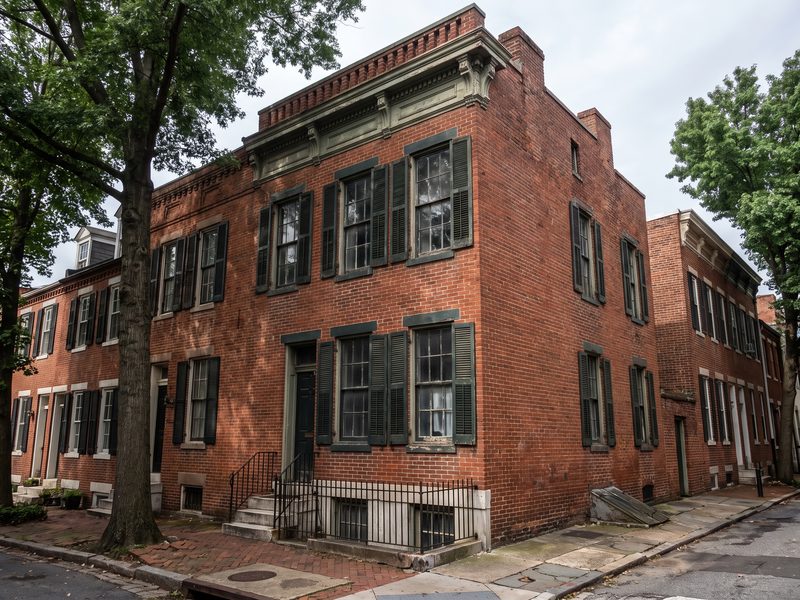
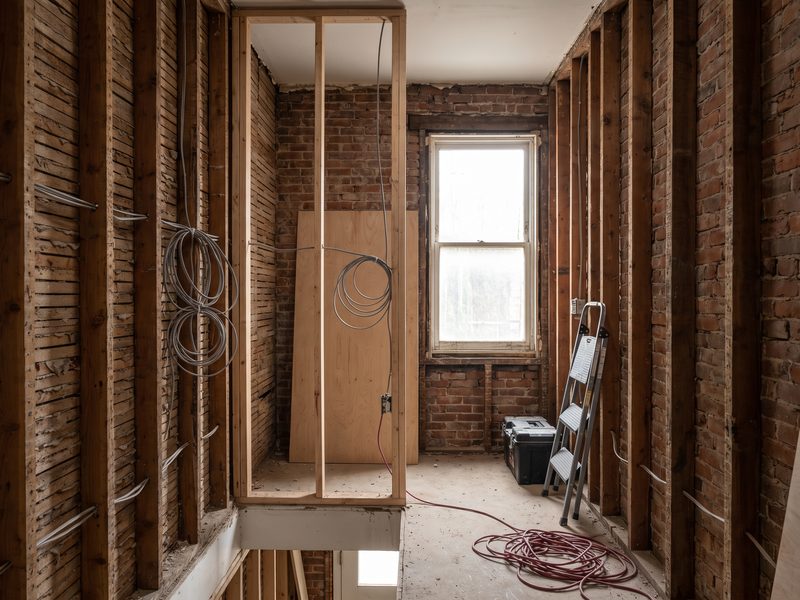
A large share of the District's housing stock shares at least one wall with the building next door. Much of that stock is pre-war, and a lot of it is older than that. In many of them the shared wall is solid brick, several wythes thick, with joists pocketed in from both faces. No cavity, no vapor barrier, no insulation.
Ownership is a legal question and the answer differs by building. Some walls are owned to the center line, some are held in common, some carry recorded agreements. We are a restoration contractor, not a law firm. Where the status of a wall is disputed, a real estate attorney should read the deed first.
On the drying side it is simpler. The wall is one continuous mass of masonry, and a repair that addresses only one face will not hold.
How does water actually get into a shared masonry wall?
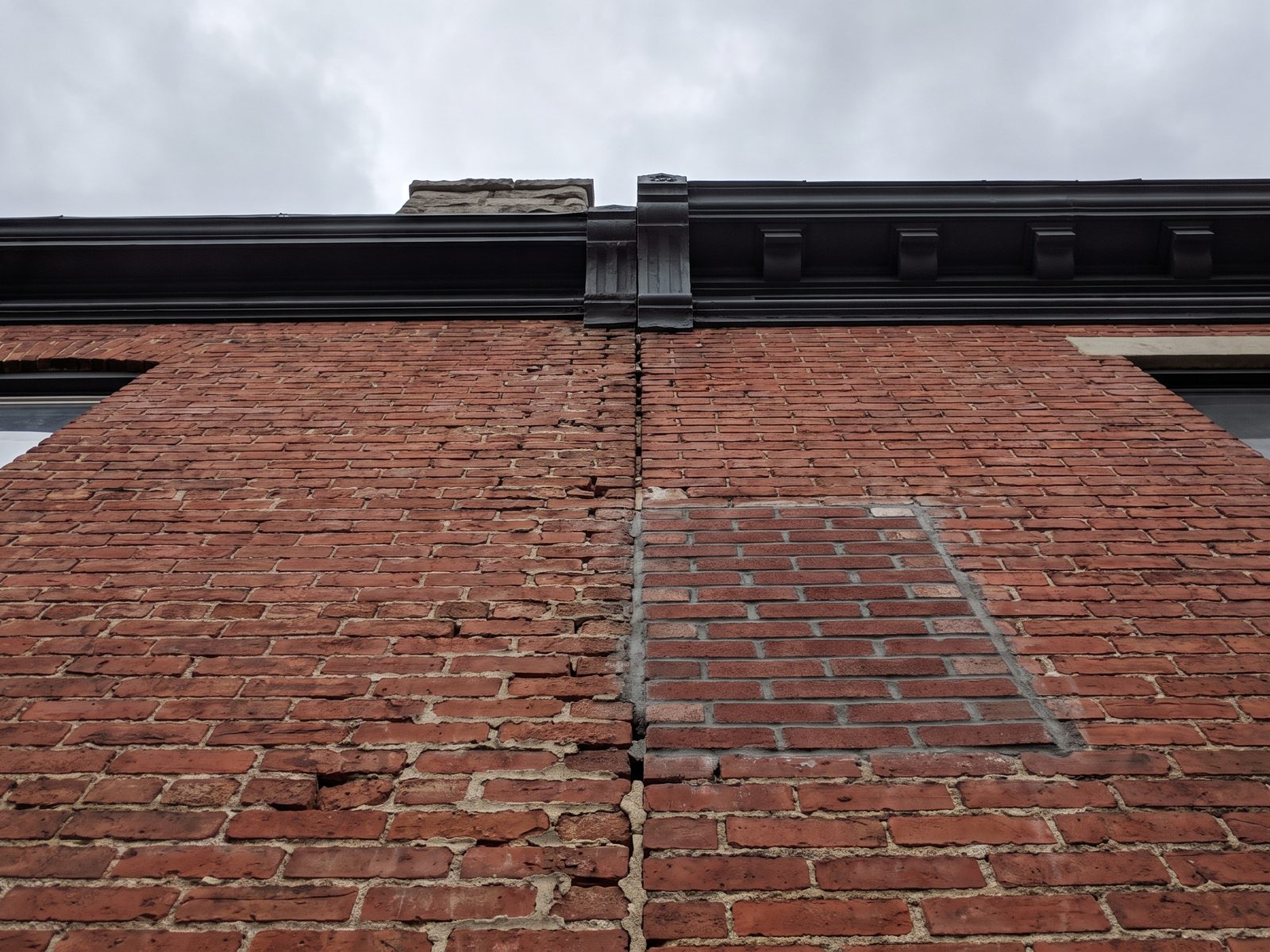
Brick is not the weak point. Mortar is. Old lime mortar is soft by design, and after a century of freeze and thaw the joints erode back from the face. Once a joint is recessed, rain that would have run off has somewhere to sit, and the wall starts drinking.
The second route is the top. Where the shared masonry runs above the roof line as a parapet, it is exposed on three surfaces and whatever caps it is doing all the work. A cracked coping stone or a failed cap flashing lets water into the core, where it travels down between the wythes and surfaces a floor or two below.
The third route is the bottom. Brick wicks. Ground water and splash-back climb the base of a wall by capillary action, and in a house with no damp-proof course the rise can reach a couple of feet above grade. In an English basement that shows as a level tide line with salty white bloom above it.
- Eroded or sand-blown mortar joints on the exposed run of the shared wall above the roof line
- Cracked, missing or back-pitched coping and cap flashing along a parapet
- Failed counterflashing where a neighboring roof membrane meets the shared brick
- A blocked scupper or downspout that backs water against the wall during every storm
- Capillary rise from grade in a cellar or English basement with no damp-proof course
How do you tell a party-wall leak from a roof, plumbing or ground-water source?
Diagnosis runs on pattern, timing and readings. Pattern is where the moisture sits and what shape it makes. Timing is what the wall does during rain and while a shower runs next door. Readings are numbers, not an opinion about a stain.
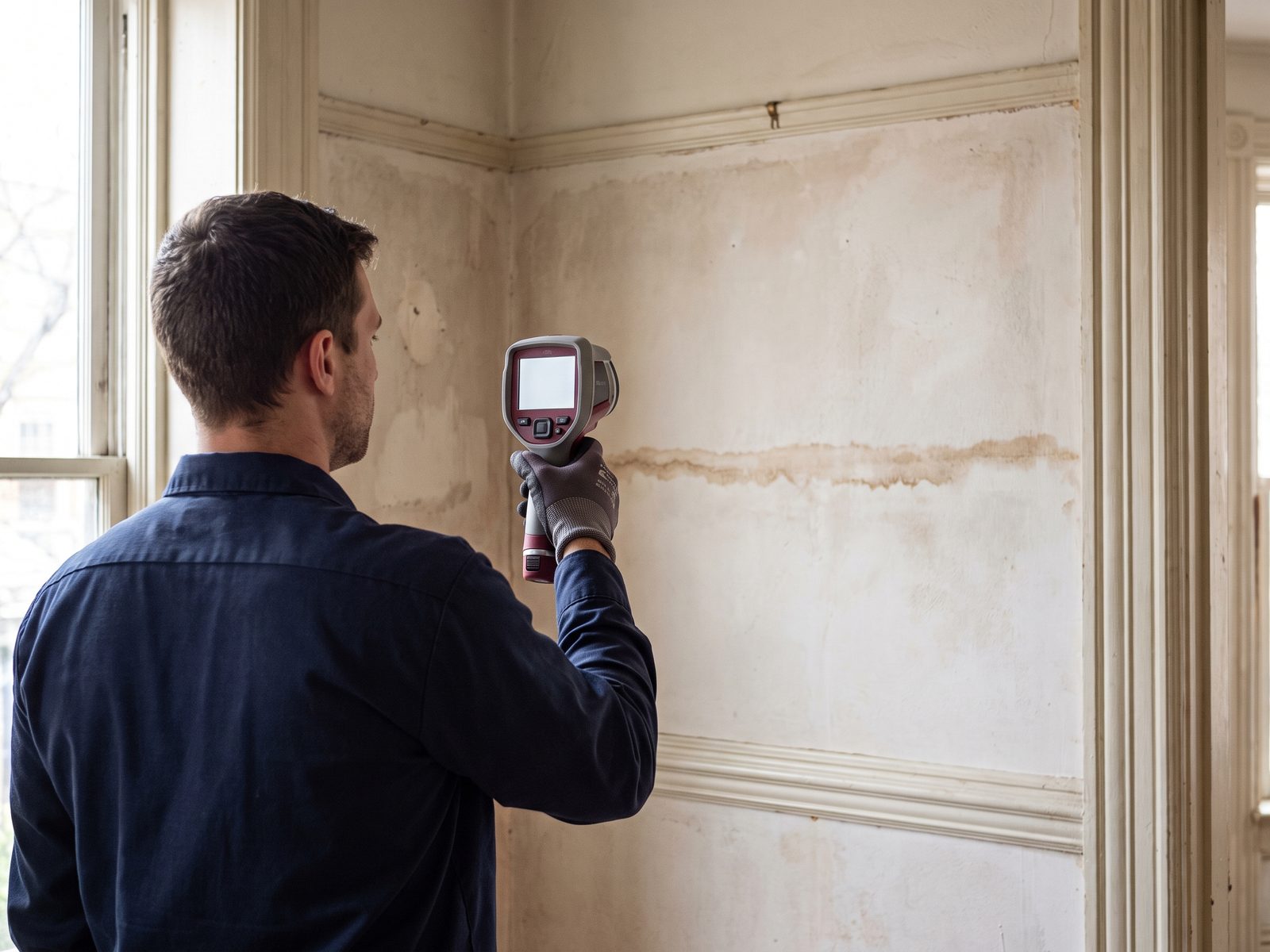
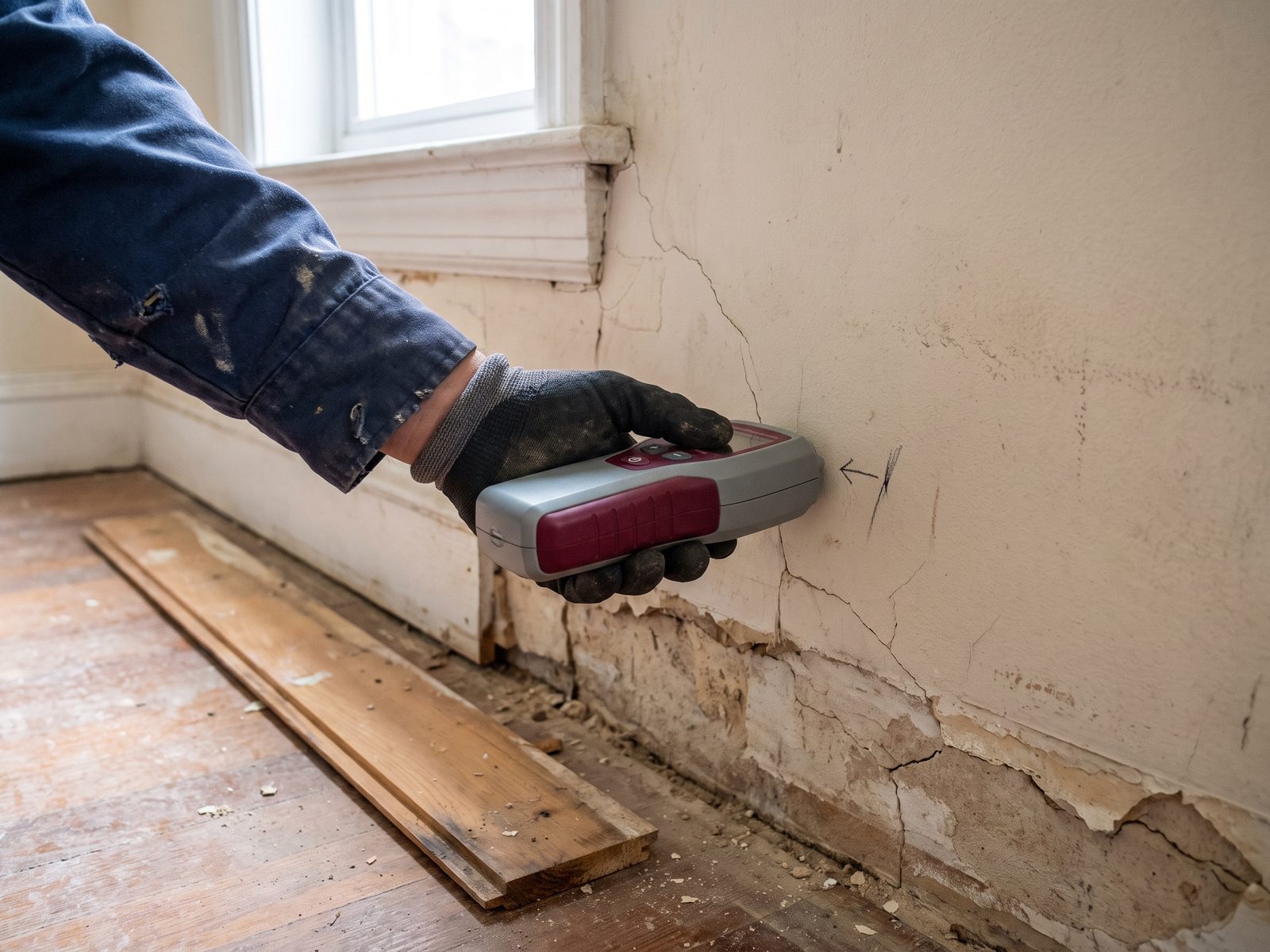
We scan the whole wall face first, floor to ceiling, then take pin readings at the wet margin and at a dry reference point in the same room. The reference is the part people skip. A reading means nothing until you know what dry looks like in that plaster, that day.
Thermal imaging maps temperature, not moisture, so it is a pointing tool. A cold band on a shared wall tells us where the meter goes next, and the shape of that band often separates a top-down source from a bottom-up one. Use the decision path below as the short version.
| What you are seeing | What it usually points to | The next move |
|---|---|---|
| Wetness starts high and runs down in a narrow vertical band | Parapet, coping or flashing at the top of the shared masonry | Have the roof edge and cap inspected, and time the staining against rain |
| A level horizontal tide line low on the wall with white bloom above it | Capillary rise from grade, or standing water against the foundation | Check grading, downspout discharge and any area drain before opening plaster |
| Wetness appears only when a fixture next door runs, never when it rains | A supply line or a shared drain stack inside the wall | Ask the neighbor to run fixtures one at a time while the meter stays on the wall |
| A round or teardrop stain on the ceiling near the shared wall | A roof penetration, or a leak traveling along a joist before it drops | Trace uphill, since the entry point is rarely above the visible mark |
| The whole lower wall reads damp with no single wet center | Chronic saturation of the masonry core rather than one event | Plan for extended drying and a masonry repair, not a patch of the finish |
| Surface moisture with no elevated reading inside the material | Condensation on cold masonry | Address humidity and surface temperature first, then re-measure |
What happens when the leak is in a plumbing stack shared by both houses?
Older attached houses were often plumbed as a pair. One cast iron soil stack can serve both units, or two stacks can share a chase inside the wall, with branch arms reaching fixtures on either side. When that stack fails, the water is inside shared structure before anyone sees it.
Cast iron fails from the inside out. The invert carries the flow and corrodes first, so the failure often starts as a pinhole rather than a break. What comes out is Category 3 water, meaning grossly contaminated, which changes the cleanup rules. Porous material that has taken on that water is removed rather than dried.
The tell is timing. A stack leak responds to use, not to weather. If the wall darkens within minutes of a shower running next door and stays quiet through a rainy weekend, the drain is the suspect. Ownership of the pipe is a separate question from ownership of the wall, and that one belongs to an attorney.
- Sewage or drain water in a wall is treated as grossly contaminated, so affected porous material comes out
- Staining that tracks fixture use rather than rainfall points at a supply line or a drain
- A camera inspection identifies the failed segment without opening both sides of the wall
- Corrosion at the bottom of an old cast iron line is wear, which affects how a carrier reads the loss
Whose insurance responds when the water started next door?
There is no general rule, and anyone who gives you one without reading your policy is guessing. What responds depends on the wording of each policy, on what failed, on whether the escape was sudden or gradual, and on how the wall is held. Two neighbors with the same loss can get different answers.
Most policies do draw a sharp line between a sudden escape of water and long-term seepage, and they treat the failed component differently from the damage it caused. A slow leak and a burst supply line are separate conversations with a carrier.
In practice both owners usually open a claim on their own policy and let the carriers sort out any recovery between themselves. Your adjuster works for your carrier, so the photographs and readings you bring to the first inspection do more for your file than an argument about the neighbor.
The same question comes up when the neighbor is above you rather than beside you. Our Virginia site walks through that version at https://restorationdoctors.com/blog/water-leak-from-upstairs-neighbor-ceiling. The mechanics differ, but the sequence of source, evidence and separate claims is the same. If a carrier decision looks wrong, the District's insurance regulator takes consumer complaints.
What can you do if your neighbor will not act?
Start by assuming the neighbor does not know. A parapet cap on the back half of a roof is invisible from the sidewalk, and a slow drain leak makes no noise. A short written note with two photographs and a date resolves more of these than anything else.
Keep your own side moving regardless. In a house you own outright, you need nobody's permission to extract water, run drying equipment, take readings and photograph your own wall. Waiting while wet plaster sits is how a water loss turns into a mold job, and the EPA's guidance is to dry water-damaged areas and items within 24 to 48 hours to prevent mold growth.
When a written request goes nowhere, the next step belongs to a lawyer rather than a contractor. Rights between adjoining owners turn on the deed, on any recorded agreement and on District law. Bring counsel the documentation, not a theory. Where a building looks unsafe rather than merely wet, the District's buildings agency handles property maintenance concerns.
- Put the notice in writing, date it, attach photographs and keep a copy
- Open your own claim on your own timeline instead of waiting for a response
- Keep drying your side, because delay costs you material that could have been saved
- Take questions about rights between owners to a property attorney, not to a contractor
Can a crew work on the wall from only one side?
Yes, and in most losses that is what happens. We work on the side we were called to, with the permission of the owner who called us, and we do not touch the other face. Access to a neighbor's interior is theirs to grant.
One-sided work has limits and you should hear them up front. We can remove finishes on our side, open a furring cavity where one exists, and drive airflow into the masonry from our face. We cannot pull moisture out of the far half of a solid brick wall on someone else's schedule, and we cannot see what that face is doing.
When both owners do coordinate, the work still stays separated. Each side keeps its own contractor, its own scope and its own claim file, and the two crews share readings. That dries a wall faster than either side working blind.
How is a shared wall dried without wrecking the plaster on both sides?
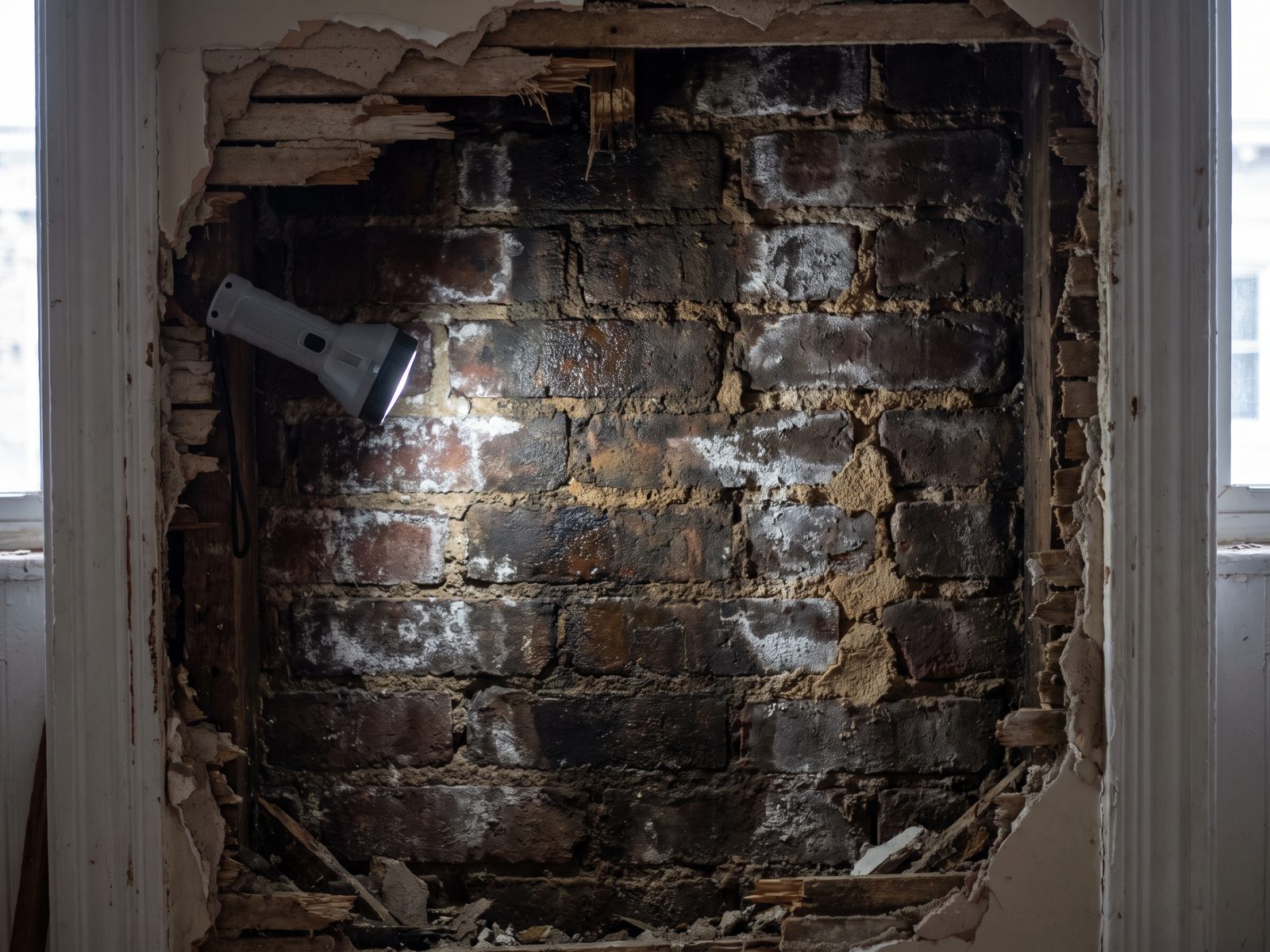
Masonry dries slowly. A saturated brick wall holds a lot of water in a material that releases it grudgingly, so the plan is built around controlled humidity and daily readings, not a row of fans aimed at the plaster.
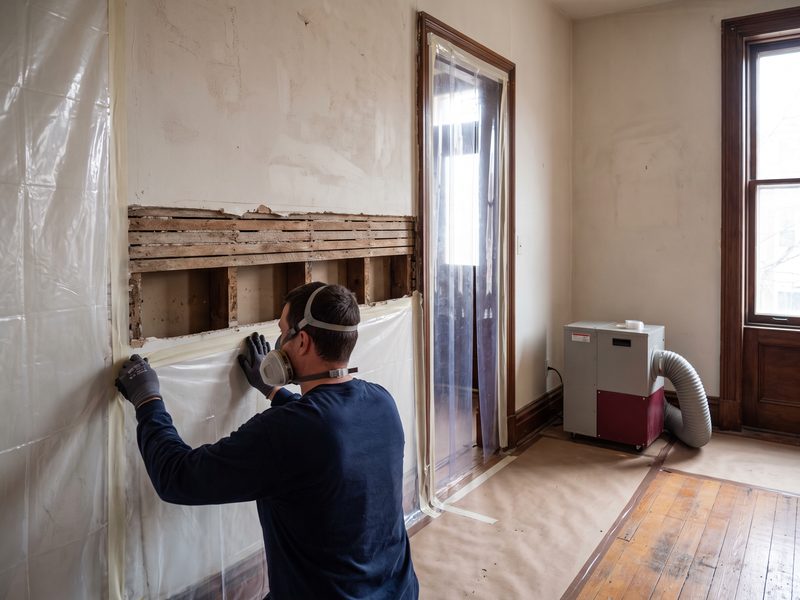
Removal stays surgical. We pull the baseboard first, because the joint behind it is where water hides and it is cheap to replace. Where furring strips create a cavity, small holes drilled low let us push dry air in without taking the wall down.
Dehumidification does the real work, pulling vapor out of the room air so the wall keeps releasing moisture into a drier space. Heat is used carefully near old plaster and painted trim in a pre-1978 house. The IICRC S500 standard sets the framework we document against, including drying goals measured against a dry standard rather than a calendar.
- Pull baseboard and trim before cutting any wall surface, and label what comes off
- Open low on the wall where a furring cavity exists rather than removing full sheets
- Hold room humidity low so the masonry has somewhere to release moisture into
- Log meter readings at fixed marked points, at the same time each day
What repairs stop it coming back: repointing, parging, flashing or drainage?
Drying the inside fixes the symptom. Until the outside stops admitting water, the wall will be wet again after the next long rain. The repair that matters sits on the exposed masonry, the roof edge or the ground outside, and the diagnosis decides which.
Repointing answers eroded joints. They are raked back to sound mortar and refilled, and the mix matters more than owners expect. Hard portland mortar in soft old brick forces moisture and salt through the brick instead of the joint, and the faces spall off.
Parging coats an exposed masonry face that was never meant to be a weather surface, often the shared wall above a neighboring roof. Flashing repair belongs to a roofer. Drainage work means regrading soil away from the wall and carrying downspout water well clear of it, with an area drain where water still collects. In a historic district the exterior work may need preservation review before a permit is issued, and your contractor or architect should confirm which approvals apply.
What should you document before anyone touches the wall?
Once the plaster comes off, the evidence goes into a bag. Photographs taken in the first hour are worth more than anything produced later, and they cost nothing. Shoot wide first so the room is identifiable, then close on the wet margin and on the source.
Write down what happened in plain sentences on the day it happened. When you first noticed it, what the weather was doing, whether a fixture was running, who you called and when they answered. Memory reshapes itself over the weeks a claim takes. A note written the same day does not.
Ask your neighbor for one photograph of their face of the wall, taken that same day. It is the most useful document in a party wall loss and the one that almost never gets collected.
- Wide, medium and close photographs of the wet area and any source, before drying starts
- A dated written timeline of what you noticed, the weather, and who you contacted
- One photograph of the neighbor's face of the same wall, taken on the same day
- Meter readings from your restoration contractor, including the dry reference point
- The failed part itself, bagged and labeled, kept until the file closes
Where do these standards and agencies come from?
We are a restoration contractor. We dry buildings and document what we find, and we do not decide coverage, ownership or permits. The sources below are the ones this article leans on, so you can read them yourself rather than take our word for any of it.
- IICRC standards, including S500 for water damage restoration: https://www.iicrc.org/page/IICRCStandards
- EPA guide to mold, moisture and your home: https://www.epa.gov/mold/brief-guide-mold-moisture-and-your-home
- DC Department of Insurance, Securities and Banking, consumer complaints: https://disb.dc.gov/
- DC Department of Buildings, housing and property maintenance inspections: https://dob.dc.gov/
- Building permits and when preservation review applies, DC Office of Planning: https://planning.dc.gov/page/building-permits-historic-property
- The upstairs-neighbor version of this problem on our Virginia site, restorationdoctors.com: https://restorationdoctors.com/blog/water-leak-from-upstairs-neighbor-ceiling