
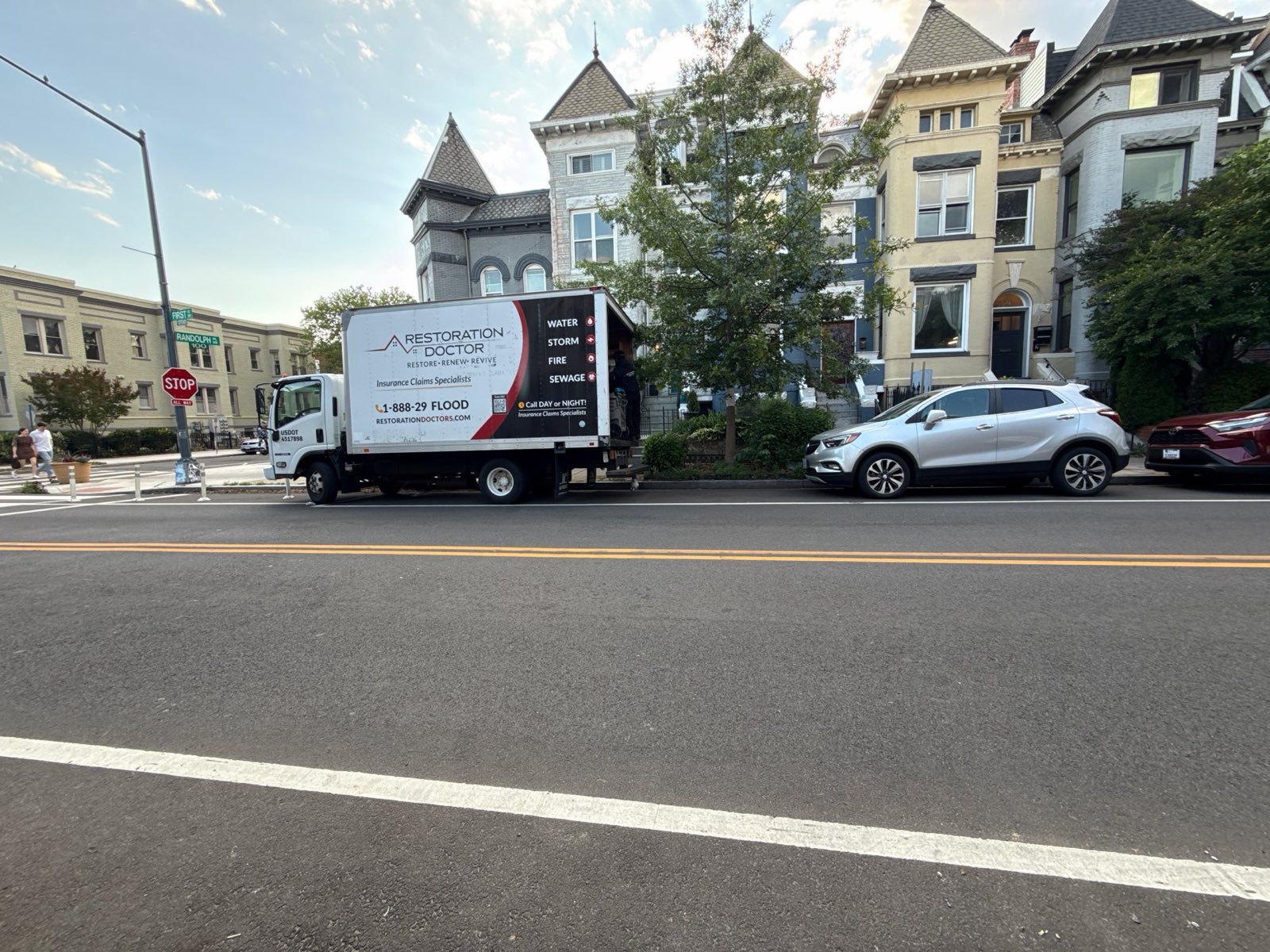
Water Damage Restoration in NoMa, Washington DC
Water damage restoration in NoMa DC is a new-construction and low-ground story. NoMa — North of Massachusetts Avenue — rose in the last fifteen years as a dense district of new condo and apartment buildings wrapped around the rail corridor and Union Station's north end. The land here is flat and low, threaded by the old railbed and its drainage, and the neighborhood's underpasses are notorious for flooding in heavy rain. So the losses split two ways: modern-building failures inside stacked, multi-unit towers, and storm-driven water pooling on low ground and pushing into ground-floor and below-grade space. Restoration Doctor answers NoMa around the clock and scopes each accordingly.
The buildings are young, which changes the failure modes rather than removing them. NoMa's mid- and high-rise residential concentrates many units, shared plumbing risers, wet fire-suppression systems, and below-grade parking into single envelopes. A supply line or sprinkler head that lets go on an upper floor sends water down a column of units in minutes, while a cloudburst that overwhelms the railbed drainage collects at the lowest points of the district. We map both kinds of loss with thermal imaging and moisture meters and coordinate with building management so we dry the whole affected area, not just the room that reported.
From the blocks around the NoMa-Gallaudet Metro and Union Market to the streets along the rail corridor and toward the Florida Avenue underpasses, the method is constant: shut or seal the source, extract before water reaches units and levels below, dry to a verified moisture standard, and document every reading for each affected policy. Here is how water actually moves through NoMa.
How water damage behaves in NoMa
Low ground, railbed drainage, and underpass flooding
NoMa's flat, low terrain is its biggest flood exposure. The neighborhood was built over the old railbed, and the legacy drainage plus the district's underpasses — long known to flood in hard rain — funnel storm water toward the lowest blocks. When an intense cloudburst outruns the drains, water sheets across streets and collects against ground-floor lobbies, retail, and the below-grade parking and mechanical rooms that new buildings rely on.
Street and storm water is Category 2 or Category 3, never clean Category 1, so we handle these events with extraction, removal of unsalvageable materials, and antimicrobial treatment under the proper protocols. Because the same storms threaten the building envelope, our storm-damage work ties the exterior entry point and the interior drying into one loss so we are not chasing water that keeps arriving.
Vertical losses in new residential towers
The signature NoMa building loss travels straight down. A supply line, a burst riser, or a discharged fire-sprinkler head on an upper floor releases water that follows the shared shafts and floor assemblies down through a column of stacked units before anyone shuts it off. Sprinkler discharges in particular move large volumes quickly.
We map the affected column with thermal imaging and penetrating meters, coordinate with the building engineer to confirm the source and isolate systems, and stage drying across every wet floor rather than the single unit that reported it. In a condo building we keep the documentation clear about unit versus common-element damage so each owner and the association can submit to the correct carrier.
Parking levels, hidden cavities, and mold
NoMa's below-grade parking and mechanical levels sit at the district's lowest point and concentrate both interior water from failures above and storm water from the low streets. Even in a new building, water trapped in wall cavities, under flooring, or in a damp garage will grow mold if it is not located and dried quickly — new drywall is no more mold-proof than old plaster once it stays wet.
We dry to a verified standard with low-grain refrigerant and desiccant dehumidification and check hidden cavities with thermal imaging rather than assuming a modern building dried itself. When we find growth we remediate under IICRC S520 with containment; when we are drying a fresh loss, verified drying is the entire defense against mold ever starting behind the finishes.
NoMa housing stock and how it fails
NoMa is almost entirely new construction — mid- and high-rise condominium and apartment buildings raised from roughly 2010 onward on former industrial and rail land north of Massachusetts Avenue. The finishes are modern: drywall, engineered and hardwood flooring, and contemporary millwork, wrapped around elevators, amenity floors, and below-grade structured parking. These materials dry faster than the plaster and heart-pine of the District's older neighborhoods, but the buildings stack so many units and shared systems into one envelope that a single failure reaches far beyond its origin.
The infrastructure that matters is vertical and shared — plumbing risers serving a whole column of units, and, in most buildings, pressurized wet fire-suppression piping. A burst riser, a failed supply line, or a discharged sprinkler head high in a building drops water through floor assemblies and shafts into units well below the source. The other defining factor is the ground itself: NoMa sits low and flat over the old railbed, where legacy drainage and the district's underpasses concentrate storm water at the lowest points. Below-grade parking and mechanical levels therefore take both interior water from above and storm-driven water from the street, which is why we coordinate with building engineers from the first hour.
Areas of NoMa we serve
Real NoMa blocks and buildings — and the water losses we most often see in each.
New high-rise condos and apartments where stack and sprinkler failures drop water through multiple floors.
Recent mixed-use residential over retail where upper-unit losses drain into commercial and lobby space below.
Buildings along the old railbed where low ground and legacy drainage funnel storm water toward lower levels.
Low-lying blocks near the notorious underpasses where cloudburst flooding reaches ground-floor and below-grade space.
Newer condos and converted buildings where shared plumbing risers can affect a vertical column of units.
Mid-rise apartments and condos where structured parking and lower levels take storm-driven water.
Documented project files
Real CompanyCam-documented Restoration Doctor work in the Washington, DC metro — every project photographed with date and time stamps.
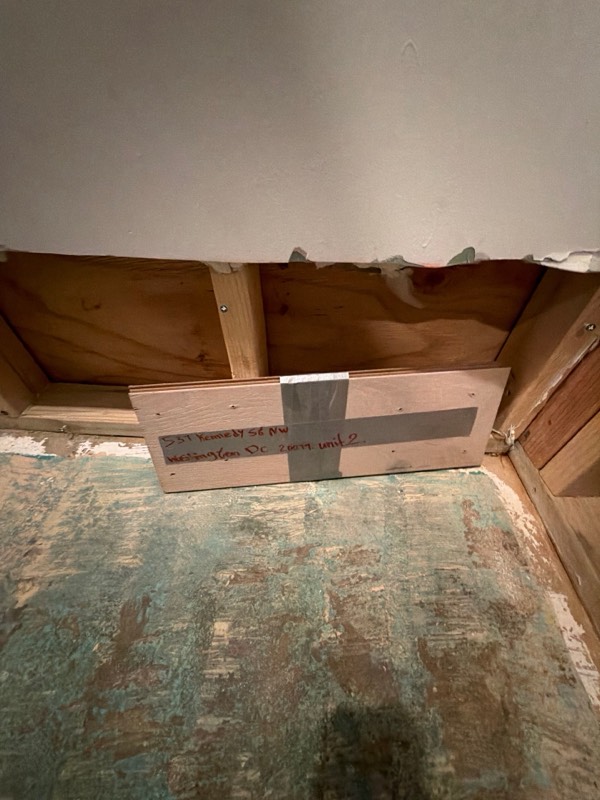
Basement water damage dry-out — Washington, DC
Documented Washington, DC below-grade loss where standing water was extracted and the space dried with air movers and dehumidifiers to a verified moisture standard.
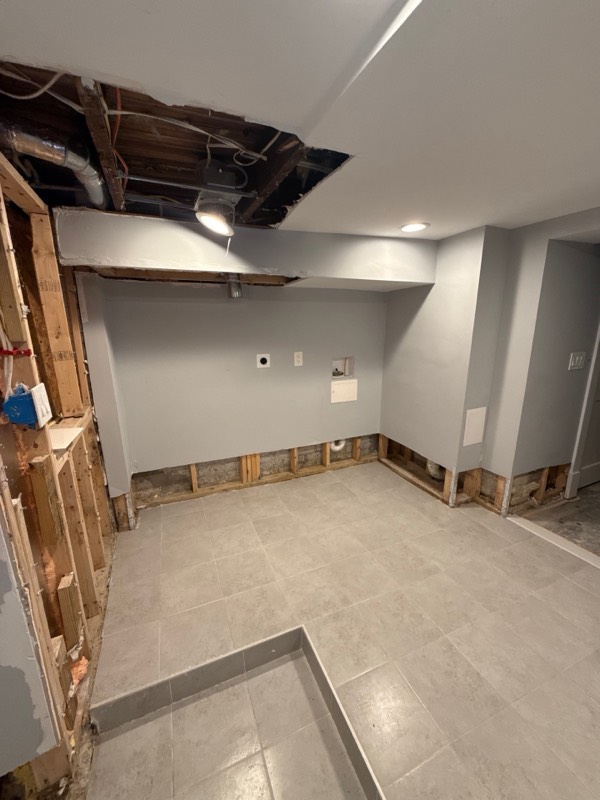
Water extraction & contents protection — Washington, DC
A documented Washington, DC loss where standing water was extracted and salvageable contents were moved and protected before staged structural drying began.
Full restoration services in NoMa
One operation covers every category — from emergency mitigation to full reconstruction.
Water Damage Restoration
Extraction, structural drying, and moisture verification for pipe breaks, appliance leaks, and English-basement flooding across the District.
Sewage & Biohazard Cleanup
Category 3 black-water decontamination with full PPE, contaminated-waste removal, antimicrobial treatment, and verified drying after sewer backups and overflows.
Mold Remediation
IICRC S520 containment, HEPA filtration, safe source-based removal, and independent post-remediation clearance verification.
Fire & Smoke Damage Restoration
Soot and smoke-residue removal, source-based odor neutralization, contents pack-out, and preservation-sensitive reconstruction after a fire — performed to ANSI/IICRC S700, the fire and smoke damage restoration standard.
Storm Damage Restoration
Emergency tarping, water extraction, and reconstruction after wind, heavy rain, and the flash flooding DC's summer storms produce.
Reconstruction & Repairs
Drywall, plaster, flooring, cabinetry, trim, and paint — the same in-house crew that dried the loss rebuilds it, with no handoff and preservation-sensitive finish matching for District homes.
What NoMa homeowners look for
NoMa is a neighborhood of new condos, large apartment communities, and professional building management, so a restoration company's reputation here runs through property managers and engineers as much as individual residents. What is worth documenting is whether the crew responded fast to a vertical or storm loss, coordinated cleanly with the building, and kept the records straight across every affected unit and level.
We do not print star ratings or review counts on this page. Our verified customer feedback lives on a separate reputation hub — visit RestorationDoctorsReviews.com to read Washington, DC reviews and the genuine Google aggregate for yourself, then come back here to book service for your NoMa home or unit. Keeping the numbers on a source-linked hub rather than typing them onto a marketing page is a deliberate honesty choice.
Frequently asked
Active water, mold, fire, or sewage event?
Connect directly with the Restoration Doctor team for your region. Crews are on standby 24/7 with documented response protocols.