
Water Damage Restoration in Oxon Hill, MD
Water damage restoration in Oxon Hill, MD is shaped by the land itself. This is Potomac-adjacent country, where split-levels, colonials, and ramblers sit on hillsides that drain toward the river, and where the low ground near the water carries a flood exposure that the neighborhoods up the ridge do not. Restoration Doctor answers Oxon Hill emergencies around the clock, because on a sloped lot the difference between a contained loss and a soaked lower level is measured in how fast someone gets the water moving out instead of down.
The homes here were largely built from the 1950s through the 1980s, and the split-foyer and split-level designs that define so many Oxon Hill streets put finished living space partly below grade by design. That lower level is the first place water pools, whether it arrives from a failed appliance upstairs, groundwater pushing against a hillside foundation, or a storm surge in the low-lying areas closer to the Potomac and Oxon Cove.
Add the commercial edge — the hotels, retail, and offices that grew up around the National Harbor side of Oxon Hill — and the range of losses widens from a single family's basement to a business that cannot afford to close. Across all of it the sequence holds: stop the source, extract fast, dry to a verified standard, and document every reading for the claim. Here is how water behaves in Oxon Hill, from the ridge homes down to the riverfront.
How water damage behaves in Oxon Hill
Does living near the Potomac raise my flood risk?
In the low-lying parts of Oxon Hill near the Potomac and Oxon Cove, yes. River-driven flooding and storm surge push water toward the lowest ground, and homes and businesses in those flats can take on water that has nothing to do with their own plumbing. Floodwater is contaminated Category 3 water by definition, carrying whatever it traveled through, so it is never a simple dry-out.
We handle flood losses as biohazard events: extract the standing water, remove and dispose of porous materials that cannot be decontaminated, clean and apply antimicrobial treatment to what remains, and only then set structural drying to a verified standard. Documentation matters even more here, because flood claims are often handled separately from standard homeowners coverage, and getting the source and category right from the first hour protects how the loss is classified.
Why do split-levels flood on the low side first?
The split-level and split-foyer homes that fill Oxon Hill put finished space partway below grade on the downhill side. When water enters — from a burst supply line upstairs, a failed water heater, or hydrostatic pressure against the hillside foundation — it runs to that lower level and collects, saturating carpet pad, wicking into drywall, and soaking the bottom plates of framed walls before it is noticed.
We trace the real footprint with moisture meters and thermal imaging instead of guessing from the visible damage, then dry in place wherever the readings allow and open only what has to come out. On a sloped lot, we also pay attention to how the water wants to keep moving downhill through the assembly, drying the low corners and cavities that a quick look would miss. Undried moisture in those hidden spaces is the leading cause of the mold we later find behind Oxon Hill basement walls.
What about the hotels and commercial buildings near the Harbor?
The commercial corridor on the National Harbor side of Oxon Hill brings a different clock. A supply-line break, a failed rooftop unit, or a sprinkler discharge in a hotel or retail space spreads across finished ceilings and stacked floors fast, and every hour the space is wet is an hour it cannot serve guests or customers. These are losses where speed of response is not a convenience but a business necessity.
We approach commercial losses as coordinated drying operations: map the affected floors and cavities, stage extraction and high-capacity drying to keep the space usable where possible, and document each area so ownership, management, and insurers can route the loss to the right coverage. When a commercial drain backs up, that becomes a Category 3 cleanup handled under the proper protocols, with the containment and disinfection those events require.
Oxon Hill housing stock and how it fails
Oxon Hill grew during the post-war suburban push, and its housing reflects it: split-levels and split-foyers, brick and frame colonials, and ramblers built from the 1950s into the 1980s, laid out across rolling terrain that slopes toward the Potomac. The split designs are the defining type — half a story below grade on the low side, which means a finished family room, bedroom, or utility space that sits partway into the hillside. That geometry is efficient for the lot but unforgiving in a water loss, because the below-grade portion is exactly where gravity and groundwater both want to send water.
Closer to the river and the National Harbor development, the mix shifts toward newer townhomes, condominiums, and a dense commercial corridor of hotels and retail. Those buildings bring stacked and shared-wall losses — a supply-line failure on one floor traveling into the units below — and the low elevation near Oxon Cove adds genuine flood exposure that the ridge neighborhoods are spared. Knowing which Oxon Hill we are working in, the hillside split-level or the riverfront building, tells us where the water went and how hard to push to get ahead of it.
Areas of Oxon Hill we serve
Real Oxon Hill blocks and buildings — and the water losses we most often see in each.
Wooded hillside lots above the Potomac where sloped foundations and groundwater drive lower-level seepage.
Post-war split-levels and garden apartments on small lots where appliance failures run straight to below-grade space.
Established colonials and split-foyers on rolling terrain that collects water on the downhill side.
Mid-century homes on aging supply lines prone to water-heater and pinhole leaks into finished basements.
Newer townhomes, condos, and a hotel-and-retail corridor with stacked and commercial losses.
Riverside low ground near Oxon Cove where flood exposure and storm surge reach the flats.
Documented project files
Real CompanyCam-documented Restoration Doctor work in the Washington, DC metro — every project photographed with date and time stamps.
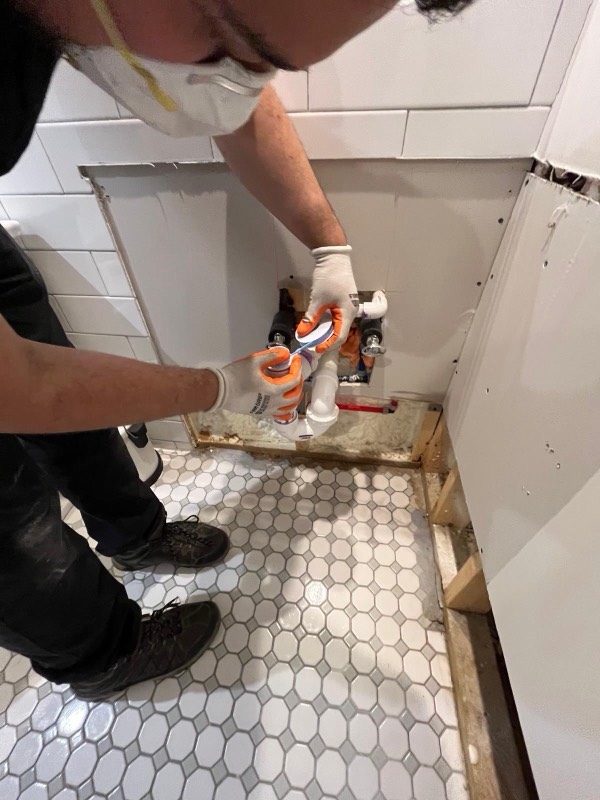
Emergency water extraction & dry-out — documented Washington, DC project
A documented Washington, DC emergency taken from rapid water extraction through monitored dry-out, with drying equipment staged to the wet footprint and verified to a dry standard — the fast-response approach we bring to Oxon Hill's sloped lots.
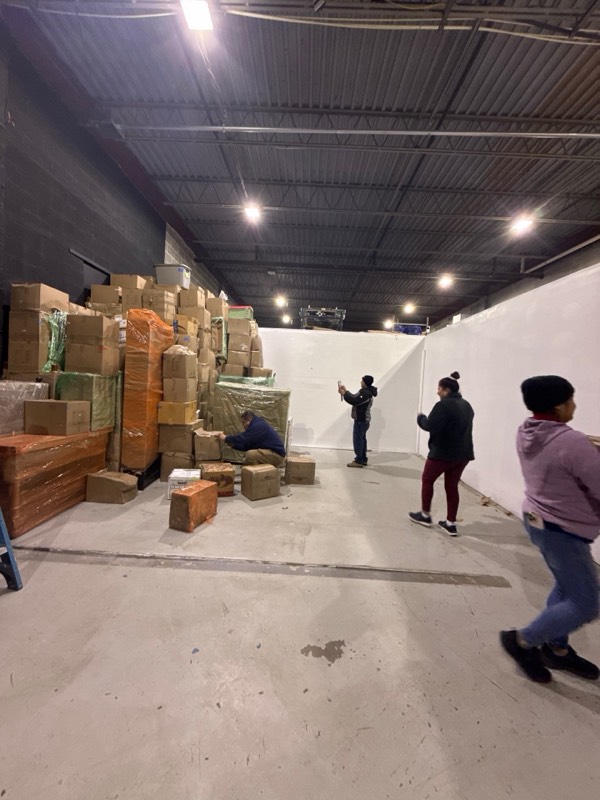
Ceiling collapse water restoration — documented Washington, DC project
A documented Washington, DC project where an overhead water failure brought down a ceiling; crews stabilized the area, dried the structure, and documented the loss for the claim — the multi-level restraint we apply to Oxon Hill split-levels.
Full restoration services in Oxon Hill
One operation covers every category — from emergency mitigation to full reconstruction.
Water Damage Restoration
Extraction, structural drying, and moisture verification for pipe breaks, appliance leaks, and English-basement flooding across the District.
Sewage & Biohazard Cleanup
Category 3 black-water decontamination with full PPE, contaminated-waste removal, antimicrobial treatment, and verified drying after sewer backups and overflows.
Mold Remediation
IICRC S520 containment, HEPA filtration, safe source-based removal, and independent post-remediation clearance verification.
Fire & Smoke Damage Restoration
Soot and smoke-residue removal, source-based odor neutralization, contents pack-out, and preservation-sensitive reconstruction after a fire — performed to ANSI/IICRC S700, the fire and smoke damage restoration standard.
Storm Damage Restoration
Emergency tarping, water extraction, and reconstruction after wind, heavy rain, and the flash flooding DC's summer storms produce.
Reconstruction & Repairs
Drywall, plaster, flooring, cabinetry, trim, and paint — the same in-house crew that dried the loss rebuilds it, with no handoff and preservation-sensitive finish matching for District homes.
What Oxon Hill homeowners look for
Oxon Hill sits at the meeting point of family homes and a busy commercial waterfront, and what is worth vetting in a restoration company differs a little for each. A homeowner on a hillside split-level wants fast response and careful drying that preserves the finished lower level; a hotel or retailer near the Harbor wants a crew that can move at commercial speed and document a loss cleanly across multiple insurers and tenants. Both come down to the same qualities: how quickly a company arrives and how honestly it records what it finds.
We do not print review counts or star ratings on this page. Our verified customer feedback lives on a separate reputation hub instead: visit RestorationDoctorsReviews.com to read the reviews and see the genuine Google aggregate for yourself, then return here to book service for your Oxon Hill property. Keeping the ratings on a source-linked hub rather than typing numbers onto a marketing page is a deliberate honesty choice — the figures there are the real Google totals, not something we invented.
Frequently asked
Active water, mold, fire, or sewage event?
Connect directly with the Restoration Doctor team for your region. Crews are on standby 24/7 with documented response protocols.