
Water Damage Restoration in Fort Washington, MD
Water damage restoration in Fort Washington, MD comes with the territory of living along the Potomac. This is a community of larger lots, wooded slopes, and homes that range from mid-century ramblers to substantial brick colonials and newer custom builds, many of them within reach of the river and its floodplain. Restoration Doctor answers Fort Washington emergencies around the clock, because a home on a big wooded lot near the water can take on moisture from directions a compact suburban house never does — the appliance inside, the groundwater outside, and the river below.
The finished basement is the through-line here as it is across Prince George's County, but Fort Washington basements tend to be bigger and more built-out — full lower levels with family rooms, guest suites, home theaters, and expensive finishes that are slow and costly to dry once soaked. On the wooded lots that define much of the area, those basements also lean hard on sump pumps to stay dry, and a sump that fails during a storm is one of the most common ways water gets into a Fort Washington home.
Whether you own a waterfront property near Fort Washington Park, a colonial in Tantallon, or a rambler up the ridge on a wooded acre, the work runs the same course: stop the source, extract fast, dry the structure to a verified moisture standard, and document every reading so the insurance claim is built on evidence. What follows is how water actually reaches Fort Washington homes and what we do about each path.
How water damage behaves in Fort Washington
The river, the floodplain, and Category 3 water
For the low-lying and waterfront properties near the Potomac, flooding is a genuine risk that has nothing to do with a home's own plumbing. River flooding and storm-driven high water push into the floodplain, and a home caught in it can take on standing water across its lowest level. Floodwater is contaminated Category 3 water by definition — it carries silt, sewage, and whatever else it moved through — so it can never be treated as a simple dry-out.
We handle these losses as biohazard events: extract the standing water, remove and dispose of porous materials that cannot be decontaminated, clean and disinfect what remains with antimicrobial treatment, and only then set structural drying to a verified standard. Because flood damage is frequently covered separately from a standard homeowners policy, precise documentation of the source and category from the first hour is what keeps a Fort Washington flood claim classified correctly.
The sump pump every wooded lot depends on
On Fort Washington's wooded, sloped lots, the sump pump is often the only thing standing between a heavy rain and a flooded basement. High groundwater and fast runoff build hydrostatic pressure against below-grade walls, and when a sump is undersized, worn out, or running on a dead backup battery, water seeps in through cracks, the cove joint, and around the slab into a finished lower level.
Groundwater that has moved through soil is Category 2 water, not clean, so we treat sump-failure seepage accordingly: extraction, selective removal of unsalvageable porous materials, antimicrobial treatment, and drying to a verified standard. We map the wet footprint with moisture meters and thermal imaging, dry the big finished basements in place wherever the readings allow, and open only what must come out — the restraint that matters most when a lower level is full of expensive finishes.
The large finished basement and the plumbing above it
Even setting the river aside, the biggest Fort Washington losses are usually interior. A supply line, water heater, or appliance fails on an upper floor and gravity carries the water down through joist bays and finished levels to the basement, the lowest point in the house, where it pools and spreads. In a large, fully finished lower level, that water can travel a long way behind walls and under flooring before a stain ever appears.
We trace the true path with thermal imaging and moisture meters rather than the visible damage, dry cavities and assemblies in place where we can, and carry licensed in-house plumbing to repair the line that actually failed. On homes served by septic rather than public sewer, a backup behaves differently and can surface as a Category 3 event indoors; we handle those with the containment and disinfection a sewage loss requires, then verify the structure to a dry standard so mold never gets its start.
Fort Washington housing stock and how it fails
Fort Washington's housing is defined by space. Compared to the denser neighborhoods to the north, homes here sit on larger, often wooded lots — mid-century ramblers and split-levels on generous parcels, established brick colonials in planned communities like Tantallon and Fort Washington Estates, and a steady layer of newer custom construction closer to the water. Nearly all of them have full basements, and because the lots afford the room, those basements are frequently finished into extensive lower-level living space with high-end materials that raise the stakes of any water loss.
The waterfront and near-waterfront homes add a category of their own. Proximity to the Potomac and its floodplain means real flood exposure for the low-lying properties, while the wooded, sloped lots up the ridge deal with heavy runoff and high groundwater that press against foundations after every serious storm. Many of these homes also depend on sump systems, and some on septic rather than public sewer, which changes how a backup behaves. Reading which Fort Washington we are standing in — the riverfront property, the ridge colonial, the wooded rambler — tells us where the water came from and how aggressively to respond.
Areas of Fort Washington we serve
Real Fort Washington blocks and buildings — and the water losses we most often see in each.
Established colonials on larger lots where big finished basements and sump reliance drive storm-season losses.
Planned-community homes on wooded parcels with high groundwater pressing against below-grade walls.
Low-lying riverfront properties with genuine floodplain exposure and Category 3 flood risk.
Waterside homes near Fort Washington Park where storm-driven high water reaches the flats.
Mid-century ramblers and split-levels on aging supply lines prone to interior water-heater and pipe failures.
Wooded ridge lots depending on sump systems, some on septic where backups surface indoors.
Documented project files
Real CompanyCam-documented Restoration Doctor work in the Washington, DC metro — every project photographed with date and time stamps.
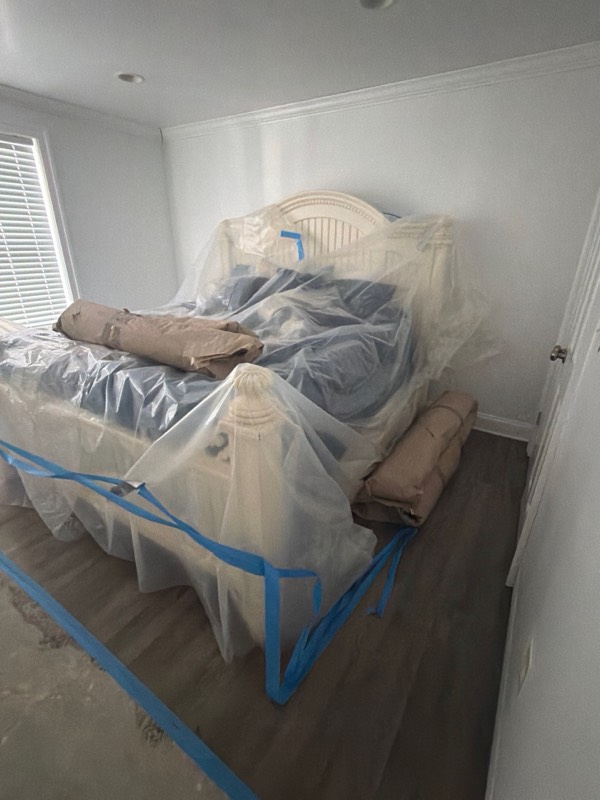
Water damage mitigation & structural drying — documented Fort Washington, MD project
A documented Fort Washington, MD loss carried from mitigation through monitored structural drying, with dehumidifiers and air movers staged to the wet footprint and verified to a dry standard.
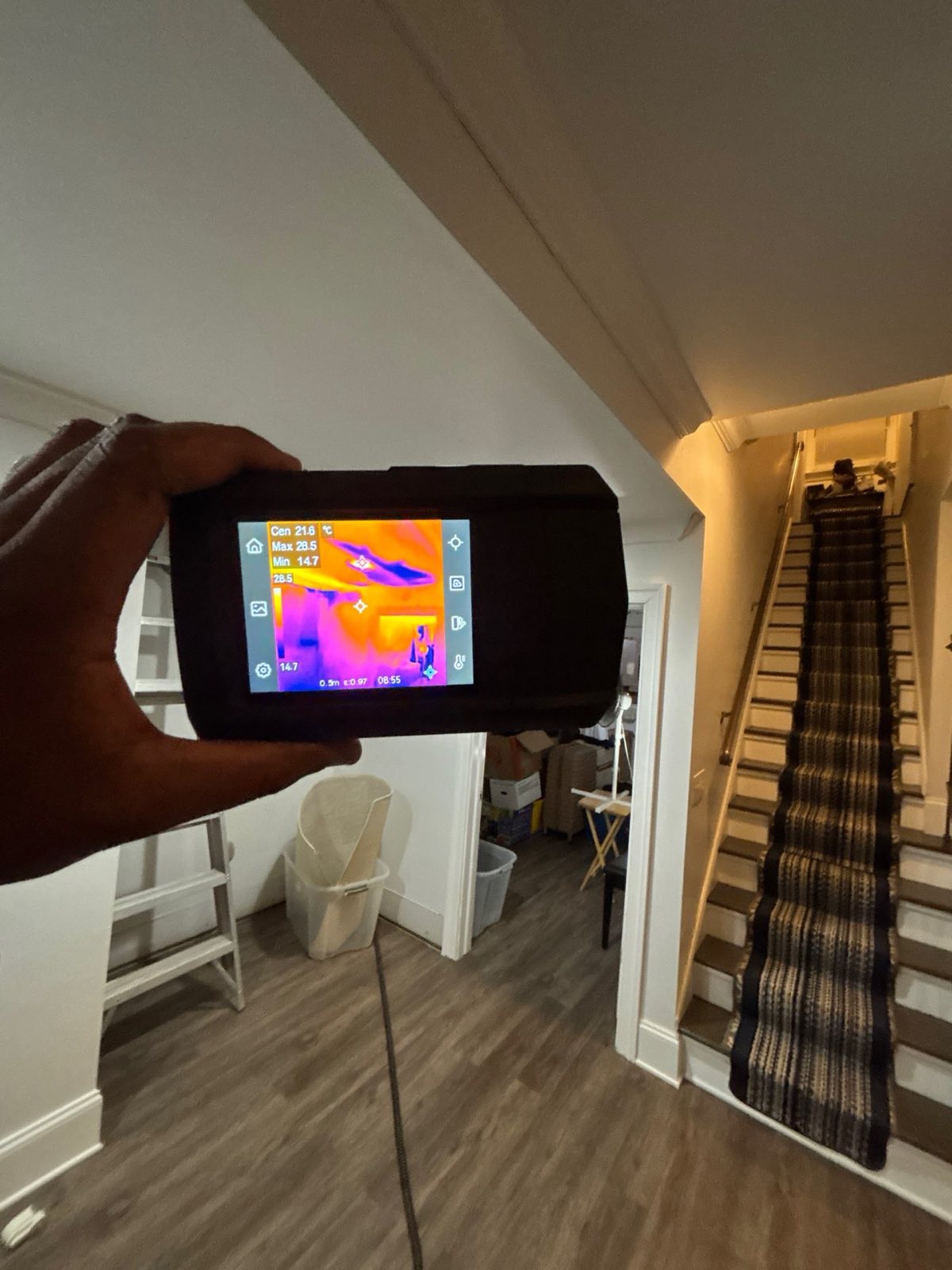
Thermal imaging moisture inspection & drying — documented Washington, DC project
A documented Washington, DC project where crews used thermal imaging and moisture meters to trace hidden water through the assembly, then dried cavities in place — the mapping we bring to large Fort Washington basements.
Full restoration services in Fort Washington
One operation covers every category — from emergency mitigation to full reconstruction.
Water Damage Restoration
Extraction, structural drying, and moisture verification for pipe breaks, appliance leaks, and English-basement flooding across the District.
Sewage & Biohazard Cleanup
Category 3 black-water decontamination with full PPE, contaminated-waste removal, antimicrobial treatment, and verified drying after sewer backups and overflows.
Mold Remediation
IICRC S520 containment, HEPA filtration, safe source-based removal, and independent post-remediation clearance verification.
Fire & Smoke Damage Restoration
Soot and smoke-residue removal, source-based odor neutralization, contents pack-out, and preservation-sensitive reconstruction after a fire — performed to ANSI/IICRC S700, the fire and smoke damage restoration standard.
Storm Damage Restoration
Emergency tarping, water extraction, and reconstruction after wind, heavy rain, and the flash flooding DC's summer storms produce.
Reconstruction & Repairs
Drywall, plaster, flooring, cabinetry, trim, and paint — the same in-house crew that dried the loss rebuilds it, with no handoff and preservation-sensitive finish matching for District homes.
What Fort Washington homeowners look for
Fort Washington homeowners tend to have real value in the ground — larger properties, extensive finished basements, and in many cases waterfront exposure — and that raises the bar on who they let into a loss. The things worth vetting here are response time on a big lot, the judgment to dry and preserve expensive lower levels rather than needlessly gut them, and honest documentation that stands up whether the loss is a burst pipe or a floodplain event.
You will not see review counts or star ratings printed on this page. Our verified customer feedback lives on a separate reputation hub instead: visit RestorationDoctorsReviews.com to read the reviews and see the genuine Google aggregate for yourself, then come back here to schedule service for your Fort Washington home. We keep the numbers on a source-linked hub rather than typing them onto a marketing page on purpose — the figures there are the real Google totals, not something we invented.
Frequently asked
Active water, mold, fire, or sewage event?
Connect directly with the Restoration Doctor team for your region. Crews are on standby 24/7 with documented response protocols.