Water Damage Restoration in National Harbor, MD
Water damage restoration in National Harbor, MD looks different from the rest of Prince George's County, because National Harbor itself is different — a planned waterfront district of high-rise condominiums, hotels, restaurants, and retail packed onto the Potomac's edge rather than a neighborhood of single-family homes. Restoration Doctor answers National Harbor emergencies around the clock, because in a stacked building full of residents or paying guests, a water loss is a clock running against occupancy, and the faster crews get equipment in place the fewer units and floors the water reaches.
The defining risk here is vertical. When a supply line bursts, a fixture overflows, or a rooftop or mechanical system fails high in a National Harbor tower, gravity spreads the damage downward through the concrete slab, pipe chases, and shared walls into the units, corridors, and commercial spaces below. A single failure can touch a stack of condos, a hotel floor, and a common area before anyone on a lower level ever sees a stain, which makes mapping the full path and drying every wet space at once far more important than reacting to the visible damage.
Whether the loss is in a residential condo tower, a hotel guest floor, or a ground-level restaurant or shop, the sequence stays the same: stop the source, extract fast, dry to a verified moisture standard, and document each affected area separately so owners, associations, tenants, and insurers can route it to the right coverage. Here is how water actually moves through National Harbor's buildings and what we do about it.
How water damage behaves in National Harbor
Managing stacked losses in high-rise condos
A National Harbor condo tower behaves like any stacked building: gravity, not chance, decides where the damage goes. A supply-line burst or overflowing fixture on an upper floor sends water straight down through the slab and pipe chases into the units below, running along ceilings and shared walls before a lower-floor owner ever notices. By the time it surfaces, the water may have touched several homes and a common corridor.
We treat these as building losses, not single-unit events. Crews map the vertical path with thermal imaging and moisture meters through every affected unit, set directed drying and low-grain dehumidification in each wet space at once, and document each area separately so individual owners and the condo association can see exactly what was affected and route it to the correct coverage. Drying a stack of units in place — rather than tearing out finished ceilings floor by floor — depends on getting equipment running fast and monitoring every level to a verified dry standard.
Drying hotel and commercial space against the clock
In a National Harbor hotel or ground-level commercial space, the water loss and the revenue loss are the same event. A burst line, a failed rooftop or mechanical unit, or a sprinkler discharge spreads across finished ceilings and stacked floors quickly, and every hour a guest floor or restaurant sits wet is an hour it cannot earn. Speed of response here is a business necessity, not a convenience.
We run commercial losses as coordinated drying operations: map the affected floors and cavities, stage extraction and high-capacity drying to keep as much of the space usable as possible, and document each area so ownership, management, and multiple insurers or tenants can route the loss cleanly. When a commercial kitchen drain or fixture backs up, that becomes a Category 3 event handled with the containment and disinfection those losses require, so a space returns to service safe as well as dry.
Accounting for the waterfront and the weather
National Harbor sits on the Potomac's edge, and that siting adds exposure the inland buildings do not share. Storm-driven high water and heavy runoff press against the lowest levels — parking structures, ground-floor commercial, and mechanical spaces — where standing water can accumulate. Water that arrives from the river or through the ground is contaminated Category 2 or Category 3 water, never a clean-water dry-out.
We treat those events for what they are: extraction, removal and disposal of unsalvageable porous materials, disinfection where the water was contaminated, and drying to a verified standard. Undried moisture in a building's lower levels and cavities is exactly how hidden mold starts, so on a fresh loss we dry the assembly out fully, and where growth already exists we remediate it under IICRC S520 with containment. Precise documentation of source and category protects how each part of a mixed-water building loss is classified.
National Harbor housing stock and how it fails
National Harbor is a built-from-scratch waterfront district, so its 'housing stock' is really a building stock: mid- and high-rise condominium towers, large hotels, and a dense street level of restaurants, retail, and office space, all constructed in the last two decades on the Potomac shoreline. The residential side is condominiums — stacked units sharing slabs, walls, and vertical plumbing and mechanical chases — rather than the detached ramblers and colonials that fill the surrounding Prince George's communities. That changes the physics of every water loss from a single-home event into a multi-unit one.
The commercial side raises the stakes further. Hotels run at high occupancy and cannot simply close a wet floor; restaurants and shops lose revenue for every hour a space is offline; and the waterfront siting on the Potomac's edge adds low-elevation exposure that pure inland buildings do not carry. Understanding which National Harbor space we are working in — the residential condo stack, the hotel guest floor, or the ground-level commercial unit — tells us how the water will travel and how fast we have to move to keep it from spreading and to get the space back in service.
Areas of National Harbor we serve
Real National Harbor blocks and buildings — and the water losses we most often see in each.
High-rise condos and hotels on the Potomac edge where upper-floor failures drop through the slab into units below.
Dense restaurant and retail street level where a single line break spreads across multiple commercial tenants.
Stacked condominium units sharing slabs and vertical chases, prone to multi-unit vertical losses.
Large hotel and event space where a wet guest floor is an occupancy and revenue emergency.
Ground-level commercial and mechanical spaces exposed to storm-driven high water off the Potomac.
Combined residential-and-retail buildings where residential and commercial losses meet in one structure.
Documented project files
Real CompanyCam-documented Restoration Doctor work in the Washington, DC metro — every project photographed with date and time stamps.
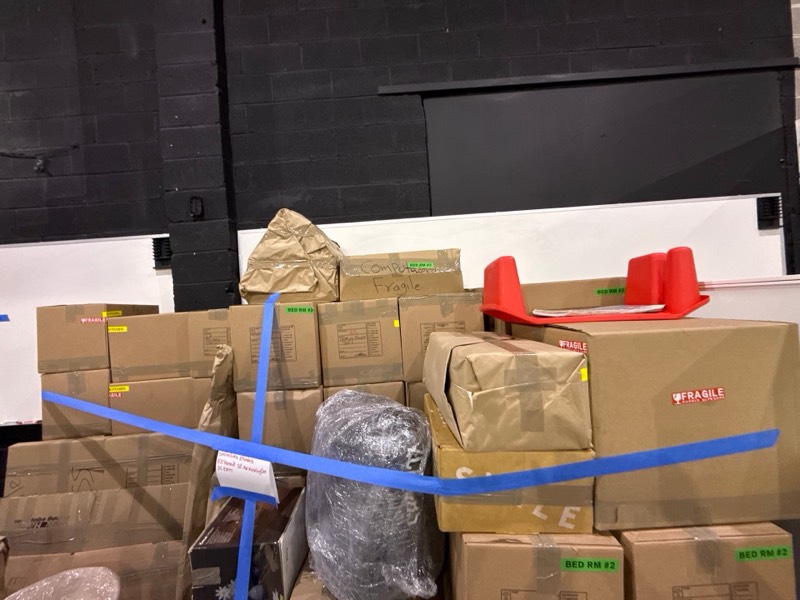
Contents pack-out & water damage mitigation — documented Washington, DC project
A documented Washington, DC loss where crews packed out and protected contents while mitigating water damage and drying the structure — the contents-and-continuity approach we bring to National Harbor condos and commercial space.
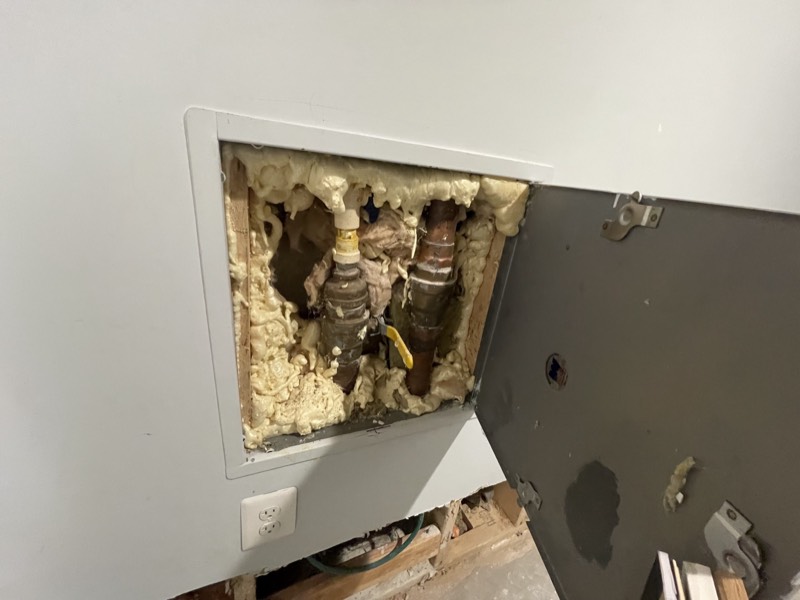
Water damage demolition & structural drying — documented Washington, DC project
A documented Washington, DC project taken from selective demolition through monitored structural drying, with the wet footprint mapped and verified to a dry standard — the multi-area method we apply to stacked National Harbor losses.
Full restoration services in National Harbor
One operation covers every category — from emergency mitigation to full reconstruction.
Water Damage Restoration
Extraction, structural drying, and moisture verification for pipe breaks, appliance leaks, and English-basement flooding across the District.
Sewage & Biohazard Cleanup
Category 3 black-water decontamination with full PPE, contaminated-waste removal, antimicrobial treatment, and verified drying after sewer backups and overflows.
Mold Remediation
IICRC S520 containment, HEPA filtration, safe source-based removal, and independent post-remediation clearance verification.
Fire & Smoke Damage Restoration
Soot and smoke-residue removal, source-based odor neutralization, contents pack-out, and preservation-sensitive reconstruction after a fire — performed to ANSI/IICRC S700, the fire and smoke damage restoration standard.
Storm Damage Restoration
Emergency tarping, water extraction, and reconstruction after wind, heavy rain, and the flash flooding DC's summer storms produce.
Reconstruction & Repairs
Drywall, plaster, flooring, cabinetry, trim, and paint — the same in-house crew that dried the loss rebuilds it, with no handoff and preservation-sensitive finish matching for District homes.
What National Harbor homeowners look for
National Harbor is a place where a single water loss rarely involves a single decision-maker — a condo owner, an association, a property manager, a hotel operator, and more than one insurer may all have a stake in the same event. That makes the qualities worth vetting in a restoration company specific: fast response that keeps a stacked loss from spreading, the capacity to dry multiple units or floors at once, and documentation clean enough to separate cleanly across every party involved.
We do not print review counts or star ratings on this page. Our verified customer feedback lives on a separate reputation hub instead: visit RestorationDoctorsReviews.com to read the reviews and see the genuine Google aggregate for yourself, then come back here to arrange service for your National Harbor property. Keeping the ratings on a source-linked hub rather than typing numbers onto a marketing page is a deliberate honesty choice — the figures there are the real Google totals, not something we invented.
Frequently asked
Active water, mold, fire, or sewage event?
Connect directly with the Restoration Doctor team for your region. Crews are on standby 24/7 with documented response protocols.