
Water Damage Restoration in Georgetown, Washington DC
Water damage restoration in Georgetown DC is a preservation problem before it is a drying problem. This is the oldest quarter of the District — a federal historic district of Federal-era and Victorian brick rowhouses where the plaster, the heart-pine floors, and the party walls are original and irreplaceable. When a supply line lets go in a home off N Street or a basement takes on Potomac backwater near the waterfront, the work is not simply pulling wet material out; it is drying aggressively enough to stop the loss while protecting finishes that a homeowner cannot buy new. Restoration Doctor answers Georgetown around the clock, and we scope every loss knowing the Old Georgetown Board sets the rules for what can be touched on the exterior.
Georgetown's housing is unusually tight and unusually old. Rowhouses share masonry party walls, sit inches from their neighbors, and stack narrow living space over shallow brick-and-dirt cellars and English basements. That geometry changes how water moves: a second-floor bathroom failure runs down through a hundred and fifty years of framing, and a cellar seep can migrate laterally into the attached house next door. We map the real footprint with meters and thermal imaging rather than guessing from the stain, because in a Georgetown rowhouse the visible damage is rarely the whole story.
From the flat blocks near the C&O Canal to the hillside streets climbing toward R Street and Book Hill, the sequence we follow never changes: stop the source, extract before clean water wicks into old plaster and subfloor, dry to a verified moisture standard, and document every reading for your insurance carrier. Below is how water actually behaves in Georgetown, street by street.
How water damage behaves in Georgetown
The Potomac, the C&O Canal, and waterfront backwater
The flat blocks below M Street toward the Georgetown Waterfront and the C&O Canal sit at the bottom of the neighborhood and closest to the Potomac. During major river rises and intense cloudbursts, that low ground is where surface water and combined-sewer surcharge collect, pushing into ground-floor commercial space, garden apartments, and below-grade storage. Water that has traveled through the canal channel, the street, or the sewer is not clean Category 1 water, and we treat these events as the Category 2 or Category 3 losses they are — extraction, removal of unsalvageable porous materials, and antimicrobial treatment rather than a quick dry-down.
These riverfront events often arrive with the same storms that damage roofs and windows uphill, so our storm-damage work overlaps here: we address the building envelope and the wet interior as one loss, sealing the point of entry before we set drying equipment so we are not chasing water that keeps coming in.
Party walls and vertical travel in attached rowhouses
Because Georgetown rowhouses share masonry party walls and stack living space over narrow footprints, water rarely stays in the room where it started. A failed toilet supply or a burst line on an upper floor finds the joist bays and runs down through two or three levels, and moisture can migrate sideways into the shared wall and, occasionally, into the attached home next door. What looks like a single ceiling stain is frequently a multi-level, multi-material path.
We use thermal imaging and penetrating moisture meters to trace that path through plaster, brick, and framing, then dry cavities in place with low-grain refrigerant and desiccant dehumidification wherever the structure allows. When a party wall is involved, we coordinate with the neighboring owner so both sides of the masonry dry — a step that generic mop-and-fan crews skip and that homeowners in attached houses cannot afford to.
Damp cellars, English basements, and hidden mold
The shallow brick cellars and English-basement apartments under Georgetown rowhouses are cool, poorly ventilated, and often finished out with drywall and flooring laid over historic masonry. That combination is the neighborhood's most reliable mold incubator: a small foundation seep or a slow plumbing weep sits against porous material until spores take hold. When we find existing growth we remediate it under IICRC S520 with containment and controlled removal; when we are drying a fresh loss we push to a verified dry standard specifically so mold never gets started.
English basements carry an added wrinkle — many are rented, so a leak can go unreported through a tenant turnover and surface only when it has already reached the framing. We document the source, the category, and the moisture readings precisely so the loss is classified correctly for the carrier from the first visit, whether the unit is owner-occupied or leased.
Georgetown housing stock and how it fails
The core of Georgetown is a federal historic district of Federal and Victorian rowhouses, most built between the 1790s and the 1890s, sharing masonry party walls and fronting directly on brick sidewalks. Inside, they carry lath-and-plaster walls, heart-pine and quarter-sawn oak flooring, and shallow cellars or English basements dug into Potomac clay. These are exactly the materials that punish a slow response: plaster crumbles once saturated, old-growth flooring cups and crowns, and a damp brick cellar grows mold in days. Because the Old Georgetown Board and the CFA govern exterior changes, some repairs must be like-for-like, which makes drying-in-place and salvage far more valuable here than fast demolition.
The plumbing tells the same story of age. Many Georgetown homes still run runs of galvanized steel, cast-iron drain stacks, and lead-jointed waste lines threaded through the walls of an occupied historic house, and a subset were re-piped piecemeal across a century of renovations. A pinhole in a supply line or a cracked cast-iron stack can weep behind original plaster for weeks before it surfaces at a ceiling. When we open a wall in a Georgetown rowhouse we do it surgically — enough to reach and repair the failed line, never more than the loss requires — because every square foot of original fabric we save is fabric the homeowner keeps.
Areas of Georgetown we serve
Real Georgetown blocks and buildings — and the water losses we most often see in each.
Federal-era rowhouses off N and O Streets where upstairs supply-line failures travel down through original plaster and heart-pine.
Victorian brick rows near Wisconsin Avenue with shallow cellars prone to seepage during heavy Potomac-basin rain.
Low-lying blocks near the river and C&O Canal where high water and combined-sewer surcharge reach ground-floor and below-grade space.
Hillside homes above Wisconsin where runoff sheets downslope and pools against uphill foundation walls.
Later attached and cluster homes on the western edge where finished lower levels take appliance-line and sump-related losses.
Older rowhouses and English-basement rentals where hidden-cavity leaks sit undetected between tenant turnovers.
Documented project files
Real CompanyCam-documented Restoration Doctor work in the Washington, DC metro — every project photographed with date and time stamps.
Hardwood floor water damage drying — Washington, DC
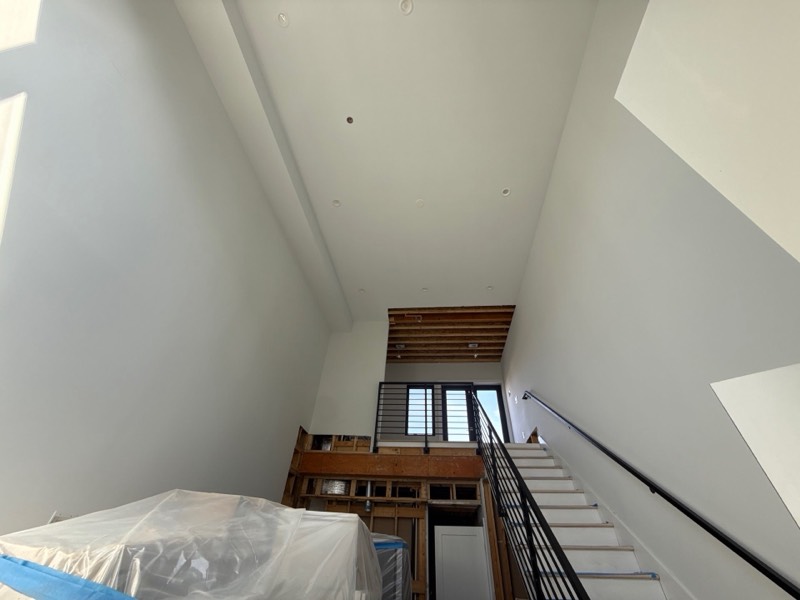
Documented Washington, DC project drying saturated hardwood flooring in place with mats and low-grain dehumidification to limit cupping before any board was pulled.
Ceiling leak demolition & structural drying — Washington, DC
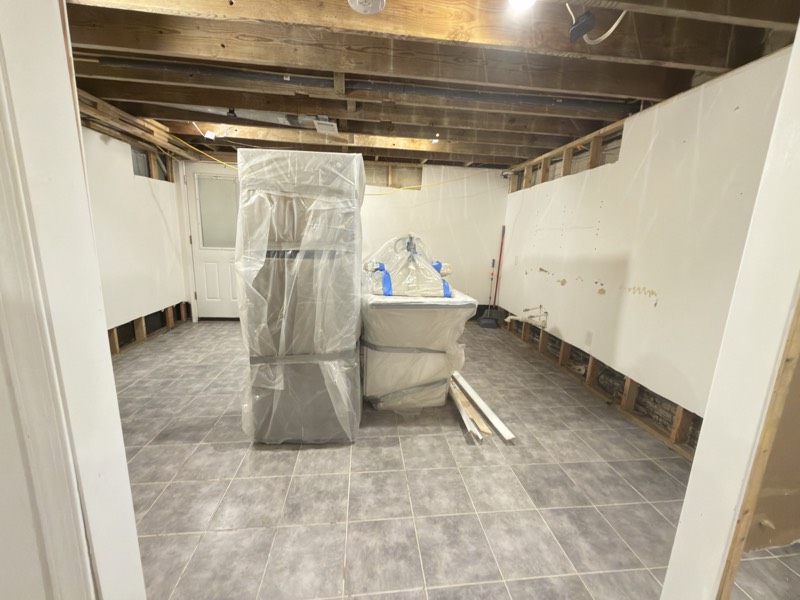
A documented Washington, DC ceiling-leak loss taken from controlled demolition of unsalvageable material through monitored structural drying to a verified standard.
Full restoration services in Georgetown
One operation covers every category — from emergency mitigation to full reconstruction.
Water Damage Restoration
Extraction, structural drying, and moisture verification for pipe breaks, appliance leaks, and English-basement flooding across the District.
Sewage & Biohazard Cleanup
Category 3 black-water decontamination with full PPE, contaminated-waste removal, antimicrobial treatment, and verified drying after sewer backups and overflows.
Mold Remediation
IICRC S520 containment, HEPA filtration, safe source-based removal, and independent post-remediation clearance verification.
Fire & Smoke Damage Restoration
Soot and smoke-residue removal, source-based odor neutralization, contents pack-out, and preservation-sensitive reconstruction after a fire — performed to ANSI/IICRC S700, the fire and smoke damage restoration standard.
Storm Damage Restoration
Emergency tarping, water extraction, and reconstruction after wind, heavy rain, and the flash flooding DC's summer storms produce.
Reconstruction & Repairs
Drywall, plaster, flooring, cabinetry, trim, and paint — the same in-house crew that dried the loss rebuilds it, with no handoff and preservation-sensitive finish matching for District homes.
What Georgetown homeowners look for
Georgetown homeowners are careful buyers of trades — restoring an original rowhouse means vetting the people who touch it, and reputation here moves through neighbors, contractors, and the preservation community rather than through billboards. The experiences worth documenting are the ones that matter in a historic house: did the crew show up fast, and did they protect the plaster and floors instead of gutting them.
We do not print star ratings or review counts on this page. Our verified customer feedback lives on a separate reputation hub — visit RestorationDoctorsReviews.com to read Washington, DC reviews and the genuine Google aggregate for yourself, then come back here to book service for your Georgetown home. Keeping the numbers on a source-linked hub instead of typing them onto a marketing page is a deliberate honesty choice.
Frequently asked
Active water, mold, fire, or sewage event?
Connect directly with the Restoration Doctor team for your region. Crews are on standby 24/7 with documented response protocols.