
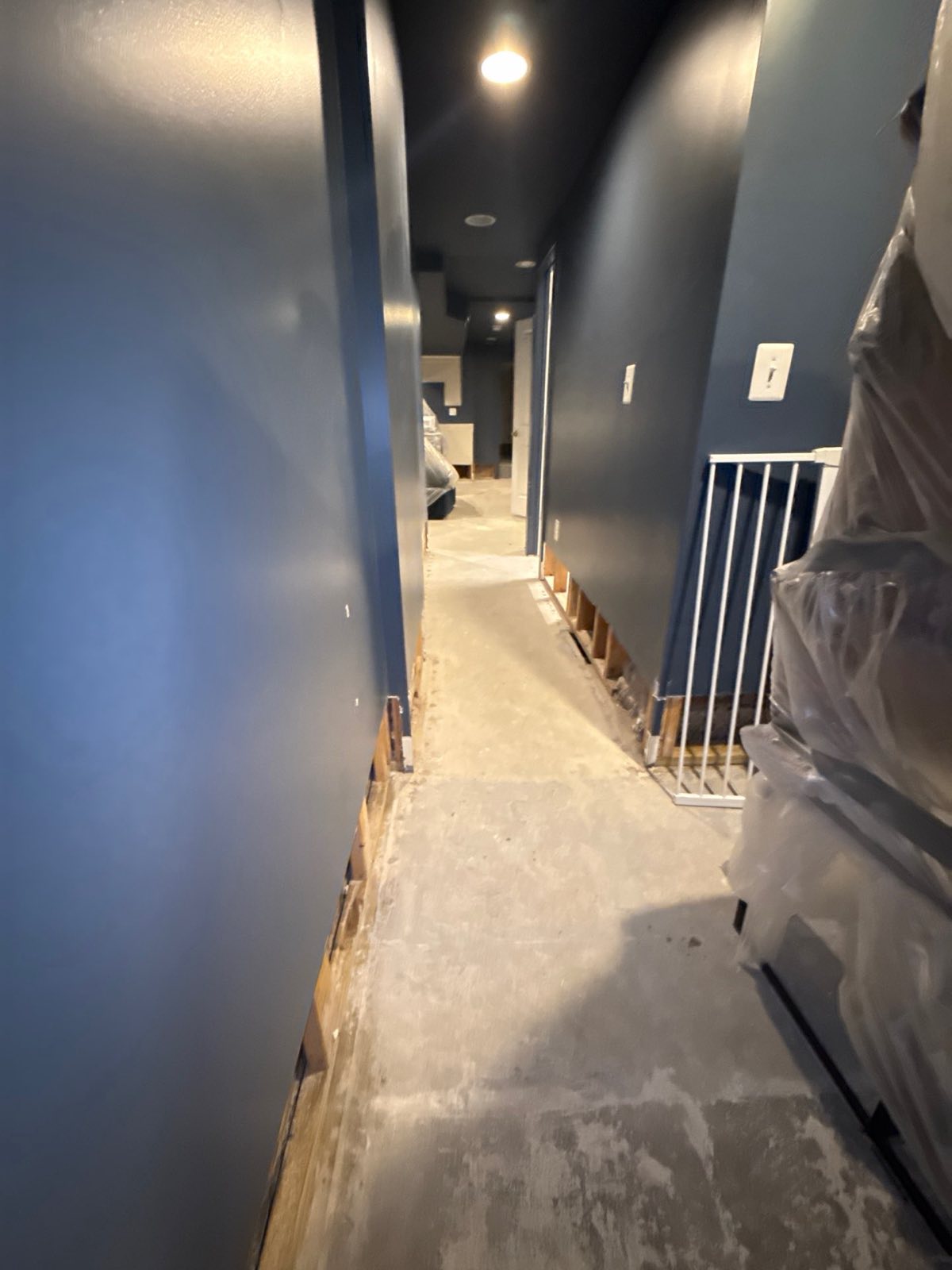
Reconstruction & Repairs in Washington, DC
Drywall, plaster, flooring, cabinetry, trim, and paint — the rebuild half of one in-house operation, with DC permitting awareness and finishes matched to rowhouse and historic-home character. The crew that dried your home is the crew that puts it back together.
Mitigation gets your home dry; reconstruction gives it back
Drying a home is only half of a restoration. When a burst pipe or a fire is brought under control, what is left behind is a house that has been deliberately opened up: drywall flood-cut to expose wall cavities, baseboards and trim pulled, flooring removed, cabinetry taken out, sometimes whole rooms stripped back to the studs so they could dry. Mitigation stops the damage and gets the structure to a verified-dry, decontaminated state. Reconstruction is the phase that closes all of that back up and returns your home to the way it was before the loss — the phase where your house stops being a work site and becomes your home again.
For most homeowners in the District, reconstruction is the part of the process they actually live with. It is the new drywall or plaster patched and finished, the floors replaced and refinished, the cabinets reset, the trim reinstalled, the walls repainted. Done well, the goal is invisibility: when the project is finished, there should be no trace that the loss ever happened. Getting there takes real construction trades — carpenters, drywall and plaster finishers, flooring installers, painters — working to a finish standard, not just patching holes.
One in-house operation, no handoff
The single biggest problem in restoration is the handoff. At most companies, a mitigation crew dries your home and then leaves, and you are on your own to find a general contractor to rebuild it — or you are passed to a separate reconstruction outfit that was not there for the drying and has to relearn your project from scratch. That gap is where restorations stall: two companies pointing at each other, a claim split across two scopes that do not reconcile, and a homeowner living in a half-finished house for months waiting for someone to take ownership.
Restoration Doctor of Washington DC eliminates that gap because reconstruction is in-house. The same operation that extracted the water, dried the structure, and documented the loss also carries the carpentry, licensed plumbing, licensed electrical, flooring, and finish trades to rebuild it. There is no re-bidding, no relearning, no seam in the schedule or the claim. The crew already knows what was removed and why, because they are the ones who removed it — so the rebuild picks up exactly where the drying left off, under one accountable point of contact from the emergency call to the final walk-through.
Rebuilding a DC home with its character intact
Reconstruction in the District is rarely just drywall and paint. Rowhouses in Capitol Hill, Shaw, and Columbia Heights, and the federals of Georgetown, carry finishes that a generic rebuild would flatten — original plaster walls, deep baseboards and picture rails, heart-pine and oak flooring, plaster cornices, and built-ins that give those homes their value. When a loss takes those out, matching them is a craft decision, not a catalog order. We rebuild to match: plaster repaired as plaster where it belongs, trim profiles milled or sourced to fit, and flooring blended so a repaired room reads as one continuous space rather than a patch.
Homes in the District's historic districts also come with a regulatory dimension, and we work with that awareness rather than around it. Exterior and character-defining work in a historic district can trigger design-review and permitting requirements, and District construction generally carries its own permitting and code obligations. We approach reconstruction knowing those considerations exist, so the rebuild is planned with permitting in mind and the finished work respects both the code and the home's period character.
What we rebuild
Reconstruction covers the full range of interior repair a water or fire loss leaves behind. Wall surfaces come first: we hang, tape, finish, and texture new drywall to match surrounding surfaces, and we repair plaster where an older home calls for it, so the repair disappears into the wall. Flooring is next — we replace and refinish hardwood, install tile and luxury vinyl, and lay carpet, matching the existing material wherever possible so a repaired room reads as one continuous floor rather than a patch.
Cabinetry and millwork are where craftsmanship shows. We remove and reset or replace kitchen and bath cabinetry, reinstall baseboards, casings, crown molding, and other trim, and rebuild the built-ins a loss often takes out. Then paint ties it together: we prime and paint repaired surfaces and, where needed, whole rooms so color and sheen match and there is no visible line between old and new. Along the way, any plumbing or electrical disturbed by the loss or the demolition is repaired by our licensed trades, so the walls close up over work that is done to code.
A rebuild that reconciles with your claim
Reconstruction is also where a restoration claim is finished on paper. The mitigation scope documents what was removed; the reconstruction scope documents what it takes to put it back. When those two halves are written by the same company, they reconcile cleanly — the drywall flood-cut in the mitigation scope is the drywall rebuilt in the reconstruction scope, line for line. When they are split between two companies, the seams between the scopes are exactly where a carrier finds reasons to push back.
We estimate reconstruction in Xactimate with the same line-item discipline as the mitigation, photograph the rebuild in CompanyCam, and fold it into one coherent, carrier-ready file. We document the full cost of making your home whole and hand you a complete file covering mitigation, contents, and reconstruction together; we are not public adjusters and do not negotiate the claim on your behalf, and the choice of contractor is always yours. You hold the contract and the invoice, and that documentation is what your carrier reads when it decides what to reimburse you. One operation, one claim, one finished home.
How the reconstruction phase works
Once the structure is verified dry and decontaminated, reconstruction follows a clear sequence — and because it happens in-house, it picks up seamlessly from the mitigation the same crew performed.
- Scope & plan
We translate what mitigation removed into a rebuild scope, estimated in Xactimate line for line against the mitigation file so the two reconcile. For District homes this is also where we account for finish matching — plaster versus drywall, trim profiles, flooring species — and for any permitting or historic-district design-review considerations the work may trigger.
- Rough-in & structure
Any plumbing or electrical disturbed by the loss or the demolition is repaired by our licensed trades, and framing or subfloor that had to come out is rebuilt. This is the stage that gets inspected and closed up correctly, so everything that follows sits on sound, code-compliant structure.
- Wall surfaces
We hang, tape, finish, and texture new drywall to match the surrounding surfaces, and repair plaster as plaster where an older home calls for it. The aim is a wall that reads as continuous — no visible seam between what was removed and what was rebuilt.
- Flooring, cabinetry & trim
We replace and refinish flooring — hardwood, tile, luxury vinyl, or carpet — matching existing material wherever possible, then reset or replace cabinetry and reinstall baseboards, casing, crown, and built-ins. This is where a rowhouse's original character is either preserved or lost, so the millwork is matched, not defaulted.
- Paint & final walk-through
We prime and paint repaired surfaces and whole rooms where needed so color and sheen match, then walk the finished home with you against the scope. The measure of the job is that no trace of the loss remains — and because we owned the whole project, there is one point of contact standing behind the result.
Frequently asked
Active water, mold, fire, or sewage event?
Connect directly with the Restoration Doctor team for your region. Crews are on standby 24/7 with documented response protocols.