
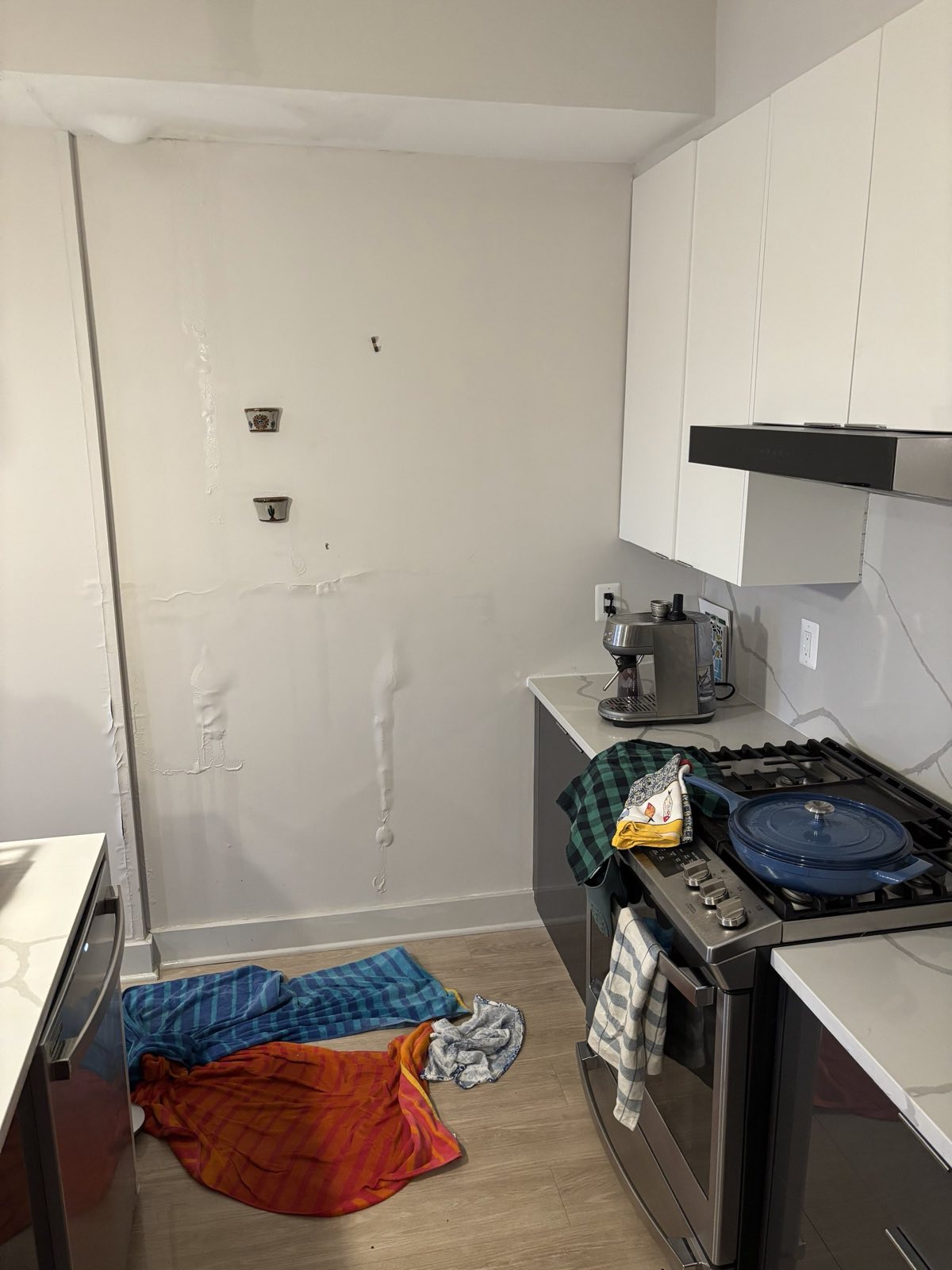
Water Damage Restoration in Clinton, MD
Water damage restoration in Clinton, MD deals mostly with a particular kind of house: the larger-lot suburban colonial and split-foyer that filled this part of Prince George's County from the 1960s through the 1980s, much of it built as the community grew alongside Joint Base Andrews. These are roomier homes on bigger parcels than the tight post-war blocks to the north, and they come with deep, fully finished basements — the extra living space that also happens to be the lowest point where water collects. Restoration Doctor answers Clinton emergencies around the clock, because the sooner a crew reaches that basement, the less the loss spreads.
Two things drive most Clinton water losses. The first is the finished basement itself, which sits below grade and catches whatever fails above it — a water heater, a supply line, an overflowing fixture — as well as whatever pushes in from outside. The second is the weather: a Clinton summer brings hard, fast thunderstorms that can drop an inch of rain in under an hour, overwhelming sump pumps and saturating the ground until hydrostatic pressure forces water through foundation walls into those lower levels.
Whether you own a brick colonial off Woodyard Road, a split-foyer in a 1970s subdivision, or a rambler on an acre closer to the base, the response is the same every time: stop the source, extract the water fast, dry the structure to a verified moisture standard, and document every reading so your insurance claim rests on evidence. What follows is how water actually gets into Clinton homes and what we do about each route.
How water damage behaves in Clinton
Summer thunderstorms overwhelm the sump and the soil.
Clinton's classic warm-weather loss is a storm loss. A fast-moving summer thunderstorm dumps more rain than the ground can absorb, runoff pools around the foundation, and hydrostatic pressure builds against below-grade walls. If the sump pump is undersized, worn out, or running on a dead backup battery, water seeps in through cracks, the cove joint, and around the slab into a finished basement — sometimes within minutes of the storm's peak.
Groundwater that has moved through soil is Category 2 water, not clean, so we treat storm seepage accordingly: extraction, selective removal of unsalvageable porous materials, antimicrobial treatment, and drying to a verified standard. We map the wet footprint with moisture meters and thermal imaging, dry the finished lower level in place wherever the readings allow, and open only what genuinely has to come out — because undried moisture behind a Clinton basement wall is the leading cause of the mold we later find in these homes.
The finished basement catches everything from above.
Setting the weather aside, most Clinton losses start indoors and end in the basement. A water heater lets go, a washing-machine hose bursts, or a supply line fails on the main floor, and gravity carries the water down through the joist bays and finished levels to the lowest point in the house. In a deep, fully finished basement, that water spreads behind walls and under flooring, often traveling well past the visible stain before anyone notices.
We trace the true path with thermal imaging and moisture meters rather than the visible damage, then dry cavities and assemblies in place where the readings let us. Our licensed in-house plumbing team repairs the line that actually failed, so the fix and the drying happen together and the same failure does not recur. Drying and preserving a finished lower level, instead of gutting it, is exactly what keeps a manageable Clinton loss from becoming a full basement renovation.
Aging drains and laterals back up as sewage.
Many Clinton homes are now old enough that their drain lines and sewer laterals are reaching the end of their service life. Roots, grease, and age crack and clog those runs, and when a lateral backs up — or the system surcharges during one of those heavy summer storms — wastewater can push up through the lowest fixture in the house, usually a basement floor drain or laundry standpipe.
That surfacing water is Category 3 sewage, a biohazard that cannot be sanitized back into safe living space by drying alone. We handle it as such: extract the contaminated water, remove and bag porous materials that cannot be disinfected, clean and apply antimicrobial treatment to what remains, and only then set structural drying to a verified standard. Where mold has already taken hold from a slow or hidden leak, we remediate it under IICRC S520 with containment so it is contained rather than spread.
Clinton housing stock and how it fails
Clinton is a suburban community of space and consistency. Its housing came up largely between the 1960s and the 1980s, in planned subdivisions of brick and frame colonials, split-foyers, split-levels, and ramblers set on larger lots than the older, denser neighborhoods nearer Washington. The proximity to Joint Base Andrews shaped the community and kept it growing, and the result is street after street of substantial single-family homes with two-car garages, real yards, and — almost universally — deep full basements that families finished into family rooms, bedrooms, and home offices.
That consistency helps us. A Clinton split-foyer built in 1974 is put together much like its neighbors, so when we walk in we already understand where the finished basement sits relative to grade, how the plumbing is routed, and where water is most likely to have traveled. It also means these homes share the vulnerabilities of their era — first- or second-generation supply lines, original water heaters reaching the end of their lives, and foundations that predate current waterproofing standards. Knowing the type tells us how the water behaved and how hard to push to get ahead of it before it reaches the finishes that make these lower levels valuable.
Areas of Clinton we serve
Real Clinton blocks and buildings — and the water losses we most often see in each.
1970s-80s colonials on larger lots where deep finished basements collect water at the low point.
Established split-foyers and split-levels where summer storm runoff drives basement seepage.
Suburban single-family homes on bigger parcels with era-appropriate supply lines prone to interior failures.
Subdivision colonials on sump systems that struggle during fast-moving thunderstorms.
Homes on rolling terrain where hydrostatic pressure pushes groundwater into below-grade space.
Mid-era homes with aging drain lines and laterals prone to sewage backups into basement floor drains.
Documented project files
Real CompanyCam-documented Restoration Doctor work in the Washington, DC metro — every project photographed with date and time stamps.
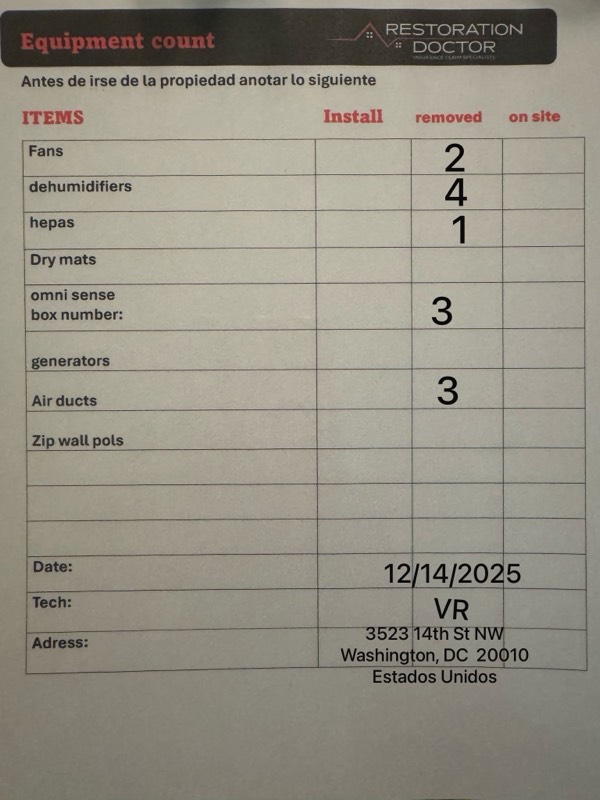
Residential water damage restoration — documented Silver Spring, MD project
A documented Silver Spring, MD residential loss carried from extraction through monitored structural drying, with dehumidifiers and air movers staged to the wet footprint and verified to a dry standard — the finished-basement approach we bring to Clinton colonials.
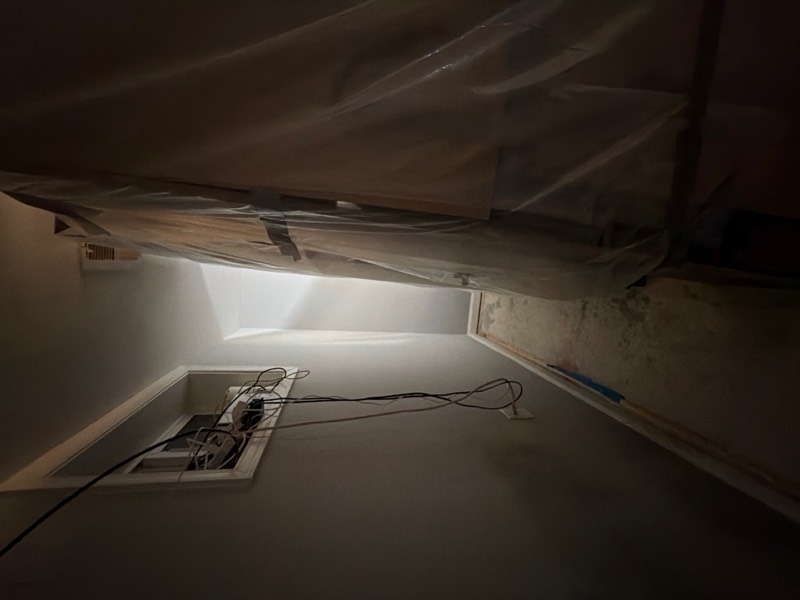
Water damage demolition & structural drying — documented Silver Spring, MD project
A documented Silver Spring, MD project taken from selective demolition through monitored drying, opening only what had to come out and verifying the structure to a dry standard — the restraint we apply to finished Clinton basements.
Full restoration services in Clinton
One operation covers every category — from emergency mitigation to full reconstruction.
Water Damage Restoration
Extraction, structural drying, and moisture verification for pipe breaks, appliance leaks, and English-basement flooding across the District.
Sewage & Biohazard Cleanup
Category 3 black-water decontamination with full PPE, contaminated-waste removal, antimicrobial treatment, and verified drying after sewer backups and overflows.
Mold Remediation
IICRC S520 containment, HEPA filtration, safe source-based removal, and independent post-remediation clearance verification.
Fire & Smoke Damage Restoration
Soot and smoke-residue removal, source-based odor neutralization, contents pack-out, and preservation-sensitive reconstruction after a fire — performed to ANSI/IICRC S700, the fire and smoke damage restoration standard.
Storm Damage Restoration
Emergency tarping, water extraction, and reconstruction after wind, heavy rain, and the flash flooding DC's summer storms produce.
Reconstruction & Repairs
Drywall, plaster, flooring, cabinetry, trim, and paint — the same in-house crew that dried the loss rebuilds it, with no handoff and preservation-sensitive finish matching for District homes.
What Clinton homeowners look for
Clinton homeowners have real square footage to protect — big finished basements, larger lots, and the family living space those lower levels provide — and that shapes what is worth vetting in a restoration company. Response time matters on a suburban lot, but so does the judgment to dry and preserve a finished basement rather than needlessly demolish it, and the discipline to document a storm or sewage loss honestly enough that the claim holds together.
You will not see review counts or star ratings printed on this page. Our verified customer feedback lives on a separate reputation hub instead: visit RestorationDoctorsReviews.com to read the reviews and see the genuine Google aggregate for yourself, then come back here to schedule service for your Clinton home. We keep the numbers on a source-linked hub rather than typing them onto a marketing page on purpose — the figures there are the real Google totals, not something we invented.
Frequently asked
Active water, mold, fire, or sewage event?
Connect directly with the Restoration Doctor team for your region. Crews are on standby 24/7 with documented response protocols.