
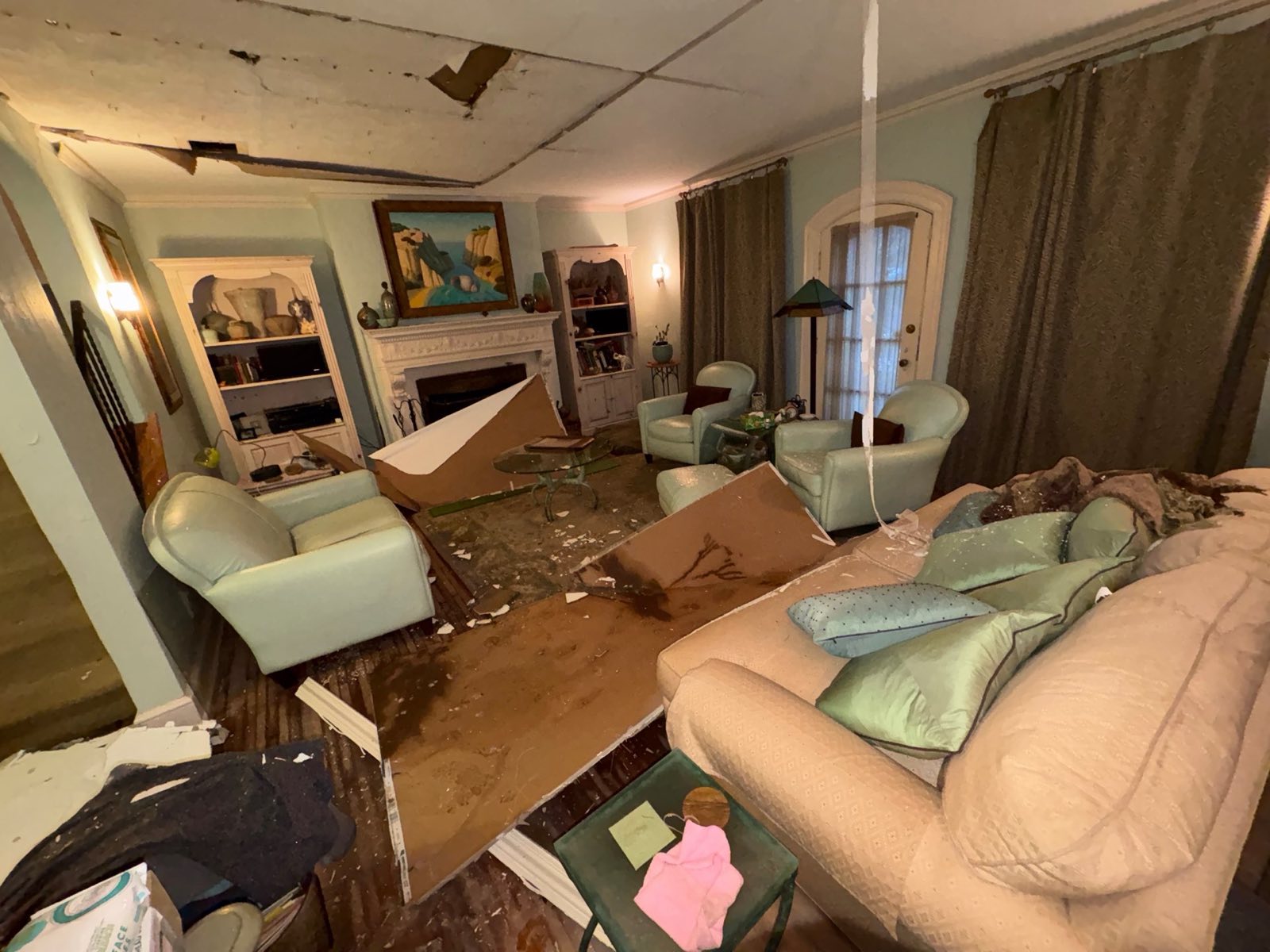
Fire & Smoke Damage Restoration in Washington, DC
Soot removal, smoke-odor neutralization, contents pack-out, and reconstruction after a fire — including the suppression water the fire department leaves behind, handled with care for the plaster, millwork, and party walls of older DC homes.
A fire loss is two emergencies stacked together
Fire damage restoration in Washington, DC almost always means dealing with two kinds of destruction at once. There is the fire itself — charred framing, burned finishes, structural members that have lost integrity — and then there is everything the fire leaves behind: acidic soot on every surface, smoke odor driven deep into porous materials, and hundreds or thousands of gallons of water and chemical residue from the fire department's suppression effort. A plan that treats only the burned rooms and ignores the smoke and water misses most of the damage.
The chemistry is unforgiving and it does not wait. Soot is acidic, and within hours it begins etching glass, discoloring metal, corroding electronics, and staining grout and stone. Left in place for days, cosmetic soot that could have been cleaned becomes permanent damage that has to be replaced. That is why the clock on a fire loss starts the moment the flames are out — the sooner residues are stabilized and removed, the more of your home and belongings survive. In the District's attached rowhouses, smoke also travels: it migrates through shared wall cavities and along floor framing into neighboring units, so even a home the fire never directly reached can need smoke and odor work.
Stabilize, clean, deodorize — in that order
Our first move on a fire scene is stabilization. We board up openings, tarp compromised roofs, and address the standing water and saturated materials from suppression so a water emergency does not grow inside a fire emergency. Wet, sooty materials are a mold risk within the same 48-to-72-hour window as any other water loss, so drying begins immediately alongside soot control.
Cleaning is methodical — performed to ANSI/IICRC S700, the professional fire and smoke damage restoration standard — because smoke behaves differently on different surfaces. Dry, powdery soot from a fast-burning fire is removed with dry-cleaning sponges and HEPA vacuums; greasy, protein-based residues from a kitchen fire demand solvent cleaning and degreasers. We match the method to the residue on ceilings, walls, cabinetry, and hard contents, and we HEPA-filter the air throughout so fine particulate is not simply pushed around the home. In older DC houses, that care extends to original plaster and millwork, which are cleaned rather than reflexively replaced wherever the residue allows.
Odor is the hardest part and the one homeowners judge most. Smoke molecules embed in drywall, insulation, framing, soft goods, and the HVAC system, and masking them with fragrance only hides the problem until humidity brings it back. We neutralize odor at the source — thermal fogging, hydroxyl and ozone treatment, sealing of odor-bearing surfaces where appropriate, and a full cleaning of the duct system so the HVAC is not recirculating smell through the rebuilt home.
Contents pack-out and inventory
Not everything can — or should — be cleaned in a home that is still an active work site. When a loss is significant, we pack out affected belongings under a documented inventory: furniture, clothing, electronics, documents, and keepsakes are cataloged, photographed, moved to controlled cleaning and storage, and restored off-site. Household textiles — clothing, bedding, upholstery — are cleaned to ANSI/IICRC S740, the standard for professional restoration of fire and smoke damaged household textiles. Working away from the debris and moisture of the structure gives fragile and high-value items their best chance.
That inventory is also a claim asset. A photographed, itemized contents log gives the record of what was affected and what was salvageable, supporting both the structural and the personal-property side of your policy. When the home is ready, cleaned and restored contents come back, and we handle the reconstruction that returns the house to pre-loss condition.
Preservation-sensitive rebuilding under one roof
After the soot, smoke, and water are handled, a fire loss still needs to be rebuilt — often substantially. Because Restoration Doctor of Washington DC carries in-house carpentry, licensed plumbing and electrical, and full reconstruction alongside mitigation, we take a fire-damaged home from emergency board-up all the way to a finished walk-through without handing you off to a separate general contractor.
In the District, that rebuild is frequently preservation-sensitive. Homes in Georgetown, Capitol Hill, and the city's other historic districts carry design-review and permitting considerations, and their plaster walls, original trim, and period detail deserve to be matched rather than swapped for the nearest modern equivalent. We approach those rebuilds with that character in mind, and every phase is documented in CompanyCam and estimated in Xactimate with line-item notes so the fire, smoke, water, and contents portions of your claim reconcile into one coherent, carrier-ready file.
The first 24 hours: what to do, and what to leave alone
What happens in the first day after a fire has an outsized effect on how much is recoverable, and much of it comes down to restraint. Do not re-enter the structure until the fire department and, where required, an inspector have cleared it — heat-weakened framing, compromised stairs, and lingering hot spots are real hazards even after the visible flames are out. Once you are cleared to retrieve essentials, resist the urge to start wiping down sooty surfaces or running the HVAC. Both instincts make the damage worse: wiping grinds acidic soot into finishes, and running the air handler pulls smoke and particulate through the whole duct system and re-deposits it in rooms the fire never reached.
A few early steps genuinely help. Photograph everything before anything is moved or cleaned. Notify your insurer promptly to open the claim and ask what documentation they need. Keep receipts for any emergency lodging or essentials — most policies include additional-living-expense coverage when a fire makes a home uninhabitable, which matters in a city where alternate housing is not cheap. And get a qualified restoration crew on site quickly: the sooner residues are stabilized, the structure secured, and suppression water dried, the more of your home and belongings survive the days that follow.
It also helps to understand how the insurance side unfolds so the days after a fire feel less chaotic. Once the claim is open, your carrier assigns an adjuster who will want to see the damage and an itemized scope before authorizing the full repair, and larger fire losses sometimes involve a cause-and-origin investigation that must conclude before certain work proceeds. Meanwhile, emergency mitigation — board-up, tarping, water removal, and stabilization — is generally handled right away because it prevents the loss from growing, and it is documented separately for exactly that reason. Knowing this rhythm means you are not left wondering why the rebuild has not started on day two: the sequence of stabilize, document, and rebuild is normal, and we keep you informed at each step rather than leaving you to chase answers.
Frequently asked
Active water, mold, fire, or sewage event?
Connect directly with the Restoration Doctor team for your region. Crews are on standby 24/7 with documented response protocols.