
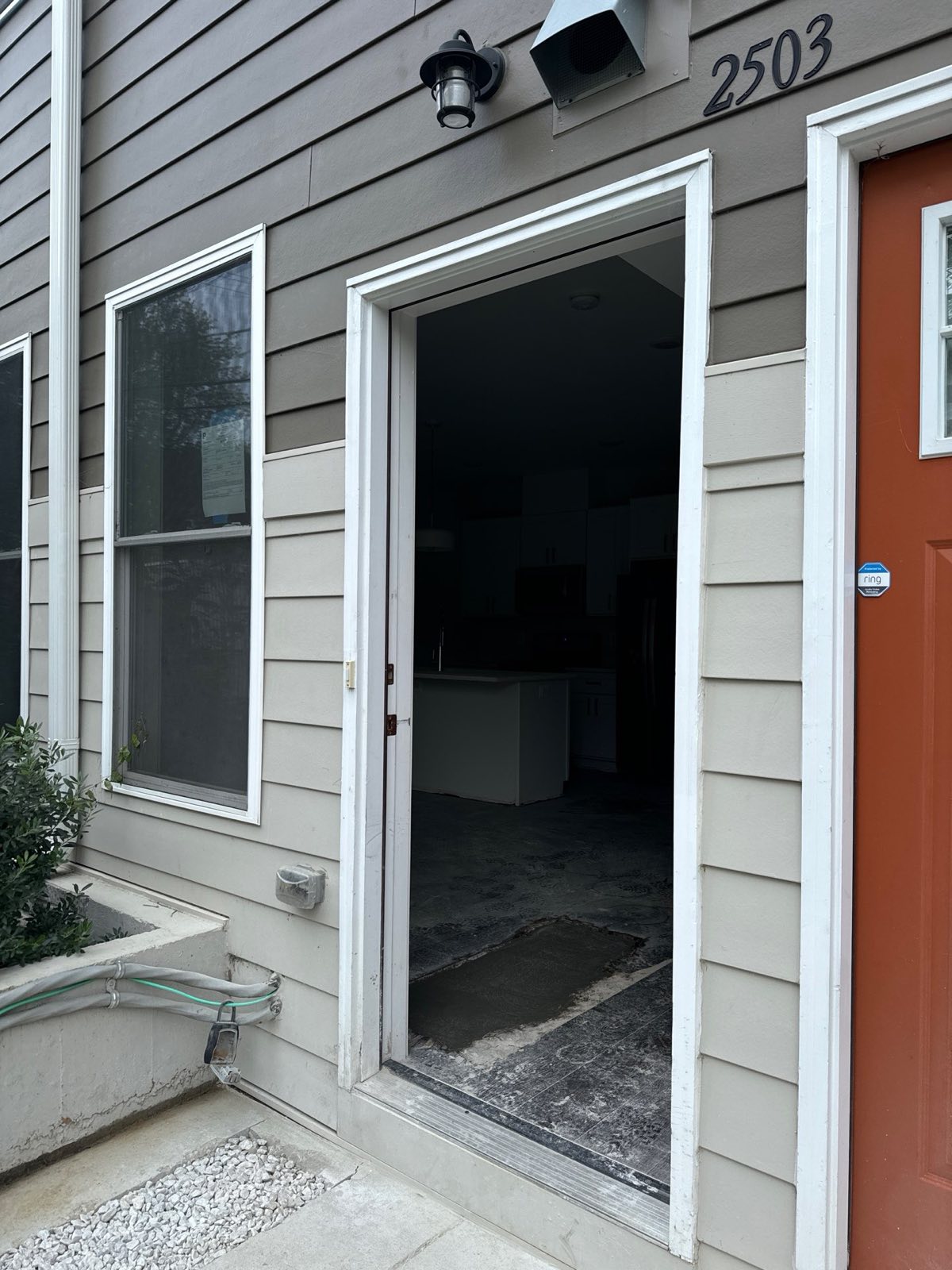
Dupont Circle Water Damage Restoration, Washington DC
Water damage restoration in Dupont Circle DC is almost always a shared-building problem. The neighborhood's signature Victorian rowhouses were built as grand single-family homes and then carved, over the last century, into condominiums, cooperatives, and apartments. So when a supply line fails on an upper floor off P Street or a stack backs up near the Circle, the water crosses unit lines: it leaves one owner's bathroom and lands in the ceiling of the unit below, and the loss instantly involves a condo association, multiple insurance policies, and finishes that belong to different people. Restoration Doctor answers Dupont around the clock and is built to work these multi-unit losses cleanly.
The building fabric here is old and vertical. These 1880s–1900s brick and brownstone rowhouses have tall ceilings, original plaster and wood floors, and English-basement units dug in below grade. In a subdivided building, water finds the fastest path down through joist bays and party walls, so the visible stain in a lower unit is frequently far from the actual source above it. We locate the origin with thermal imaging and moisture meters rather than opening the wrong ceiling, which matters enormously when the wet material spans two owners.
From the blocks along Connecticut and Massachusetts Avenues to the quieter streets toward Kalorama and Logan, the sequence holds: shut off the source, extract before old plaster and subfloor soak it up, dry to a verified moisture standard, and document every reading for each affected policy. Here is how water actually behaves in Dupont's converted rowhouses.
How water damage behaves in Dupont Circle
Multi-unit losses across condo and co-op lines
The defining Dupont loss starts in one unit and ends in another. A failed toilet supply, a dishwasher line, or an overflowing tub on an upper floor drains through the ceiling assembly into the unit below, wetting drywall, insulation, and flooring that belong to a different owner and, often, common elements the association is responsible for. Sorting out what is unit property and what is common area is not a side issue — it determines which policy pays for what.
We document the source, the migration path, and the affected materials in CompanyCam with a same-day moisture log, and we write the estimate so each stakeholder — the source unit, the damaged unit, and the association — has a clear, carrier-ready record. We document; each owner submits to their own carrier and chooses how to proceed. That clean separation keeps a two-unit loss from turning into a months-long dispute.
English basements and below-grade units
The English-basement and garden-level units under Dupont's rowhouses sit at the lowest, dampest point of the building and collect whatever runs down from above, plus their own risks from foundation seepage and combined-sewer surcharge during heavy rain. Finished out with drywall, carpet, and full kitchens and baths, they are valuable spaces that punish a slow response — porous materials against cool masonry are a fast track to mold.
We extract, then dry aggressively with low-grain refrigerant and desiccant dehumidification, monitoring to a verified standard rather than pulling equipment early. Where storm-driven groundwater or a sewer backup is involved, we treat the water as the Category 2 or Category 3 loss it is, with proper removal and antimicrobial treatment, not a clean-water dry-down.
Hidden leaks and mold behind original plaster
A large share of Dupont losses begin as slow, hidden failures — a pinhole in an aging supply line, a cracked cast-iron stack, a weeping valve — that weep behind original plaster for days or weeks before a stain appears. In a shared building, that hidden moisture can be quietly feeding a cavity in the unit next door or below. Thermal imaging and penetrating meters let us find the real wet footprint instead of guessing, so we open only what genuinely has to come out.
When we uncover existing growth we remediate under IICRC S520 with containment and controlled removal; when we are drying a fresh loss, verified in-place drying is the entire defense against mold ever starting. In a subdivided historic rowhouse, catching moisture early is also what keeps one unit's leak from becoming several units' problem.
Dupont Circle housing stock and how it fails
Dupont Circle's housing is largely subdivided Victoriana: brick and brownstone rowhouses raised in the 1880s through the early 1900s as single-family mansions and later split into condominiums, cooperatives, and rental apartments. The bones are old — lath-and-plaster walls, original wood flooring, tall stacked floors — and much of the neighborhood sits inside a historic district that constrains exterior and structural changes. That combination rewards fast drying and salvage over demolition, because replacing original plaster and flooring in a protected, shared building is slow, costly, and often coordinated across an association.
The critical feature for water losses is that ownership is layered inside a single old structure. An English-basement condo, a garden-level apartment, and two or three upper units may all sit within one former rowhouse, each with its own finishes and its own policy, all connected by shared stacks, party walls, and joist bays. A century of piecemeal re-piping — galvanized supply, cast-iron drains, and newer copper spliced in — runs through those shared cavities. When one line lets go, the damage is rarely confined to the unit where it started, so our scope has to account for whose materials are wet and which association or master policy the common elements fall under.
Areas of Dupont Circle we serve
Real Dupont Circle blocks and buildings — and the water losses we most often see in each.
Grand rowhouses converted to condos and co-ops where upper-unit failures drain into the units below.
Subdivided Victorian rows with English-basement units that take the lowest-point losses in the building.
Brownstone and brick rows near Kalorama where party-wall moisture crosses between attached buildings.
Mixed rowhouse condos and small apartment buildings where stack and supply-line failures affect multiple units at once.
Quiet blocks of converted rowhouses where slow hidden leaks sit behind original plaster before surfacing.
Larger converted homes and co-ops with finished lower levels vulnerable to appliance-line and sump losses.
Documented project files
Real CompanyCam-documented Restoration Doctor work in the Washington, DC metro — every project photographed with date and time stamps.
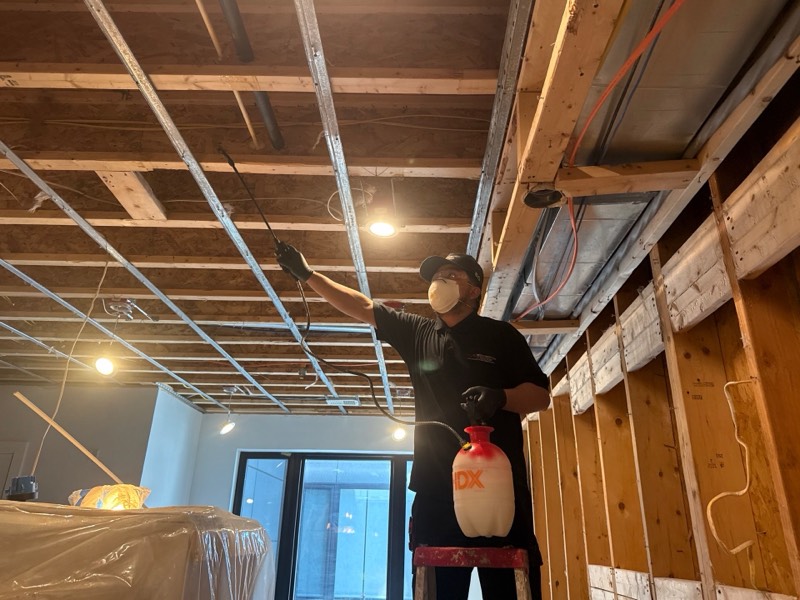
Moisture mapping & structural drying — Washington, DC
Documented Washington, DC project where thermal imaging and meters mapped the true wet footprint before drying equipment was staged to that boundary and nothing beyond it.
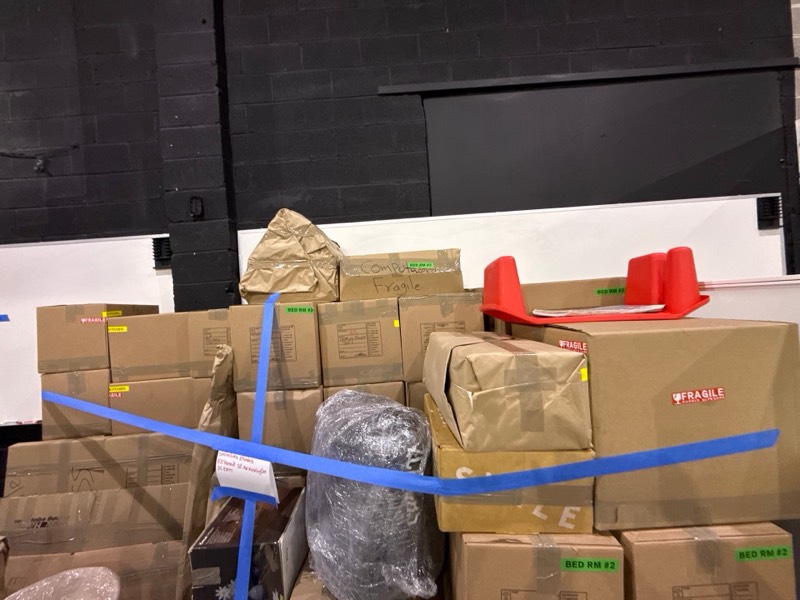
Contents pack-out & water damage mitigation — Washington, DC
A documented Washington, DC loss where affected contents were packed out and protected while the structure was mitigated and dried to verified standards.
Full restoration services in Dupont Circle
One operation covers every category — from emergency mitigation to full reconstruction.
Water Damage Restoration
Extraction, structural drying, and moisture verification for pipe breaks, appliance leaks, and English-basement flooding across the District.
Sewage & Biohazard Cleanup
Category 3 black-water decontamination with full PPE, contaminated-waste removal, antimicrobial treatment, and verified drying after sewer backups and overflows.
Mold Remediation
IICRC S520 containment, HEPA filtration, safe source-based removal, and independent post-remediation clearance verification.
Fire & Smoke Damage Restoration
Soot and smoke-residue removal, source-based odor neutralization, contents pack-out, and preservation-sensitive reconstruction after a fire — performed to ANSI/IICRC S700, the fire and smoke damage restoration standard.
Storm Damage Restoration
Emergency tarping, water extraction, and reconstruction after wind, heavy rain, and the flash flooding DC's summer storms produce.
Reconstruction & Repairs
Drywall, plaster, flooring, cabinetry, trim, and paint — the same in-house crew that dried the loss rebuilds it, with no handoff and preservation-sensitive finish matching for District homes.
What Dupont Circle homeowners look for
Dupont Circle owners live inside associations and boards, so a restoration company's reputation here is shaped as much by property managers and neighbors across the hall as by any single homeowner. What is worth documenting is whether the crew responded fast, worked cleanly through a multi-unit loss, and kept the paperwork straight for everyone whose finishes got wet.
We do not print star ratings or review counts on this page. Our verified customer feedback lives on a separate reputation hub — visit RestorationDoctorsReviews.com to read Washington, DC reviews and the genuine Google aggregate for yourself, then come back here to book service for your Dupont Circle home or unit. Keeping the numbers on a source-linked hub rather than typing them onto a marketing page is a deliberate honesty choice.
Frequently asked
Active water, mold, fire, or sewage event?
Connect directly with the Restoration Doctor team for your region. Crews are on standby 24/7 with documented response protocols.