
Water Damage Restoration in Bethesda, MD
Water damage restoration in Bethesda, MD covers an unusually wide range of homes, from mid-century colonials with deep finished basements to the multi-million-dollar rebuilds replacing them and the high-rise condos stacked in the downtown core. A water loss in a 1955 rambler off Old Georgetown Road and a water loss in a two-year-old custom home in Edgemoor are genuinely different projects, and Restoration Doctor scopes each for what it actually is. We answer Bethesda emergencies around the clock, because the faster we extract, the less water wicks into the finished lower levels that make Bethesda homes so valuable and so vulnerable.
The through-line across all of it is the finished basement. Bethesda's older colonials almost universally have full basements finished into rec rooms, home theaters, and in-law suites, and the new luxury builds go even deeper — full lower levels with wine rooms, gyms, and custom millwork. That below-grade space is the lowest point in the house and the first place water collects, whether it comes from a failed appliance line upstairs, a water heater giving out, or storm water pushing against the foundation. Downtown, the same principle plays out vertically: a leak high in a Bethesda condo tower drops through the slab into the units below.
Whether you own a mid-century colonial near the Capital Crescent Trail, a new custom build in Bradley Hills, or a condo in downtown Bethesda, the sequence we run is the same: stop the source, extract fast, dry to a verified moisture standard, and document every reading for your insurance carrier. What follows is how water actually behaves in Bethesda, from the older neighborhoods to the downtown high-rises.
How water damage behaves in Bethesda
Finished basements and multi-level leaks
In Bethesda's colonials and custom homes alike, the finished basement is both the most-used space and the lowest point for water to collect. A water-heater failure, a burst supply line, or a washing-machine hose lets water pool at the bottom of the house, where it immediately soaks carpet pad, wicks up into drywall, and saturates the bottom plates of framed walls. Because basements dry slowly on their own, in-place monitored drying with low-grain refrigerant and desiccant dehumidification matters more here than almost anywhere in the home.
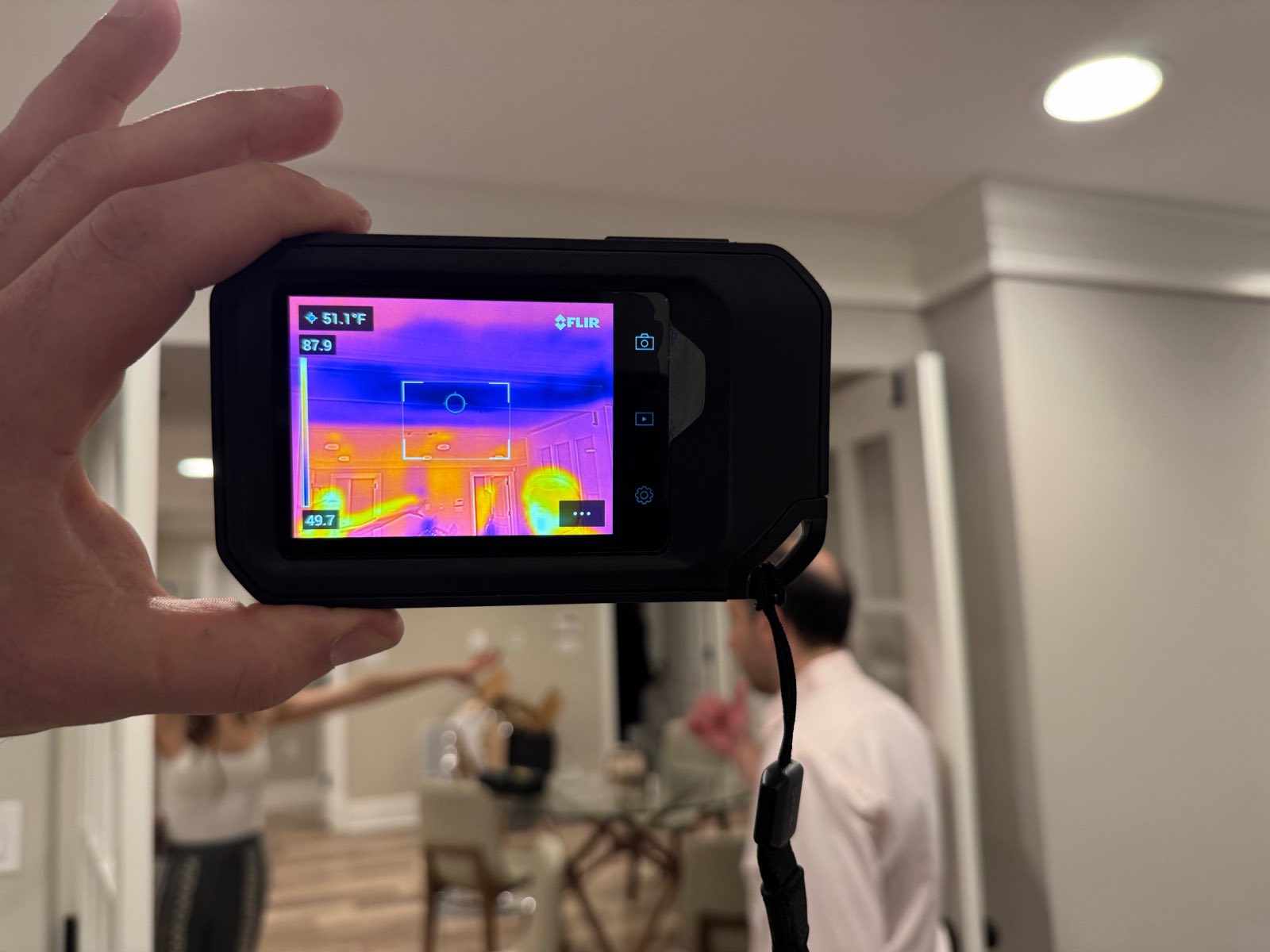
In the two- and three-story homes, the classic Bethesda loss travels vertically instead. An angle-stop under a second-floor vanity, a failed toilet supply, or an ice-maker line lets water find the fastest path down through the joist bays, crossing multiple finished levels before anyone notices the ceiling stain. We use thermal imaging and moisture meters to map the real footprint rather than guessing from the visible damage, then dry cavities in place wherever we can and open only what genuinely has to come out — which, in a home with custom millwork and high-end finishes, is exactly the restraint owners want.
High-rise condos in the downtown core
Downtown Bethesda's condo towers behave like any stacked building: gravity spreads the damage. A supply-line burst or overflowing fixture on an upper floor sends water straight down through the concrete slab and pipe chases into the units below, along ceilings and shared walls, before a lower-floor resident ever sees a stain. By then the water may have touched several homes and a common corridor.
We approach these as building losses, not single-unit events. Crews map the vertical path with thermal imaging and moisture meters through each affected unit, set directed drying and low-grain dehumidification in every wet space at once, and document each area so owners and the condo association can see exactly what was affected and route it to the right coverage. Drying a stack of units in place — rather than tearing out finished ceilings floor by floor — depends on getting equipment running fast and monitoring every level to a verified dry standard.
Storm water, sump reliance, and aging plumbing
Bethesda's older neighborhoods lean hard on sump pumps during heavy rain. When a strong storm saturates the ground, hydrostatic pressure builds against below-grade walls, and a home whose sump fails or whose battery backup is dead lets groundwater seep in through the foundation. Water that has traveled through soil is no longer clean Category 1 water, so we treat those storm events as the Category 2 seepage they are, with extraction, selective removal of unsalvageable porous materials, and antimicrobial treatment.
The mid-century homes also carry the plumbing risks of their age — aging supply lines that corrode and fail and drains that crack and back up — and undried moisture behind those walls is exactly how hidden-cavity mold starts. We carry licensed in-house plumbing to repair the line that actually failed, remediate existing mold under IICRC S520 with containment, and — on a fresh loss — verify the assembly to a dry standard so mold never gets its start. When a Bethesda drain line backs up, that becomes a Category 3 sewage and biohazard cleanup handled under the proper protocols.
Bethesda housing stock and how it fails
Bethesda's residential fabric is defined by two overlapping waves. The first is the mid-century one: brick and frame colonials, ramblers, and split-levels built from the 1940s through the 1970s across neighborhoods like Glen Echo Heights, Bradley Hills, and the streets near downtown. Nearly all of them have full basements, and over the decades most of those basements were finished into living space full of drywall, carpet, and belongings that hold water and grow mold quickly. The second wave is the teardown-and-rebuild boom that has reshaped the same lots — older homes scraped and replaced by large custom houses with deep, fully finished lower levels, hardwood throughout, and high-end finishes that are expensive to dry and expensive to replace.
Downtown Bethesda adds a third housing type entirely: the mid- and high-rise condominium buildings clustered around the Metro and Bethesda Row. In those buildings the risk is not the age of one unit's plumbing but the way a single failure propagates — a supply-line burst or overflowing fixture on an upper floor travels down through the concrete slab into the units below and into common areas. Knowing which Bethesda we are standing in — the 1950s colonial, the brand-new custom build, or the downtown condo tower — tells us where the water went and how aggressively to move.
Areas of Bethesda we serve
Real Bethesda blocks and buildings — and the water losses we most often see in each.
Established homes and high-end rebuilds near downtown with deep finished lower levels where multi-level leaks travel down.
Large lots mixing mid-century colonials and $2M+ custom builds with expansive finished basements and hardwood.
1950s-60s homes on wooded slopes where sump reliance and storm seepage drive basement losses.
Mid- and high-rise condos where an upper-floor leak drops through the slab into the units below.
Older single-family homes with aging supply lines prone to pinhole and drain-line failures.
Mid-century colonials near the Capital Crescent Trail where finished basements collect water at the low point of the house.
Documented project files
Real CompanyCam-documented Restoration Doctor work in the Washington, DC metro — every project photographed with date and time stamps.
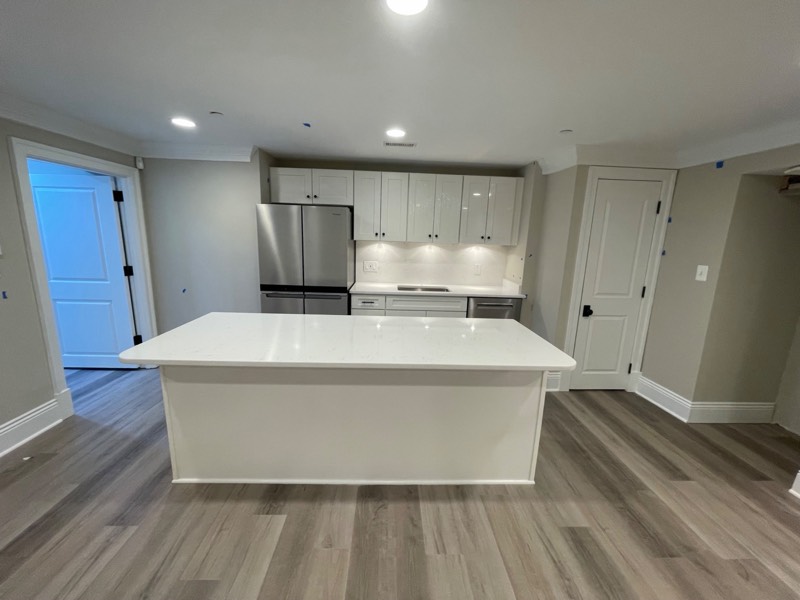
Flood cleanup & dehumidification — Bethesda
A documented Bethesda flood loss taken from water extraction through staged dehumidification, with low-grain dehumidifiers and air movers set to the wet footprint and monitored to a dry standard.
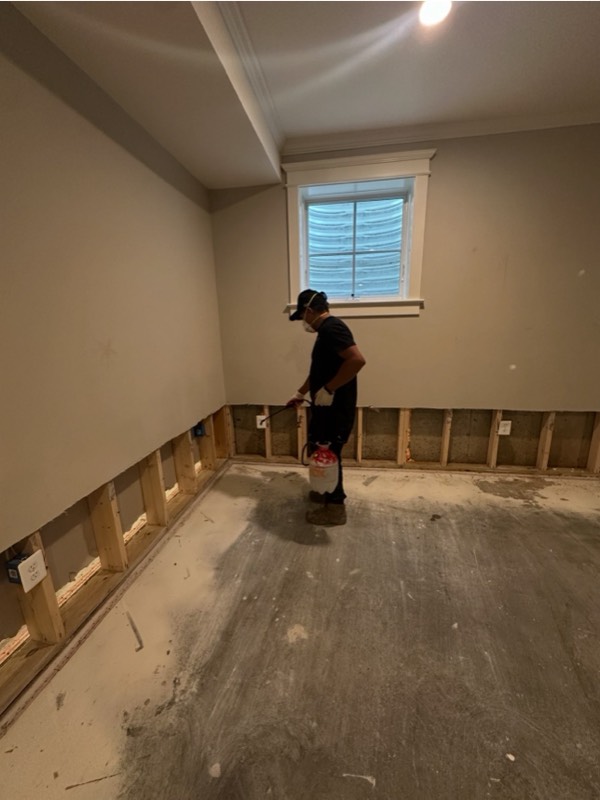
Flooded carpet extraction & structural drying — Bethesda
A documented Bethesda project where crews extracted a saturated carpet and pad, then set structural drying to the subfloor and walls, keeping salvageable finishes in place.
Full restoration services in Bethesda
One operation covers every category — from emergency mitigation to full reconstruction.
Water Damage Restoration
Extraction, structural drying, and moisture verification for pipe breaks, appliance leaks, and English-basement flooding across the District.
Sewage & Biohazard Cleanup
Category 3 black-water decontamination with full PPE, contaminated-waste removal, antimicrobial treatment, and verified drying after sewer backups and overflows.
Mold Remediation
IICRC S520 containment, HEPA filtration, safe source-based removal, and independent post-remediation clearance verification.
Fire & Smoke Damage Restoration
Soot and smoke-residue removal, source-based odor neutralization, contents pack-out, and preservation-sensitive reconstruction after a fire — performed to ANSI/IICRC S700, the fire and smoke damage restoration standard.
Storm Damage Restoration
Emergency tarping, water extraction, and reconstruction after wind, heavy rain, and the flash flooding DC's summer storms produce.
Reconstruction & Repairs
Drywall, plaster, flooring, cabinetry, trim, and paint — the same in-house crew that dried the loss rebuilds it, with no handoff and preservation-sensitive finish matching for District homes.
What Bethesda homeowners look for
Bethesda homeowners tend to do their homework, and on a high-value home with finished lower levels and custom finishes they want a restoration company that will dry and preserve rather than needlessly demolish. Response time, careful moisture work, and honest documentation are exactly the things worth vetting here — and in the downtown condos, a company's track record across multi-unit losses matters to an entire association, not just one owner.
We do not print review counts or star ratings on this page. Our verified customer feedback lives on a separate reputation hub instead: visit RestorationDoctorsReviews.com to see the reviews and the real Google aggregate for yourself, then come back here to book service for your Bethesda home. Keeping ratings on a source-linked hub rather than typing numbers onto a marketing page is a deliberate honesty choice — the figures there are the genuine Google totals, not something we invented.
Frequently asked
Active water, mold, fire, or sewage event?
Connect directly with the Restoration Doctor team for your region. Crews are on standby 24/7 with documented response protocols.