Ceiling Leak in a DC Condo: Finding the Source and Where Your Questions Belong

BYSteve Jafari, General ManagerWASHINGTON DC & SOUTHERN MARYLAND

A ceiling leak in a DC condo starts somewhere: the unit above, a shared building system, or your own unit. Coverage depends on your policy and your insurer's decision. Questions about coverage belong with your insurer, your agent, or a licensed public adjuster or attorney. The key is fast documentation: photograph the water while it's active, log the source, and keep records before drying erases the evidence.
Call (202) 922-1444Where does a ceiling leak in a DC condo come from?
The ceiling you see is often the least important part of the picture. The real question is whether the water came from a neighbor's overflowing tub or failed supply line, from a shared pipe inside a common wall, from the roof or building envelope, or from a fixture inside your own unit. Your condo's declaration and bylaws, not us, say who is responsible for which part of the building.
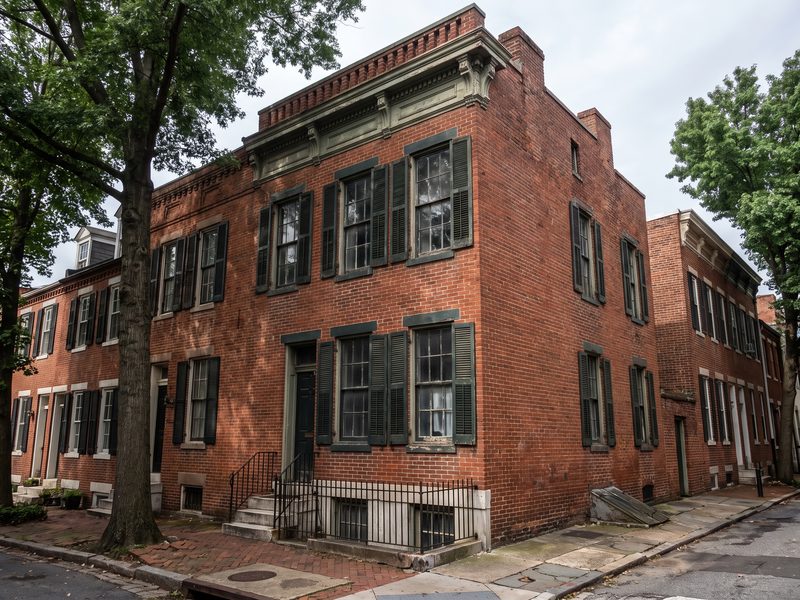
In a typical D.C. condo building, whether it's a converted row house with two or three stacked units or a mid-rise near the Metro, several parties can be involved: the owner above, the association, and you. Sorting that out starts with locating the source and documenting the damage immediately, before drying erases the evidence.
Our team handles this kind of multi-party water event. We invoice the property owner and build project documentation you may share with your insurer. Learn more about our approach to water damage restoration.

Where should I take questions about my unit policy and the master policy?
Coverage depends on your policy and your insurer's decision. Questions about coverage belong with your insurer, your agent, or a licensed public adjuster or attorney. We are a water mitigation company and we do not interpret policies.
The boundary between the association's property and yours is defined by your condo's declaration and bylaws. Read your condo's declaration or ask your property manager which structure applies, and take your questions about your own policy to your agent.
| Document | Who can answer questions about it |
|---|---|
| Your unit policy (HO-6) and declarations page | Your insurer or agent |
| The master policy declarations page | The association, its manager or its insurer |
| The recorded declaration and bylaws | The association, or a licensed attorney |
How do I figure out where the ceiling leak came from?
To find the source of a condo ceiling leak, trace the water upward and inward from where it's staining, because water travels along framing before gravity pulls it through the drywall. The wet spot on your ceiling is almost never directly below the actual leak. The origin can be several feet away, or in an entirely different room of the unit above.
Start by noting the pattern. A leak tied to someone's water use upstairs, running when they shower, do laundry, or wash dishes, points to a plumbing fixture or drain in the unit above. A leak that appears only during or after rain points to the roof, a window, or the building envelope. A steady drip unrelated to weather or neighbor activity may be a slow supply-line failure inside a wall.
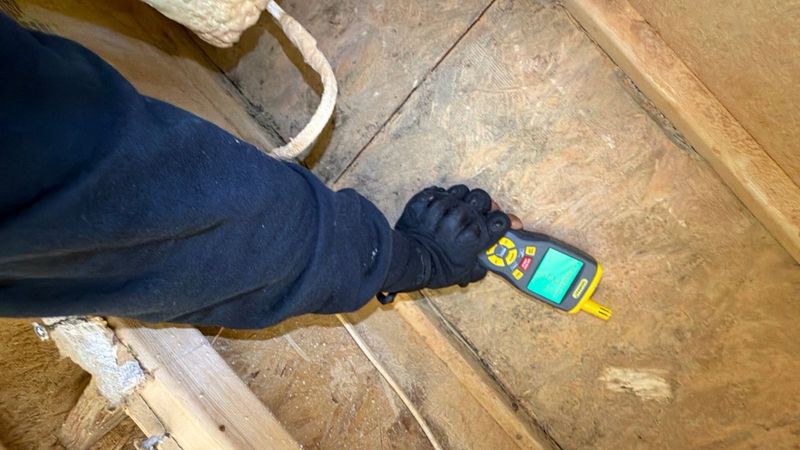
Because pinpointing the exact source often requires moisture meters, thermal imaging, and sometimes a small inspection opening, this is where professional documentation helps. Establishing the source should be done carefully and recorded before repairs begin. Once a plumber patches a pipe or a contractor cuts out wet drywall, the physical evidence of the source is gone.
- Water only when the upstairs unit runs water: likely their fixture or drain line
- Water during or after rain: likely roof, window, or envelope
- Constant slow drip regardless of weather or neighbors: possible in-wall supply line
- Brown/yellow staining spreading outward: water traveling along ceiling joists
- Bubbling paint or a sagging ceiling: trapped water pooling above the drywall

What should I do first when water comes through my condo ceiling?
The moment water comes through your ceiling, stop the source if you safely can, protect your belongings, and document everything before you clean up. In a stacked D.C. condo, the fastest way to stop an active leak is often to reach the unit above and have that owner shut off their water, so notify them and your property manager immediately.
Do not turn on ceiling lights or fixtures in the affected area if the drywall is wet, and keep people away from any sagging section, which can collapse without warning. Move furniture, rugs, and valuables out from under the leak, and place a bucket to catch active dripping. Then photograph and video everything while it is still wet.
Call for professional help early. A 24/7 emergency response matters because trapped water behind drywall and inside ceiling cavities keeps causing damage and feeding potential mold growth long after the visible dripping stops. Our emergency water damage team can begin extraction and documentation the same day. See our full water damage restoration service for what that response includes.
- Have the upstairs owner shut off their water if the source is their unit
- Notify your property manager or HOA in writing right away
- Keep clear of sagging drywall, which can fail suddenly
- Avoid using electrical fixtures in the wet area
- Move belongings and photograph the damage before cleanup
- Call a restoration professional to extract and document
How do I document a ceiling leak in a condo?
To document a condo ceiling leak, capture time-stamped photos and video of the active leak, the source, and all damaged property, then keep a written timeline of when it started, who was notified, and what steps were taken.
Condo leaks are complicated because the water often crosses ownership lines: it starts in someone else's unit or a common element and ends up in yours. Ask your insurer what your policy requires, and read your bylaws for any notice requirements.
For every job we build project documentation: an Xactimate scope, CompanyCam photo documentation tied to each affected area, and daily moisture logs showing the drying progress. We give that file to you, the property owner we invoice, and you may share it with your insurer. We are hired by the property owner under a written agreement.
- Time-stamped photos and video of the active leak and its source
- Wide shots of each room plus close-ups of damaged materials
- A written timeline: start time, notifications, and actions taken
- An itemized list of damaged personal property
- Moisture readings and daily drying logs from a restoration professional
- Copies of all messages to the upstairs owner and property manager

Who do I ask about responsibility: my neighbor, the HOA, or my insurer?
Responsibility for a condo ceiling leak depends on the source of the water and on your declaration, bylaws and the facts. Simply being the source of a leak does not automatically make a neighbor legally liable in the District. We do not decide responsibility.
Coverage depends on your policy and your insurer's decision. Questions about coverage belong with your insurer, your agent, or a licensed public adjuster or attorney. Read your bylaws before assuming who bears any charge, and avoid admitting fault before the source is confirmed. Keep conversations with your neighbor, property manager and insurer in writing.
| Water source | What we record |
|---|---|
| Upstairs neighbor's tub, toilet, or sink overflow | Source location, affected rooms and materials, moisture readings |
| Failed supply line inside upstairs unit | Source location, affected rooms and materials, moisture readings |
| Shared pipe in a common wall | Source location and the path of the water, shared with the association |
| Roof or building envelope leak | Entry point and the path of the water, shared with the association |
| Fixture inside your own unit | Source location, affected rooms and materials, moisture readings |
How long does drying take after a condo ceiling leak?
Drying time depends on how much water was absorbed, how long it sat, and whether it reached insulation, the subfloor above, or wall cavities. We monitor daily to a dry standard, and repairs to the ceiling and any affected finishes are a separate step.
Proper drying follows the ANSI/IICRC S500 standard, which relies on psychrometry, measuring temperature, relative humidity, and the moisture content of materials, rather than guessing when a surface merely feels dry. We set air movers and dehumidifiers, take daily moisture readings, and only remove equipment once materials return to a documented dry standard consistent with unaffected areas of the unit. Rushing this step is how hidden moisture turns into mold weeks later.
If the water sat long enough or came from a contaminated source, contamination category and timing determine the protocol. Under S500, even clean Category 1 water can degrade to Category 2 or 3 as it sits and picks up contaminants, and when microbial growth is present, remediation follows the ANSI/IICRC S520 mold standard. You can read more about our mold remediation process if you're concerned about what's behind the drywall.

How does Restoration Doctor help with a DC condo ceiling leak?
Restoration Doctor of Washington DC responds 24/7 to condo ceiling leaks across the District and Southern Maryland, extracts the water, dries your unit to a documented standard, and gives you project documentation. We are a licensed D.C. contractor (DC DLCP #410524000721) and we align our work to the IICRC S500 and S520 standards.
We are hired by the property owner under a written agreement, and we invoice the property owner. We document the source, scope, and drying: an Xactimate scope, CompanyCam photos, and daily moisture logs. You may share that file with your insurer, the association, and any other party involved.
We understand D.C.'s specific housing stock: converted row houses with stacked units, English basement apartments below occupied floors, and mid-rise condos where a single leak can touch several homes. If water is coming through your ceiling right now, call (202) 922-1444 or reach out through our contact page to start emergency response and documentation today.