Loss Assessment Coverage: When Your DC Condo Association Bills You for the Leak
BY RESTORATION DOCTOR OF WASHINGTON DC · WASHINGTON DC & SOUTHERN MARYLAND

When a condo association's master policy pays a loss, the deductible and any uncovered portion are often assessed back to the unit owners, and loss assessment coverage on your own HO-6 is the line that absorbs it. The limit is usually small by default and almost always adjustable, which is a short call to your agent before a loss and an argument after one.
Call (202) 922-1444What is loss assessment coverage and where does it live on your policy?
Loss assessment coverage is the line on a DC condo owner's HO-6 policy that pays your share when the association charges every unit owner for a loss the master policy did not fully absorb. It is a separate limit, printed on the declarations page rather than in the summary your lender saw, and in most standard forms it starts at a token amount that has not moved in years.
On many forms it appears as Loss Assessment under the Section I coverages, sometimes with its own deductible. It is not Coverage A, which handles your unit's interior and betterments, and it is not Coverage C, which handles your belongings. It sits on its own line because it responds to a bill from the association rather than to damage in your rooms.
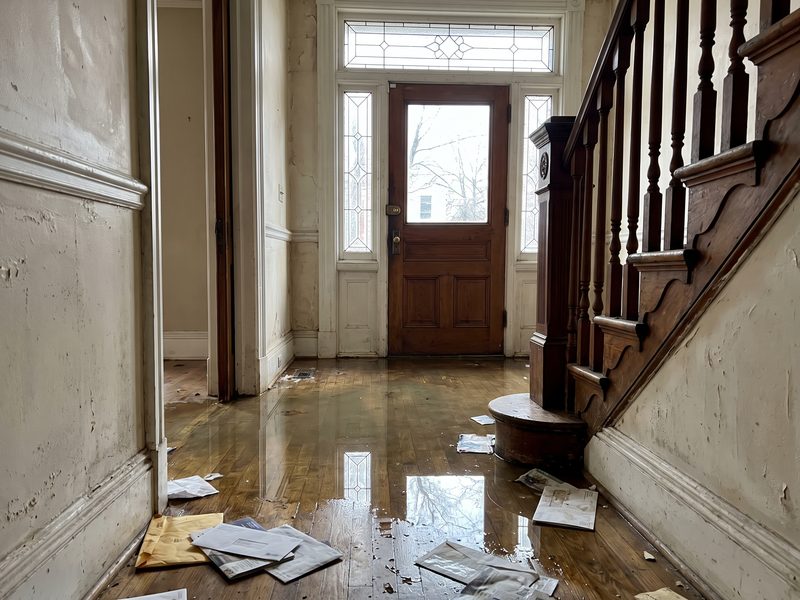
Most District condo owners meet this line for the first time in an email from the board. A riser failed, the corridor carpet came up, three units took water through a shared chase, and the association has resolved to assess the owners. At that point you are asking your own carrier to treat the association's invoice as a covered expense.
Why would your association bill you for damage you did not cause?
Because in a condominium you already own a slice of the thing that broke. The roof, the corridors, the stacks, the risers and the structural walls are common elements, held by all the owners together and insured under one master policy the association buys on everyone's behalf. Repairing them costs money that runs back to the owners through the assessment mechanism written into the declaration.
The District governs condominium ownership under Title 42, Chapter 19 of the D.C. Code, and the allocation of responsibility for your building sits in the recorded declaration and bylaws rather than in the statute alone. Two buildings on the same block can split the same leak differently. One declaration puts original drywall and flooring in the master policy. Another stops at the studs and leaves everything inward to the unit owner.
So the first document to read after a building loss is not the policy. It is the declaration. Ask the management office for the recorded declaration, the bylaws and any amendments, then read the insurance article and the assessments article together. Boards frequently quote one without the other.

How does a master-policy deductible become a unit owner's bill?
The master policy pays the loss above its deductible. Somebody has to fund the part below it, and the association has no source of money other than the owners. The board either draws the deductible out of reserves, which usually forces a later assessment anyway, or it assesses the owners directly. Either way the charge arrives as a line on a statement rather than as an insurance claim.
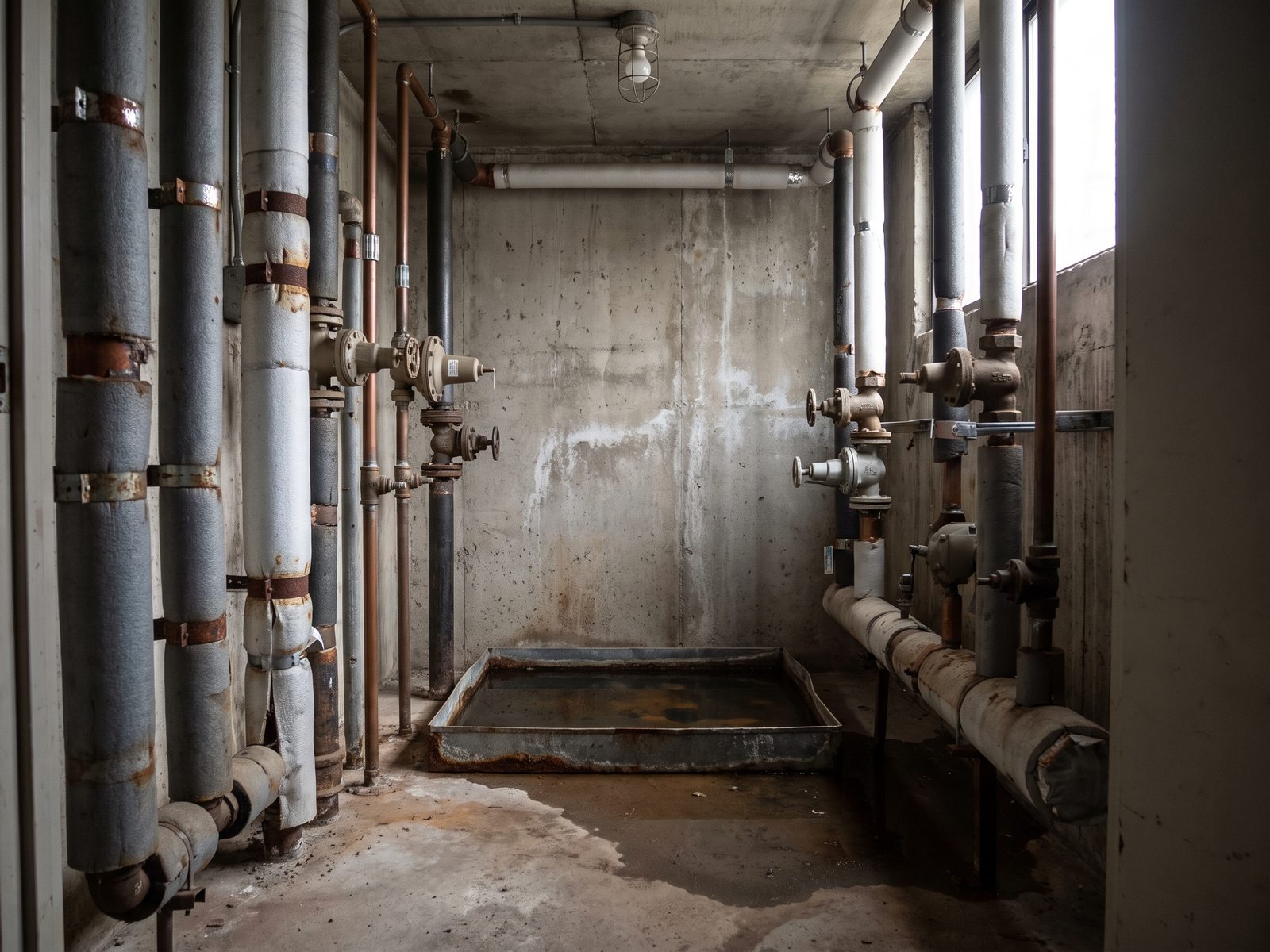
Water damage deductibles on multi-unit master policies are often written far higher than the all-other-perils deductible on the same policy, and many owners never see either number. A single failed supply line in a mechanical closet can therefore produce a repair the master policy technically covers while paying nothing, because the whole repair lands underneath the water deductible.
Some declarations let the board charge that deductible to the single unit where the water originated. Others spread it across all owners by percentage interest. None of this is your carrier's decision. Your carrier reacts to whatever the association lawfully assesses under the instruments, which is why the assessment letter and the declaration go to your agent together.
What is the difference between a loss assessment and a special assessment?
People use the two terms interchangeably and insurers do not. A special assessment is any charge the board levies outside the regular budget, for any reason. A loss assessment, in insurance language, is the narrow subset of those charges arising out of direct physical damage to the common elements from a peril your own policy would cover. New elevators are a special assessment. Your share of the corridor rebuild after a riser burst is usually a loss assessment.
The table below is the sorting tool. Take the association's letter, find the row it matches, and you will know whether you are opening a claim or writing a check.
- Loss assessment is about a peril, not about the size of the bill
- The trigger is direct physical damage to property the owners hold in common
- The date the assessment was levied matters as much as the date of the leak
| What the association is charging for | Why it happens | Usually covered? | Send your agent |
|---|---|---|---|
| Your share of the master policy deductible | The master policy pays only above its deductible and the board must fund the rest | Often, if your form names deductible assessments and not only losses | Assessment letter, master policy declarations, insurance article of the declaration |
| A repair that fell entirely below the master water deductible | Large water deductibles mean the master policy pays nothing on a mid-size loss | Frequently, treated as a deductible pass-through | Repair invoice or board resolution showing the cause of loss |
| Damage the master policy excluded outright | Flood, earth movement and maintenance exclusions appear on master policies too | Only if your own policy covers that peril | The master policy denial or reservation letter |
| A liability judgment against the association | Someone was injured in a common area and the association's limits ran out | Some forms include association liability, many do not | Board resolution and correspondence naming the claim |
| Deferred maintenance, reserves or a capital improvement | The building needs work and the reserve will not cover it | No. There is no physical loss from a covered peril | Nothing. This is a budget item you pay |
| An assessment levied before your policy period began | The charge predates your purchase or your policy inception | Usually no. Most forms respond to assessments made during the policy period | Your settlement statement, which may shift it to the seller |
What does loss assessment coverage actually pay for, and what is excluded?
Read the grant of coverage on your own form rather than a summary of it. Most forms cover your share of an assessment charged during the policy period, levied by an association of property owners, arising out of a direct loss to property owned collectively by all members. The loss must come from a peril insured against under Section I of your policy. Every clause there is doing work.
The peril test is the one that surprises people. Your coverage applies your policy's exclusions, not the master policy's. If your HO-6 excludes flood and the building took ground water in a storm, the association may have been insured under a separate flood policy while you are uninsured for your share. That is why the cause of loss on the board's letter matters.
- Usually inside: your percentage share of repairs to common elements after a covered peril
- Usually inside: your share of the master policy deductible, if the form or an endorsement says deductible
- Usually outside: maintenance, reserves, upgrades or anything with no physical loss behind it
- Usually outside: a peril your own policy excludes, even where the master policy paid
- Watch for: a separate loss assessment deductible that applies before the coverage pays
How much coverage do DC condo owners typically carry versus what they need?
Most owners carry whatever limit came with the base form, because nobody ever picked it. The limit rides along in the base form, the lender never asked, and the renewal declarations page arrives as a PDF nobody opens. Meanwhile the water deductible on the master policy can move at renewal without anyone telling the owners, which is why the number to trust is the one on the current master declarations page and not the one you remember.
Size it from the building rather than from a rule of thumb. Get the master policy declarations page from the management office, find the water damage deductible, and find your percentage interest in the declaration. Your exposure to a deductible pass-through is roughly that percentage of that deductible, and your exposure to an uninsured common-element repair can be larger.
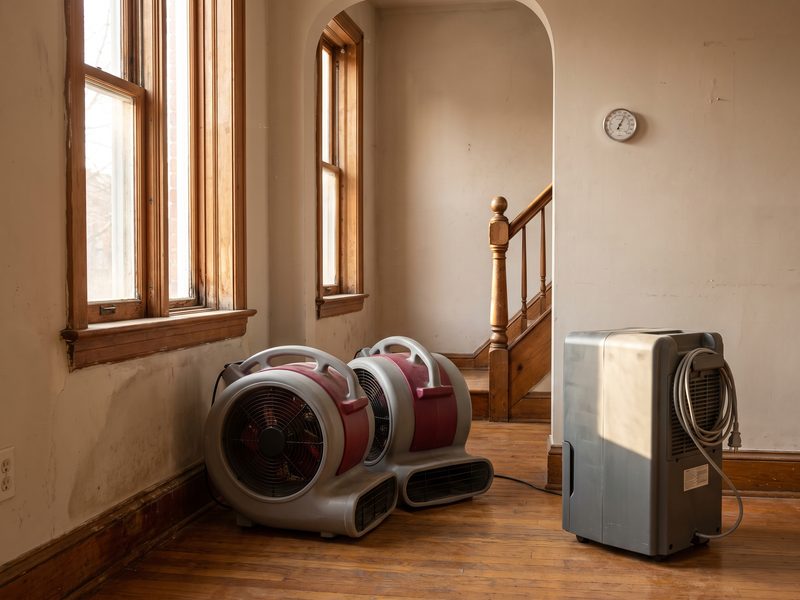
Raising the limit is generally inexpensive relative to what it protects. The catch is timing. Coverage responds to assessments made while the policy is in force, so an increase bought after the board has resolved to assess does nothing for that assessment. Buy it in a quiet month, not in the week the corridor is full of air movers.
What happens when the assessment is for a deductible rather than a loss?
This distinction decides many of these claims. A deductible is not damage. Older loss assessment wording responds to your share of a loss to common property, and a carrier reading it strictly can argue that a deductible pass-through is a contractual obligation you owe the association. Newer wording, and several widely used endorsements, name the master policy deductible as a covered assessment.
So the question for your agent is specific and it has a yes or no answer. Does my loss assessment coverage respond to an assessment for the master policy deductible, and is there a sublimit on that part. Ask in writing and keep the reply.
If a claim is already open and the carrier is reading the language narrowly, the board's paperwork is the evidence. A resolution describing the assessment as funding the insurance deductible for a specific covered loss reads differently from a bare line item on a statement. Ask for the resolution, the master policy claim number and the adjuster's loss description.
How does this interact with the repair your own unit needs?
Three separate pots of money are in play on a single building leak, and mixing them up turns a two-week job into a three-month argument. The master policy handles the common elements and, depending on the declaration, some or all of your original unit finishes. Your HO-6 building property coverage handles betterments and improvements, which in a District condo often means every kitchen and bath installed since the conversion. Loss assessment coverage handles the association's charge to you.
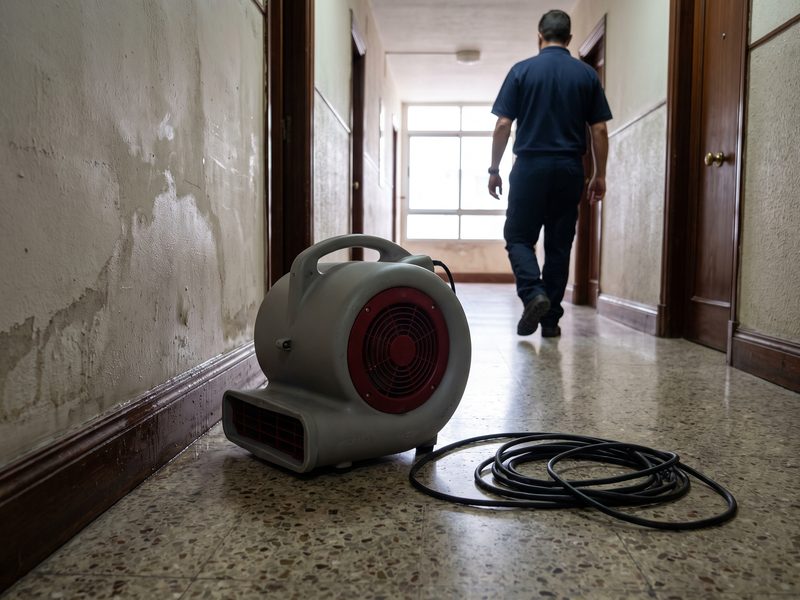
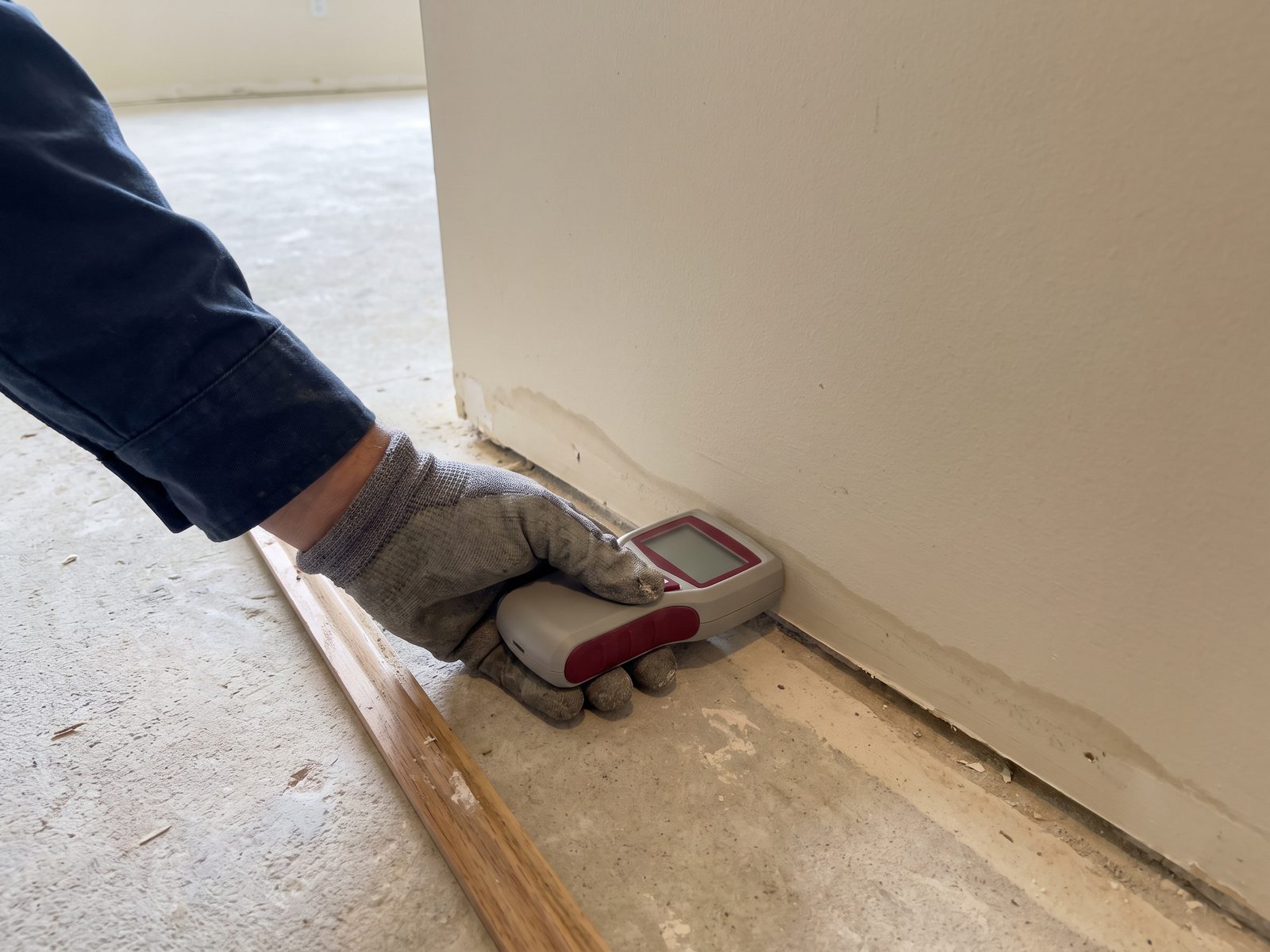
The drying work usually starts before any of that is settled, and it should. When water travels down a chase into stacked units, the wet material is inside the walls within hours, and the moisture meter reads high well beyond the stain you can see. We pull the baseboard first, drill or remove where the readings say to, and set containment so the corridor and the unit dry as one system. The IICRC S500 standard is the reference both adjusters expect.
Document by unit from the first hour, because the master policy adjuster and your own adjuster will want the file split that way. Moisture maps per room, readings per day, equipment counts per space, photographs of the failed component. If drying runs long, the mold question follows, and EPA household mold guidance plus the IICRC S520 standard keep that conversation factual.
What should you check on your declarations page this week?
Pull the current declarations page for your HO-6, not the policy booklet. It is two or three pages, it lists every coverage with its limit, and it is the only document that tells you what you actually bought.
Work down this list and write the answers somewhere you will find them again. If a line is missing from your declarations page, that is itself the answer.
- Find the loss assessment line and write down its limit
- Check whether a separate deductible applies to that line
- Check whether the wording covers assessments for the master policy deductible, not only for losses
- Check your building property limit, since renovated kitchens and baths are usually yours
- Confirm the policy period, because most forms respond to the date the assessment is levied
- Ask your agent, in writing, what it costs to raise the loss assessment limit
What do you ask the association after a building-wide loss?
Boards are not hiding anything. They are usually a handful of neighbors handling something large for the first time, and the information you need is scattered across a management company, an adjuster and a contractor. Asking in writing, early and specifically, gets better answers than asking loudly later. Keep every reply, because if your carrier later disputes the assessment, this paperwork is the case.
The same association-versus-owner split plays out in a Florida high-rise, where the master policy deductible and the unit owner's share work the same way, and Restoration Doctor Florida covers that version at https://restorationdoctorfl.com/blog/high-rise-condo-water-damage-who-pays.
One last point from the drying side. Whoever ends up paying, the building still has to come dry, and delay is the one cost nobody's policy reimburses. Get equipment in place while the coverage question is still open.
Nothing here outranks your own documents. The recorded declaration and bylaws decide how your building splits a loss, and your declarations page decides what your policy pays. If your carrier's reading of the wording and yours cannot be reconciled, the District's Department of Insurance, Securities and Banking takes consumer complaints about insurance in DC.
- What was the cause of loss, and which component failed?
- Was a claim opened under the master policy, and what is the claim number?
- What master policy deductible applies to this loss?
- Which articles of the declaration and bylaws is the assessment levied under?
- Is the assessment spread by percentage interest or charged to one unit?
- Which repairs are the association's scope and which are left to unit owners?
- Sources: D.C. Code Title 42, Chapter 19, Condominiums, https://code.dccouncil.gov/us/dc/council/code/titles/42/chapters/19
- Sources: DC Department of Insurance, Securities and Banking, https://disb.dc.gov/
- Sources: IICRC standards, including S500 for water damage restoration and S520 for mold remediation, https://www.iicrc.org/page/IICRCStandards
- Sources: EPA guidance on mold cleanup in the home, https://www.epa.gov/mold/mold-cleanup-your-home