Pipes Burst While You Were Away: Preparing an Empty DC Home and Keeping a Record

BYSteve Jafari, General ManagerWASHINGTON DC & SOUTHERN MARYLAND
Coverage depends on your policy and your insurer's decision. Questions about coverage belong with your insurer, your agent, or a licensed public adjuster or attorney. Keep the heat on or drain the system, have somebody physically check the property, and keep a dated record of both.
Call (202) 922-1444What is the difference between vacant and unoccupied?
Unoccupied usually means your furniture and belongings are still in place but nobody is living there, while vacant usually means the people and the personal property are both gone. Insurers and policy forms may use these words in different ways.
Coverage depends on your policy and your insurer's decision. Questions about coverage belong with your insurer, your agent, or a licensed public adjuster or attorney. We are a water mitigation company and we do not interpret policies.
Pull your policy now, search it for the words vacant and unoccupied, and take your questions about each to your insurer or agent before you travel.
Why do empty-house pipe failures do so much damage?
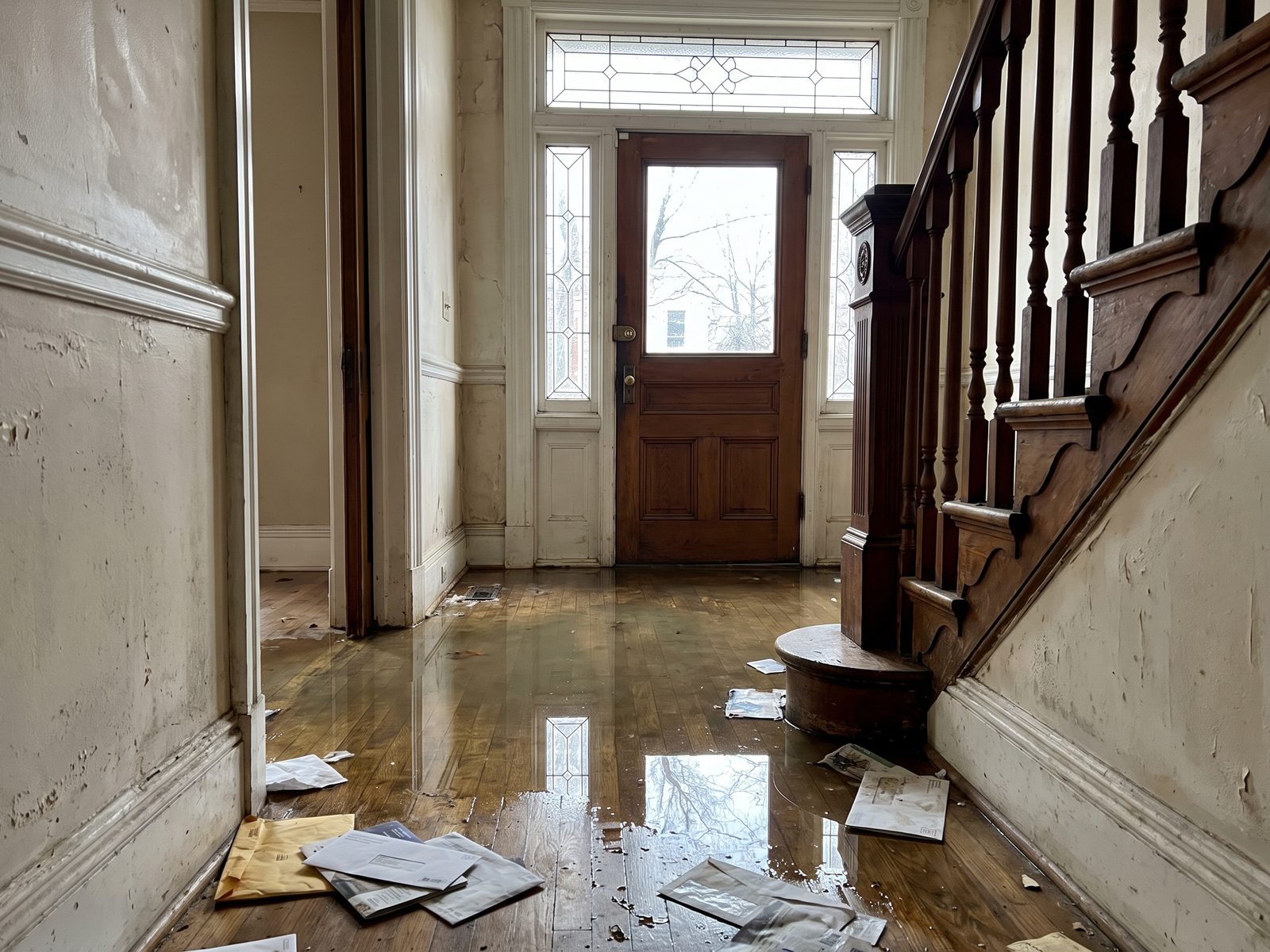
A half-inch supply line at household pressure moves a remarkable volume of water, and in an empty building nobody hears it start. By the time a neighbor notices water at the foundation, it may have run down through two ceilings and stood in the English basement for days.
The District has a particular version of this. The city empties out over the holidays and again during the August recess, and a row house with the thermostat turned down and nobody walking through it is at risk.
- A tenant moved out and the unit has not been re-let.
- An owner moved into assisted living and the house was left furnished.
- A renovation pulled the kitchen and the bathrooms, so the household moved out.
- An estate is in probate and an executor stops by every few weeks.
- A condo is listed and staged, with nobody sleeping there between showings.
Why is keeping the heat on harder than it sounds in a DC row house?
Dropping the thermostat to its lowest setting and leaving the plumbing full is the most common half measure. Either keep the heat running, or shut the water off at the main and drain the system.
District row houses make the heated half harder than it sounds. Supply lines run up unheated party walls, through crawl spaces under the front rooms and out to hose bibs on the back of the building. A thermostat in the front hall reads a comfortable number while the pipe in the back wall of the kitchen sits ten or fifteen degrees colder. A top-floor unit above a vacant one has the same problem in reverse.
Some policies carry conditions about heat or monitoring systems during an absence. Ask your insurer or agent what yours says.
What will an insurer ask about a loss in an empty house?
Your insurer decides what it asks, and every claim is different. Questions an owner can expect to be asked include whether the heat was on, who checked the building last and on what date, and whether the main valve was open or closed. An owner who has been traveling often cannot answer these precisely, which is why a dated record helps.
Questions about how your insurer handles a claim belong with your insurer, your agent, or a licensed public adjuster or attorney. The District's Department of Insurance, Securities and Banking takes consumer complaints about insurance, and its website is in the sources at the end of this post.
What should you do before you leave for more than a week?
Here is the checklist we give owners who ask before they travel. It takes about half an hour on the way out the door, and steps five and seven build a dated record while you are gone.
- 1. Set the thermostat to a temperature that keeps the whole building above freezing, not just the floor the thermostat sits on.
- 2. Open the cabinet doors under every sink on an exterior or party wall so warm air reaches the supply lines behind them.
- 3. Shut off and drain the outside hose bibs and disconnect anything still attached to them.
- 4. If the absence is long enough that heat feels like a gamble, close the main valve and drain the system from the lowest tap.
- 5. Photograph the thermostat, the water main and the water heater on the day you leave, and keep the files with their dates intact.
- 6. Ask a named person to walk the inside of the building, and agree in writing how often they will do it.
- 7. Have that person send you one photo from inside on every visit, so the record builds itself while you are gone.
- 8. Stop the mail or have it collected, so a pile at the door does not advertise the absence to the street.
- 9. Tell your insurer if the absence will run long, and ask for the answer in writing rather than over the phone.
- 10. Leave interior doors open so heat moves between rooms and the basement stair does not turn into a cold well.
Does a smart water sensor or automatic shutoff help?
A leak sensor on the floor beside the water heater, under the kitchen sink and in the laundry closet can turn a three-day loss into a one-hour loss, because somebody gets a notification while there is still only an inch of water on the floor. A shutoff valve on the main goes further and closes the water itself before anyone reads the message.
A monitored device also writes a timestamped log showing when flow started and when it stopped.
Ask your agent before you install whether your policy says anything about such devices.
What if the property is between tenants or on the market?
Many empty-house problems begin here. An empty rental can sit empty longer than anybody planned without anybody making a decision about it. Call your agent the week the unit goes empty and ask what your policy says about an empty unit.
For a condo or a co-op unit, the building's master policy and your own unit policy are separate documents, and your association may separately require owners to keep heat on through the winter whether the unit is occupied or not. Check your bylaws and ask your agent.
What do you do first when you walk back into a flooded house?
Stop at the door and look up before you look down. A plaster ceiling holding water sags before it lets go, and you do not want to be under it. If water has reached outlets, a panel or anything else electrical, leave the power off until an electrician clears it. Standing water in an English basement with a live panel is the one situation worth waiting outside for.
Then close the main valve and photograph every room before anything moves. Video with narration is better still, because it captures rooms you would not think to frame. Contact your insurer and ask what your policy requires.
A pipe that burst while you were away behaves differently from one caught in the first hour, and the difference shows up in what can be dried and what has to come out. Our sister site has a longer account of a burst pipe.
Duration also changes the category of the water. Clean supply water begins as Category 1 under the IICRC S500 standard, and it degrades as it sits in contact with building materials, contents and whatever was already on the floor. After several days in a closed building, a restorer will treat it as a more contaminated loss, which changes what gets dried in place and what gets removed.
What records should you keep after a loss in an empty house?
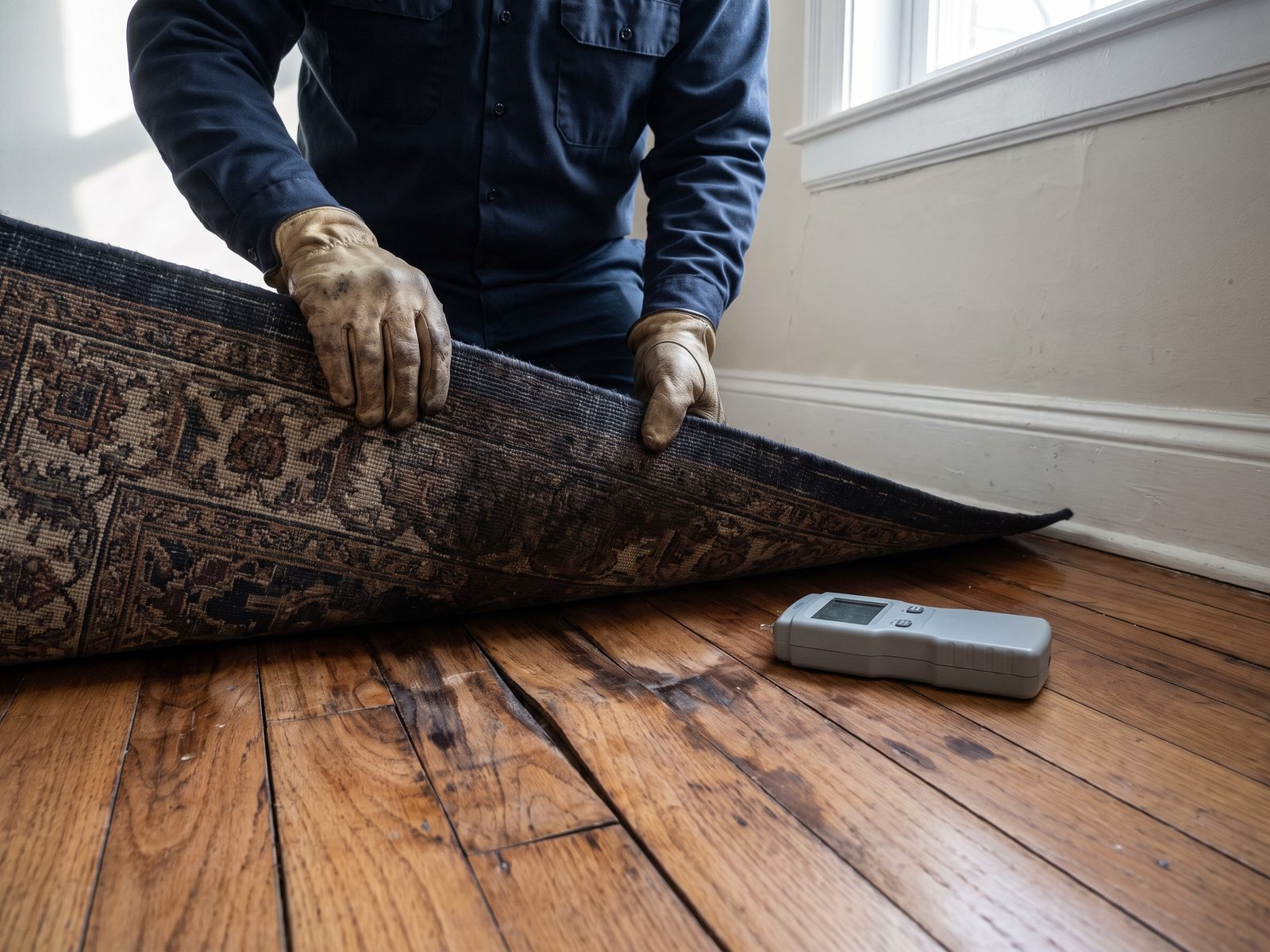
Build the file as though somebody will read it in six months. Ask your restoration contractor for the drying documentation in writing as well. A job run to the IICRC S500 standard produces daily moisture readings, psychrometric data and equipment placement records, which record when the water stopped and when the structure reached a dry standard. You may share them with your insurer. Your insurer alone decides what it approves and pays.
Here is what we tell owners to keep, with the sources this post draws on underneath.
- Sources: IICRC standards, including S500 for water damage restoration
- Sources: EPA guidance on cleaning up mold in your home
- Sources: DC insurance regulator DISB, for insurance complaints
- Sources: Ready.gov winter weather preparedness
| Record | What it shows |
|---|---|
| Dated photos of the thermostat, main valve and water heater | The settings on the day you left |
| Gas and electric bills covering the whole absence | Utility use during the absence |
| Property check log with dates and names | Who was watching the building, and how often |
| Texts or emails arranging those checks | Independent confirmation of the log |
| Claim number, adjuster name and the date of every call | A timeline that does not depend on memory |
| Daily moisture readings and equipment logs | When the structure reached a dry standard |
| Letters from your insurer and your written replies | What was asked and what you answered |