
Hardwood Floor Drying in Washington, DC
Restoration Doctor of Washington DC dries wet hardwood floors in place in Washington, DC when the boards can be saved, using moisture and thermal-camera readings, air movers, dehumidifiers and, where needed, floor-drying mats, and removes only what cannot be dried. Call (202) 922-1444 at any hour.
Updated October 2026
At a glance
- Phone
- (202) 922-1444
- Hours
- 24 hours a day, 7 days a week
- Response
- On-site in as little as 60 minutes in Washington, DC**Response times vary based on crew availability and demand.
- Service area
- All four quadrants of Washington, DC
- Services
- Water damage, sewage cleanup, mold remediation, fire damage, storm damage, reconstruction, extraction & drying, hardwood floor drying, roof tarping, smoke & soot cleaning, contents pack-out
- DC license
- DC Basic Business License #410524000721Held by VA Water Damage LLC dba Restoration Doctor
- Maryland license
- MD Home Improvement (MHIC) #167541Held by VA Water Damage LLC dba Restoration Doctor
- Certification
- IICRC-certified, S500 / S520-aligned
A wet hardwood floor is a drying decision before it is a tear-out decision
Hardwood takes water in slowly and gives it up slowly. The boards swell and the edges lift, and a floor that looks fine on the surface can hold water in the boards and in the subfloor beneath them. Waiting turns a drying job into a replacement job, because boards that stay wet cup, crown and lose their bond to the subfloor.
That is why the first question on a wet floor is whether it can be dried in place. The crew removes only what genuinely cannot be dried, because drying in place keeps the original floor and shortens the rebuild.
Finding water you cannot see
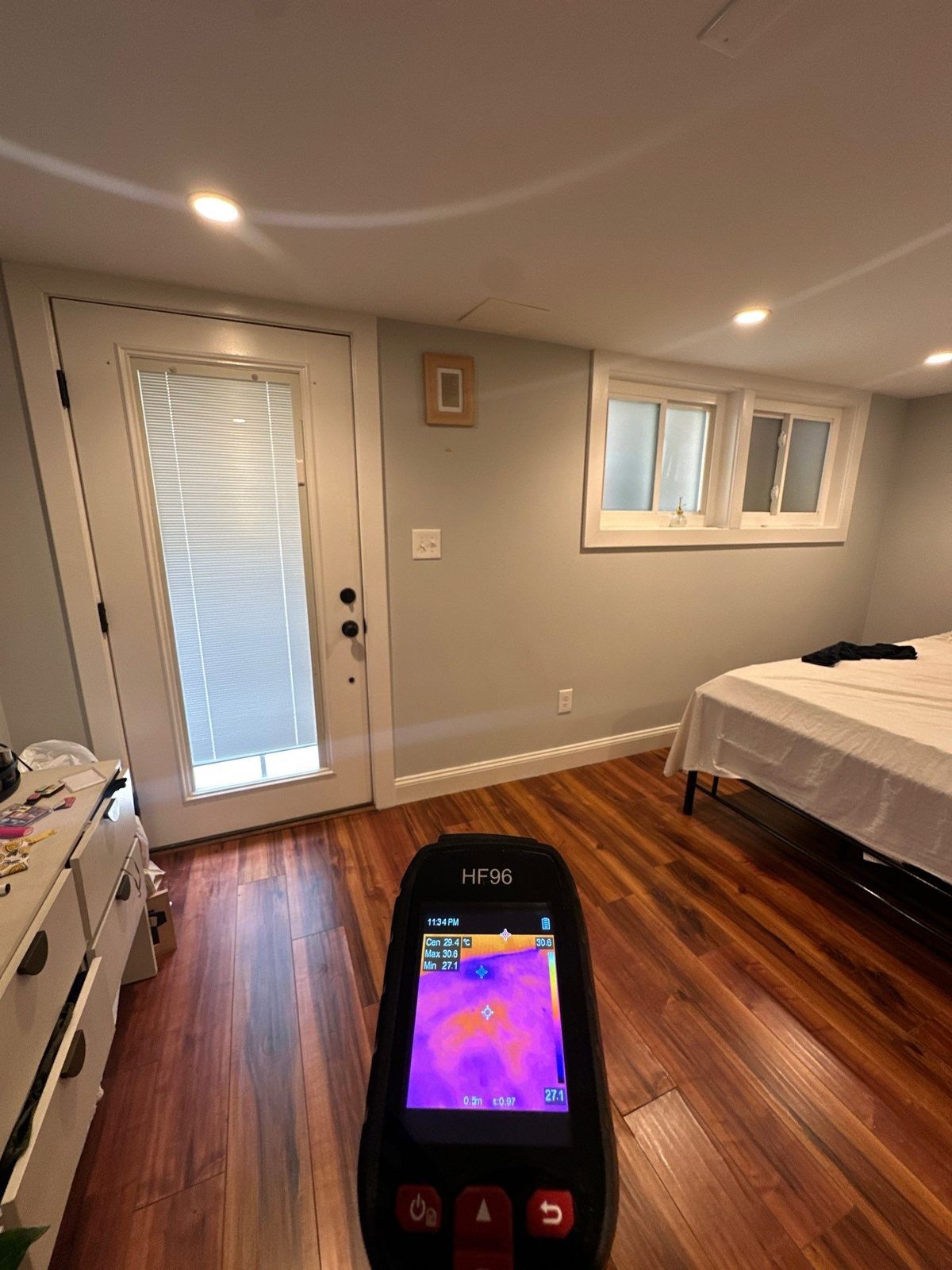
A floor can feel dry on top while the boards and the subfloor under them are still wet. The crew maps moisture with moisture meters and a thermal camera. A thermal image shows temperature differences that can point to wet material under a finished surface, and the meter readings taken on the boards are what the crew records.
That map decides where the equipment goes. Air movers and dehumidifiers are placed where the wet material is, not spread across a room in the hope that they reach it.
How a hardwood floor is dried in place
Air movers sweep moisture off the boards, and low-grain refrigerant (LGR) or desiccant dehumidifiers pull it out of the air so the floor is not left to reabsorb it. Where the boards or the subfloor hold water that moving air will not reach, floor-drying mats and injection drying are added. Starting before any board is pulled is how cupping is limited.
The general method, including the baseline, the daily readings and the drying goal that ends the equipment count, is described on the extraction and structural drying page.
What decides save or replace
Three things decide it. The first is the water category: porous material that contaminated water has soaked is removed rather than dried, and the crew tells you which category it found. The second is how long the floor stayed wet, because boards that have lost their bond to the subfloor cannot be returned to service by drying. The third is the reading: drying is finished when the affected material reads at or near the drying goal and holds, not when it looks dry.
After drying, the crew tells you which boards need replacing and why. Replacement then belongs to the rebuild, which is a separate scope. See reconstruction.
A Washington, DC hardwood floor file from July 2025
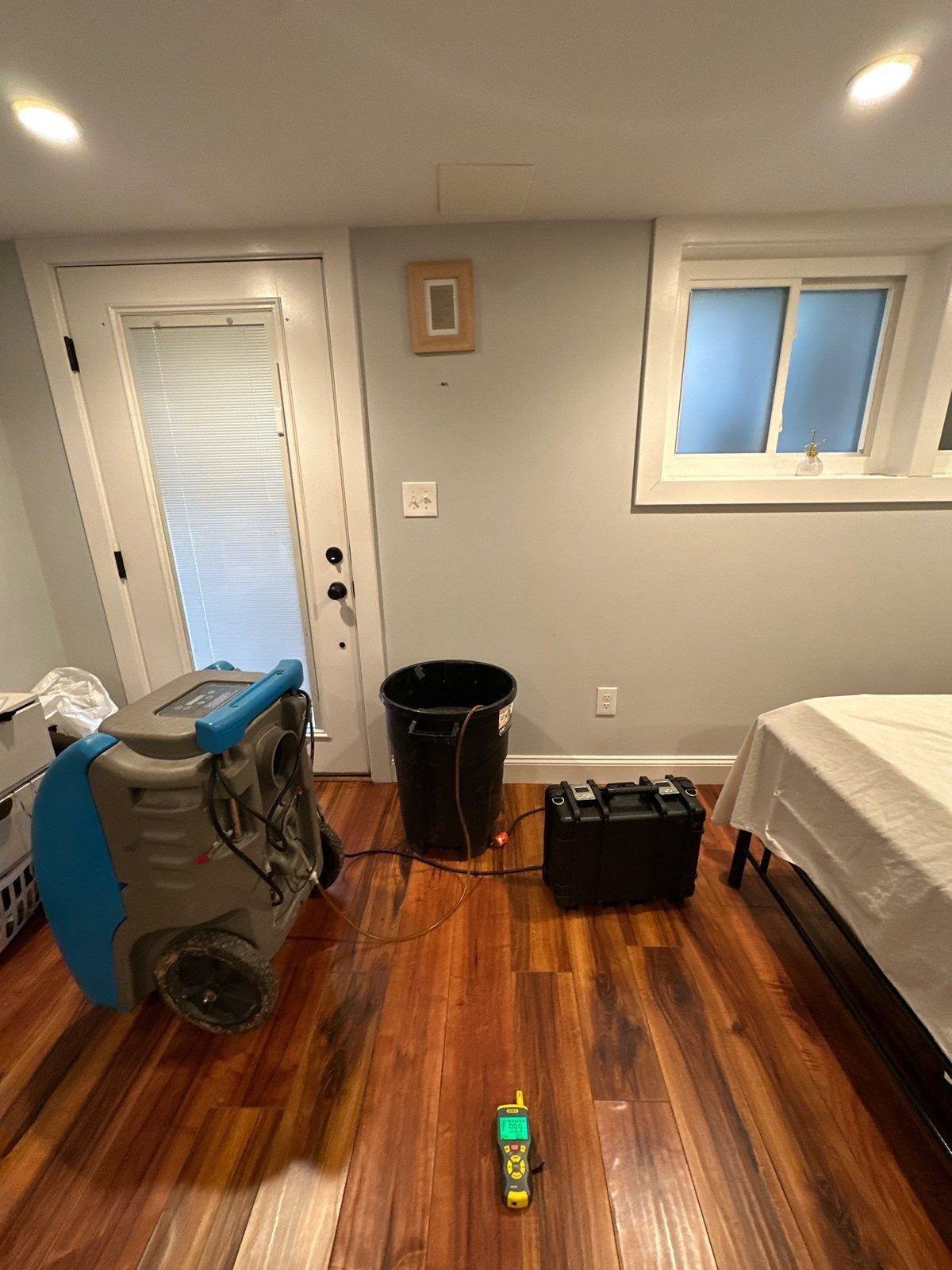
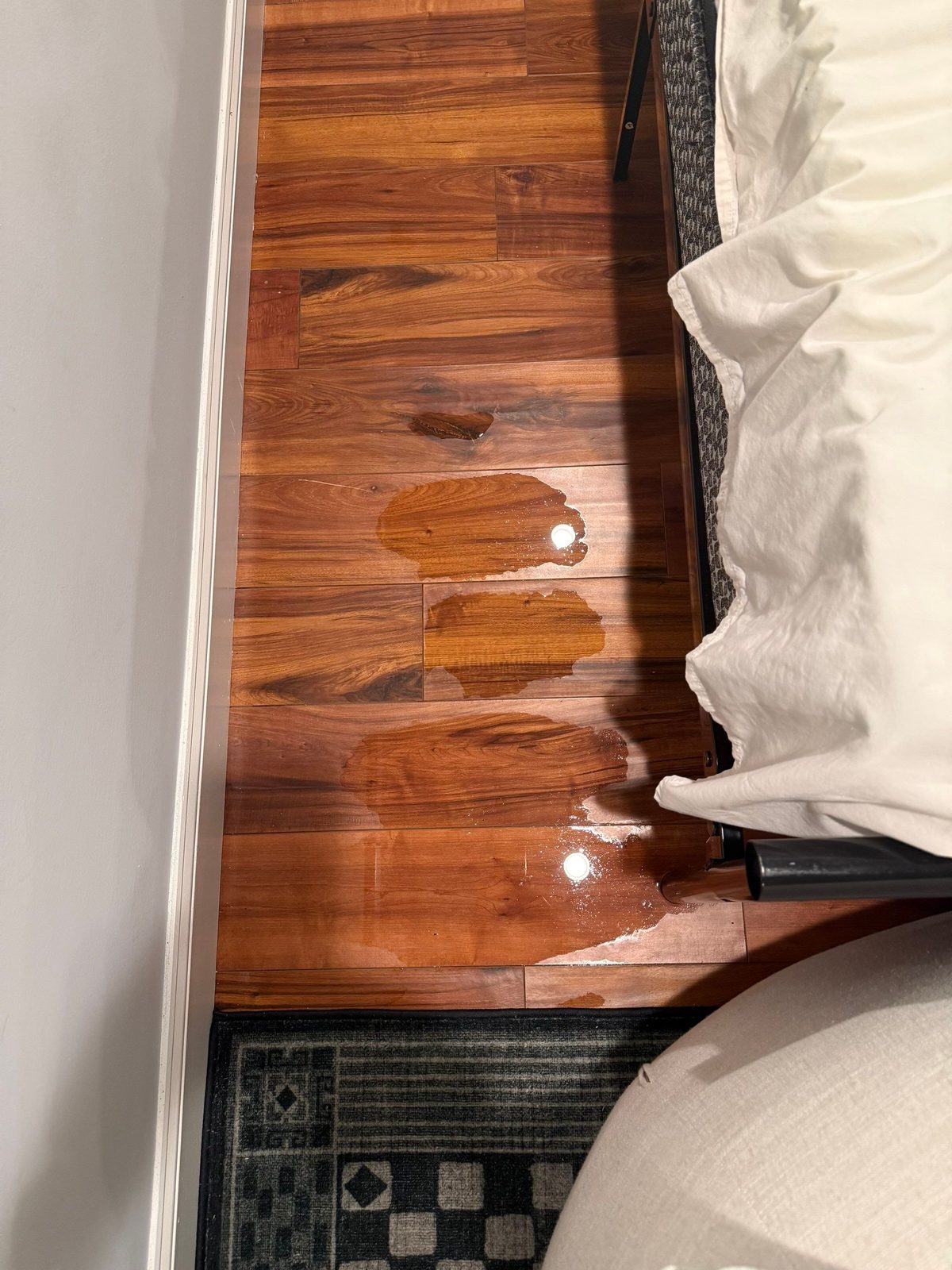
The project file below holds 26 photographs from July 2025 in Washington, DC. They show beads and patches of water on a dark-stained wood floor next to a bed, a blue dehumidifier and a blue air mover set on the bedroom floor, a moisture meter lying on the boards, and thermal-camera scans of the floor.
The photographs do not show the flooring species or construction, the water category, a moisture reading that is legible, or how the job ended, so none of those is stated here. The file carries no equipment count that this page can publish.
To reach a crew now, see 24/7 emergency restoration in Washington, DC.
Documented Washington, DC projects
Dark-Stained Wood Floor Water Drying
Wet wood floor in a Washington, DC bedroom, July 2025. The file's 26 photographs show water on the boards, a blue dehumidifier and air mover on the floor, a moisture meter and thermal-camera scans.
Frequently asked
Active water, mold, fire, or sewage event?
Connect directly with the Restoration Doctor team for your region. Crews are on standby 24/7 with documented response protocols.