
Water Damage Restoration in Shaw, Washington DC
For water damage restoration in Shaw, from the rowhouses to the garden-level apartments, Restoration Doctor of Washington DC dispatches crews 24 hours a day, 7 days a week, and a crew can be on-site in as little as 60 minutes from your call anywhere in Washington, DC. Response times vary based on crew availability and demand.
Updated October 2026
At a glance
- Phone
- (202) 922-1444
- Hours
- 24 hours a day, 7 days a week
- Response
- On-site in as little as 60 minutes in Washington, DC**Response times vary based on crew availability and demand.
- Service area
- Shaw, Washington, DC
- Services
- Water damage, sewage cleanup, mold remediation, fire damage, storm damage, reconstruction, extraction & drying, hardwood floor drying, roof tarping, smoke & soot cleaning, contents pack-out
- DC license
- DC Basic Business License #410524000721Held by VA Water Damage LLC dba Restoration Doctor
- Maryland license
- MD Home Improvement (MHIC) #167541Held by VA Water Damage LLC dba Restoration Doctor
- Certification
- IICRC-certified, S500 / S520-aligned
Water damage restoration in Shaw DC starts with how much of the neighborhood is old, attached and divided. Shaw is a Northwest neighborhood of brick rowhouses, many cut into condos and apartments, with English basements and garden-level units under the front steps, and with newer mid-rise apartment buildings along the 7th Street and 9th Street corridors. A leak in one of these buildings rarely stays where it started: water runs down through shared floors and along party walls into the unit next door.
The blocks around the Shaw-Howard University Metro station, the streets near the Convention Center and Mount Vernon Square, and the rowhouse blocks that border Logan Circle and U Street share one pattern. The plumbing is old, many roofs are flat, basements are lived in, and the people who call are often renters or condo residents who need a crew that can work inside a building they do not control.
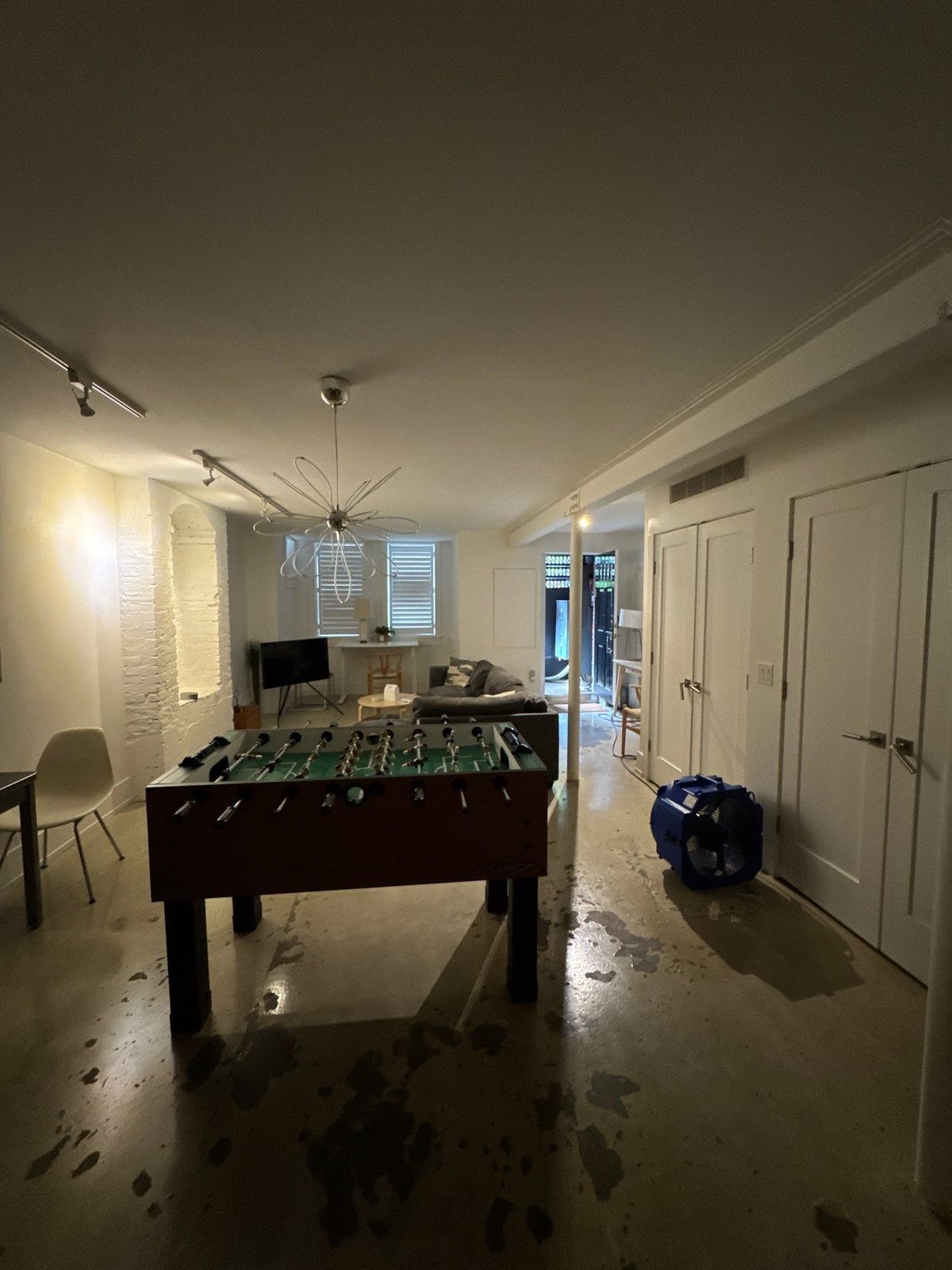
Our method does not change from block to block: stop the source, extract the standing water before it reaches the floor below, map what is wet, dry to a verified moisture standard and document every reading. This page explains how that plays out in Shaw's buildings and shows one real Shaw project file from July 2025.
How water damage behaves in Shaw
Garden-level apartments and English basements
Many Shaw rowhouses have a lower level that was finished as its own apartment, with its own entrance beneath the front steps. A garden-level unit sits below street level and takes water from two directions: from the plumbing and the units above, and from the ground and the sewer line below. A supply failure on an upper floor drains toward the lowest finished floor in the building, and for a garden-level unit that is often the first floor to show it.
Floors in these units are often polished concrete, tile or laminate over a slab. A slab does not absorb water the way a wood subfloor does, so the water spreads across the whole surface and finds every low spot, wall base and closet. The crew extracts it, then dries the wall bases, the cabinet toe-kicks and whatever rugs, furniture and trim held water against the slab, and checks the moisture in the surrounding material before it calls the floor dry.
Combined sewers, old pipes and flat roofs
Many blocks in Shaw still rely on combined sewer infrastructure that carries both storm water and sewage in the same pipe, which is why a heavy rain can push water back up through a basement drain. Water from a sewer backup is not clean water, and it is handled differently from a supply-line leak: contaminated porous material is removed rather than dried.
Shaw's rowhouses were plumbed with cast iron that is now well past its design life, and the older brick rowhouses usually carry flat roofs with parapets and coping that take the most weather. A pinhole in a cast-iron stack and a failed roof membrane look very different from the ceiling below, and the crew traces which one it is before it decides where to open a wall and where to dry.
Party walls and the unit next door
Rowhouses share walls, and the divided houses of Shaw often share floors, stacks and shut-offs as well. Water that starts in one unit travels through the shared wall cavity and the floor framing, so the neighbor's ceiling may be the first place it shows. The crew maps the affected area with thermal imaging and moisture meters, looks past the unit that called, and works with building management or the neighboring residents to dry where the moisture actually is.
Older plaster, original millwork and historic fabric add a second constraint. Shaw is one of the neighborhoods the District treats as a historic district, so exterior and structural repairs can involve review. Drying keeps original material in place wherever it can be dried, and every phase is documented so there is a record.
Shaw housing stock and how it fails
Shaw's housing is mostly attached brick rowhouses, a large share of them now condominiums, apartments or rooming units divided from single-family houses, alongside corner buildings with storefronts at street level and a growing number of newer mid-rise apartment buildings on the main corridors. A divided house puts one household's plumbing above another household's living room, and a party wall puts one house's water against another house's plaster.
What fails in that stock is predictable. Cast-iron drain stacks and older supply lines corrode from the inside. Flat roofs leak at the parapet and the roof drain. Original lath-and-plaster ceilings take on water and let go in sheets. Each of those shapes a different drying plan, and the crew identifies which one it is dealing with before it sets equipment.
Areas of Shaw we serve
Real Shaw blocks and buildings — and the water losses we most often see in each.
Rowhouse blocks and newer apartment buildings where a supply or drain failure can reach several units.
Mid-rise apartments over ground-floor retail, where an upper-unit leak can drain into the space below.
Older rowhouses and corner buildings, many divided into condos and apartments that share plumbing.
The southern edge of Shaw, where older rowhouse blocks meet newer apartment buildings.
Restored Victorian rowhouses and condos where original plaster and floors raise the cost of a slow response.
Lower-level apartments with their own entrances, where water from above and from the sewer line reaches the lowest floor.
Documented project files
Real CompanyCam-documented Restoration Doctor work in the Washington, DC metro — every project photographed with date and time stamps.
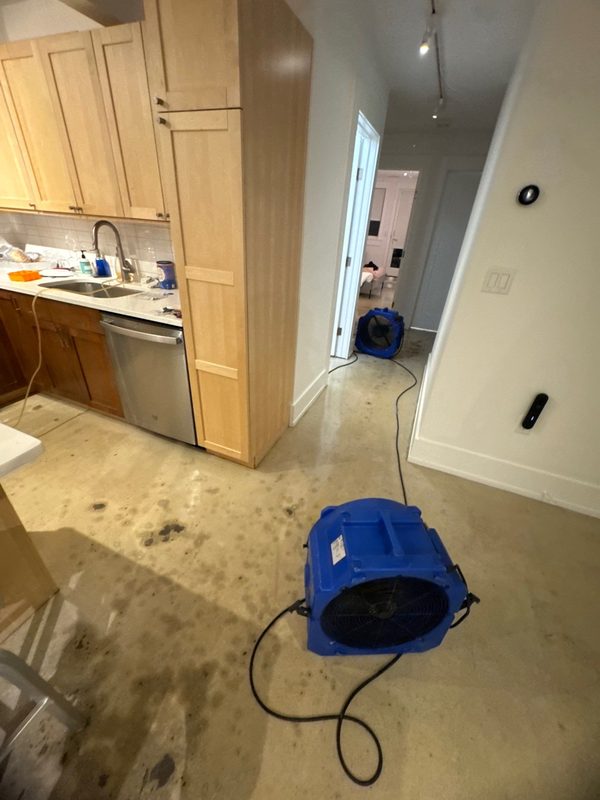
Air mover on a wet kitchen floor, Shaw, Washington, DC
From the July 2025 Shaw file of 134 photographs: a blue air mover standing on a wet polished concrete kitchen floor, with a second air mover in the hallway beyond it. The file does not record readings or an equipment count that this page can publish.
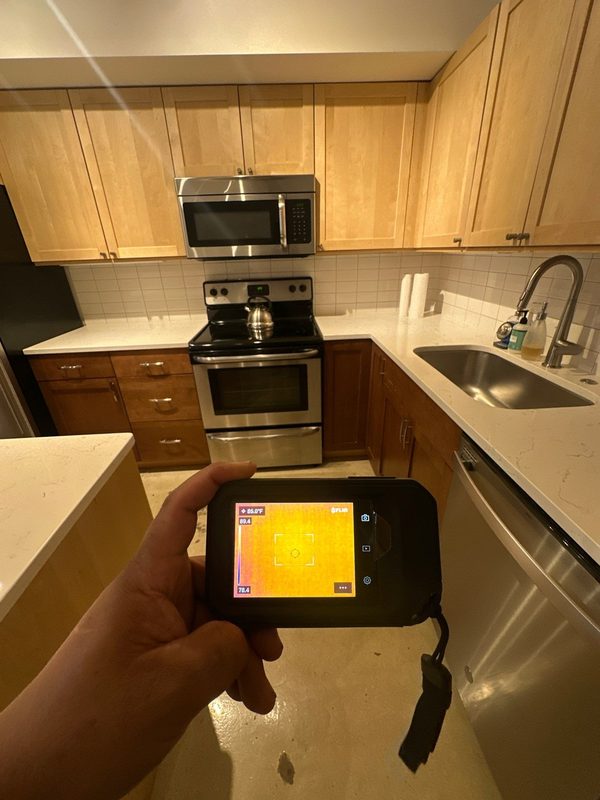
Thermal scan of a kitchen floor, Shaw, Washington, DC
From the same July 2025 file: a thermal camera held over the kitchen floor of the apartment. A thermal image shows temperature differences that can point to wet material, and the crew confirms with a moisture meter.
Full restoration services in Shaw
One operation covers every category — from emergency mitigation to full reconstruction.
Water Damage Restoration
Extraction, structural drying, and moisture verification for pipe breaks, appliance leaks, and English-basement flooding across the District.
Sewage & Biohazard Cleanup
Category 3 black-water decontamination with full PPE, contaminated-waste removal, antimicrobial treatment, and verified drying after sewer backups and overflows.
Mold Remediation
IICRC S520 containment, HEPA filtration, safe source-based removal, and independent post-remediation clearance verification.
Fire & Smoke Damage Restoration
Soot and smoke-residue removal, source-based odor neutralization, contents pack-out, and preservation-sensitive reconstruction after a fire — performed to ANSI/IICRC S700, the fire and smoke damage restoration standard.
Storm Damage Restoration
Emergency tarping, water extraction, and reconstruction after wind, heavy rain, and the flash flooding DC's summer storms produce.
Reconstruction & Repairs
Drywall, plaster, flooring, cabinetry, trim, and paint — the same in-house crew that dried the loss rebuilds it, with no handoff and preservation-sensitive finish matching for District homes.
Water Extraction & Structural Drying
Truck-mounted and portable extraction, air movers, dehumidifiers and dated moisture readings that decide when the equipment comes out.
Hardwood Floor Drying
In-place drying of wet hardwood floors with moisture and thermal mapping, air movers and dehumidifiers, and a clear line on which boards can be saved.
Emergency Roof Tarping
A temporary tarp over storm or impact damage to a roof, followed by drying of the water that already reached the interior.
Smoke & Soot Cleaning
Soot cleaned by surface type, odor treated at the source, HVAC cleaning and a real Washington, DC fire-damage file.
Contents Pack-Out & Restoration
Photographed, itemized pack-out, controlled cleaning and storage, and return of belongings when the home is ready.
What Shaw homeowners look for
Shaw residents often rent or share a divided house, so a restoration company's reputation here travels through landlords, building managers and neighbors as much as through the person who made the call. What matters on these blocks is whether the crew explains what it is doing in each unit, protects the neighbors' belongings and leaves a record the building can use.
We do not print star ratings or review counts on this page. Customer feedback lives on a separate reputation hub. Visit RestorationDoctorsReviews.com to read Washington, DC reviews and the Google aggregate for yourself, then come back here to compare them with what the crew actually documents.
Showing 4- and 5-star reviews. See all reviews on Google.
Nearby areas
Frequently asked
Active water, mold, fire, or sewage event?
Connect directly with the Restoration Doctor team for your region. Crews are on standby 24/7 with documented response protocols.