Sewer Backups in DC: Why the Combined System Floods Basements

BYSteve Jafari, General ManagerWASHINGTON DC & SOUTHERN MARYLAND

A sewer backup in DC most often happens because roughly a third of the city still runs on a combined sewer system that carries both stormwater and raw sewage in one pipe. During heavy rain that pipe overloads, and the pressure pushes contaminated water backward through the lowest drains — usually an English basement floor drain or toilet. This is Category 3 (black water) contamination under the ANSI/IICRC S500 standard, and it requires professional extraction, controlled removal of contaminated porous materials, disinfection, and often a backwater valve to prevent a repeat.
Call (202) 922-1444Why do sewer backups happen so often in DC basements?
Sewer backups happen so often in DC basements because roughly a third of the city is still served by a combined sewer system — a single network of pipes designed in the 1800s to carry both stormwater runoff and household sewage together. When a heavy storm dumps more water into that shared pipe than it can handle, the system surcharges, and the excess has to go somewhere. The path of least resistance is backward, up through the lowest fixtures in the lowest homes.
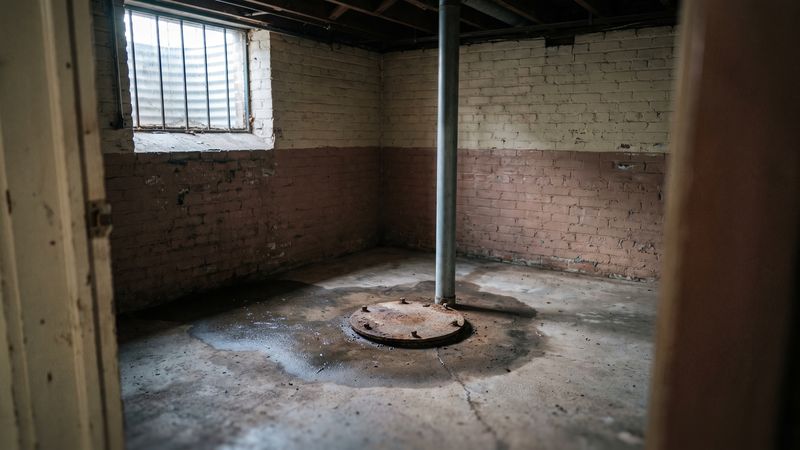
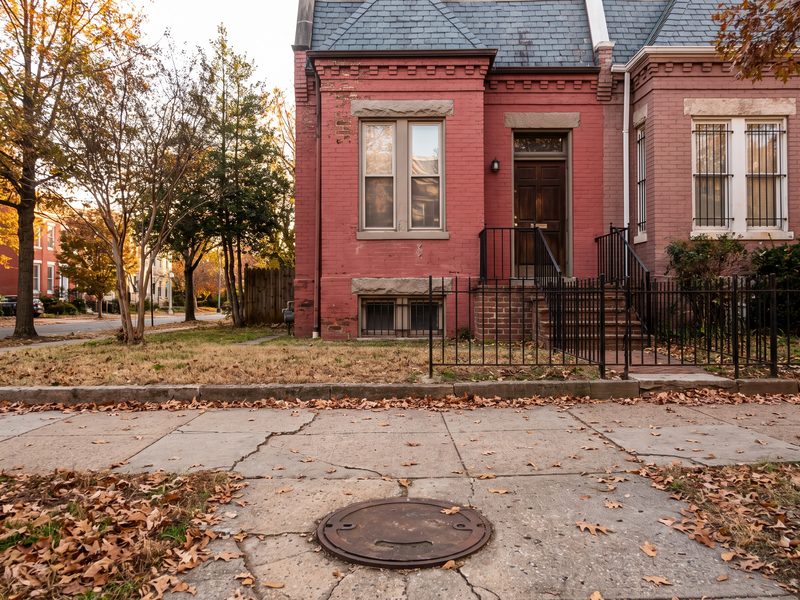
In practice that means English basements, garden-level condos, and the ground floors of older row houses in neighborhoods like Bloomingdale, LeDroit Park, Georgetown, Capitol Hill, and parts of Southeast bear the brunt of it. Your basement floor drain, laundry standpipe, or lowest toilet sits below the level of the surcharged city main during a surge, so when the main backs up, your fixtures become the release valve.
This is not a hypothetical problem in the District. Bloomingdale and LeDroit Park have experienced repeated, well-documented combined sewer backups during intense summer storms — part of why DC Water launched the Clean Rivers Project, a major program of tunnels and green infrastructure built to relieve the system. Until that relief is complete everywhere, older low-lying homes remain vulnerable every storm season.

What is a combined sewer overflow and how does it flood my home?
A combined sewer overflow (CSO) occurs when a combined sewer pipe fills beyond capacity during rain and discharges the excess — a mix of stormwater and raw sewage — into local waterways. In DC, the combined system was built to overflow to the Anacostia River, the Potomac River, and Rock Creek by design. But when even that outlet is overwhelmed, or a branch line can't relieve itself fast enough, the pressure travels back up the lateral lines toward individual properties.
The mechanism inside your home is straightforward physics. Every fixture in your house drains into a lateral pipe that connects to the city main. When the main is running under pressure during a surcharge, that pressure has to equalize, and it does so by pushing water and sewage up through whatever opening is lowest — almost always a basement floor drain first, then the basement toilet, then the tub or shower.
Because the water arriving in your basement contains untreated sewage, it is classified as Category 3 water under the ANSI/IICRC S500 Standard for Professional Water Damage Restoration. That distinction matters enormously for how the cleanup must be handled, which we cover below.
Several factors make a CSO backup worse for a specific home:
- A home at the bottom of a hill or block, where the sewer runs deepest
- An English basement or below-grade unit with fixtures below the street main
- An older lateral line partially blocked by roots, grease, or scale
- No backwater valve on the building's main drain line
- Impervious surfaces nearby (paved yards, roofs) sending more runoff into the combined pipe
Is sewer backup water dangerous — what is Category 3 black water?
Yes — sewer backup water is dangerous. It is classified as Category 3 water, commonly called black water, under the IICRC S500 standard. Category 3 water is grossly contaminated and can contain bacteria, viruses, protozoa, and other pathogens capable of causing serious illness, so it should never be treated like a clean water leak.
Category 3 water includes sewage, water that has backed up from beyond the trap, and any water carrying pathogenic or toxigenic agents. Porous materials it touches — carpet, carpet pad, drywall below the waterline, particleboard, insulation, upholstered furniture — are generally unsalvageable and must be removed and disposed of, not just dried. Semi-porous and non-porous materials can often be cleaned and disinfected, but only after complete extraction and removal of contamination.
Because of the health hazard, our crews follow Category 3 protocols: containment of the affected area, appropriate personal protective equipment, controlled removal of contaminated materials, antimicrobial application to remaining surfaces, and verification that structural materials are both dry and sanitary before any rebuild begins. Do not run a shop vac or a household carpet cleaner through sewage — you risk aerosolizing pathogens and spreading contamination through your HVAC system and living space.
Learn more about how we handle this on our sewage cleanup and water damage restoration pages, and if you're mid-crisis, call our 24/7 line at (202) 922-1444 before disturbing the area.

What should I do in the first hour after a sewer backup?
In the first hour after a sewer backup, keep people and pets away from the contaminated water, stop using every drain and toilet in the house, and call a licensed restoration team with emergency response capability. Do not wade into standing sewage or attempt to clean it yourself — the priorities are safety and stopping additional water from entering.
Time genuinely matters with Category 3 water. Contamination spreads, materials wick moisture upward, and within 24 to 48 hours microbial growth can begin on damp surfaces. Fast, professional extraction limits both the health hazard and the total scope of demolition and rebuild.
Here is a safe, practical sequence for the first hour:
- Keep everyone, especially children and pets, out of the affected basement or room
- Stop all water use upstairs — no flushing, no laundry, no dishwasher — to avoid adding to the backup
- If you can safely reach the electrical panel without touching water, cut power to the affected area
- Do not handle sewage-soaked items with bare skin, and avoid tracking contamination into clean areas
- Photograph everything for your records, but only from a safe, dry vantage point
- Call Restoration Doctor of Washington DC at (202) 922-1444 for 24/7 emergency response
| Do | Don't |
|---|---|
| Keep people and pets out of the water | Wade in or let kids near it |
| Stop all upstairs water use | Flush toilets or run laundry |
| Document with photos from a dry spot | Move contaminated items through clean areas of the house |
| Call for professional Category 3 cleanup | Use a shop vac or carpet cleaner on sewage |
How does a backwater valve stop sewage from flooding my basement?
A backwater valve stops sewage from flooding your basement by acting as a one-way gate on your main drain line: it lets wastewater flow out to the city sewer but automatically closes when water tries to flow backward into your home. When the combined main surcharges during a storm, the valve's flap seals against the reverse pressure, keeping the sewage in the street rather than in your English basement.
For DC row houses and townhomes prone to combined sewer backups, a backwater valve is one of the most effective single upgrades a homeowner can make. It's installed on the building's main sewer lateral, typically accessed through the basement floor, and requires periodic inspection to ensure the flap stays clean and seats properly.
A valve is not a cure-all. It must be sized and placed correctly by a licensed plumber, and while it's closed during a surge you should minimize water use inside the house so your own wastewater doesn't back up on your side of the valve. But for homes that flood repeatedly, it's often the difference between a dry basement and another Category 3 disaster every heavy rain.
Because we handle the cleanup and reconstruction side, we routinely see which homes get hit again and again. When we rebuild a finished basement after a sewage loss, we'll flag whether a backwater valve and other mitigation belong in the scope — so you're not calling us back next storm.

Who can tell me how my policy treats a sewer backup in DC?
Coverage depends on your policy and your insurer's decision.
Coverage depends on your policy and your insurer's decision. Questions about coverage belong with your insurer, your agent, or a licensed public adjuster or attorney.
It's also important to understand what the endorsement is versus what it isn't. Coverage depends on your policy and your insurer's decision. Coverage depends on your policy and your insurer's decision.
We document the loss with photographs, moisture readings and a scope that you may share with your insurer. Your insurer alone decides what it approves and pays.
Questions you can bring to your insurer or agent:
- What your policy says about water that backs up through a sewer or drain
- Whether any limit applies to this kind of loss
- How your policy treats cleanup and reconstruction
- Which deductible applies
- What your policy says about root intrusion or neglected laterals
How does Restoration Doctor handle the cleanup and the insurance claim?
Restoration Doctor of Washington DC handles a sewer backup as a full Category 3 project — safe extraction, controlled demolition of contaminated porous materials, disinfection, structural drying, and reconstruction — while building project documentation the entire time. We bill you, the homeowner, directly and hand you complete documentation to submit to your insurer. We are hired by the property owner under a written agreement.
Our project documentation includes an Xactimate scope written to industry-standard pricing, CompanyCam photo documentation tied to each affected area, and daily moisture logs that prove the structure was dried to a verified standard rather than just surface-wiped. Because we hold a DC license (DLCP #410524000721), we can carry the project straight through from emergency mitigation into the rebuild.
On the drying side, a typical structural dry-out runs three to five days, monitored daily with psychrometric readings until moisture content in the affected materials meets the drying goals established for the project. For sewage losses, that drying happens only after contaminated materials are removed and surfaces are treated, following ANSI/IICRC S500 protocols and, where microbial growth is present, the ANSI/IICRC S520 mold remediation standard.
If you're dealing with a backup right now, call (202) 922-1444 and let us stabilize the situation before the contamination spreads.
- Category 3 containment and safe extraction of black water
- Removal and disposal of unsalvageable porous materials (carpet, pad, wet drywall, insulation)
- Antimicrobial treatment of remaining structural surfaces
- Structural drying to verified drying goals with daily moisture logs
- Xactimate scope + CompanyCam photos for project documentation
- Full reconstruction under our DC license (DLCP #410524000721)

How can I prevent the next sewer backup in my DC home?
You can reduce the odds of the next sewer backup by installing a backwater valve, maintaining your sewer lateral, and managing how stormwater reaches the combined system. No single step is a guarantee against a severe CSO event, but layered mitigation dramatically lowers your risk and your exposure.
Start with the drain line itself: have a plumber camera-inspect your lateral for roots, cracks, grease buildup, and bellies that trap debris, since a partially blocked lateral backs up far more easily. A properly installed and maintained backwater valve is the strongest defense for low-lying English basements. From there, reducing runoff into the combined pipe — through downspout redirection, rain gardens, or permeable surfaces where allowed — eases pressure on the whole system.
Prevention steps that pay off for DC row houses and English basements:
- Install and annually inspect a backwater valve on your main line
- Camera-inspect and clear the sewer lateral of roots and grease
- Ask your insurer or agent what your policy says about sewer backup
- Redirect downspouts and reduce impervious runoff into the combined system
- Keep valuables and mechanicals off the basement floor where possible
- Know your shutoffs and keep our 24/7 number, (202) 922-1444, handy before storm season
| Measure | Relative cost | Impact on backup risk |
|---|---|---|
| Backwater valve installation | Moderate one-time | High |
| Lateral camera inspection & cleaning | Low to moderate, periodic | Medium to high |
| Ask your insurer or agent about sewer backup | Not applicable | A question for your insurer, not prevention |
| Downspout & runoff redirection | Low to moderate | Medium |