DC Basement Flooding: Causes, First Steps, and How to Prevent It

BYSteve Jafari, General ManagerWASHINGTON DC & SOUTHERN MARYLAND

Basement flooding in Washington DC is most often caused by dense clay soil that traps water against foundations, backups from the District's aging combined sewer system during heavy rain, sump-pump failures, and downspouts that dump roof runoff right at the foundation. If water is already inside, cut power to the area only if you can do it safely, stop the source, get contaminated water treated as a health hazard, and call a licensed crew fast — mold can start within 24 to 48 hours. You can prevent most floods by installing a battery-backup sump pump, adding a backwater valve, extending downspouts, and sealing foundation cracks.
Call (202) 922-1444Why do DC basements flood so often?
DC basements flood so often because of four overlapping factors: the region's dense, slow-draining clay soil; a partly combined sewer system that can back up during heavy rain; below-grade and English basements that sit near or below the water table; and intense, fast-moving summer storms that overwhelm drainage.
Much of the District sits on tight clay and fill that does not let water percolate away quickly. When a storm saturates the ground, water lingers around foundations and builds hydrostatic pressure against basement walls and slabs, forcing moisture through cracks and the cove joint.
A large part of central and older DC is served by a combined sewer that carries both sewage and stormwater in the same pipes. When a downpour overwhelms that system, water can back up into the lowest drains in a house — almost always in the basement.
Add row-house and townhome basements that are half below grade, and you have homes that take on water from the outside (groundwater) and the inside (sewer) at the same time during a big storm.
What should I do the moment I find a flooded basement?
The moment you find a flooded basement, prioritize safety and source control: do not step into standing water that could be near electrical outlets or a panel, cut power to the area only if you can reach the breaker safely, identify whether the water is clean or contaminated, and call for professional extraction.
Electricity is the first hazard. Basements hold the panel, the water heater, and often the laundry, so energized water is a real risk. If you cannot reach the panel without standing in water, stay out and have the power cut at the meter.
Next, figure out the water source. Clean groundwater or a supply-line leak is Category 1. Water that came up through a floor drain or toilet during a storm is a sewer backup — Category 3, contaminated — and must be handled with protective equipment and disinfection, never mopped up casually.
Then document with photos before anything is moved, and get a licensed crew on the way. The faster water is extracted and drying begins, the less of the finished basement you lose.

How does the combined sewer cause backups?
The combined sewer causes backups because, in older parts of DC, stormwater and sewage share the same pipes. When rainfall exceeds the system's capacity, the water has nowhere to go and pushes back up the branch lines into homes through the lowest available opening.
That lowest opening is almost always in the basement — a floor drain, a laundry standpipe, or a first-floor toilet in a below-grade unit. Because the backup contains sewage, it is a genuine health hazard, not just a mess.
A backwater valve is the standard defense. Installed on the home's sewer line, it allows waste to flow out but closes automatically if the municipal system tries to push water back in. For a home that has backed up before, it is one of the highest-value upgrades available.
If you have experienced a backup, the cleanup should include extraction, removal of porous materials the water touched, disinfection, and verified drying — the same protective standard used for any Category 3 loss.
Why do sump pumps fail exactly when I need them?
Sump pumps fail during storms for predictable reasons: the power goes out in the same storm that is flooding the basement, the pump is undersized or worn out, the float switch jams, or the discharge line freezes or clogs. The failure almost always coincides with the moment of greatest need.
Power loss is the single most common cause. A summer thunderstorm that drops two inches of rain also knocks out electricity, and a pump with no battery backup simply stops while groundwater keeps rising.
A battery-backup or water-powered backup sump is the fix. It keeps pumping through an outage and buys hours of protection. Pairing it with a high-water alarm means you know the moment the primary pump is struggling.
Pumps also wear out. A unit older than about seven to ten years should be tested regularly and replaced proactively — testing it in a dry spell is far cheaper than discovering it failed mid-storm.

What is the prevention checklist for a DC basement?
You can prevent most DC basement floods with a handful of targeted upgrades that address both the groundwater and the sewer pathways. None of them require rebuilding the house.
- Install a battery-backup (or water-powered backup) sump pump and a high-water alarm.
- Add a backwater valve on the sewer line if your home is on the combined system or has ever backed up.
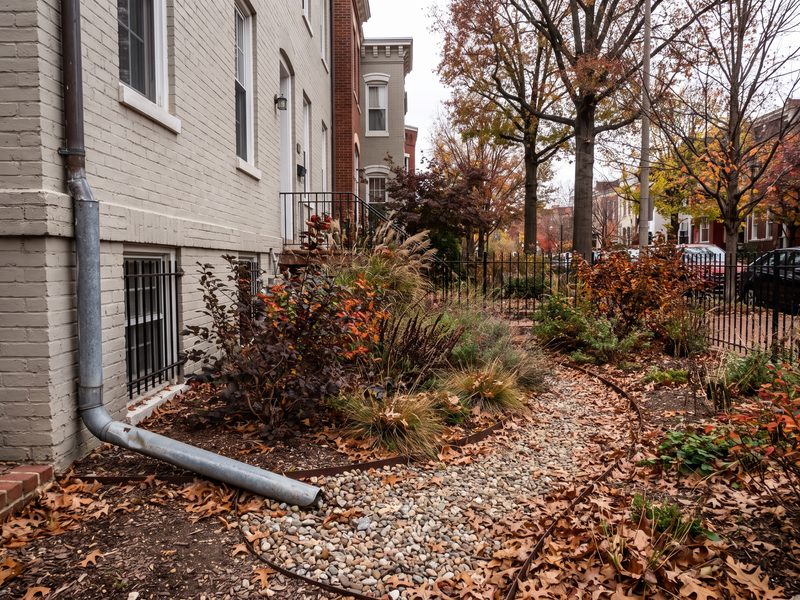
- Extend downspouts at least four to six feet from the foundation, and keep gutters clear.
- Regrade so the soil drops about six inches over the first ten feet away from the house.
- Seal foundation and cove-joint cracks, and consider interior drain tile for a chronically wet basement.
- Keep valuables and mechanicals off the floor — up on shelving or platforms.
How is a flooded basement properly dried?
A flooded basement is properly dried by extracting all standing water, removing unsalvageable porous materials, disinfecting if the water was contaminated, and then running sized dehumidification and airflow until moisture readings hit a verified dry standard — not just until surfaces feel dry.
Below-grade spaces are the hardest to dry because masonry and slab hold moisture and there is little natural airflow. Crews log moisture daily and keep equipment running until the structure actually reaches the target, which for a saturated basement can take longer than an upstairs room.
Materials matter. Wet drywall, carpet pad, and insulation in a Category 3 backup come out; masonry and framing can usually be dried and saved. Making that call correctly is what separates a durable repair from one that grows mold.
As with any restoration, the documentation built during drying — daily logs and photos — is what supports your insurance claim.

Does insurance cover a flooded basement in DC?
Coverage depends on how the water got in. A sudden supply-line break or a sump failure is often covered by a standard homeowners policy, sewer backups are typically covered only if you carry a specific backup endorsement, and true surface flooding from a storm generally requires separate flood insurance.
Because those distinctions decide whether you are reimbursed, identifying and documenting the water source correctly from the start is critical. That is part of what a proper response captures.
Restoration Doctor bills you, the homeowner, and provides a carrier-ready claim file — Xactimate scope, dated photos, and daily moisture logs — so you can pursue reimbursement. We work for you, not the insurance company, so the scope reflects what your basement actually needs.
If your basement is taking on water now, call and get a crew moving; sorting coverage is far easier with complete documentation in hand.