English Basement Water Problems in DC Rentals and In-Law Suites

BYSteve Jafari, General ManagerWASHINGTON DC & SOUTHERN MARYLAND

English basement water damage in DC most often comes from below-grade groundwater intrusion and sewer backups, because the unit sits partly or fully below street level where hydrostatic pressure and old combined sewer lines create constant risk. Mold can begin colonizing damp materials within 24 to 48 hours, so an occupied lower unit demands fast action. Protect it with proper exterior grading, a maintained sump pump with battery backup, a backwater valve on the sewer lateral, and fast professional drying — structural dry-out typically takes 3 to 5 days, monitored daily with moisture meters until the structure reaches a verified drying goal.
Call (202) 922-1444Why are DC English basements so prone to water damage?
English basement water damage in DC is common because these units sit below street grade, surrounded on multiple sides by soil that holds and channels water toward the foundation. The lower a living space sits relative to the water table and the storm sewer, the more paths water has to enter it — through the slab, the cove joint where the wall meets the floor, foundation cracks, and window wells. Hydrostatic pressure builds against below-grade walls whenever the surrounding soil is saturated, and that pressure will find any weak point in a century-old foundation.
Washington's older row-house neighborhoods add another layer of risk. Many blocks in Capitol Hill, Petworth, Columbia Heights, Shaw, and Bloomingdale still rely on combined sewer infrastructure that carries both stormwater and sewage in the same pipe. During heavy rain, those pipes surcharge, and the lowest connected fixture in the system — often a floor drain or toilet in an English basement — becomes the pressure-relief point. Bloomingdale and LeDroit Park in particular have a well-documented history of storm-driven sewer surcharge precisely because of this combined system.
Add clay-heavy soil that swells when saturated, mature street trees whose roots invade sewer laterals, and century-old brick foundations that were never waterproofed to modern standards, and the below-grade lower unit becomes the part of the property most likely to take on water. When that unit is a rental or an in-law suite with someone living in it, the stakes are higher than a flooded storage room — you are protecting a home within a home.

What causes water problems in English basement rentals and in-law suites?
The causes fall into three buckets: groundwater intrusion driven by hydrostatic pressure, sewer or drain backups, and interior plumbing failures. In an occupied lower unit, any of these can go from a damp corner to a livability emergency within hours, because the water has nowhere to drain and the residents have nowhere below to escape it.
Groundwater problems tend to be slow and recurring — seepage at the cove joint after rain, efflorescence (a white mineral crust left behind as water evaporates through masonry) on the walls, or a musty smell that never fully clears. Sewer backups are sudden and hazardous, pushing Category 3 contaminated water up through the lowest drain. Plumbing failures — a burst supply line, a failed water heater, or an overflowing appliance in the unit above — send clean or gray water down into the basement finishes, and even clean water becomes a contamination problem the longer it sits.
Each cause leaves a different fingerprint, and identifying the source correctly is the first step in both the cleanup and the insurance conversation. A recurring groundwater problem points toward drainage and waterproofing work; a one-time backup points toward a backwater valve; an interior plumbing failure points toward a straightforward covered loss in many policies.
- Hydrostatic groundwater seepage through the slab, cove joint, or foundation cracks
- Combined-sewer surcharge backing up through floor drains and toilets during storms
- Failed or unplugged sump pumps during power outages
- Clogged or root-invaded sewer laterals shared with the main house
- Water heater, washing machine, or supply-line failures inside the unit
- Window well flooding when drains are blocked by leaves and debris
- Condensation and high humidity that feed mold on finished walls
How can I tell if it's groundwater or a sewer backup?
You can usually tell the difference by where the water appears, how it smells, and how fast it arrives. Groundwater enters at the base of walls and the floor slab, is generally clear or slightly cloudy, and worsens gradually during or after rain. A sewer backup comes up through the lowest drain or toilet, often smells foul, and may carry visible solids — that is Category 3 water under the ANSI/IICRC S500 standard, and it requires contaminated-water handling, not just drying.
This distinction matters because it changes the entire response. Clean groundwater seepage can be extracted and dried, and the affected materials are often salvageable if drying starts quickly. Sewer backup contaminates everything it touches with bacteria and other pathogens, so porous materials like drywall, carpet, carpet padding, and insulation typically must be removed rather than dried in place. Keep in mind that groundwater is not automatically Category 1 either — water that has traveled through soil and entered a structure is generally treated as at least Category 2, and it degrades further the longer it sits.
When an occupied unit is involved, do not wade into standing water that smells of sewage or has an unknown source, and keep tenants and family members out until the category is confirmed. Our team documents the water category on arrival and adjusts the scope accordingly, because the category determines what can be saved, what must go, and what the claim file needs to show.
| Clue | Groundwater seepage | Sewer backup |
|---|---|---|
| Entry point | Base of walls, floor slab, cove joint | Lowest floor drain or toilet |
| Appearance | Clear to cloudy | Discolored, may carry solids |
| Odor | Musty, earthy | Strong sewage smell |
| Timing | During/after rain, gradual | Sudden, often during storms |
| Water category (S500) | Typically Cat 2, degrading over time | Cat 3 (grossly contaminated) |
| Typical outcome | Extract and dry | Remove porous materials, clean and disinfect |

What are the health risks for an occupied lower unit?
The health risks in an occupied English basement are real and time-sensitive, because people are living, sleeping, and often cooking in the same air as the moisture. Standing or absorbed water in a below-grade unit with limited ventilation drives humidity up fast, and mold can begin colonizing damp organic materials within 24 to 48 hours. Once colonization starts, the problem stops being a drying job and becomes a remediation job.
Sewer backups add bacterial and viral contamination to that mix. Anyone with asthma, allergies, a compromised immune system, or respiratory sensitivity is at elevated risk, and infants and elderly residents in an in-law suite are especially vulnerable. English basements also tend to have fewer egress windows and lower airflow than upper floors, so contaminated or humid air lingers instead of clearing.
Because these units are occupied, the practical priority is often relocating residents temporarily while the space is dried and, if needed, remediated under the ANSI/IICRC S520 mold standard or cleaned under Category 3 contaminated-water protocols. Getting people out of the moisture is not overcaution — it protects health and prevents a small problem from becoming a chronic mold issue that follows the unit through every future tenancy.
How do I protect an occupied English basement from water damage?
Protect a lower unit by attacking water on three fronts: keep it away from the foundation, give any water that does enter a controlled path out, and block the sewer from backing up. No single device solves an English basement — layered defenses do.
Start outside, since the cheapest gallon of water to manage is the one that never reaches the wall. Grading, gutters, downspout extensions, and clear window-well drains handle the bulk of storm runoff. Then add mechanical protection inside for the water that inevitably gets through — a sump pit and pump with a backup power source — and finally address the sewer connection with a backwater valve, which is the single most effective defense against a combined-sewer surcharge turning a rainstorm into a Category 3 event.
For an occupied rental or in-law suite, also build in monitoring so a failure gets caught quickly. A battery backup on the sump pump and a few inexpensive water alarms can be the difference between a mopped floor and a gutted unit, and they matter even more when the owner lives upstairs or off-site and may not see the first inch of water arrive.
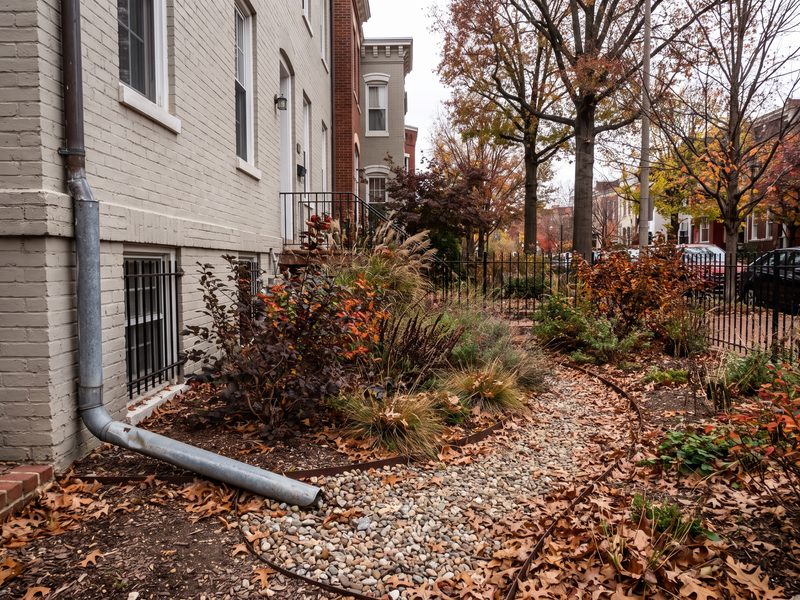
- Grade soil to slope away from the foundation and extend downspouts several feet from the wall
- Clean gutters and window-well drains before every storm season
- Install and maintain a sump pump with a battery or water-powered backup
- Add a backwater valve on the sewer lateral to stop combined-sewer surcharge
- Seal foundation cracks and consider interior drainage in chronically wet units
- Keep stored belongings and furnishings off the slab on shelving or risers
- Place water alarms near the floor drain, sump, and water heater
- Know where the main water shutoff and sewer cleanout are before you need them

What should I do immediately when an English basement floods?
The moment you find water in an English basement, prioritize safety, stop the source if you safely can, and call for professional extraction — standing water in a below-grade occupied unit does not drain or dry on its own. If the water may be contaminated or is near electrical outlets, do not enter; cut power to the area at the panel only if you can reach the panel safely, and keep residents out.
Speed matters more here than almost anywhere else in a home. A finished lower unit holds water against drywall, baseboards, and flooring with no gravity drainage, so every hour raises the humidity and the odds of mold. Rapid extraction and structured drying protect both the building and the people living in it, and they also protect the insurance claim — carriers expect a homeowner to mitigate damage promptly.
Restoration Doctor of Washington DC runs 24/7 emergency response across Washington, D.C. and Southern Maryland for exactly this situation. Call (202) 922-1444 and we can begin extraction, set containment, and start the moisture documentation your claim will need. For a full walkthrough of the process, see our water damage restoration page at /services/water-damage-restoration.
- Get all residents out of standing or foul-smelling water immediately
- Shut off the water source if it is a plumbing failure and you can reach it safely
- Do not use electrical devices or outlets in the flooded area
- Photograph everything before moving anything — this supports your claim
- Move undamaged belongings to a dry level if it is safe to do so
- Call 24/7 emergency water damage response at (202) 922-1444
Does insurance cover English basement water damage in DC?
Coverage depends on the cause and your specific policy, so the honest answer is: sometimes fully, sometimes only with an endorsement. A sudden interior plumbing failure is commonly covered, while groundwater seepage is almost always excluded and sewer backup is excluded unless you carry a water-backup or sump-overflow endorsement — a rider every DC owner with an English basement should specifically ask their agent about before storm season, not after.
This is where documentation wins or loses claims. Restoration Doctor bills the homeowner directly and hands you a carrier-ready claim file — an Xactimate scope, CompanyCam photo documentation, and daily moisture logs — so the cause, category, and drying process are all on the record. We work for you, not your insurance company, and that file is what lets an adjuster evaluate and approve the work quickly instead of going back and forth over an undocumented loss.
If you rent out the lower unit, coordinate with your tenant on their renters' policy, which covers their personal property, while the structure and finishes typically fall under the owner's policy. For a deeper look at how DC policies treat water losses, read our guide at /blog/does-dc-homeowners-insurance-cover-water-damage.

How does professional restoration work for an occupied lower unit?
Professional restoration of an occupied English basement follows the ANSI/IICRC S500 process: inspect and classify the water, extract standing water, remove unsalvageable materials, set containment and controlled drying, then monitor moisture daily until the structure reaches its verified drying goal. Structural dry-out typically takes 3 to 5 days, though a below-grade unit with saturated masonry and dense plaster can take longer — brick and concrete release moisture far more slowly than framing and drywall.
Because people are living there, we design the work to minimize disruption. Containment barriers isolate the wet zone, HEPA air scrubbers protect indoor air quality, and we sequence demolition and drying so residents can often remain elsewhere in the building or return sooner. For sewer backups, we apply Category 3 contaminated-water protocols, and where mold growth is present, we follow the ANSI/IICRC S520 remediation standard.
Psychrometry drives the whole process: we track temperature, relative humidity, and the moisture content of walls and slab so drying is verified with meters, not guessed by touch or appearance. A wall can look and feel dry days before its core actually is, and closing it up early is how chronic mold problems start. See how we approach the full scope at /services/water-damage-restoration, and visit /services/mold-remediation if colonization has already started.
- Inspection and water-category classification on arrival
- Standing-water extraction and removal of unsalvageable porous materials
- Containment, air movement, and dehumidification sized to the space
- Daily moisture monitoring documented in a claim-ready log
- Antimicrobial treatment for Category 3 or mold-affected areas
- Reconstruction of finishes once the structure is verified dry