Is There a DC Water Basement Flooding Protection Program? Rebates Explained
BY RESTORATION DOCTOR OF WASHINGTON DC · WASHINGTON DC & SOUTHERN MARYLAND
The District runs several separate homeowner programs covering stormwater retrofits, flood resilience assessments and the stormwater charges on your water bill, and they are administered by different agencies with different eligibility. Find out which one covers your address before you pay out of pocket for something one of them would have funded.
Call (202) 922-1444What District programs actually help a homeowner with flooding or stormwater?
Six District programs matter to a typical homeowner, and two different bodies run them. The Department of Energy and Environment, known as DOEE, runs RiverSmart Homes, RiverSmart Rebates, RiverSmart Rewards, Clean Rivers Impervious Area Charge relief and FloodSmart Homes. DC Water runs its own Expanded Backwater Valve Program, which reimburses the purchase and installation of a backwater valve at eligible properties with a documented sewer backup. They sit on separate pages with separate applications and separate eligibility, so a homeowner who finds one has usually not found the others. If you are looking for a DC Water basement flooding protection program, the backwater valve rebate is the one DC Water pays out directly, and the bill discounts below are the ones DOEE approves and DC Water posts to your account.
Sort them by what they hand you. RiverSmart Homes installs physical features on your property at a reduced cost, and RiverSmart Rebates reimburses you for installing them yourself. RiverSmart Rewards converts qualifying green infrastructure into a standing discount on your DC Water bill. Clean Rivers relief lowers that same bill for income-qualified households. FloodSmart Homes sends an assessor and gives you a written report on what would actually reduce your flood risk. DC Water's Expanded Backwater Valve Program pays you back after the work, for a documented sewer backup.
Read one thing into that list first: these are stormwater, resilience and sewer-backup programs, not general repair funds. Not one pays to rip out a soaked finished basement. The DC Water valve rebate is the only one a past flood helps you with, and even that reimburses the valve rather than the damage. The rest exist to keep rainwater out of the ground floor and out of the combined sewer.
Who runs each one and what does it pay for?
Amounts, income limits and application windows move, so the table says what each program does and who runs it. The agency page says what it currently pays.
- On your property: RiverSmart Homes and RiverSmart Rebates
- On your bill: RiverSmart Rewards and Clean Rivers charge relief
- On paper, as advice you then act on: FloodSmart Homes
- Paid back to you after the work: DC Water's Expanded Backwater Valve Program
- Nowhere on this list: any program that pays to dry out or rebuild a basement
| Program | Run by | What it delivers | Typical candidate |
|---|---|---|---|
| RiverSmart Homes | DOEE | Free stormwater audit, then rain barrels, trees, rain gardens or permeable paving at a set copayment | Owner or consenting renter, four units or fewer |
| RiverSmart Rebates | DOEE | Reimbursement toward features you install yourself | Anyone using their own contractor |
| RiverSmart Rewards | DOEE, credited by DC Water | Recurring discount on the stormwater fee and the CRIAC line, for a three-year term | A property already holding runoff back, installed after DOEE's cutoff date |
| Clean Rivers charge relief | DOEE | Percentage reduction of the monthly CRIAC and volume charges on the DC Water account | An income-qualified DC Water customer |
| FloodSmart Homes | DOEE | Free flood resilience assessment, written report and counseling session | A homeowner with documented flood risk |
| Expanded Backwater Valve Program | DC Water | Reimbursement for the purchase and installation of a backwater valve, up to the cap DC Water publishes | An owner with a documented sewer backup at the property |
Which addresses qualify and how is eligibility decided?
Each program draws its line differently. RiverSmart Homes uses building type: DOEE publishes it as residential properties inside the District with four or fewer units, which covers the ordinary row house, the two-flat and the small conversion. Larger buildings, including apartment buildings, most condominium buildings and offices, are pointed toward RiverSmart Communities or RiverSmart Rebates instead.
RiverSmart Rewards uses the infrastructure, not the building. DOEE asks that there be a DC Water bill, that the account is current, that the green infrastructure is actively maintained, and that the property complies with DOEE stormwater rules where they apply. The practice also has to have been installed after a cutoff date DOEE publishes, and it has to be a type that captures stormwater rather than one that only looks green.
Clean Rivers relief uses household income and size. DOEE publishes a tier table that sets the income limit by household size, and the tier you land in decides how much comes off. That table is refreshed each fiscal year, so a household that missed the cut once is worth re-checking.
FloodSmart Homes uses risk. DOEE has said its goal is to serve every interested homeowner with flood risk, with homes inside a Flood Hazard Area served first. Eligibility is decided per program, so being told no once tells you nothing about the others.
What is the CRIAC line on your DC Water bill and can it be reduced?
The Clean Rivers Impervious Area Charge is the line that funds the District's clean rivers work, and it is charged on impervious area. Impervious means hard surface that rain cannot soak through: roof, patio, parking pad, walkway, driveway. A wide row house with a paved rear pad pays more than a narrow house with a planted yard, even if the two use identical amounts of water.
That design is why the charge can be reduced rather than only paid. Because the fee is sized by runoff, the District discounts properties that hold their own runoff back. RiverSmart Rewards is the mechanism. DOEE describes it as two incentives in one application, covering the DC Government Stormwater Fee and the CRIAC, with the discount posted directly to the DC Water account.
The size of that discount depends on the application type, the property size and how much runoff the green infrastructure retains, so there is no flat figure to quote. Approvals run for a three-year term and can be renewed before they expire, so a household that installs a rain garden and forgets the paperwork can quietly lose the discount later.
The second route is income based. Clean Rivers relief reduces the monthly CRIAC and the volume charges for qualifying households across several tiers. DOEE is explicit that this is a discount rather than a direct payment, so it lowers what accrues going forward and does not settle what is already owed.
One practical note for RiverSmart Homes and RiverSmart Rebates participants: DOEE enrolls them in RiverSmart Rewards automatically, and says the credit should appear within a billing cycle or two. If the line never moved, email the program.
What is RiverSmart Homes and what does it install?
RiverSmart Homes is DOEE's installation program for small residential properties. You apply, you go on a waitlist, and when your name comes up a DOEE auditor performs a free stormwater audit. That audit decides which features your lot can take, so the answer is site specific and you do not pick from a menu sight unseen. Most features carry a fixed copayment, some are free, and one is a reimbursement with geographic limits.
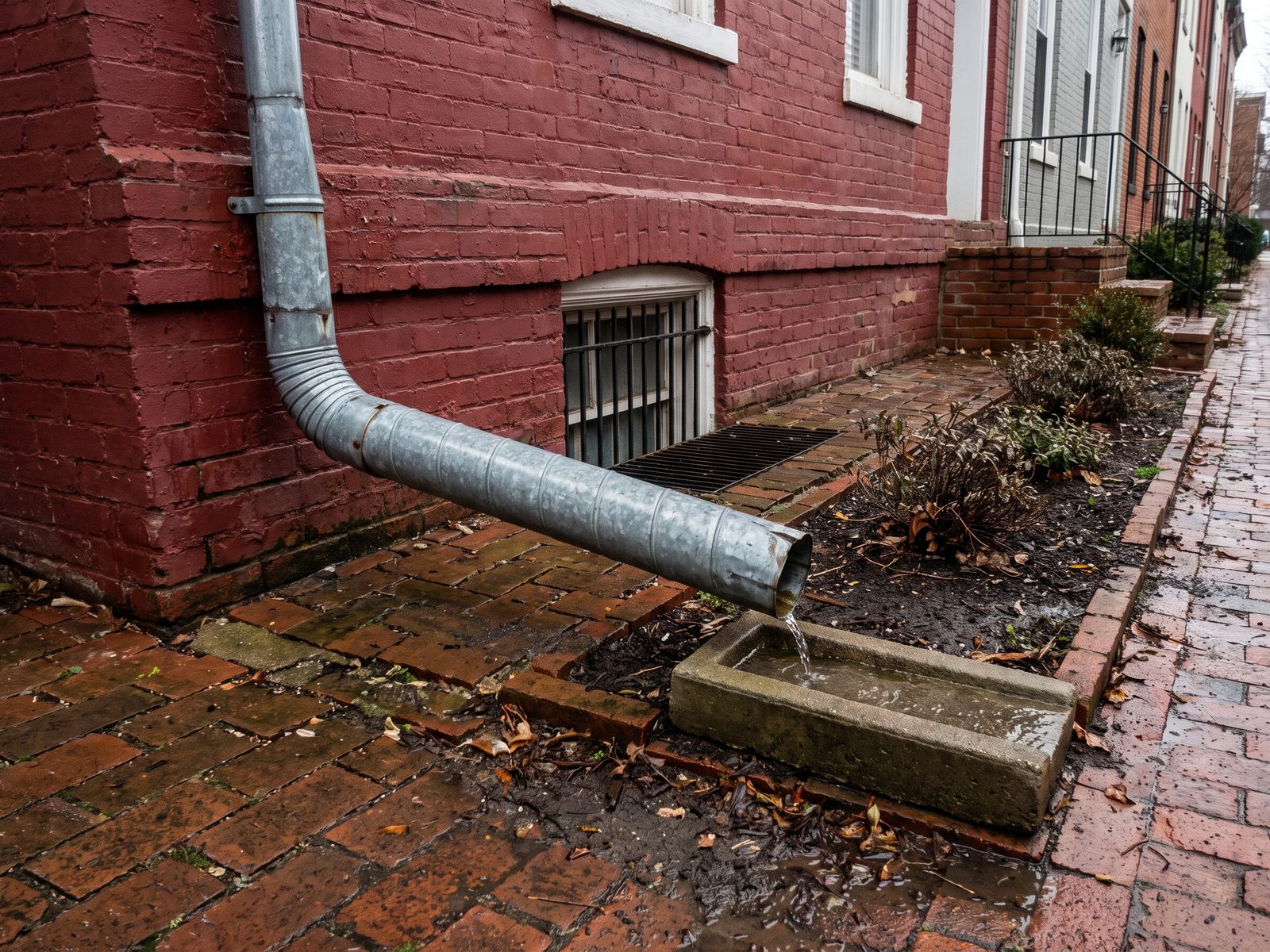
For an owner whose problem is a wet basement rather than a wet river, the feature that matters moves water away from the wall. A downspout discharging at the foundation loads the soil right where the wall is weakest. Redirecting that discharge into a barrel, a planted bed or a gravel run is usually the cheapest change that measurably reduces what reaches the wall.
- Rain barrels, which hold roof runoff at the downspout for later use in the garden
- Shade tree planting, which intercepts rainfall and pulls moisture out of the soil
- Rain gardens, which are planted depressions that take and infiltrate runoff
- Native plant gardens, sometimes called BayScaping, which replace turf with deeper-rooted plantings
- Permeable pavers and re-vegetation, which convert driveways, patios and parking pads back to surfaces water can pass through
- A free stormwater audit first, which decides what your lot qualifies for
Does any program pay for a backwater valve or a sump pump?
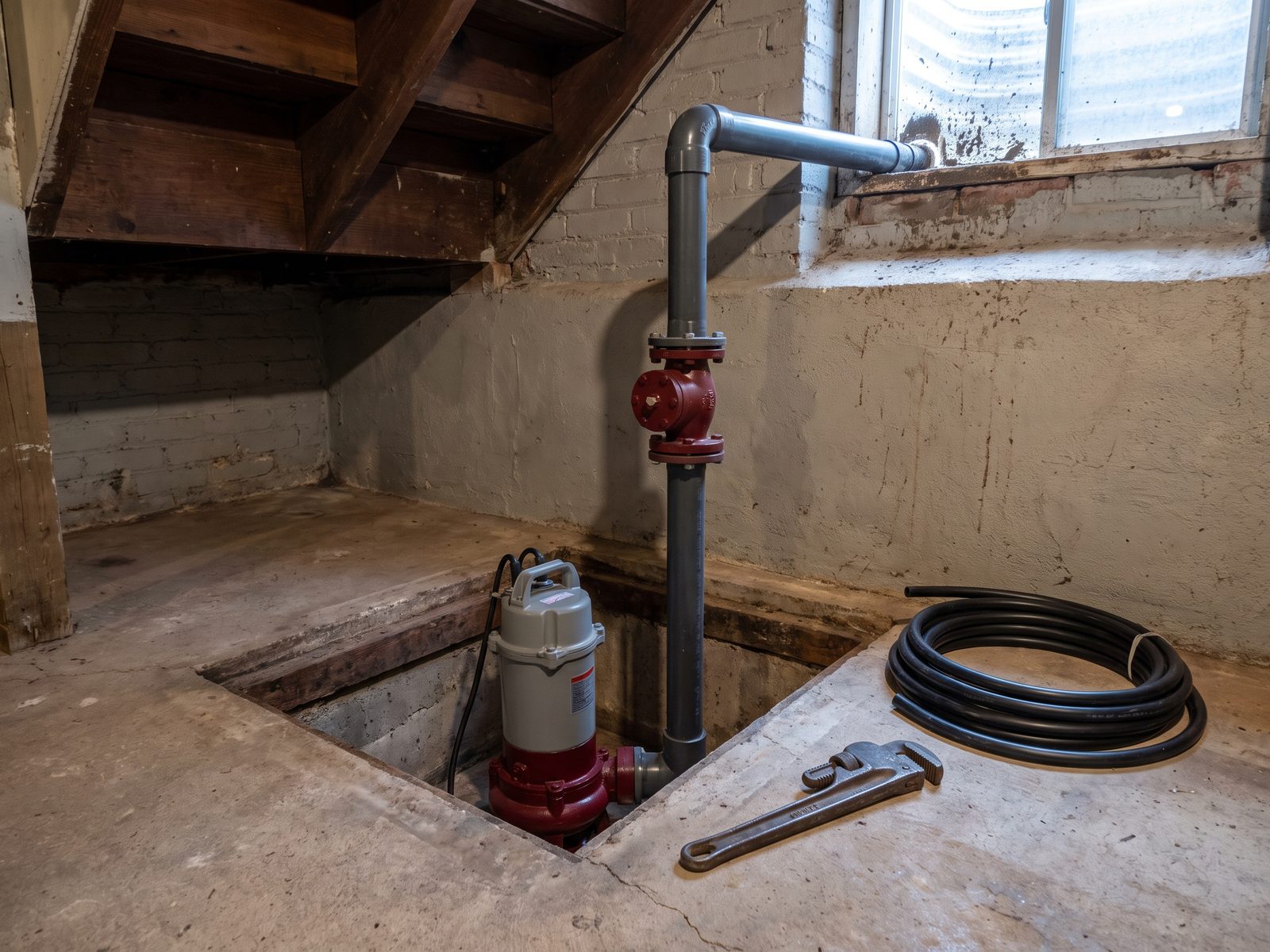
For a backwater valve the answer is yes, but the money comes from DC Water rather than from the stormwater programs. DC Water runs an Expanded Backwater Valve Program that reimburses the purchase and installation of a backwater valve at eligible properties with a documented sewer backup, up to the cap it publishes. Eligibility turns on the backup record for the property, so the application starts with DC Water rather than with DOEE. The DOEE stormwater programs are a separate matter. A backwater valve is sanitary plumbing in the building drain and a sump pump is a mechanical system in a pit. Neither retains runoff, so neither sits inside the RiverSmart eligible list as DOEE publishes it.
FloodSmart Homes gets closer, but it stops at the recommendation. DOEE describes the program as a free assessment, a report and a counseling session. The upgrades that report may recommend include sewer backflow prevention valves, sump pumps, water intrusion alarms, raised or GFCI-protected outlets, anchoring straps on water heaters and HVAC equipment, sealed ducts and removable flood barriers. For a sump pump, paying for the work is still yours.
When you do install a valve or a pump, treat it as permitted plumbing work. A backwater valve sits in the drain line that carries everything out of the house, and one installed wrong fails in the direction you do not want. Use a licensed plumber and pull the permit through the Department of Buildings.
How do you apply, and what does the process look like end to end?
Each program accepts an application directly from a homeowner, with no broker in the middle. Restoration Doctor does not administer, partner with or obtain funding from any of these programs. You apply to the agency yourself. The shape is much the same across all six: you apply, the agency verifies something about the property, then work is scheduled, a credit is posted or a reimbursement is paid.
- RiverSmart Homes: apply online, wait for the audit waitlist, take the free stormwater audit, agree to the features offered, pay any copayment, then schedule installation
- RiverSmart Rebates: install the qualifying feature through your own contractor, keep the invoices and photographs, then submit for reimbursement under the published terms
- Expanded Backwater Valve Program: submit the request form to DC Water to have the property's eligibility checked, have a licensed Master Plumber pull the permit and install the valve, then upload the invoice and required documents for review and payment
- RiverSmart Rewards: use the single application covering both bill charges, choosing the simple form for a typical house and the standard form for a larger property, then watch the DC Water bill
- Clean Rivers relief: apply online, by email or by mail with proof of household income, government photo identification and the other documents DOEE lists
- FloodSmart Homes: sign up through the online survey, by email to the flood team or by phone, then schedule the assessment and read the report you get back
- All of them: keep a copy of what you submitted and note the date, because a three-year approval eventually needs renewing
What do these programs not cover, and what stays on you?
The gap between what the District funds and what a flooded basement costs is wide. Public money here keeps stormwater out of the combined sewer and the rivers. Private repair, drying and rebuilding sit outside that purpose.
Some exclusions are structural rather than budgetary. RiverSmart Rewards does not count native plantings, shrubs, simple removal of hard surface or practices installed before its cutoff date, because the discount is tied to measurable retention rather than to greenery. A garden that looks the part and holds nothing back does not move the charge. The other gap is time: every one of these runs on an application cycle, and none of them responds to an emergency.
- Emergency extraction, drying equipment and structural drying after a loss
- Demolition of soaked drywall, insulation or flooring, and the rebuild that follows
- Mold remediation, contents cleaning and disposal
- Interior waterproofing, underpinning, crack injection and drain tile
- Sump pumps as hardware, rather than as a recommendation in a report (backwater valves are the exception, and DC Water reimburses those separately)
- Any loss you have already had
How do these interact with an insurance claim you have already filed?
They run on separate tracks. A District stormwater or resilience program is not insurance, does not adjust a claim and does not pay a deductible. Your policy decides what gets paid for the damage. The program decides what gets installed to lower the odds of the next one.
Two distinctions matter while a claim is open. Surface water entering from outside is generally a flood, which standard homeowners policies exclude and which the National Flood Insurance Program exists to cover separately. Water arriving back through a drain is a sewer backup, usually excluded unless a water or sewer backup endorsement was added, and that endorsement carries its own limit.
Where the programs do help a claim is documentation. A FloodSmart Homes report is a dated, third-party description of your building's condition and its risk, and installing what it recommends leaves a paper trail.
One warning about sequence. Do not delay drying or cleanup while you wait to hear from a program. Wet organic material supports microbial growth within a day or two, which is why the EPA tells homeowners to dry or remove wet materials quickly. The restoration work runs on the building's clock. The rebate runs on the agency's. The District's insurance market is regulated by the Department of Insurance, Securities and Banking, and your declarations page decides coverage.
What should you do first if your basement has flooded more than once?
A second flood is information. It tells you the first one was not a freak event, and it usually means one of three things: stormwater reaching the building from the surface, groundwater pushing under the slab, or sewage coming back through a drain. Those have different fixes and different funding, so identifying which one you have is the first job rather than the last.
Start with the free things. Look your address up on the District's flood risk tool at dcfloodrisk.org. Sign up for a FloodSmart Homes assessment if you have documented risk. Apply to RiverSmart Homes for the stormwater audit. If the water came back up through a drain, check DC Water's Expanded Backwater Valve Program, because a documented backup is what makes a property eligible for it.
Then deal with the water path itself. Trace every downspout and confirm where it discharges. Check the areaway drain and the grade along the walls. If sewage is involved, ANSI/IICRC S500 treats that as Category 3 water, so porous materials that absorbed it come out rather than get dried.
For the prevention measures themselves, written for readers outside the District where no program funds them, our sister site restorationdoctors.com covers the ground at https://restorationdoctors.com/blog/basement-flooding-causes-and-prevention and the physics is the same everywhere. Only the funding changes.
If water is in the building right now, none of this is the first call. Get the water out, get wet materials dried or removed, and apply next month. The programs will still be there. The drywall will not.
The agency pages behind everything above are listed below. Read the current page before you apply, because the amounts and income limits move.
- Source: DOEE RiverSmart Homes, https://doee.dc.gov/service/riversmart-homes
- Source: DC Water Backwater Valve Information and Rebate Program, dcwater.com/backwater-valve-information-and-rebate-program-application
- Source: DOEE RiverSmart Rewards, https://doee.dc.gov/service/riversmart-rewards
- Source: DOEE Clean Rivers charge relief, https://doee.dc.gov/node/1375571
- Source: DOEE Flood Risk Management, including the District's National Flood Insurance Program role, https://doee.dc.gov/service/flooding
- Source: DOEE FloodSmart Homes, https://doee.dc.gov/service/floodsmart-homes
- Source: EPA on combined sewer overflows, https://www.epa.gov/npdes/combined-sewer-overflows-csos
- Source: EPA, Mold Cleanup in Your Home, https://www.epa.gov/mold/mold-cleanup-your-home
- Source: DC Department of Buildings, https://dob.dc.gov/
- Source: DC Department of Insurance, Securities and Banking, https://disb.dc.gov/
- Source: IICRC, publisher of S500, https://www.iicrc.org/