
Water Damage Restoration in Congress Heights, DC
For water damage restoration in Congress Heights, from the brick rowhouses to the garden apartments, Restoration Doctor of Washington DC dispatches crews 24 hours a day, 7 days a week, and a crew can be on-site in as little as 60 minutes from your call anywhere in Washington, DC. Response times vary based on crew availability and demand.
Updated October 2026
At a glance
- Phone
- (202) 922-1444
- Hours
- 24 hours a day, 7 days a week
- Response
- On-site in as little as 60 minutes in Washington, DC**Response times vary based on crew availability and demand.
- Service area
- Congress Heights, Washington, DC
- Services
- Water damage, sewage cleanup, mold remediation, fire damage, storm damage, reconstruction, extraction & drying, hardwood floor drying, roof tarping, smoke & soot cleaning, contents pack-out
- DC license
- DC Basic Business License #410524000721Held by VA Water Damage LLC dba Restoration Doctor
- Maryland license
- MD Home Improvement (MHIC) #167541Held by VA Water Damage LLC dba Restoration Doctor
- Certification
- IICRC-certified, S500 / S520-aligned
Water damage restoration in Congress Heights, DC, means working in Southeast Washington's far corner, where brick rowhouses, semi-detached homes and garden-style apartment communities sit on a mix of high ground along Martin Luther King Jr. Avenue and low ground toward the Oxon Run valley. Restoration Doctor answers Congress Heights emergencies around the clock, because a burst supply line, a failed water heater or a backed-up drain does the most harm in the first hours, while water is still moving into subfloors, wall cavities and the contents stored on a basement floor.
Congress Heights is its own part of Ward 8, defined by the Congress Heights Metro station on the Green Line, the Alabama Avenue and South Capitol Street corridors, the redevelopment of the St. Elizabeths campus and Joint Base Anacostia-Bolling to the south. People who live here have often been in the same house for decades, which matters for water damage: older plumbing, long-finished basements and shared walls in multi-unit buildings decide how a leak spreads and how much of the house has to be opened to dry it.
Whether you are in a brick rowhouse near Congress Heights Metro, a detached home in Washington Highlands or Bellevue, or an apartment in one of the garden-style communities along Alabama Avenue, the sequence is the same: stop the source, extract the water, dry to a documented moisture standard, and record every reading so you can share it with your insurer. What follows is how water behaves in Congress Heights, and what to do first.
How water damage behaves in Congress Heights
Oxon Run blocks and low-lying water
Part of Congress Heights drains toward Oxon Run, a stream corridor that runs through the Washington Highlands and Bellevue side of the neighborhood. Blocks near the valley sit lower than the ridge along Martin Luther King Jr. Avenue, and in a hard storm, water follows the grade down. A basement or a ground-floor unit on low ground can take on runoff through the foundation, window wells and exterior doors even when the same storm leaves a house uphill dry.
Water that has come across the ground into a house is not clean Category 1 water, so we treat it as Category 2 or worse: extraction, removal of materials that cannot be dried or sanitized, antimicrobial treatment and monitored drying rather than a quick mop and a fan. If you are not sure whether your block is a low spot, the signs are a damp basement wall after rain, efflorescence on the foundation, or a sump or floor drain that is slow to clear.
Basements, sump pumps and storm seepage
A basement that gets wet in Congress Heights usually comes down to a short list: groundwater pressing on the foundation after saturated ground, a failed or undersized sump pump, a window well that fills and spills in, or gutters and downspouts that deliver roof water against the wall. We find which one actually put the water there, because drying a basement without knowing the source means doing it again the next storm.
On a basement loss we extract standing water first, then pull wet carpet and pad, cut back wet drywall to a dry line, and set air movers and dehumidifiers. We map moisture with thermal imaging and meters so we open only what has to come out, and we dry to a documented standard before anything is rebuilt. Wet basements left a few days grow mold, which is why speed matters here more than in almost any other room of the house.
Sewer backups, floor drains and Category 3 cleanup
A backup through a basement floor drain, shower or toilet is sewage. It is Category 3 water, a biohazard, and it has to be handled with containment, protective equipment, removal of the porous materials it touched and full disinfection before drying starts. It is not a spill to mop. Report a sewer backup to DC Water as well, since they check whether the public main is the cause, and if the problem is in your own lateral a registered plumber has to clear it.
If it is your own line, a recurring slow drain, gurgling toilets or a sewage smell near the floor drain are warnings. We handle the cleanup and drying of the affected space, document the cause as we find it and tell you when the line needs a licensed plumber so the cause is not left waiting to let go again.
Multi-unit buildings and shared walls
In a garden apartment or townhome building, a leak travels. Water from a failed dishwasher line or a cracked supply pipe moves down through the floor assembly and sideways through shared walls, so the wet area is often bigger than the stain. We map the full path through your unit and any neighbors we are allowed into, set drying in each wet space at once, and keep records separated by unit. Access to other units and common areas is arranged through building management.
If you rent, tell your property manager right away and take photos of the damage and your belongings. We document what we find at every step, and we provide our photos, moisture readings and invoice to you and, at your request, your insurer.
Congress Heights housing stock and how it fails
The housing in Congress Heights is mostly mid-century. Brick rowhouses and semi-detached brick homes line many of the residential streets, with detached single-family houses on larger lots toward Washington Highlands and Bellevue. Many of these homes have full basements, some finished into family rooms, extra bedrooms or rental space and some left as laundry and storage. A basement is the lowest point of the house, so it is where a supply-line leak, a sewer backup or seepage after heavy rain ends up first, and finished basements take longer to dry because the carpet, drywall and framing hold water.
Alongside the single-family blocks are garden-style apartment buildings and townhome communities, two and three stories of brick with shared walls, shared stairwells and sometimes shared plumbing stacks. In a building like that, water from one unit's failed fixture travels into the ceiling below and through the wall next door, so the first job is mapping how far the water has gone, not just drying the room where you saw it. Many of these buildings were built decades ago, and original supply lines, valves and drains are a common source of leaks. Where a repair is a plumbing job, we work with licensed plumbers and tell you plainly when the cause needs one.
Areas of Congress Heights we serve
Real Congress Heights blocks and buildings — and the water losses we most often see in each.
Brick rowhouses and apartments near the Green Line station where a leak in one unit can reach the next.
Older brick homes and mixed-use blocks with aging supply lines and drains.
Detached and semi-detached brick homes and garden apartments, some on low ground toward Oxon Run.
Mid-century houses with full basements where storm seepage and sewer backups reach finished space.
Brick rowhouses and small apartment buildings where basement and shared-wall leaks are common.
Garden-style communities and redeveloping blocks where multi-unit water mapping matters.
Documented project files
Real CompanyCam-documented Restoration Doctor work in the Washington, DC metro — every project photographed with date and time stamps.
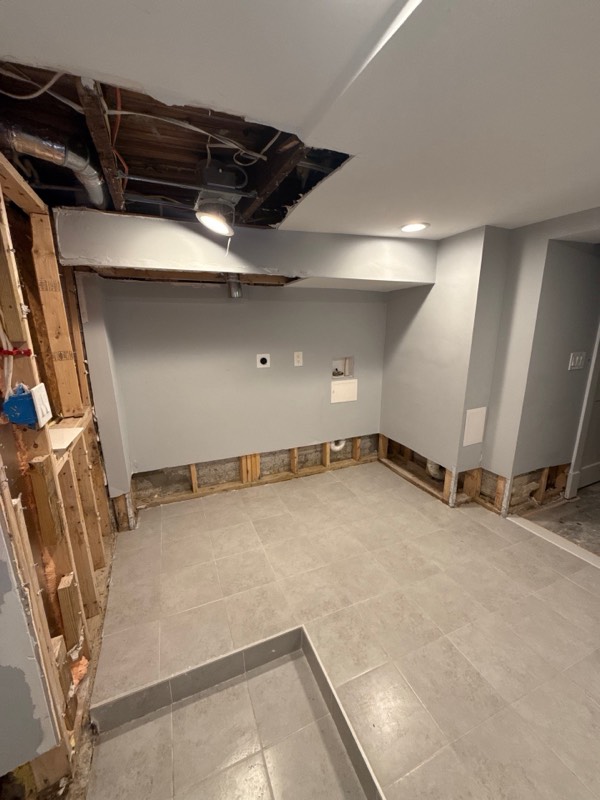
Water extraction & contents protection — Washington, DC
A documented Washington, DC residential water loss where crews extracted standing water and protected contents before setting structural drying.
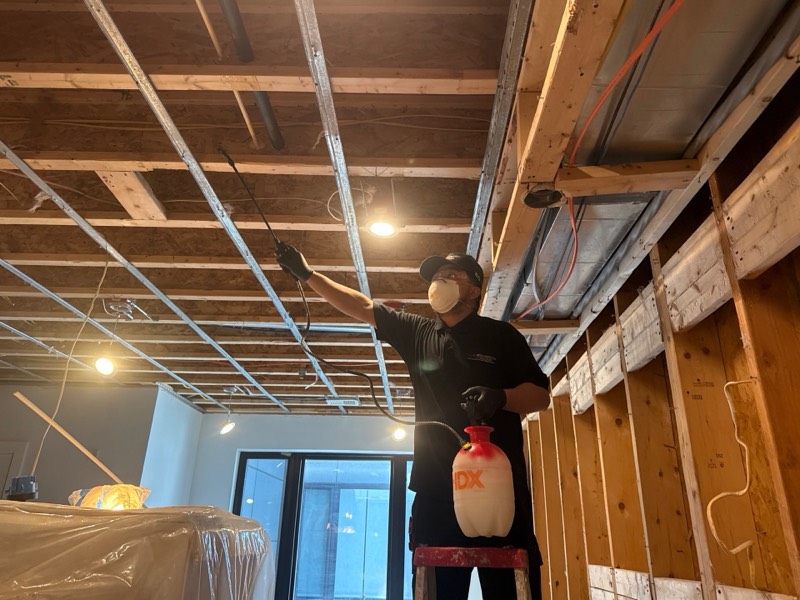
Moisture mapping & structural drying — Washington, DC
A documented Washington, DC project where crews mapped the hidden moisture footprint with meters and thermal imaging, then set targeted structural drying to the wet assembly.
Full restoration services in Congress Heights
One operation covers every category — from emergency mitigation to full reconstruction.
Water Damage Restoration
Extraction, structural drying, and moisture verification for pipe breaks, appliance leaks, and English-basement flooding across the District.
Sewage & Biohazard Cleanup
Category 3 black-water decontamination with full PPE, contaminated-waste removal, antimicrobial treatment, and verified drying after sewer backups and overflows.
Mold Remediation
IICRC S520 containment, HEPA filtration, safe source-based removal, and independent post-remediation clearance verification.
Fire & Smoke Damage Restoration
Soot and smoke-residue removal, source-based odor neutralization, contents pack-out, and preservation-sensitive reconstruction after a fire — performed to ANSI/IICRC S700, the fire and smoke damage restoration standard.
Storm Damage Restoration
Emergency tarping, water extraction, and reconstruction after wind, heavy rain, and the flash flooding DC's summer storms produce.
Reconstruction & Repairs
Drywall, plaster, flooring, cabinetry, trim, and paint — the same in-house crew that dried the loss rebuilds it, with no handoff and preservation-sensitive finish matching for District homes.
Water Extraction & Structural Drying
Truck-mounted and portable extraction, air movers, dehumidifiers and dated moisture readings that decide when the equipment comes out.
Hardwood Floor Drying
In-place drying of wet hardwood floors with moisture and thermal mapping, air movers and dehumidifiers, and a clear line on which boards can be saved.
Emergency Roof Tarping
A temporary tarp over storm or impact damage to a roof, followed by drying of the water that already reached the interior.
Smoke & Soot Cleaning
Soot cleaned by surface type, odor treated at the source, HVAC cleaning and a real Washington, DC fire-damage file.
Contents Pack-Out & Restoration
Photographed, itemized pack-out, controlled cleaning and storage, and return of belongings when the home is ready.
What Congress Heights homeowners look for
Congress Heights is a close community where reputation travels by word of mouth: neighbors ask neighbors who showed up, who explained the work honestly and who left the house cleaner than they found it. That is the standard we want to be held to here, with clear communication and written documentation at each step.
We do not print review counts or star ratings on this page. Our customer feedback lives on a separate reputation hub instead: visit RestorationDoctorsReviews.com to see the reviews and the real Google aggregate for yourself, then come back here to book service for your Congress Heights home. Keeping ratings on a source-linked hub rather than typing numbers onto a marketing page is a deliberate honesty choice.
Showing 4- and 5-star reviews. See all reviews on Google.
Frequently asked
Active water, mold, fire, or sewage event?
Connect directly with the Restoration Doctor team for your region. Crews are on standby 24/7 with documented response protocols.