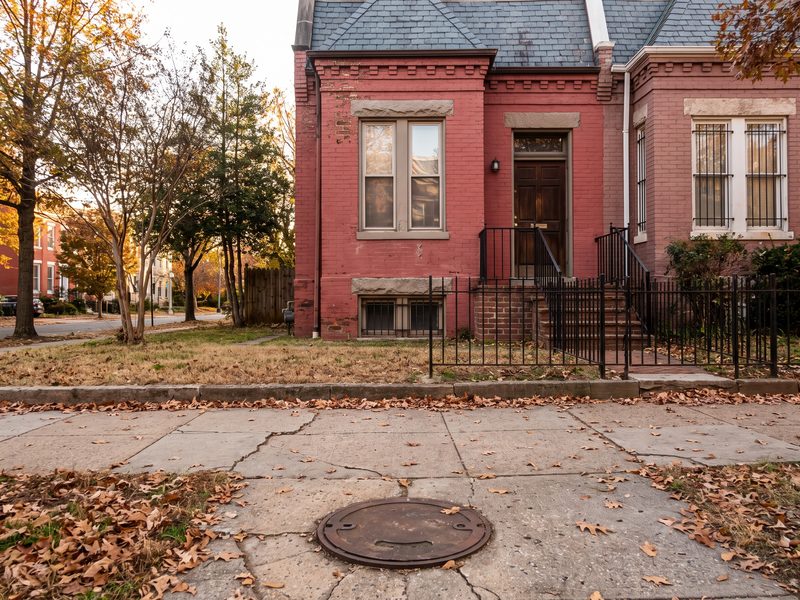
When a Sewage Ejector Pump Fails in a DC English Basement
BY RESTORATION DOCTOR OF WASHINGTON DC · WASHINGTON DC & SOUTHERN MARYLAND
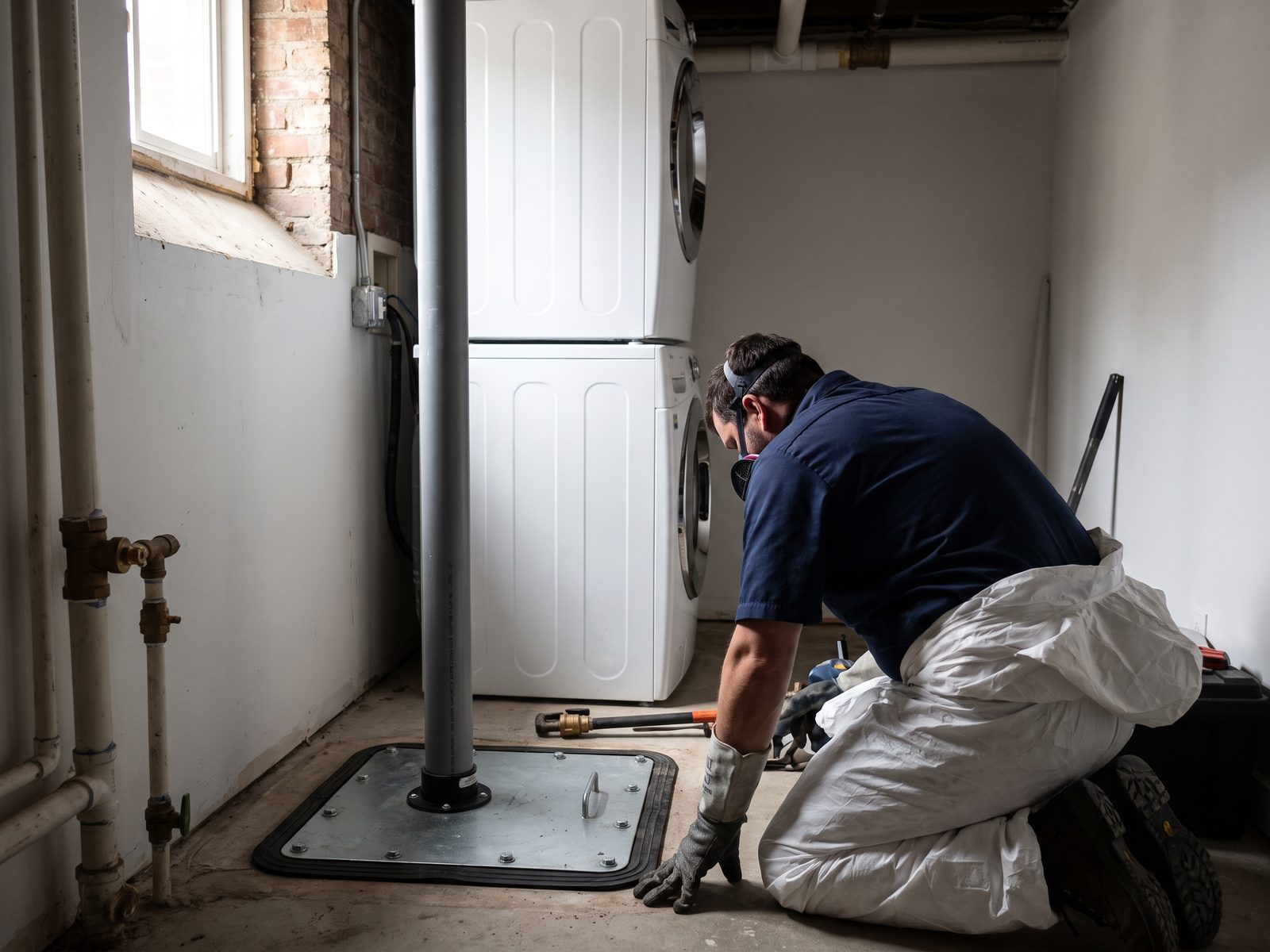
An ejector pump lifts waste from a below-grade bathroom or laundry up to the sewer, and when it fails the discharge comes back into a finished room as Category 3 water. Stop using every fixture in the basement immediately, keep people and pets out, and treat the cleanup as decontamination rather than drying.
Call (202) 922-1444What does an ejector pump do and why does a DC basement need one?
A sewage ejector pump failure in a DC English basement means the waste that should have been lifted up to the sewer comes back into the room instead, and it is Category 3 water from the first second. Stop using every fixture below grade, keep people and pets out, and treat what follows as decontamination rather than a mop-up.
The pump exists because of elevation. Gravity drainage only works when a fixture sits above the building's sewer line, and in a District English basement the bathroom, kitchenette or laundry sits below it. Everything draining down there collects in a sealed basin set into the slab, and a pump inside that basin lifts it to the main drain.
That basin is the ejector pit. It carries a gasketed lid, a vent line to the roof, a float switch that starts the pump and a check valve that stops the lifted waste from running back down. Every one of those parts is a single point of failure, and in a finished apartment the pit often sits a few feet from a bed.
- A sealed basin in the slab, taking everything that drains below grade
- A float switch that calls for the pump as the level rises
- A check valve that keeps lifted waste from draining back into the pit
- A vent line carrying sewer gas to the roof, not into the room
What are the early warning signs before it fails outright?
Most ejector failures announce themselves for days before the floor gets wet. Listen first. A healthy pump runs in a short, even burst and stops cleanly. A pump that hums without moving anything, cycles with nobody using the bathroom, or runs and restarts immediately is telling you something. So is a hard clunk from the discharge line after each cycle.
Then use your nose. A properly sealed pit does not smell, so sewer odor in a below-grade room means a lid gasket, a vent connection or the discharge seal has opened, and an odor path is also a water path. Alarms get their own rule. A high-water float is not a nuisance to be muted. It means the basin is already above where the pump should have taken it.
| What you notice | What it usually means | How urgent |
|---|---|---|
| High-water alarm sounding | The basin is above the pump's normal stop point | Stop using every fixture below grade now |
| Pump hums but the level does not drop | Seized impeller, jammed solids or a failed start component | Same day, before the next load of laundry |
| Pump cycles with nobody using the bathroom | Check valve leaking back, or a float stuck partly up | Same day; the motor is wearing itself out |
| Sewer odor in the room | Lid gasket, vent connection or discharge seal has opened | Within days, and read it as a warning of leakage |
| Gurgling shower drain or slow floor drain | The basin is backing up toward the fixtures it serves | Stop using the fixtures and call a plumber |
| Damp ring or staining on the slab at the pit | Water has already left the basin at least once | Have it looked at before it happens again |
What does a failure look like when it actually happens?
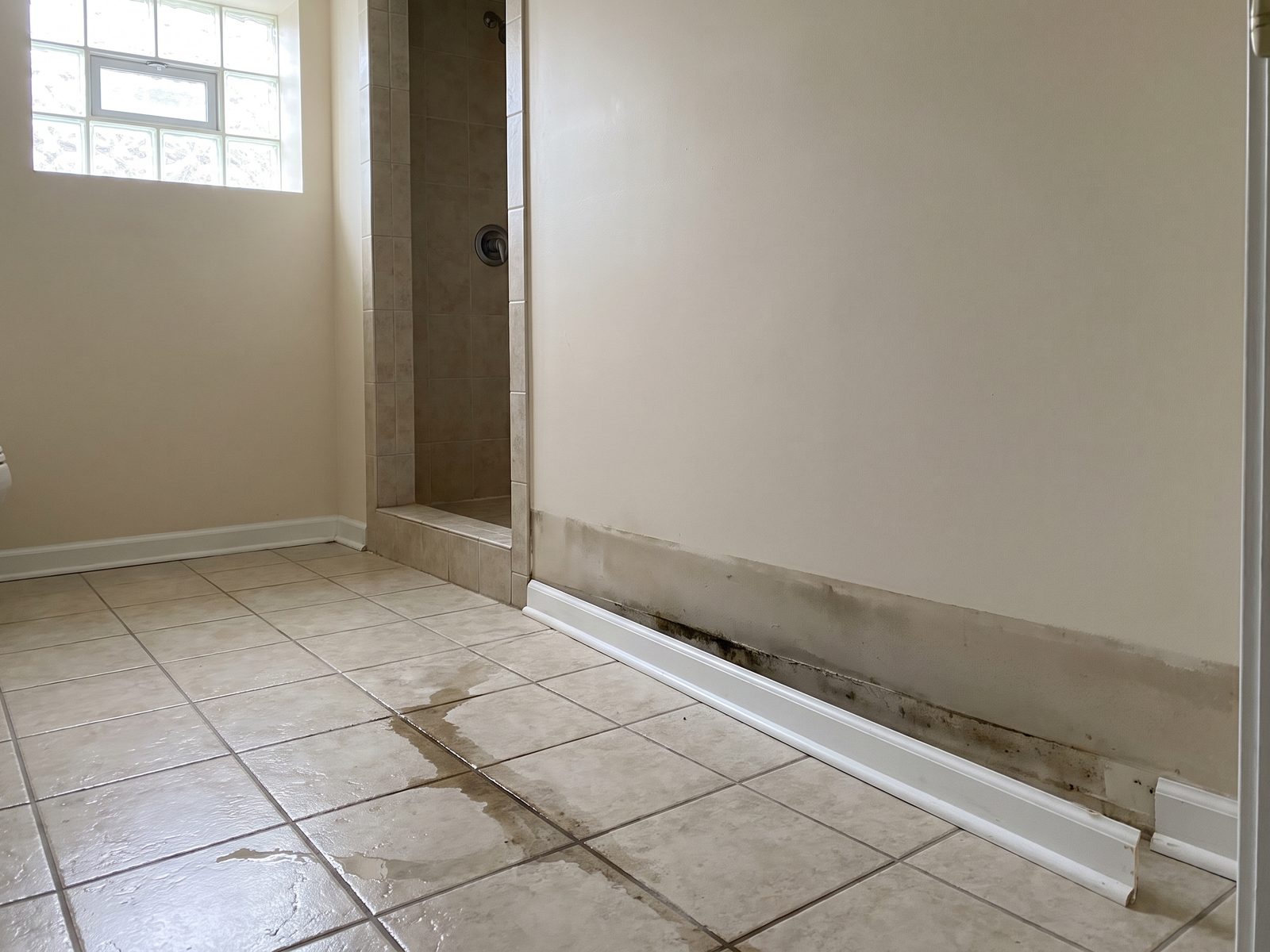
The failure people picture is a geyser. The common one is quieter. The basin fills past the lid, finds the weakest seal and pushes out at the rim onto the slab, so the first evidence is a dark wet edge creeping out from under a washer or a vanity.
Fixtures give way next, in order of height. The lowest opening surrenders first, usually a floor drain or a shower pan, then the toilet. Anyone upstairs running a sink adds volume the pump is no longer moving, so the level climbs while the rest of the house carries on as normal.
Materials take it up fast. Carpet wicks it under the pad and into the wall base. Drywall pulls contaminated water up the paper face well past the visible line, and the framing behind it hides the rest. What looks like a shallow puddle is often a wall that is wet to twelve or eighteen inches.
- Water appearing at the pit rim rather than from any fixture
- A wet wall base under a wall that still looks dry above it
- A sewage odor that does not clear when the room is aired out
What is the first thing to do, and what should nobody do?
Stop adding water. Every flush and every wash cycle that drains to that basin makes the room downstairs worse, so the first instruction goes to the people upstairs as much as to anyone standing in it.
Then deal with electricity. The pump sits on a circuit, a finished basement has outlets near the floor, and standing water and power do not share a room safely. If the panel is dry and you can reach it without walking through water, cut the circuits serving the space. If you cannot, stay out and call an electrician.
Keep people and pets out after that. Category 3 water carries bacteria and viruses, and the exposure routes are ingestion, contact through broken skin and aerosol raised by disturbing it. Children, anyone pregnant, anyone immunocompromised and anyone with a respiratory condition should stay out of the room until it has been cleaned and cleared. Then document: wide photographs of each room, close ones of the pit and the wet line, and the time you found it.
- Do not open, lift or reach into the pit lid; that is a plumber's job
- Do not keep running the pump to see whether it catches
- Do not push the water toward a drain with a broom or a household vacuum
- Do not send anyone in without gloves, boots, eye protection and a rated respirator
- Do not pour a cleaning product over it and treat the room as handled
Why is this automatically Category 3 water?
The ANSI/IICRC S500 standard sorts water by how contaminated it is at the source rather than by how it looks in the room. Category 1 is clean supply water. Category 2 carries significant contamination and can cause illness. Category 3 is grossly contaminated and can carry pathogens, and a failed sanitary ejector is the textbook example.
Category is set by origin, not appearance and not dilution. Gray-looking water from a mostly laundry basin is still Category 3 if that basin takes a toilet. Category also moves one way. Clean water left standing in a warm room degrades toward Category 2 and then Category 3, while sewage starts at the end of that path.
The classification drives everything that follows. Category 3 work means containment, protective equipment, removal of porous materials instead of drying them in place and cleaning that gets verified rather than assumed. It is the reason the honest answer to 'can we just dry it out' is no. Our guide to the three water categories walks through them with field examples.
- Category is decided by where the water came from, not how clear it looks
- Clean water left standing in a warm room degrades through the categories
- Category 3 means containment and removal, never drying in place
What has to be removed and what can be cleaned?
The governing question is not what an item cost. It is whether contamination can be removed from the material with certainty. Non-porous surfaces carry contamination on them. Porous materials hold it in them, and no amount of surface cleaning reaches inside a material that absorbed the water.
Hard, non-porous materials like tile, glass, metal or sealed concrete can usually be cleaned and verified, because what sits on them can be scrubbed off and rinsed away. Semi-porous materials sit in the middle. Structural lumber, subfloor and masonry are sometimes recoverable after surface removal, depending on how deep the water went and how long it sat.
Porous materials leave the building. Carpet and pad, drywall, insulation, particle board, upholstered furniture and mattresses hold contaminated water inside a structure that cannot be cleaned to a verifiable state. A sealed plastic bin is a cleaning decision; the cardboard box beside it is not.
One District wrinkle is worth raising before the saw comes out. Pre-1978 housing is common here, so cutting drywall or plaster can disturb lead paint and the removal plan has to account for it. Some of the rebuild that follows falls under D.C. Department of Buildings permitting.
- Non-porous and cleanable: tile, glass, metal, solid plastics, sealed concrete
- Semi-porous and case by case: structural lumber, subfloor, brick or block
- Porous and removed: carpet and pad, drywall, insulation, particle board, upholstery
- Anything irreplaceable flagged before demolition starts, not after
How is the room decontaminated and verified, not just dried?
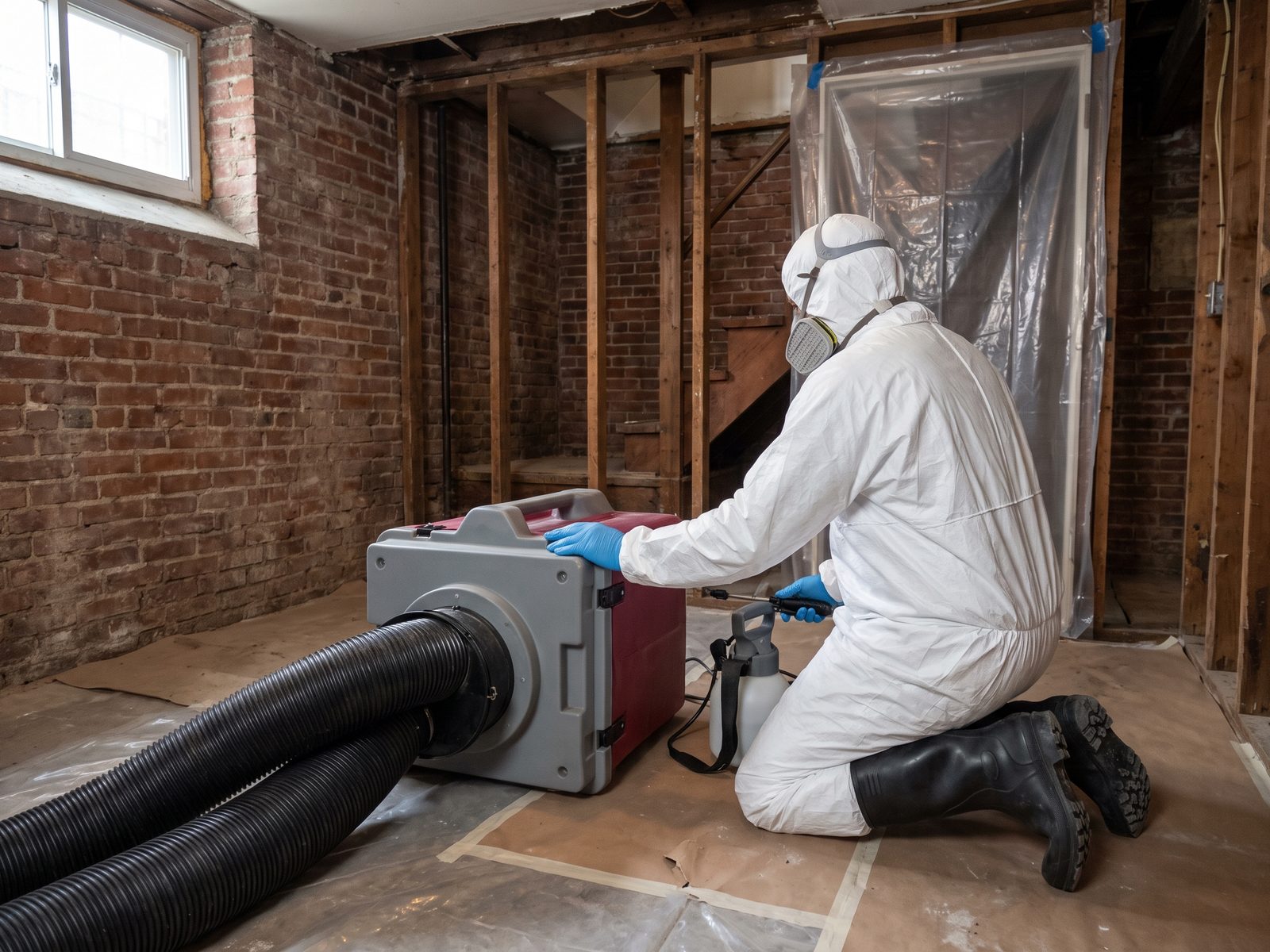
Category 3 work runs in an order, and drying is not first. Containment goes up before anything is disturbed, so the space is isolated from the rest of the house and from the stair. Negative air with HEPA filtration keeps whatever gets raised into the air inside that containment.
Gross contamination comes out next. Standing water is extracted with equipment rated for waste. Solids and sludge are removed, and the porous materials on the removal list are bagged and carried out along a controlled path rather than through the kitchen. Then cleaning, which is mechanical before it is chemical.
Surfaces get cleaned, then rinsed, then cleaned again, because an antimicrobial sprayed over a soiled surface does not do what the label promises. No product sanitizes material that has not been physically cleaned first. Drying comes after decontamination and it is instrumented, with meters reading the wall base, the subfloor and the framing against a documented dry standard.
Verification closes it out. Clean, dry, verified: those are three separate findings, each needing its own evidence. Our sister site restorationdoctors.com covers what a sewage cleanup actually involves from containment through clearance, and the protocol is the same wherever the waste came from: https://restorationdoctors.com/blog/sewage-backup-cleanup-guide
- Containment and negative air before any material is disturbed
- Extraction and solids removal, then the porous materials on the list
- Mechanical cleaning first, antimicrobial application second
- Drying tracked to meter readings, not to how the room looks
Does insurance treat this as a backup, a sudden discharge, or neither?
Most homeowner and condo policies exclude water that backs up through sewers or drains unless a specific endorsement has been added. It goes by names like water backup or sewer and drain backup, it carries its own separate limit, and that limit is often far smaller than the dwelling limit.
Where an ejector failure lands depends on the wording, and the wording varies by carrier. Some policies fold ejector overflow into the backup endorsement. Some treat a failed pump as equipment breakdown. Some read a discharge out of the pit differently from a backup arriving from the street. Find the declarations page before assuming anything.
The claim has to be built as well as filed. Carriers want a stated cause of loss, the time of discovery, photographs of the condition before cleanup started, an itemized scope and moisture documentation. A sewage loss with no category documentation invites an argument about whether the removal was necessary.
Condos and co-ops add a layer. The unit owner's policy and the association's master policy split responsibility at a line drawn in the governing documents, and a below-grade unit served by a shared basin can pull in both. Notify the association's insurer in writing alongside your own. The District's Department of Insurance, Securities and Banking is the regulator if a carrier's handling goes wrong.
- Check the declarations page for a water backup or sewer and drain endorsement
- Note the separate sublimit, which is frequently well below the dwelling limit
- Report the loss in writing, with the discovery time, on the day you find it
- In a condo or co-op, notify the association's carrier alongside your own
How is an ejector pit properly maintained so it does not happen again?
Maintenance on an ejector system is mostly a scheduling problem and a habit problem. The work at the pit belongs to a plumber, because the lid is a seal and the contents are Category 3. What a household controls is what goes into the basin and whether anyone is watching it.
Keep the wrong things out of the drain. Wipes marketed as flushable do not break down, and they are a common reason an ejector jams or seizes. Grease from a basement kitchenette congeals on the float and the impeller. Paper towels, cat litter and coffee grounds all end up in the same basin.
Then build in a warning. An audible high-water alarm costs very little next to a Category 3 loss in a finished room, and a monitored version can reach a phone. For a rental English basement, tell the tenant in writing what the alarm means and who to call, because they will hear it first.
Schedule the professional side on a calendar rather than on symptoms. An annual visit checks the float, the check valve, the discharge and the seal, and it is the moment to ask the pump's age. If mold follows a wet basement, EPA's general mold guidance is to correct the moisture source and clean up growth promptly, and the D.C. Department of Energy and Environment sets the licensing rules for remediators working in the District.
- Nothing but waste and toilet paper down a below-grade fixture, wipes included
- An audible high-water alarm, plus written instructions for whoever sleeps down there
- An annual plumbing visit checking the float, check valve, discharge or seal
- A written note of the pump's installation year, so replacement is planned
Where do these standards and rules come from?
We are a restoration contractor, not a regulator or an insurer. The sources below are the ones this article leans on, so you can read them yourself.
- Sources: ANSI/IICRC S500, Standard for Professional Water Damage Restoration: https://iicrc.org/s500/
- EPA, A Brief Guide to Mold, Moisture and Your Home: https://www.epa.gov/mold/brief-guide-mold-moisture-and-your-home
- EPA, Renovation, Repair and Painting Program, which covers work that disturbs paint in pre-1978 housing: https://www.epa.gov/lead/renovation-repair-and-painting-program
- D.C. Department of Energy and Environment, mold professional licensing: https://doee.dc.gov/service/mold
- D.C. Department of Buildings: https://dob.dc.gov/
- D.C. Department of Insurance, Securities and Banking: https://disb.dc.gov/