
What Is an Xactimate Estimate and Why It Matters for Your Claim

BYSteve Jafari, General ManagerWASHINGTON DC & SOUTHERN MARYLAND
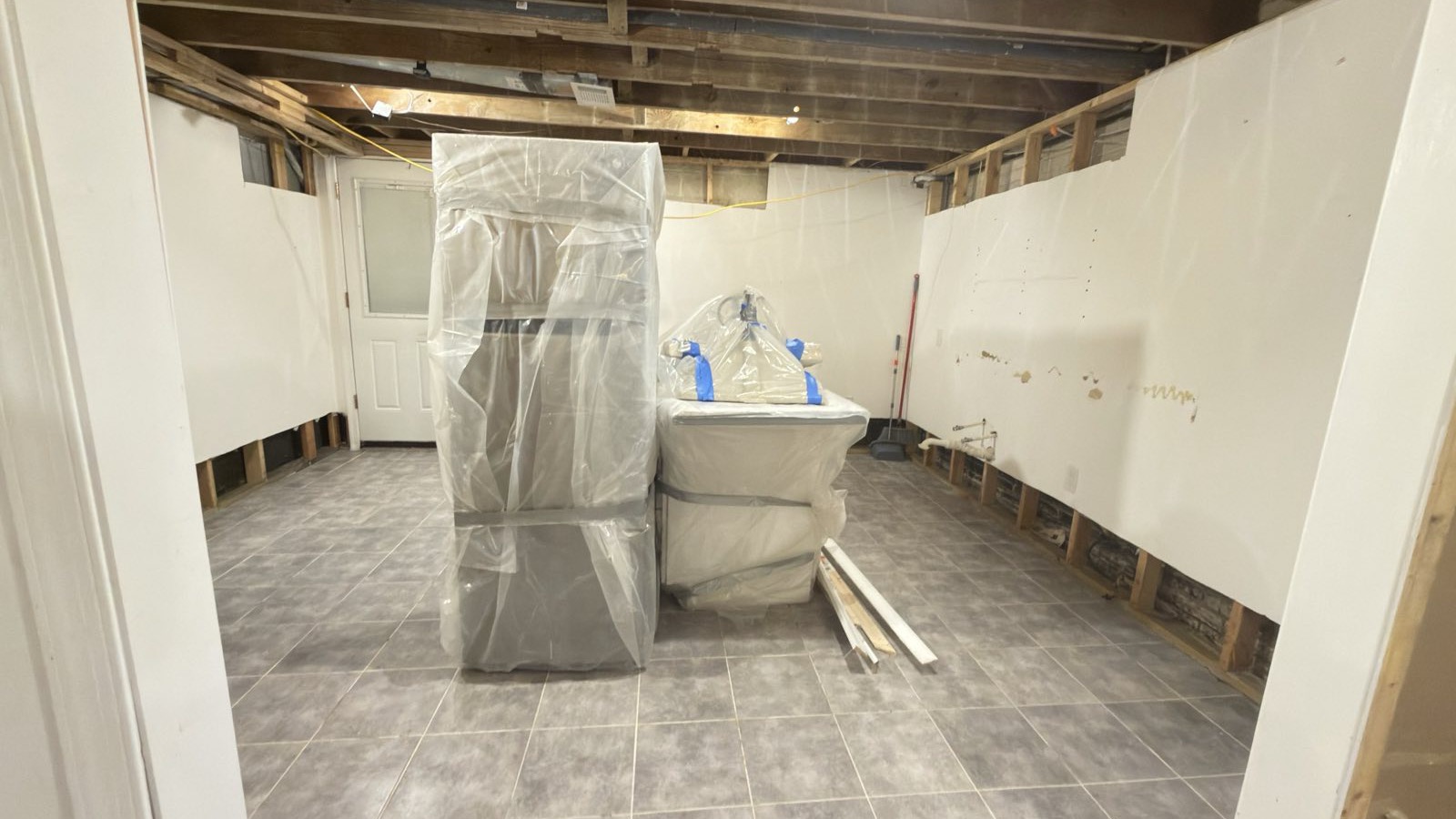
An Xactimate estimate is a line-item repair estimate built in the same software most U.S. insurance adjusters use, priced to your specific ZIP code and updated on a regular publication cycle. Xactimate estimate explained simply: it translates the damage in your home into standardized tasks, materials, and labor that a carrier recognizes — which is why a carrier-ready Xactimate scope, paired with time-stamped photos and daily moisture logs, gives your claim a common language and far less room for dispute.
Call (202) 922-1444What Is an Xactimate Estimate, Exactly?
An Xactimate estimate is a detailed, line-item cost estimate for repairing property damage, produced in Xactimate — the estimating software used by the majority of insurance carriers and independent adjusters across the United States. Put simply, Xactimate estimate explained in one sentence: it is the standardized pricing document that turns the damage in your home into a list of specific tasks, quantities, materials, and labor costs your insurer already recognizes.
Rather than a single lump-sum number scribbled on a proposal, an Xactimate estimate breaks a loss down into discrete lines. Each line has a code, a description, a unit of measurement, a quantity, a unit price, and a total. A water-damaged D.C. row house basement might include lines for water extraction, antimicrobial application, drywall removal to a measured flood-cut height, air movers, dehumidifiers, and content manipulation — each priced separately, each verifiable on its own.
Because the line items and the underlying price list come from the same database your adjuster uses, the estimate speaks the carrier's language from the first page. That shared vocabulary is the entire point: it removes guesswork and gives both sides an objective starting point for the settlement conversation, instead of two incompatible documents that have to be argued into alignment.
At Restoration Doctor of Washington DC, we build Xactimate scopes as part of a carrier-ready claim file and invoice you, the homeowner, directly — never your insurance company. The file is yours to submit, so you stay in control of your own claim. We work for you, not your insurance company.
Why Do Insurance Adjusters Accept Xactimate Estimates?
Insurance adjusters accept Xactimate estimates because Xactimate is the pricing platform most carriers license and rely on internally. When your contractor's estimate and the adjuster's estimate are built in the same system with the same regional price list, the two documents can be compared line by line instead of argued over as competing opinions.
The pricing inside Xactimate is not invented by the contractor. It is drawn from a market-researched database of material and labor costs published by Verisk, refreshed on a regular cycle and localized to your geographic price list. That means a drywall line for a home in Washington, D.C. reflects D.C.-area pricing, not a national average and not a number pulled from thin air.
This shared basis is what makes settlement smoother. An adjuster reviewing a properly built Xactimate estimate is checking quantities and scope — did the estimate capture the right rooms, the right materials, the right drying equipment — rather than disputing whether the prices themselves are fair. The prices are already the ones the carrier's own system produces.
It is worth being precise about a common misconception: an Xactimate estimate is a proposed scope and price, not an automatic approval. Your adjuster still reviews it against your policy language, coverage limits, deductible, and their own inspection. But a clean, well-documented Xactimate estimate gives you the strongest possible footing to negotiate from, because every disagreement can be narrowed to a specific line rather than the estimate as a whole.
How Does Xactimate Pricing Actually Work?
Xactimate pricing works by assigning each repair task a code and a locally researched unit price, then multiplying by the measured quantity of work. The software maintains price lists by geographic region and updates them regularly, so the same task can cost differently in Washington, D.C. than it would elsewhere in the country — and differently this quarter than it did last year.
Every line is built from components: material cost, labor cost, equipment, and — where the complexity of the loss supports it — overhead and profit. A line item like 'remove and replace 1/2" drywall' carries a price per square foot that already bundles the underlying labor and material research. The estimator supplies the accurate measurement; the database supplies the current local price.
This structure is why accurate field measurements matter so much. The price list is fixed and objective, but the quantities are determined by careful documentation — wall dimensions, affected square footage, linear feet of baseboard, and the number of air movers and dehumidifiers a space genuinely requires under the drying calculations in the ANSI/IICRC S500 standard. Because our costs on any project are driven by these measured quantities, real-world totals are always expressed as ranges until the loss is scoped; anyone quoting a single fixed price before measuring your home is guessing.
Understanding the components helps you read your own estimate with confidence:
- Line item code and description — the standardized task being performed
- Quantity and unit — how much work, measured in SF, LF, EA, or hours
- Unit price — the locally researched cost per unit from the current price list
- Material, labor, and equipment — the cost components bundled into the line
- Overhead and profit — applied where the loss complexity and policy support it
What Does an Xactimate Documentation Package Include?
A strong Xactimate documentation package includes the line-item estimate itself plus the supporting evidence that proves each line is justified: photographs, moisture readings, a measured sketch, and daily logs. The estimate states what work is needed; the documentation proves why. Together they form the carrier-ready claim file we hand to you at the end of mitigation.
Photo documentation ties visual proof to specific line items — for example, a photo of saturated drywall in a Petworth basement supports the line for drywall removal and antimicrobial treatment. We use CompanyCam so every image is time-stamped and organized by room, making it easy for an adjuster to match the picture to the scope without a back-and-forth of follow-up requests.
Moisture documentation is central to water claims. Under the ANSI/IICRC S500 standard, affected structural materials must be dried to a documented drying goal — typically referenced against dry-standard readings from unaffected materials — and monitored with moisture meters until that goal is verified. Those daily moisture logs justify the drying-equipment lines on your estimate and demonstrate the dry-out ran until materials actually reached their target, not until an arbitrary day count expired.
A complete package typically brings these elements together:
- The Xactimate line-item estimate with local pricing
- CompanyCam photo documentation tied to the damaged areas
- A room-by-room sketch with measurements supporting the quantities
- Daily moisture logs and psychrometric readings for the dry-out
- Notes on water category and any biohazard or safety conditions
Why Does an Xactimate Estimate Matter for Your DC Claim?
An Xactimate estimate matters for your D.C. claim because it removes ambiguity from the single most contested part of any loss: how much the repair actually costs. When your scope is priced in the carrier's own system and backed by measured documentation, there is far less room for a lowball settlement or a dispute over whether prices are reasonable.
D.C. housing stock makes this especially important. Row houses, condos, and English basements share party walls, stacked plumbing, and below-grade spaces where water travels laterally through shared assemblies and wicks up into finished materials. A generic estimate misses hidden migration; a properly scoped Xactimate estimate captures the full path of damage and prices every affected assembly, from the visible ceiling stain to the wet framing behind it.
There is also a coverage-versus-cost distinction worth understanding. Whether a loss is covered is a policy question — sudden pipe burst versus long-term seepage, for instance. What the covered repair costs is a pricing question, and that is exactly what Xactimate settles. A precise estimate ensures that once coverage is confirmed, the dollar figure reflects the real, local cost of putting your home back together, including the demolition, drying, and rebuild phases.
Because we bill you directly and hand you the claim file — Xactimate scope, CompanyCam photos, and daily moisture logs — you decide how and when to present it to your carrier. That independence is deliberate: we work for you, the homeowner, so the documentation is built to protect your interest in a fair settlement, whether your property is in the District or in Southern Maryland communities like Silver Spring, Oxon Hill, or Fort Washington.
How Is an Xactimate Estimate Different From a Contractor Quote?
An Xactimate estimate is different from a typical contractor quote in structure, pricing source, and how insurers treat it. A standard quote is often a lump sum or a short list of bundled prices set by the contractor, while an Xactimate estimate is an itemized document priced from the same regional database adjusters use.
This difference matters at settlement. A lump-sum quote forces an adjuster to guess at what is included and to compare apples to oranges against their own line-item estimate. An Xactimate estimate lines up directly against the carrier's version, so the conversation becomes about scope and quantity rather than about whose pricing method is correct.
The two documents also serve different audiences. A quote is built to win a homeowner's signature; an Xactimate estimate is built to be reviewed, verified, and reconciled by an insurance professional. For an insurance claim, the second format is what carries weight — and when the carrier's estimate and your contractor's invoice diverge, a line-item scope is what makes the gap explainable instead of adversarial.
The contrast is easiest to see side by side:
| Feature | Typical Contractor Quote | Xactimate Estimate |
|---|---|---|
| Format | Lump sum or few bundled lines | Detailed line-by-line scope |
| Pricing source | Set by the contractor | Regional database used by carriers |
| Local accuracy | Varies | Localized to your ZIP code |
| Adjuster comparison | Hard to reconcile | Directly comparable, line by line |
| Supporting proof | Often minimal | Photos, sketch, moisture logs |
Who Creates Your Xactimate Estimate and Can You Trust the Numbers?
Your Xactimate estimate is created by a trained estimator who inspects the loss, measures the affected areas, identifies the water category or damage type, and enters the correct line items — but the unit prices themselves come from Xactimate's independently researched, regularly updated regional database, not from the estimator's opinion. That separation is what makes the numbers trustworthy.
The estimator's judgment shows up in scope and accuracy: choosing the right line items, measuring correctly, and applying the right drying and cleaning protocols under IICRC standards. The estimator cannot simply type in a favorable price — the unit costs are set by the price list for your region and publication period. This is a deliberate check on both inflation and lowballing, in either direction.
Restoration Doctor of Washington DC works to ANSI/IICRC S500 for water damage restoration and ANSI/IICRC S520 for mold remediation, with Category 3 contamination protocols where sewage or grossly contaminated water is involved. Those standards drive which line items belong in your estimate — for instance, a Category 3 sewer backup requires removal and disposal of porous materials that a Category 1 clean-water leak would not, and the estimate should reflect that difference explicitly.
Because we invoice you directly rather than billing your carrier, the estimate is built to document the true, standards-based scope of your loss — that is what our tagline, DAMAGE CLAIM SPECIALISTS, actually means in practice. You can verify the numbers yourself: every line has a code your adjuster can look up in the same system, and every quantity is backed by the photos and measurements in your file. Restoration Doctor of Washington DC is licensed in the District under DC DLCP #410524000721 and serves Washington, D.C. and Southern Maryland from 4315 50th St NW Suite 100 #7112, Washington, DC 20016. Reach us any time at (202) 922-1444 or through /contact if you want your damage scoped properly.


