How Long a DC Water Damage Claim Takes, Start to Finish
BY RESTORATION DOCTOR OF WASHINGTON DC · WASHINGTON DC & SOUTHERN MARYLAND

Mitigation typically runs days while the claim runs weeks to months, and the two are only loosely connected: drying ends when the structure hits its dry standard, payment ends when the file closes. Knowing which stage you are in tells you whether to chase the adjuster or the contractor.
Call (202) 922-1444What are the real stages of a water damage claim?
A water damage insurance claim timeline in DC usually runs a few weeks to a few months from the day you report the loss to the day the file closes, even though the drying itself is finished inside the first week. The claim is two clocks running side by side, and most owners only watch one: the drying clock is short and closes in days, while the claim clock keeps running well after the equipment leaves your floor.
Every file moves through the same six stages, whether the property is a Capitol Hill row house, a Dupont Circle condo unit or a co-op apartment north of Logan Circle. What changes is how many parties have to sign off, and each extra party adds waiting.
- Report and assignment. You notify the carrier, a claim number is issued, and the file lands with a staff adjuster, an independent or a desk reviewer.
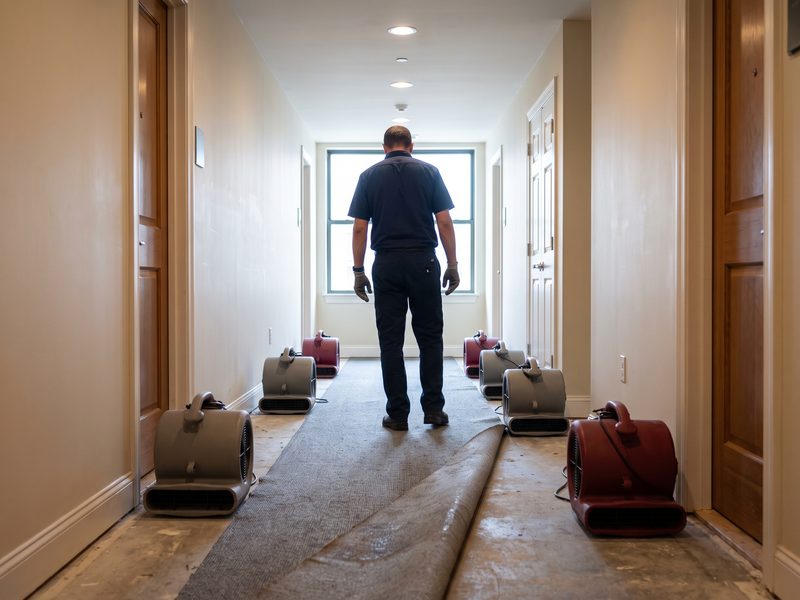
- Mitigation. A crew extracts standing water, removes material that cannot be saved, and sets drying equipment. This begins before anyone has approved a dollar of it.
- Inspection. Someone from the carrier examines the loss, usually working from the mitigation photos and the moisture log as much as from what is still visible.
- First payment. On a replacement-cost policy the carrier issues payment on the agreed scope at actual cash value, less your deductible, often with the mortgage servicer named alongside you.
- Supplement. Anything discovered after the first estimate goes back as a supplement, and it gets its own review cycle from the start.
- Rebuild and closeout. The repair contractor works the approved scope, and held-back depreciation releases once completion is documented.
How fast does mitigation have to start, and why does that clock matter most?
Mitigation starts first because your policy makes it your job to prevent further damage, not the carrier's job to authorize it. Almost every homeowner and condo unit-owner form carries a duties-after-loss condition requiring reasonable steps to protect the property from more harm. Waiting three days for a call back is not one, and a carrier can argue the extra damage was avoidable.
The biology backs up the paperwork. The EPA advises that wet or damp materials be dried within 24 to 48 hours to prevent mold growth, which means the window closes before most adjusters have opened the file. Clean water also does not stay clean. The IICRC S500 standard treats water category as a condition that degrades with time and contact, so yesterday's supply-line break sitting against a soiled carpet pad is no longer the loss it was on arrival.
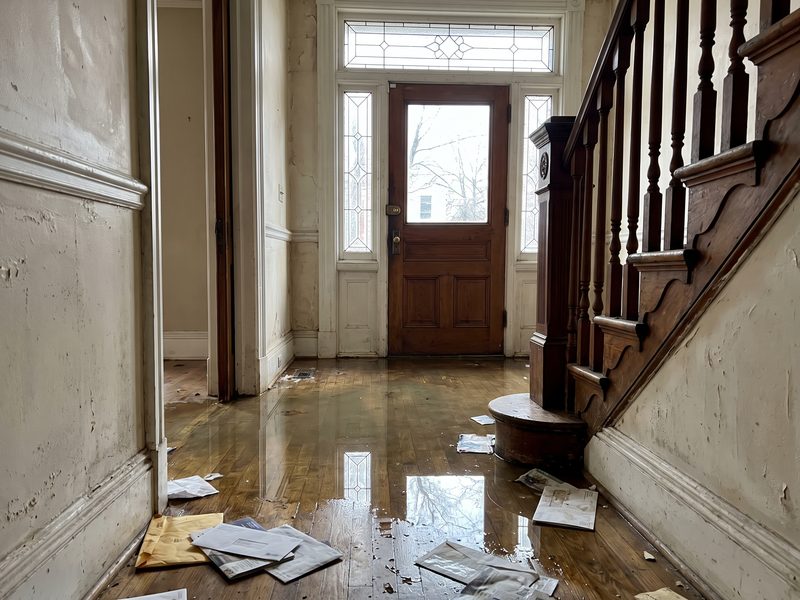
District construction makes the window tighter, not looser. A row house shares party walls with neighbors on both sides, so water in a stud bay can travel sideways into a building you have no right to open up. English basements sit partly below grade against masonry that wicks and holds. Older plaster on wood lath looks dry on the surface long after the lath behind it is soaked.

When does the adjuster inspect, and what happens at that visit?
Inspection scheduling is the first stage where the carrier, not you, controls the pace. A single burst supply line in a quiet month usually gets looked at quickly. The same loss during a hard freeze, when pipes let go across the District in the same week, joins a queue behind all of them. Carriers surge by hiring independent adjusters, who often carry files for several companies at once.
Some losses never get a physical visit. Many carriers now close smaller water claims on a desk review, working from photographs, a video call with you walking the rooms, and the contractor's documentation. That is faster when the record is good and slower when it is thin.
The visit itself is short. The adjuster confirms the cause of loss, measures rooms, photographs the affected areas, and asks what has already been removed. The estimate is written afterward in estimating software, which is where the real time goes. What helps most is having the mitigation record ready: moisture readings by day, the equipment list and run days, and the cause of loss in writing from whoever repaired the failed component.
- Have the claim number, the date and time of discovery, and the plumber or roofer invoice for the actual repair.
- Do not throw away the moisture log. It is the document that proves both the extent and the duration of the loss.
How long does drying take compared to how long the claim takes?
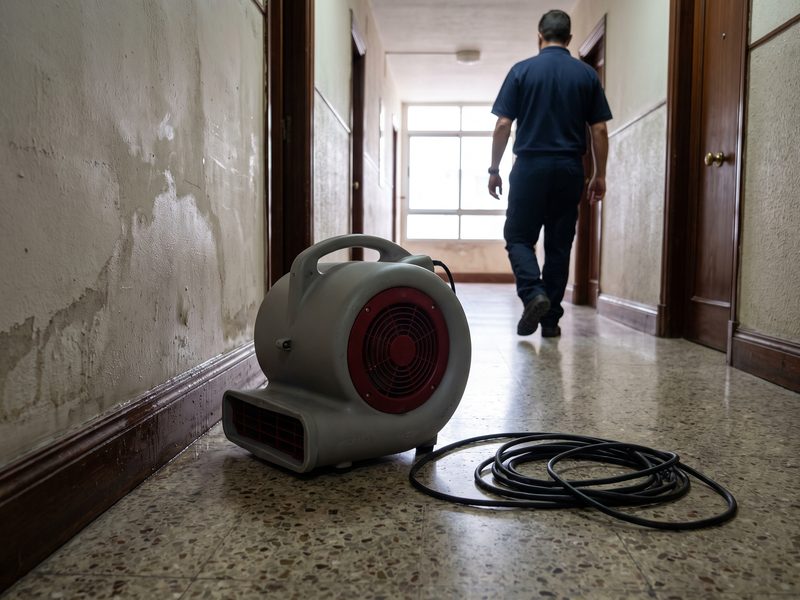
Drying ends when the structure reaches a dry standard, which is a measurement rather than a calendar date. It is set from unaffected material of the same kind elsewhere in the building, and the wet material has to come back to that reading and hold. Daily readings from the same marked spots prove it, which is why a technician returns each day rather than leaving the fans for a week.
In practice most dry-outs in a District home finish inside a week. Open framing and carpet come back fast. Plaster, hardwood over a subfloor, and anything against a masonry party wall take longer, because the water is bound deeper and has fewer escape routes. Cold weather slows it too.
Meanwhile the claim has barely started. The first payment has not been issued, the rebuild scope has not been agreed, and in many cases the adjuster has not written the estimate. This gap is the most common source of frustration we hear about. The house is dry, the equipment is gone, the hole in the ceiling is still there, and nothing appears to be happening. Something is, but it is happening inside the carrier's file rather than inside your rooms.
When is the first payment issued and what is in it?
The first payment normally follows the adjuster's estimate rather than the inspection, and it is rarely the whole amount. Most policies pay replacement cost in two pieces. The first is actual cash value: repair cost minus depreciation for age and wear, minus your deductible. The held-back portion, recoverable depreciation, releases after the work is finished and documented.
Two features of that payment surprise people. If you have a mortgage, the servicer is usually named on the check with you, so it must be endorsed and often routed through that servicer's draw process. Mitigation also runs on its own track: the emergency service invoice may be reviewed and paid separately from the dwelling repair estimate.
Understand clearly that the payment goes to the policyholder, and paying the restoration company remains your obligation under the contract you signed with them, whatever the carrier ultimately reimburses. No restoration contractor can guarantee what a carrier will approve. What a good contractor does is document the work to the standard the carrier reviews against, so the estimate and the invoice speak the same language.
What is a supplement and what does it add to the timeline?
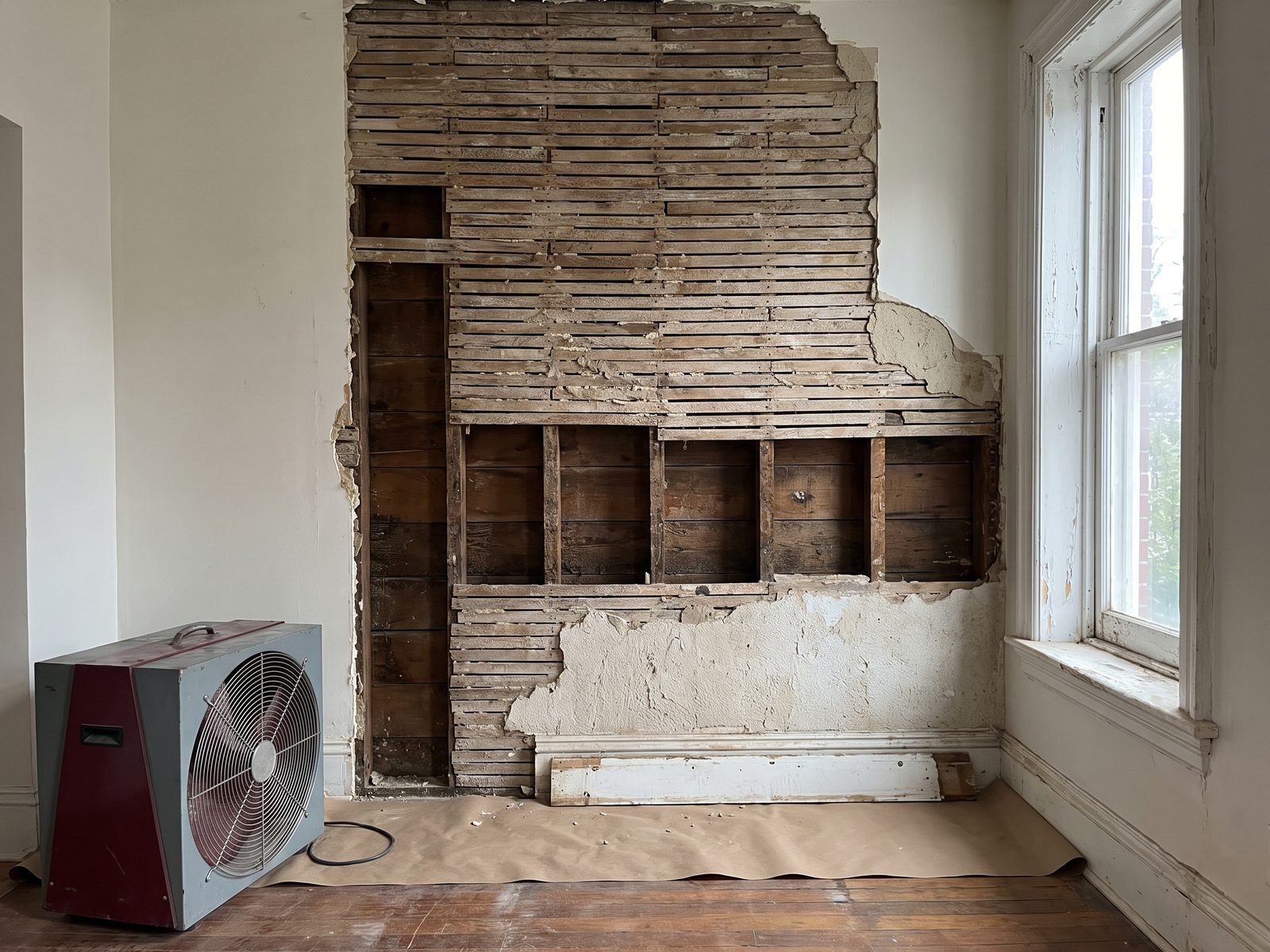
A supplement is a request to revise the approved scope after the first estimate, and on water losses it is the rule rather than the exception. The adjuster wrote the estimate while the walls were still closed, and the real extent only appears once flooring comes up and plaster or drywall comes off.
In older District housing stock the supplement is often driven by what the demolition uncovers. Plaster on wood lath cannot be patched like drywall and usually has to be taken back to a sound edge. A pre-1978 property may need lead-safe work practices, and materials of a certain era may need asbestos screening before anyone cuts. None of that was visible on inspection day.
Each supplement starts its own review cycle. It goes in with photographs and, where needed, a lab result or a licensed trade's written finding, then waits in the queue the original estimate waited in. Two or three rounds on a moderate loss is ordinary. One well-evidenced supplement beats five thin ones.
What are the District's claim-handling expectations for insurers?
The District regulates claim conduct through its unfair insurance trade practices law. The relevant section is DC Code 31-2231.17. It lists behaviors an insurer may not engage in as a general business practice. Among them: failing to acknowledge and act reasonably promptly on claim communications, failing to adopt reasonable standards for prompt investigation, and failing to affirm or deny coverage within a reasonable time after proof of loss.
Read that carefully, because it matters for expectations. The section speaks in terms of reasonableness and general business practice, not in terms of a fixed number of days. Anyone who tells you the District puts a fixed number of days on a property carrier's payment is describing a different jurisdiction, or a different kind of insurance. What the law gives you is a standard of conduct and a place to complain.
That place is the Department of Insurance, Securities and Banking, which takes complaints from District residents, forwards them to the company for an explanation, and can require a correction where it finds a violation of District law. DISB confirms receipt of a completed complaint within three business days and aims to complete a case within 45 days. Filing one does not decide your coverage and is not a substitute for the appraisal process in your policy. It does create a record, and it frequently gets a stalled file moving.
Deadlines do work differently elsewhere in the region, and the rules that apply depend on where the insured property sits rather than where you live. Our Virginia site, restorationdoctors.com, covers the statutory response deadlines that apply on the other side of the river at https://restorationdoctors.com/blog/insurance-claim-response-deadlines-va-dc-md, useful if you own property in more than one jurisdiction.
What slows a claim down most often?
Most delays are not adversarial. They are informational: somebody in the chain is waiting for a document that nobody has asked for out loud. Here is what holds up District files, roughly in order of frequency.
- No proof of the cause of loss. Carriers separate a sudden failure from long-term seepage, and without a plumber or roofer report in writing the file sits while that question hangs open.
- A thin mitigation record. If the daily readings, the equipment log and the pre-demolition photographs are incomplete, the reviewer cannot verify what was necessary and defaults to asking for more.
- Shared responsibility in a condo or co-op. The association master policy and your own unit policy each have a piece, and neither carrier wants to move until the other does.
- The mortgage servicer. Multi-party checks and draw inspections can add weeks after your carrier has released the money.
- Catastrophe volume. A freeze or a heavy storm week floods the same adjusters with files, and non-emergency claims queue behind emergency ones.
- Scope disagreement. Flooring continuity and plaster versus drywall repair are the usual sticking points, and they settle on documentation and line-item comparison, not on a phone call, with appraisal as the fallback your policy provides.
What can you do to move it along without antagonizing anyone?
Adjusters manage dozens of open files and they move the ones that are easy to move. Being easy to move is the whole strategy. Put everything in writing to the claim number, ask for specific things rather than general updates.
Ask three questions early: who is the assigned adjuster, what documents are still outstanding, and has the estimate been written yet. That last one tells you whether you are waiting on a visit or on paperwork, which are different problems.
Ask for a copy of the estimate itself, not just the payment summary. The line-item detail is what your contractor needs in order to agree, disagree or supplement intelligently.
- Send the plumber or roofer report the day you get it, without being asked for it.
- Keep a dated log of every call, name and promise. It costs nothing and it settles arguments.
- Escalate one step at a time: adjuster, supervisor, the carrier's complaint line, then the regulator. Skipping steps resets the clock.
- Do not sign a release or accept a final payment while a supplement is still open.
What does the whole sequence look like on one timeline?
The table below is the composite shape of a District residential water loss with no unusual complications. Treat the windows as ranges describing how files behave, not as commitments from any carrier. A condo or co-op loss involving the association adds a parallel track that runs longer, and a disputed scope can extend the back half indefinitely. The shape matters more than the numbers: everything urgent happens in the first week, everything financial after it.
- Sources for this article:
- District of Columbia unfair claim settlement practices, DC Code 31-2231.17: https://code.dccouncil.gov/us/dc/council/code/sections/31-2231.17
- DC Department of Insurance, Securities and Banking consumer complaints: https://disb.dc.gov/complaints
- EPA, A Brief Guide to Mold, Moisture and Your Home, which states the 24 to 48 hour drying window: https://www.epa.gov/mold/brief-guide-mold-moisture-and-your-home
- EPA Lead Renovation, Repair and Painting Program, on the pre-1978 threshold and lead-safe work practices: https://www.epa.gov/lead/lead-renovation-repair-and-painting-program
- IICRC standards index, including the ANSI/IICRC S500 Standard for Professional Water Damage Restoration: https://www.iicrc.org/page/IICRCStandards
- Restoration Doctor's Virginia site, on response deadlines in the neighboring jurisdictions: https://restorationdoctors.com/blog/insurance-claim-response-deadlines-va-dc-md
| Stage | Typical window | Who drives it | What to watch |
|---|---|---|---|
| Discovery and shut-off | Hour 0 | You | Stop the source, kill power to wet areas, photograph before anything moves |
| Report the loss | Hours 0 to 24 | You | Get the claim number and the assigned adjuster in writing |
| Emergency mitigation begins | Hours 0 to 48 | Restoration contractor | Extraction, controlled demolition, equipment set, first moisture readings |
| Adjuster inspection or desk review | Days 2 to 14 | Carrier | Whether it is a site visit or a photo review, and what documents are requested |
| Structure reaches dry standard | Usually within a week | Restoration contractor | Daily readings hitting the dry standard and holding, then equipment removal |
| Estimate written and first payment | Weeks 2 to 6 | Carrier | Actual cash value less deductible, mortgage servicer endorsement, mitigation invoice handled separately |
| Supplement rounds | Adds 1 to 3 weeks each | Contractor and carrier | One evidenced submission beats several thin ones |
| Rebuild | Weeks to months | Repair contractor | Permits, material lead times, draw inspections if a servicer holds funds |
| Depreciation release and closeout | After documented completion | You and carrier | Final invoices, completion photos, nothing signed while a supplement is open |