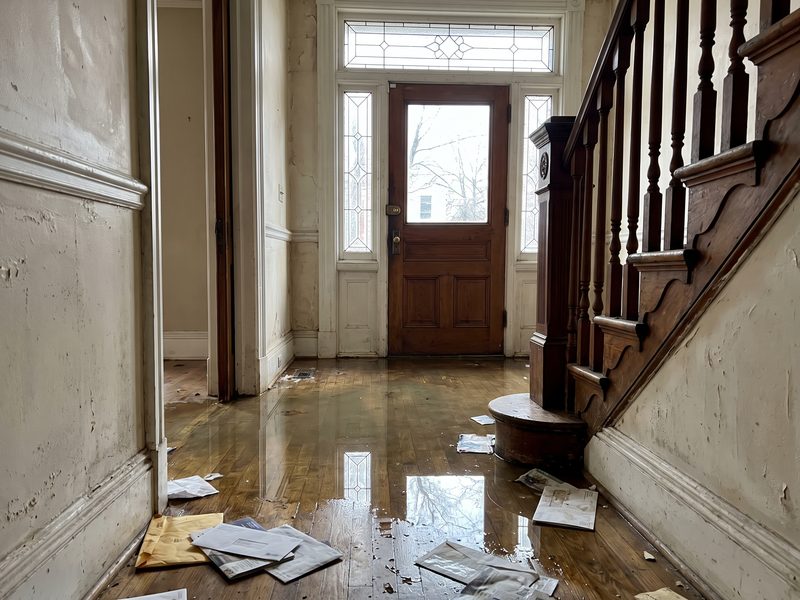
Co-op, Condo or Fee Simple: Who Pays for Water Damage in DC
BY RESTORATION DOCTOR OF WASHINGTON DC · WASHINGTON DC & SOUTHERN MARYLAND
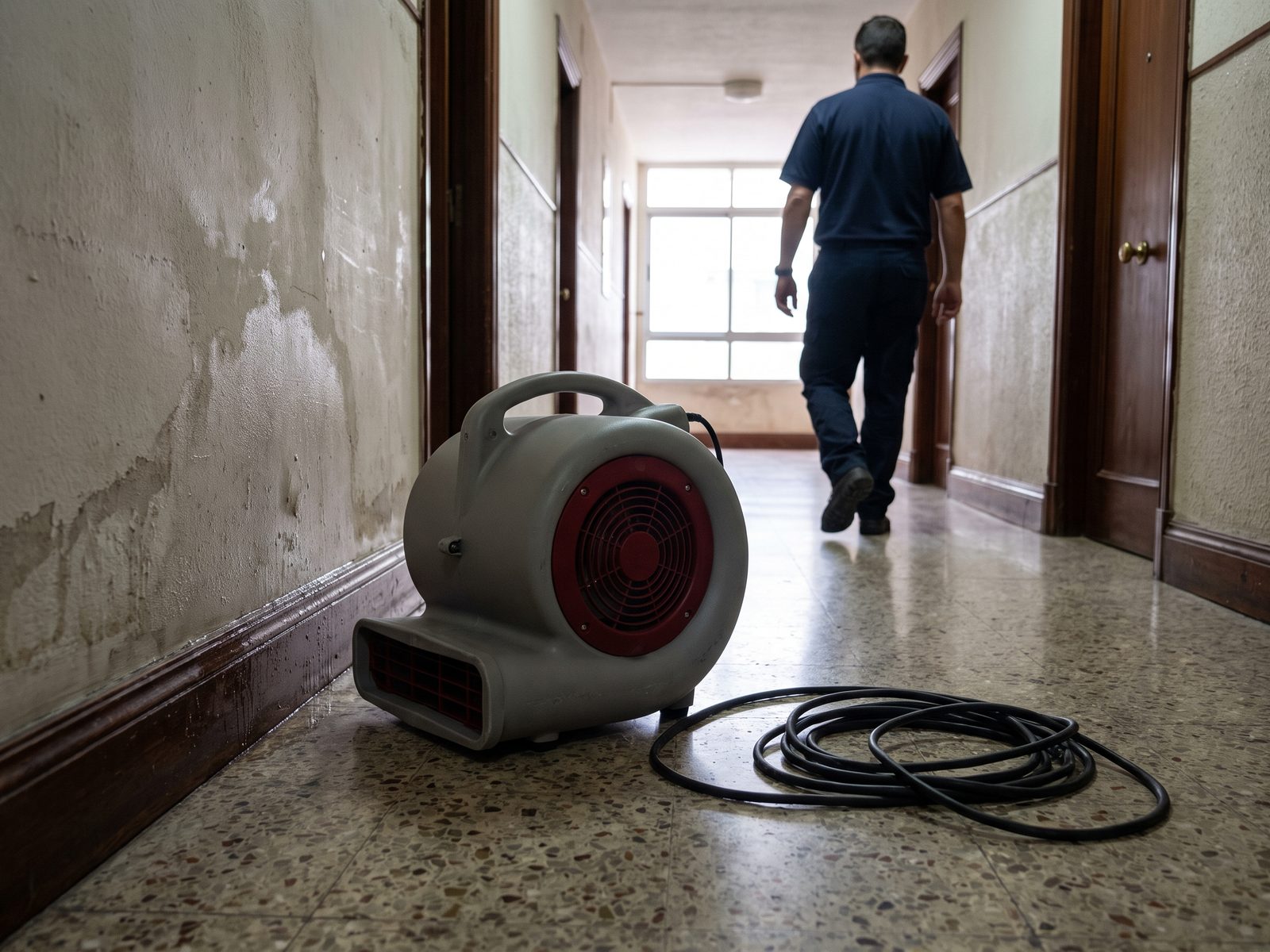
In a DC condominium the declaration splits the loss between unit owner and association, while in a co-op the corporation owns the real property and your proprietary lease decides what is yours. Find that document before you argue about the repair line, because the three ownership forms give three different answers.
Call (202) 922-1444What are the three ownership forms a DC water loss can happen inside?
DC co-op water damage responsibility turns on one fact that surprises most people: in a housing cooperative the corporation owns the building, and you own shares plus a proprietary lease that lets you occupy a specific unit. In a condominium you hold a deed to your unit and an undivided interest in the common elements, and in a fee simple row house you own the structure and the ground under it. The same burst supply line takes three different paths through authorization, insurance and the final invoice.
Washington runs on all three at once. Most of the newer buildings around Navy Yard, NoMa and Logan Circle are condominiums. Many of the District's cooperatives are pre-war apartment buildings along upper 16th Street, Connecticut Avenue, in Cleveland Park and on the Southwest Waterfront. Fee simple covers the row houses in between.
The practical difference is who holds title to the wet material. In a co-op, the plaster on your living room wall is the corporation's real property even though you paid to paint it. Your interest is personal property, shares bundled with a lease that spells out what you maintain. That changes who can hire a contractor and who the restoration company can bill.
Who owns the pipe, the drywall and the floor in each one?
Start with the element that failed, not with the room it flooded. A supply line inside a demising wall, a branch drain under a slab, a riser serving stacked units and the connector under your own sink are four different ownership questions that can wet the same floor. The table below is the general pattern across the three forms.
For a condominium, all-in versus bare-walls is a question about what the master policy insures, not about who owns the plaster, and in the District it starts from a statutory floor. Where units are stacked, the D.C. Code requires the association's property insurance to include the units themselves, to the extent that coverage is reasonably available. That default holds unless the condominium instruments expressly provide otherwise, and it does not reach improvements or betterments a unit owner installed. Our sister site restorationdoctors.com works through all-in versus bare-walls master policies in detail at https://restorationdoctors.com/blog/condo-master-policy-deductible-who-pays-virginia.
Cooperatives do not use the all-in and bare-walls vocabulary. The corporation owns the real property from the roof to the slab, so the question is never who owns it. The question is what the proprietary lease assigns you to maintain and repair. Many DC co-op leases hand the shareholder everything on the room side of the plaster and keep the structure, the risers and the roof with the corporation.
- Photograph the failure point before anyone cuts, because the ownership answer lives there and not in the wet room.
- Ask the manager in writing: is the component that failed a unit component, a common element or corporation property?
| Element that got wet | Fee simple row house | Condominium | Housing cooperative |
|---|---|---|---|
| Supply or drain pipe inside a wall | Yours, from the meter inward | By D.C. Code default a pipe serving only your unit is part of your unit and one serving more than one unit is a common element, wherever it runs, unless the instruments say otherwise | Corporation's real property, though the lease may still assign upkeep to you |
| Drywall, plaster and paint | Yours | Usually yours: where the wall or ceiling is the unit boundary, the D.C. Code puts the plaster and wallboard on the finished surface inside the unit unless the instruments say otherwise | Corporation's, with the lease deciding who repairs and repaints it |
| Flooring and floor covering | Yours | Usually yours as a unit component | Usually yours to maintain as a fixture you or a prior shareholder installed |
| Cabinets, counters and built-ins | Yours | Yours | Usually yours as shareholder improvements |
| Corridors, roof, slab and risers | Yours, because you own the whole building | Common elements owned in common by every unit owner | Corporation's, with no serious argument available |
| Who signs the work authorization | The owner on title | Owner for the unit side, board or manager for common elements | Shareholder for the lease side, corporation for anything structural |
| Who is invoiced for the shortfall | The owner | Per the bylaws; where they are silent the D.C. Code default sends a common-element loss to the association and a unit-origin loss to that unit owner up to a capped amount, with prior notice required | Shareholder or corporation per the lease, sometimes recovered through maintenance fees |
What document actually governs: declaration, proprietary lease or nothing?
In a condominium the governing instrument is the declaration, supported by the bylaws and board rules. Condominiums in the District sit under the condominium chapter of the D.C. Code, and that chapter does more than name the categories. It supplies default rules that apply unless your condominium instruments say otherwise. Where a wall, floor or ceiling is the designated unit boundary, the lath, wallboard and plaster on the finished surface count as part of the unit, and everything behind them counts as common element. Your declaration can move those lines, so read the statute first and then read what your building actually recorded.
In a cooperative the governing instrument is the proprietary lease, supported by the corporation's bylaws and the house rules. A cooperative is a corporation first, so its paperwork starts from corporate law and its own bylaws rather than from a property statute that defines unit boundaries. The co-op answer therefore comes out of a contract, and that contract is worth reading with your own attorney before a dispute starts.
In a fee simple row house there is usually no governing document beyond your deed, unless the property sits in a historic district or carries a party wall agreement. That is simpler, and it also means nobody else is contractually obliged to help when water comes through a shared wall.
Get the document before you need it. The maintenance and repair article, then the insurance and deductible articles, answer most of what an adjuster will ask.
Who signs the work authorization when a co-op unit floods?
A work authorization is a contract to perform work on property, so the answer follows title rather than occupancy. In a fee simple house the owner signs and nothing else is required. In a condominium the unit owner signs for work inside the unit, and the board or its managing agent signs for anything touching a common element.
In a co-op both signatures usually belong on the file. The shareholder can authorize work on what the proprietary lease assigns to the shareholder, and the corporation authorizes anything that reaches its real property. A responsible restoration company asks for the managing agent's approval before cutting plaster, even when the shareholder is standing there asking for it, because the proprietary lease almost always reserves alterations to the corporation's consent.
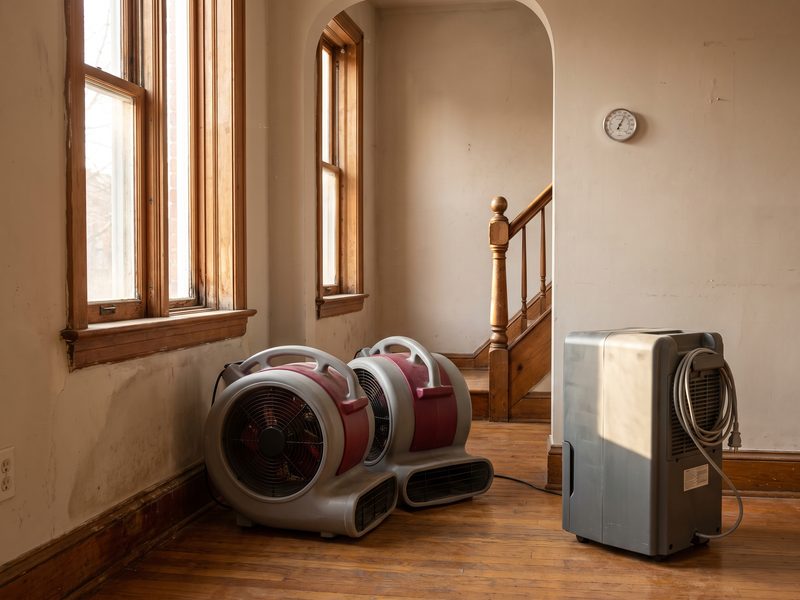
This is where jobs stall. Water does not wait for a board meeting. The workable line is between reversible mitigation and alteration. We meter the wall, set drying equipment and, where a run of trim comes off and goes back on, pull a baseboard to dry the cavity, all under the shareholder's signature. Cutting plaster, removing lath or opening a ceiling waits for the corporation's written approval.
Whose insurance responds first, and what does each policy actually cover?
Order of response is the part people get backward. In a District condominium the starting point is the statute, not the declaration. Unless the condominium instruments expressly provide otherwise, the association has to carry property insurance on the common elements. Where units have horizontal boundaries, that insurance has to include the units too, though not the improvements or betterments a unit owner installed. The statute also makes the association's policy primary where a unit owner's own policy covers the same risk. Your own unit owners policy then carries contents, loss of use, liability and the improvements the association is not required to insure. The D.C. Code also requires each unit owner to carry condominium owner's insurance with dwelling property coverage and personal liability coverage at statutory minimums, and the executive board can raise those minimums. In a co-op the corporation carries a commercial property policy on the building, and the shareholder carries an HO-6 style unit owners policy adapted to a cooperative interest, sometimes written specifically as a co-op shareholder form.
The master or corporate policy usually carries a deductible far larger than a homeowner expects, and the real question is who absorbs it. In a District condominium the bylaws are supposed to name who pays. If they are silent and the damage originated in the common elements, the D.C. Code treats that deductible as a common expense. If it originated inside a unit and the bylaws are silent, the statute puts it on the owner of that unit, capped at five thousand dollars. That cap applies only where the association gave owners notice of the responsibility before the damage happened. A co-op works differently, because there the answer lives in the proprietary lease and the corporation's bylaws rather than in a property statute.
Our sister site restorationdoctorfl.com covers how a Florida high-rise splits the loss between master and unit policies at https://restorationdoctorfl.com/blog/high-rise-condo-water-damage-who-pays, and the order-of-response logic there maps cleanly onto a DC building even though the statutes differ.
One more distinction matters in a co-op. Because the corporation owns the real property, a shareholder policy is often written to cover improvements and betterments, meaning what you installed rather than what the building provided. If your kitchen was renovated by a prior shareholder and the paperwork is thin, that question becomes real fast. The District's insurance regulator publishes consumer guidance and takes complaints if a claim handling question cannot be resolved with the carrier.

How does a co-op share loan change who the check goes to?
Financing a co-op is not a mortgage. You are borrowing against shares and a lease, so the instrument is a share loan secured by the stock certificate and an assignment of the proprietary lease. That changes the mechanics of a claim payment in a way that catches people out when they try to pay a restoration invoice.
On a fee simple property, a large dwelling loss payment is commonly issued naming the mortgage servicer alongside the owner, who then releases funds in draws as work is completed. Co-op share loan lenders sometimes require similar treatment and sometimes do not, because their collateral is stock rather than real estate. Ask your lender in writing whether it must be named on a loss payment, because finding out after the draft arrives adds weeks.
What is a loss assessment and does it exist in a co-op?
Loss assessment coverage pays your share when the association or corporation assesses every owner for a covered loss the master policy did not fully pay. It is a small optional limit on most unit owner policies, often carried at a level chosen years ago and never revisited.
In a condominium the assessment arrives as a special assessment under the declaration, and loss assessment coverage is designed for exactly that. In a co-op the same economics happen through a different door: the corporation raises the maintenance fee, levies a special assessment on shareholders, or charges the shareholder directly under the proprietary lease for a repair the lease assigns to them. Whether your policy treats that as a loss assessment depends on the form wording.
Two things are worth checking on your declarations page. First, the loss assessment limit itself. The D.C. Code caps the deductible a District condominium can push onto a unit owner when the bylaws are silent, so the large exposure comes from bylaws that set a higher figure or from a special assessment for an uninsured loss. Second, whether the form covers an assessment made to pay the master or corporate policy deductible, a carve-out some policies exclude and others endorse back in.

How does the answer change when the water came from the unit above?
Water traveling down through a ceiling is the most common multi-unit loss we see in the District, and it is the one where ownership form and liability get confused with each other. They are separate questions. The governing document decides who repairs what. Negligence decides who ultimately pays, and those two answers are often different people.
In a condominium, the owner above may be responsible for the damage they caused if their conduct or their failure to maintain a unit component caused the release. Most declarations put common element repair with the association whatever the cause and then let the association pursue a negligent owner separately, but your declaration is the document that settles it. In a co-op the corporation owns the ceiling in both units, so the repair obligation frequently sits with the corporation, and the shareholder above may still face a claim under the lease or in tort for the damage.
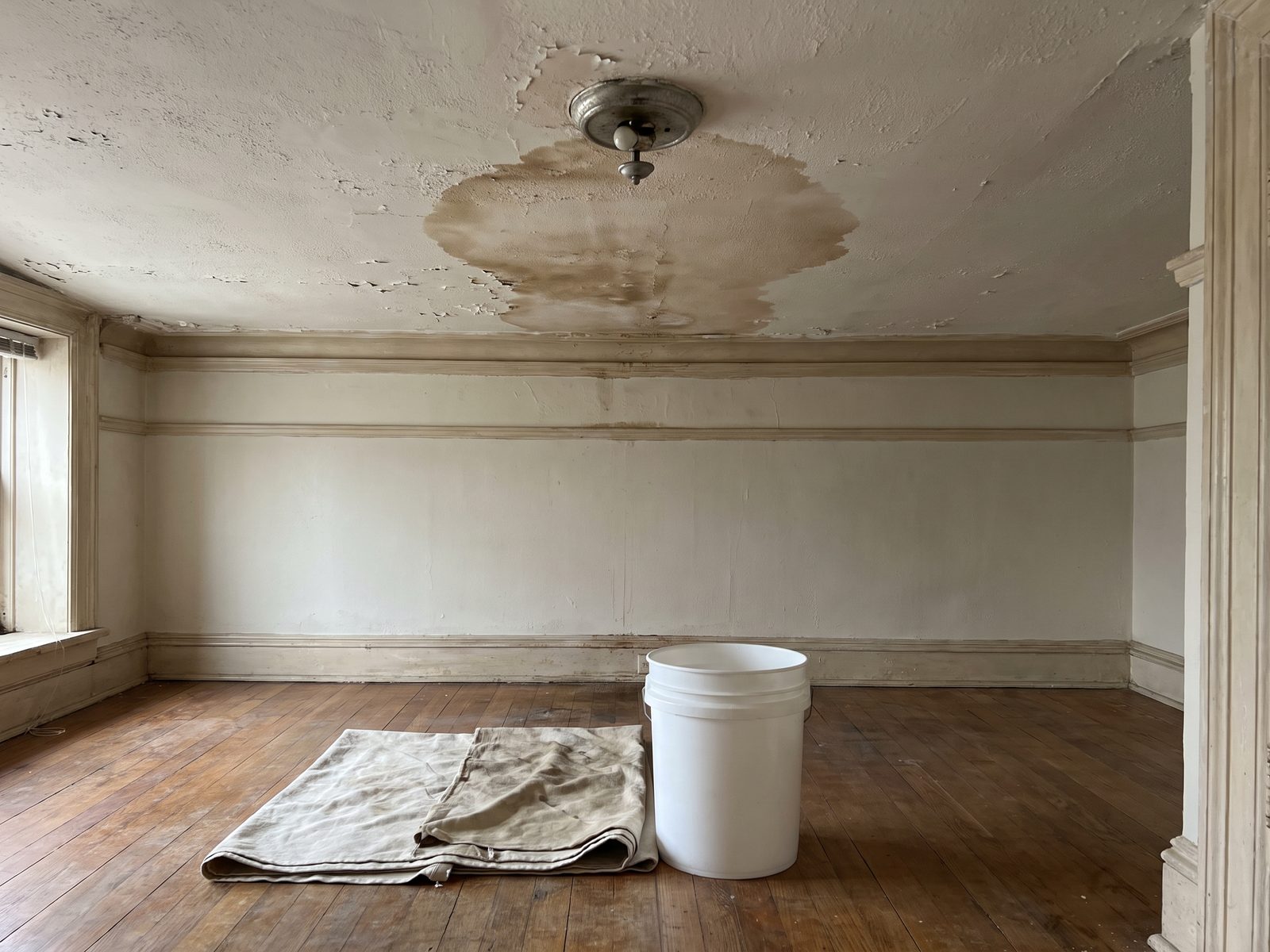
What that means on the ground is simple. Do not wait for the fault argument to resolve before drying the ceiling cavity. A wet plaster ceiling in a pre-war building holds moisture in the lath and the insulation, and sometimes in original horsehair plaster for far longer than a modern drywall assembly. The EPA's guidance on mold and moisture treats 24 to 48 hours as the window in which wet materials should be dried to keep mold from establishing.
- Report to the managing agent in writing, even if you also call. A phone log entry is not a document you can produce later.
- Ask that the source be identified and shut off in writing, and ask for confirmation when it is done.
- Do not cut your own ceiling open in a co-op without the corporation's approval, however tempting it is.
What should you collect in the first 24 hours no matter which form you own?
The first day is the only time some of this evidence exists. Whatever your ownership form, the same short collection makes every later conversation easier. Competent restoration work follows the IICRC S500 standard for water damage restoration, which is built around documenting conditions and drying to a measured target rather than a guessed number of days.
Then make the two calls that matter: the managing agent or board, so the corporation or association is on notice, and your own carrier, so your policy is on notice. Both notices should go in writing the same day, however the first contact happened.
The sources below are primary standards and government pages, not a substitute for your own governing document or your own attorney.
- Photographs of the failure point, the wet rooms and the ceiling or wall the water traveled through, taken before anything is moved.
- A written report to the managing agent or board, sent by email so it is timestamped.
- Your own policy declarations page, with the deductible and the loss assessment limit noted.
- The parts of your declaration or proprietary lease that set repair duties and insurance duties.
- The restoration company's scope, daily moisture meter readings and equipment list, requested in writing rather than assumed.
- Sources used in this article: IICRC standards overview, https://iicrc.org/iicrcstandards/
- EPA brief guide to mold and moisture in the home, https://www.epa.gov/mold/brief-guide-mold-moisture-and-your-home
- D.C. Code 42-1902.06, unit boundaries and common elements, https://code.dccouncil.gov/us/dc/council/code/sections/42-1902.06
- D.C. Code 42-1903.10, insurance obtained by the association, https://code.dccouncil.gov/us/dc/council/code/sections/42-1903.10
- DC Department of Insurance, Securities and Banking, https://disb.dc.gov/