Water Damage Repair in a DC Historic District: What Gets Reviewed
BY RESTORATION DOCTOR OF WASHINGTON DC · WASHINGTON DC & SOUTHERN MARYLAND
In a DC historic district, exterior repairs that change materials or appearance go through design review, while in-kind repairs and interior drying generally do not, and Georgetown carries an extra federal layer on top. Emergency stabilization is not what gets owners in trouble; replacing a historic window with a modern one without asking is.
Call (202) 922-1444How do you find out whether your DC property is in a historic district?
Check the address in PropertyQuest, the District's property lookup, before you commit to a DC historic district home repair review. It returns whether the building is a designated landmark, sits inside a historic district, or neither, and that one result decides whether the rebuild half of your water loss goes through design review at all.
The Office of Planning runs PropertyQuest, and the Historic Preservation Office keeps maps of every designated district.
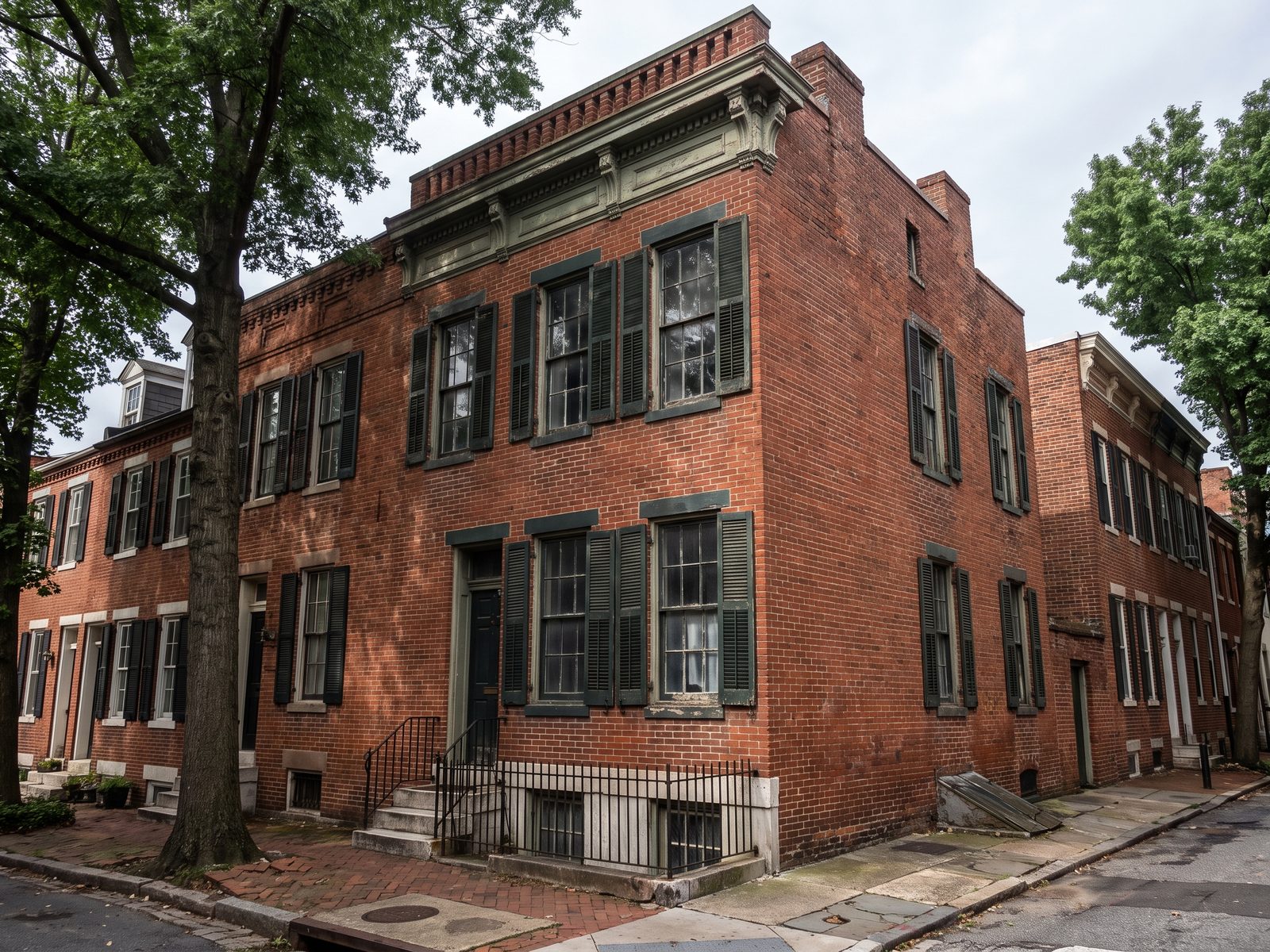
Designation is not rare here. The Office of Planning describes dozens of District neighborhoods as historic districts, from Georgetown and Capitol Hill through Dupont Circle, Logan Circle, Shaw and Anacostia. Blocks of brick row houses that look ordinary from the sidewalk are often inside one.
Condominium and cooperative owners get caught out most. Designation applies to the building, not the unit, so a leak that ends at a stucco facade or a slate mansard becomes an association matter and a design review matter at once.
What does historic review actually cover: exterior, interior, or both?
Design review attaches to the building permit, and it attaches to exterior appearance. The Historic Preservation Office states the test plainly: preservation review is needed when a building permit is required for work affecting the exterior appearance of a historic property, and for officially designated historic interiors. A change of use does not trigger it, and neither does work needing no permit.
There is no separate historic permit to chase. HPO clearance of the ordinary building permit application is the preservation approval, so the process is an extra desk rather than a second application. One thing does change: postcard permits cannot be used on a historic property, so the quick-permit route many contractors rely on is closed.
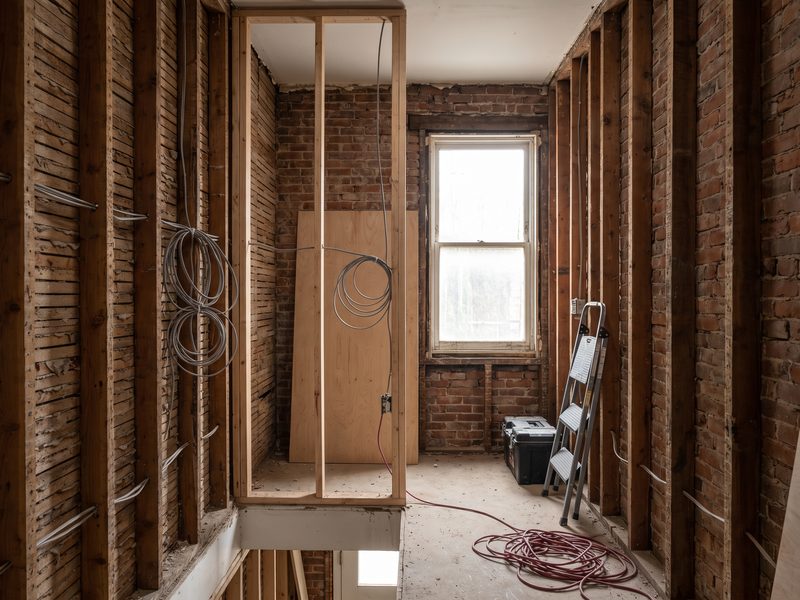
Separately designated historic interiors are uncommon in a private row house; they are usually public rooms in institutional buildings. In a typical home the plaster and framing behind your walls are yours to dry and repair without a preservation officer weighing in. The moment the work reaches a window opening, a cornice or a roof slope the street can see, that changes.
Keep two questions apart. Whether the work needs a building permit is answered by the Department of Buildings. Whether it needs design review is answered by HPO, with the Historic Preservation Review Board, HPRB, taking the applications staff do not clear. In a historic district a repair can need both.
Which water damage repairs are reviewed and which are exempt?
Run each line of your scope through three questions. Does it require a building permit? Does it change what the street or a public alley can see? Is it a true in-kind repair, same material and same profile? Answer those and you land in the right lane.
The table below is the short version of that decision tree for a water loss. It does not settle your project. HPO staff make that call, and the Office of Planning encourages owners to ask for a preliminary design review consultation before the permit application goes in.
| Work after the loss | Changes what the street or alley sees? | Where it usually lands |
|---|---|---|
| Extraction, air movers, dehumidification, containment | No | Outside design review entirely; no HPO application |
| Removing wet plaster, insulation, subfloor or baseboard indoors | No, unless the interior is separately designated | Outside design review in a typical house |
| Emergency tarp, board-up or temporary shoring | Temporarily | Stabilize first, then tell HPO what you did and how it comes off |
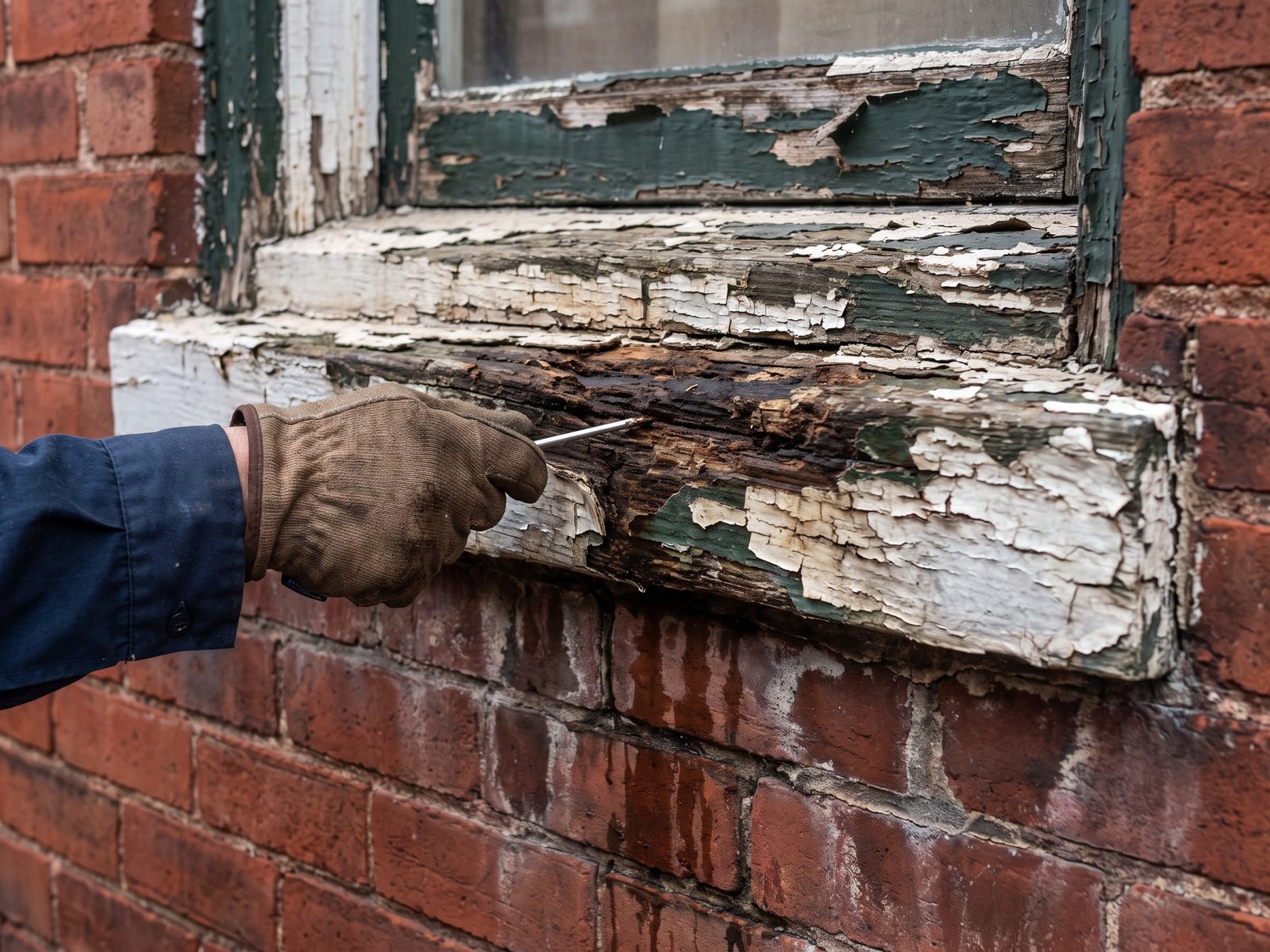
| Repairing a wood window, sill, door or cornice in kind | No, same material and profile | Minor work HPO can usually clear at staff level |
| Replacing a historic window or door with a new unit | Yes | Design review, with drawings, product data and a condition case |
| Re-roofing a visible slate or standing-seam slope in a substitute material | Yes | Design review, and substitute materials draw the most scrutiny |
| Rebuilding a parapet, chimney, coping or sheet-metal cornice | Yes | Design review, with mortar, profile and detail all in scope |
| Exterior work in Georgetown hidden from every street and alley | No | HPO and HPRB rather than the Old Georgetown Board |
What is different about Georgetown?
Georgetown answers to two systems at once. District preservation law applies to the Georgetown Historic District the way it applies everywhere else, and federal law gives the US Commission of Fine Arts authority to review most exterior construction in the neighborhood. The District has to consider what the federal side recommends.
In practice the Old Georgetown Board, an advisory board of the Commission of Fine Arts, conducts the primary review of most projects there, and its recommendations reach the District through the Commission. That is a second calendar layered onto a repair that would be routine six blocks east.
The dividing line is visibility. The Commission reviews what can be seen from a street or an alley, so HPO and HPRB handle exterior work the public cannot see. A rear wall hidden behind a garden wall can sit outside Old Georgetown Board review while the front elevation of the same house does not.
Standards are similar on both sides but not identical, and some Georgetown rules are stricter than the citywide ones. Applications still go in through the Historic Preservation Office, which transmits them to the Commission. Owners do not file federally.
- Old Georgetown Board review covers exterior work visible from a street or public alley
- Work not visible from public space stays with HPO and HPRB
- Applications are filed with HPO, which transmits them for the federal review
- Plan on a board calendar, not a same-week clearance, for anything on a visible elevation
What happens to emergency stabilization, tarps and board-ups?
Nothing in preservation law asks you to let water keep running into a building. Emergency stabilization is expected after a storm or a burst supply line, and temporary protection is not the kind of permanent change design review exists to catch. A permanent change made during the emergency and never disclosed is.
The working rule on designated buildings is reversibility. Fasten through mortar joints rather than brick faces so the holes can be repointed. Screw plywood to a frame that bears on the opening rather than into original trim. Keep bracing off carved stone and pressed-metal detail. Those choices cost minutes on site and save an argument later.
Photograph the building before anything is touched, then photograph the protection once it is up. Those two frames answer the question a reviewer asks months later: what was there before the damage.
Then make the call. Tell the Historic Preservation Office what failed and what the permanent repair is likely to involve. Storm damage is ordinary business for that office, and an early conversation keeps a temporary tarp from turning into an enforcement letter.
Can you replace historic windows and doors damaged by water?
This is the repair that goes wrong most often. A sill rots, a storm drives water through a failed glazing bead, and someone orders replacement units the same week. Replacing a historic window is exterior work that changes appearance, so it is a design review question, and the guidelines start from repair.
Old windows are more repairable than they look. Stiles and rails on a nineteenth-century sash are usually old-growth wood with tight grain, and decay concentrates at the bottom rail and the sill where water sits. A probe tells you the difference between surface damage and a member that has lost strength. Dutchman repairs, epoxy consolidation and new sills milled to the original profile handle a surprising share of storm losses.
When a unit genuinely cannot be saved, the case is made with evidence rather than opinion. A reviewer wants photographs of the elevation, close frames of the failed members and a written condition assessment. A replacement matching the original material, dimensions, muntin profile and glazing pattern has a far easier path than a catalog unit that happens to fit the opening.
Interior storm panels solve the comfort argument without touching the street elevation, and they clear review more easily than new sash. Vinyl replacements are the opposite. Order them before a review and you can end up removing them at your own cost.
What about slate, standing-seam metal and parapet work on a flat roof?
Row house roofs in the District are mostly low-slope membrane behind a parapet, with a visible front slope in some neighborhoods carrying slate or standing-seam metal. The membrane you cannot see from the sidewalk is rarely a design review fight. The visible slope and the parapet above it are a different matter, because those elements define the building from the street.
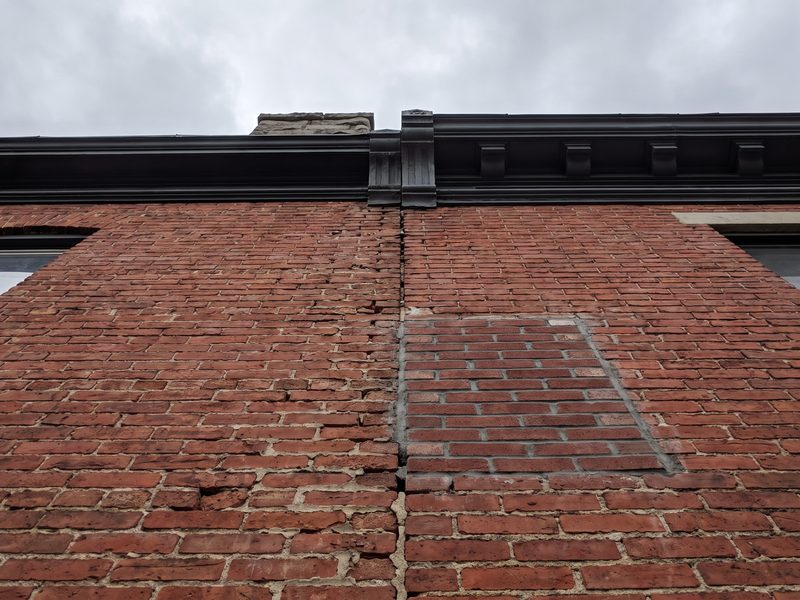
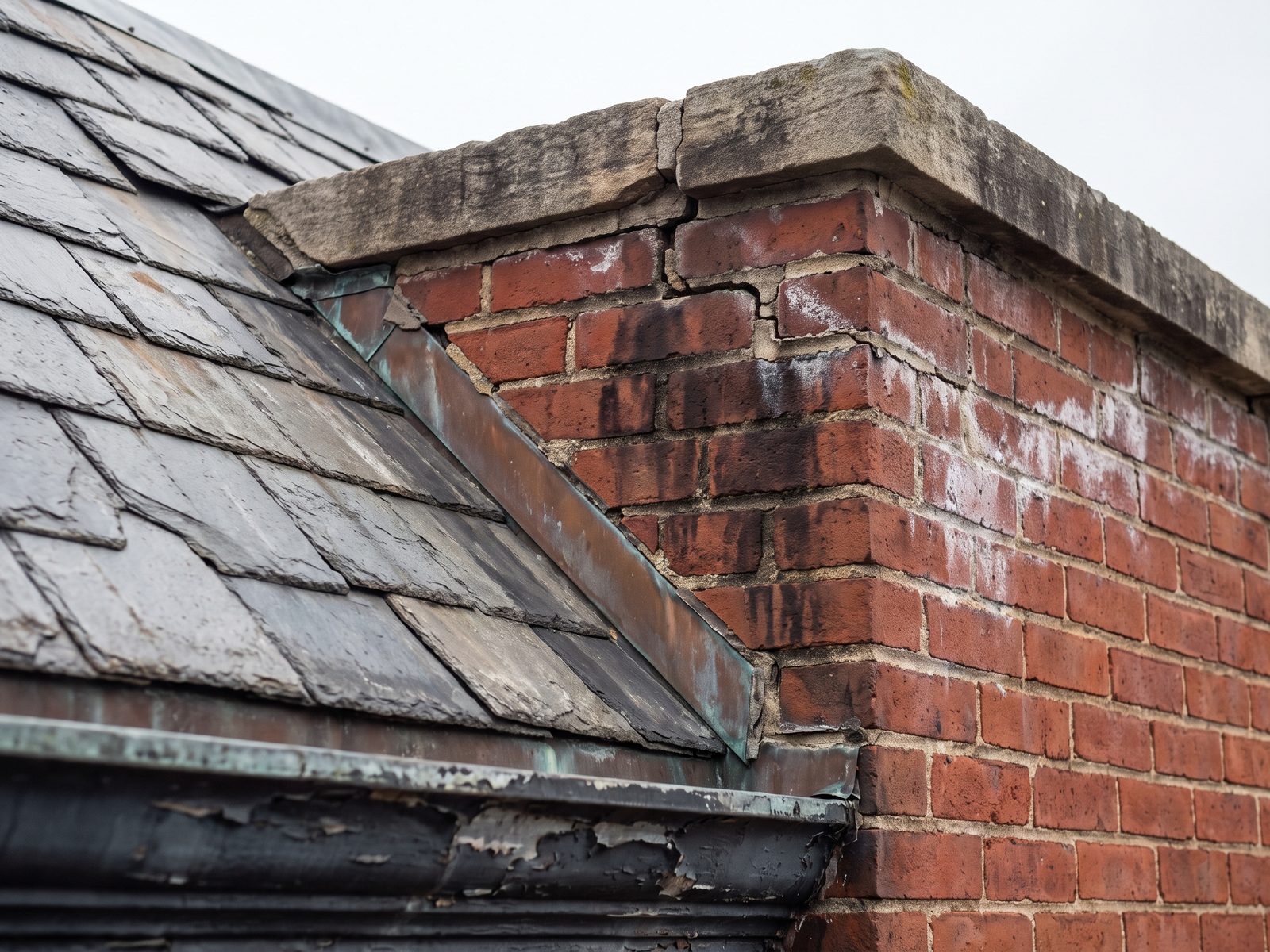
Water losses concentrate at exactly those elements. A failed coping stone or cap flashing lets rain into the core of a parapet, and the wall stays wet long after the roof is patched. A blocked scupper backs water up behind the parapet in every storm. Fixing the ceiling below without fixing the detail above buys you a repeat.
Mortar is where good intentions do the most damage. Soft historic brick needs a soft lime-based mortar, and hard portland mixes are stronger than the brick they sit between. The National Park Service preservation briefs cover repointing and historic roofing, and they are the technical baseline HPO staff work from alongside the board's guidelines.
A substitute material can be approved, but only on evidence. Expect to show the failure, the proposed replacement and often a mock-up on the building. Synthetic slate on a rear slope nobody can see is a different conversation from synthetic slate on a front mansard.
How long does review take and how does that affect drying and rebuild?
Most preservation review never reaches a board. The Office of Planning reports that more than 95 percent of permit applications requiring preservation review are handled through HPO expedited staff review. HPO says staff can often clear an application the same day when it is complete and consistent with the adopted standards, and that larger scopes typically take up to five business days.
Projects that do reach HPRB or the Old Georgetown Board move on a meeting calendar, and that is where weeks enter the schedule. Nobody should wait on that calendar with wet plaster in the house.
This is why mitigation and reconstruction are two different jobs with two different clocks. Drying needs no design review and no board, so it starts immediately. IICRC S500, the standard for water damage restoration, treats drying as a measured process with daily readings rather than a fixed number of days, and EPA guidance on mold and moisture points to acting within roughly 24 to 48 hours. Waiting on paperwork before extracting water is how a water loss becomes a mold job.
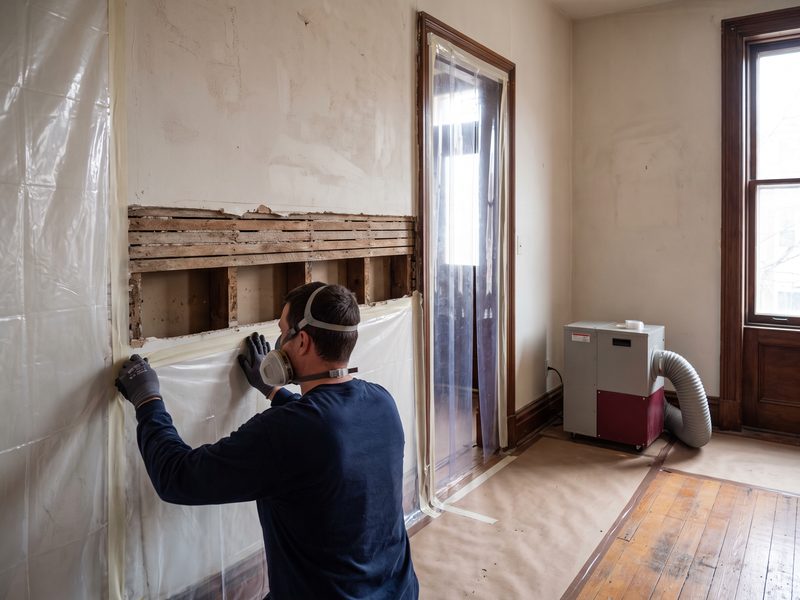
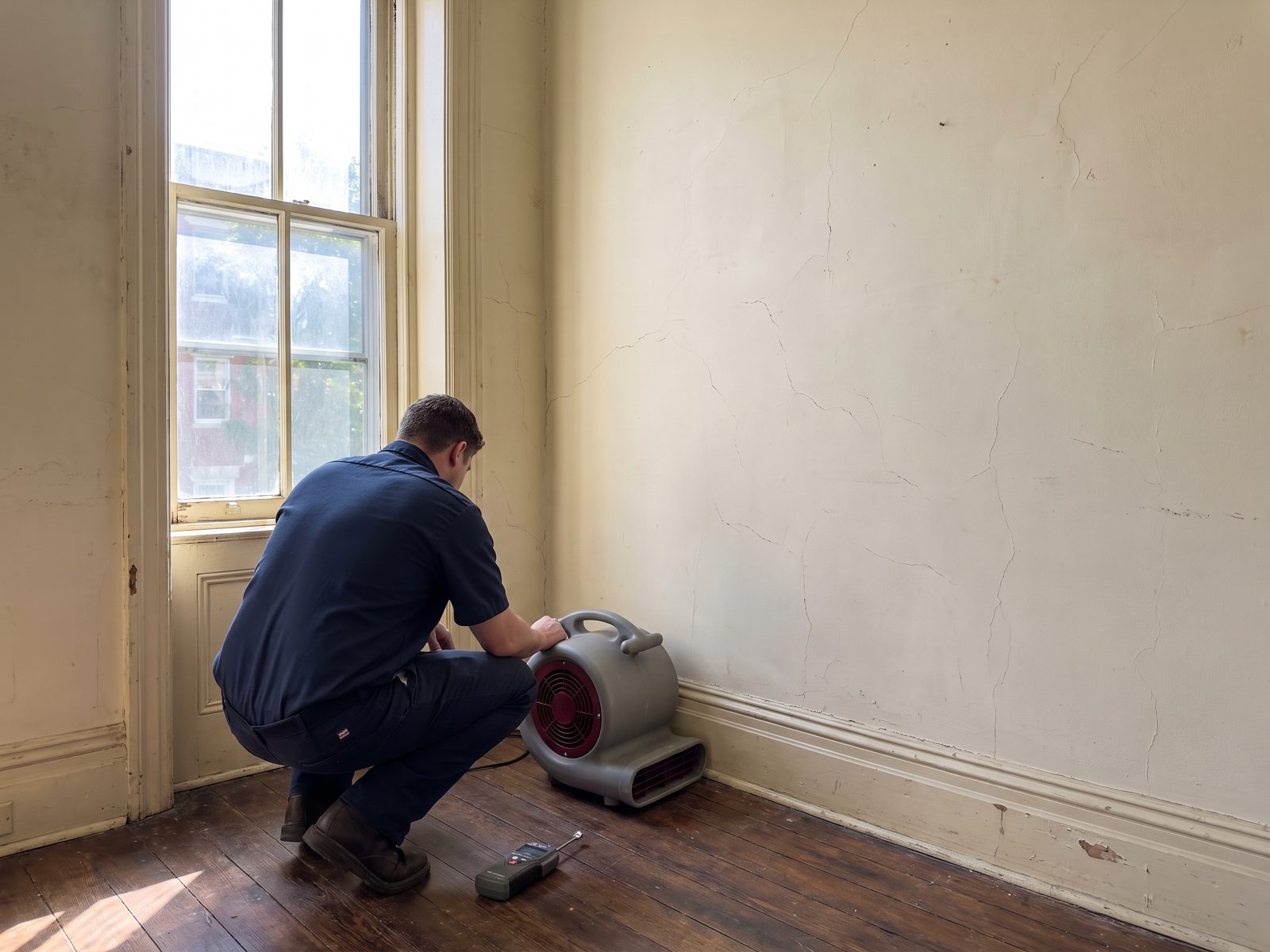
Sequence the work accordingly. Stabilize and dry first. Remove what cannot be saved, document what remains, and let the structure reach a dry standard. Use the drying window to prepare the review package, so the application goes in while the equipment is still running.
How do you document a repair so it is approved the first time?
Applications get returned for missing evidence far more often than for bad design. A reviewer has to understand what existed and what failed without visiting the house. Photographs and a clear written scope do most of that work.
Build the package as you work. Once a wet cornice return is off the building, the case for matching its profile is gone. We photograph and measure before anything comes off.
- Wide shots of each affected elevation, dated, before any removal begins
- Close frames of the failed element, with a tape or scale in the shot
- Probe findings or moisture readings that show why a member cannot be saved
- Measured profiles of moldings, muntins, sills and cornice returns
- A written scope that uses the words in kind where the repair genuinely is in kind
- A note on what the work looks like from the street or the public alley
What does this mean for your insurance claim and your scope?
Estimating software prices stock materials by default. Historic repair is not stock. Milling a sill to an original profile or repointing with a lime-based mortar takes skilled hours that a default line item does not carry.
Raise it early with the adjuster, in writing, with the review requirement attached. The argument is simplest framed as restoring the property to its pre-loss condition, because that condition includes the detail design review protects. Ask your carrier about ordinance or law coverage, the provision that can respond when a regulatory requirement drives up the cost of a repair. Read the declarations page rather than anyone's summary.
Keep the preservation correspondence in the claim file. An HPO clearance or a staff comment letter is third-party documentation that the work had to be done a particular way, and it carries more weight with a carrier than a contractor's assertion. The District's insurance regulator, DISB, handles questions about how a carrier is treating a claim.
The storm repair sequence itself, without a design-review layer sitting on top of it, is set out at https://restorationdoctors.com/blog/storm-damage-restoration-guide on our sister site restorationdoctors.com. The order of operations there is the same one we follow here; the review step is what the District adds.
We restore buildings. We do not obtain historic approvals for owners, and nobody should tell you a project is exempt without asking HPO. Sources are below so you can read the rules yourself.
- Permits and preservation design review, DC Office of Planning: https://planning.dc.gov/page/permits-design-review
- Building permits and when preservation review applies, DC Office of Planning: https://planning.dc.gov/page/building-permits-historic-property
- HPO expedited review and what qualifies: https://planning.dc.gov/page/hpo-expedited-review
- Georgetown review and the Old Georgetown Board: https://planning.dc.gov/page/old-georgetown-review
- US Commission of Fine Arts, Old Georgetown: https://www.cfa.gov/project-review/old-georgetown
- Is my property historic, PropertyQuest: https://propertyquest.dc.gov/
- National Park Service preservation briefs: https://www.nps.gov/orgs/1739/preservation-briefs.htm
- IICRC standards, including S500: https://www.iicrc.org/page/IICRCStandards
- EPA guide to mold and moisture: https://www.epa.gov/mold/brief-guide-mold-moisture-and-your-home
- DC Department of Insurance, Securities and Banking: https://disb.dc.gov/