Flood Cuts in a Pre-1978 DC Row House: Lead-Safe Rules and the Asbestos Question
BY RESTORATION DOCTOR OF WASHINGTON DC · WASHINGTON DC & SOUTHERN MARYLAND
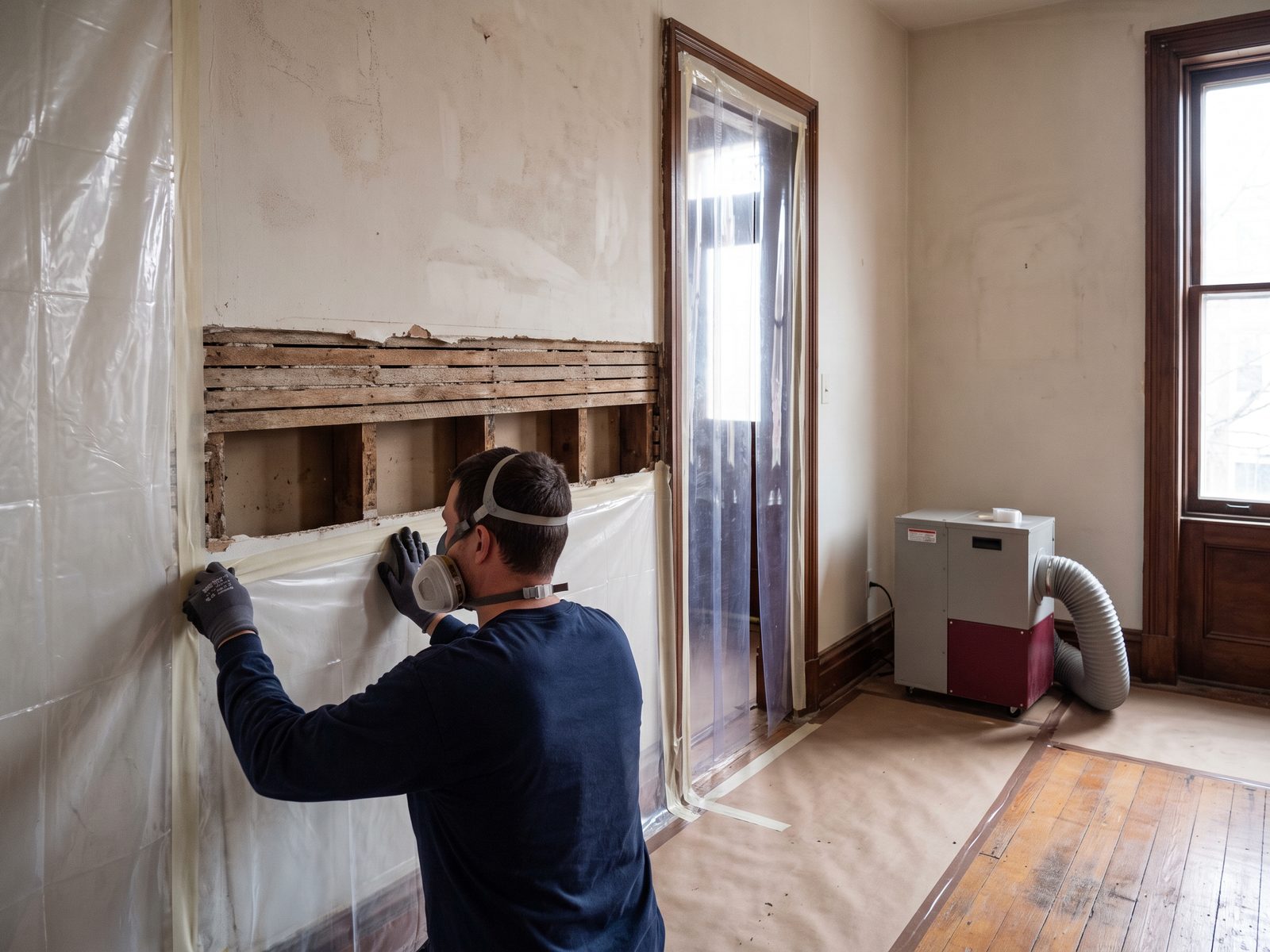
A flood cut removes wet wall material above the water line so the cavity can be dried, but in a pre-1978 DC row house that cut can disturb lead paint and asbestos-bearing materials. Testing and containment come before the saw, and a crew that skips straight to cutting is telling you something.
Call (202) 922-1444What is a flood cut and why is it made at all?
A flood cut is a straight horizontal removal of wet wall material above the water line, made so the cavity behind it can be opened up, cleaned out and then dried instead of closed up damp. In a DC row house built before 1978, a flood cut and lead paint are the same problem, because the surface the blade passes through is painted and paint sold for homes before that year could legally contain lead. That one fact changes who may make the cut and what has to happen first.
Height is a judgment made with a meter, not a tape. We map the wet zone with a moisture meter, find the highest reading still elevated against a dry reference elsewhere in the room, and cut above it so the removal ends in dry material. Our sister site has a full walkthrough of how that height gets chosen at https://restorationdoctors.com/blog/flood-cut-drywall-how-high.
A cut is not automatic. Clean water caught early, a wall with no cavity insulation, and a floor assembly that will accept drilled holes and directed airflow can often be dried in place. The cut becomes the answer when the water was contaminated, when the cavity holds wet insulation, or when the material itself has lost its structure. In an older District house, the answer also depends on what the material is made of.
Why is the decision different in a pre-1978 house?
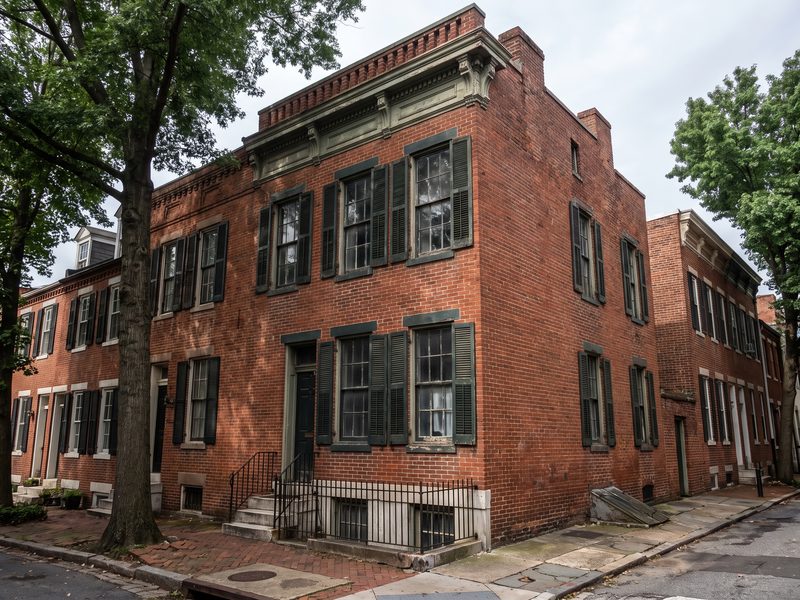
In 1978 the federal government banned the sale of lead-based paint for use in homes and childcare facilities, and EPA states that roughly three quarters of American homes built before that year still contain some lead-based paint. Much of the District's row-house stock, from Logan Circle to Adams Morgan, went up decades before the ban. A wall in one of those houses may carry ten or twelve coats, and the earliest are the concern.
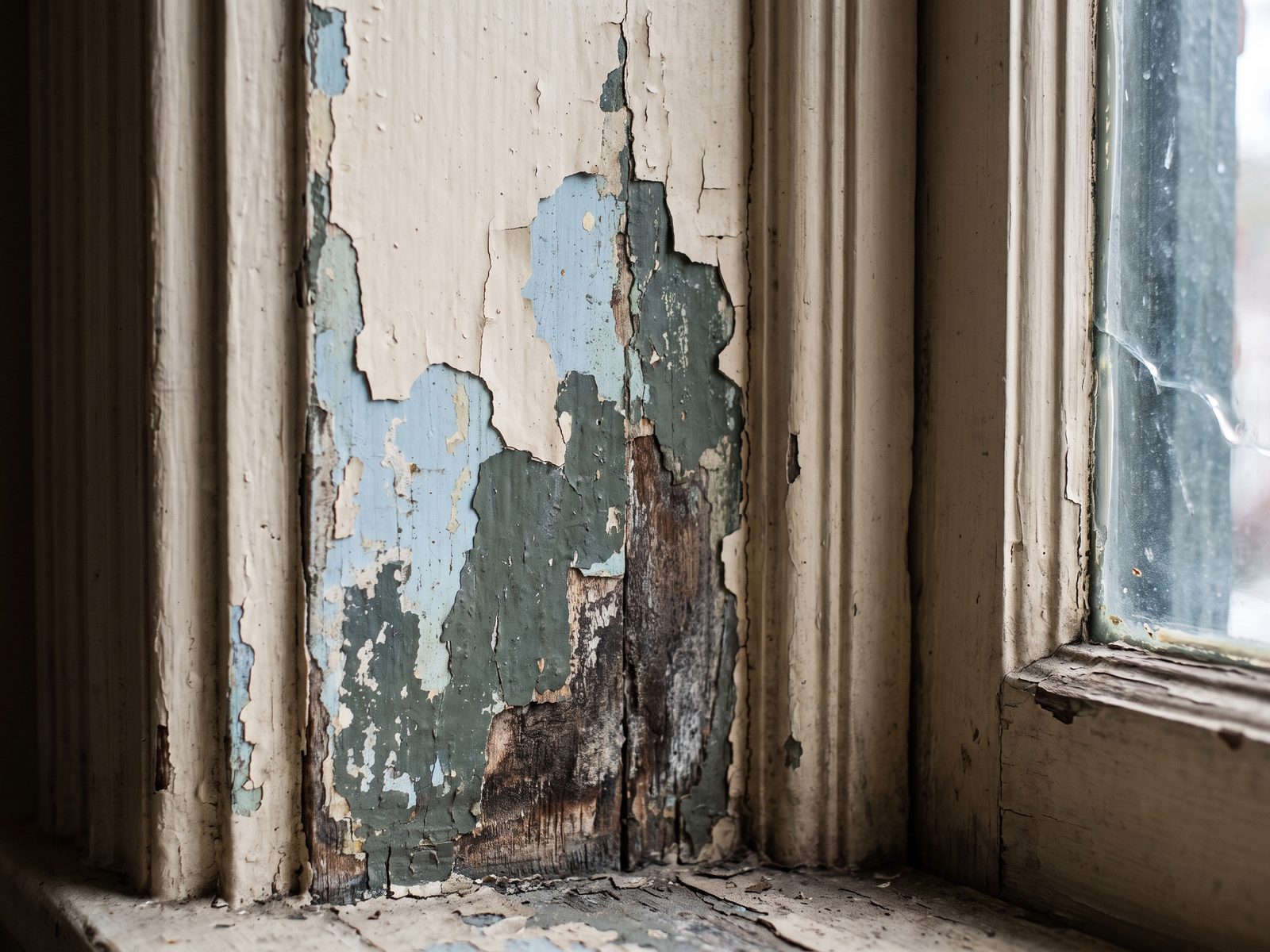
Intact paint on a wall is not the hazard. Disturbed paint is. Cutting into it, prying off trim and sanding a patch turn a stable film into dust and chips, and that dust lands on floors, in heating registers, on window stools and in the cavity you were trying to dry. A row house makes this worse, because the rooms are narrow and connected and the stair is open. The air handler often pulls from the same floor you are working on.
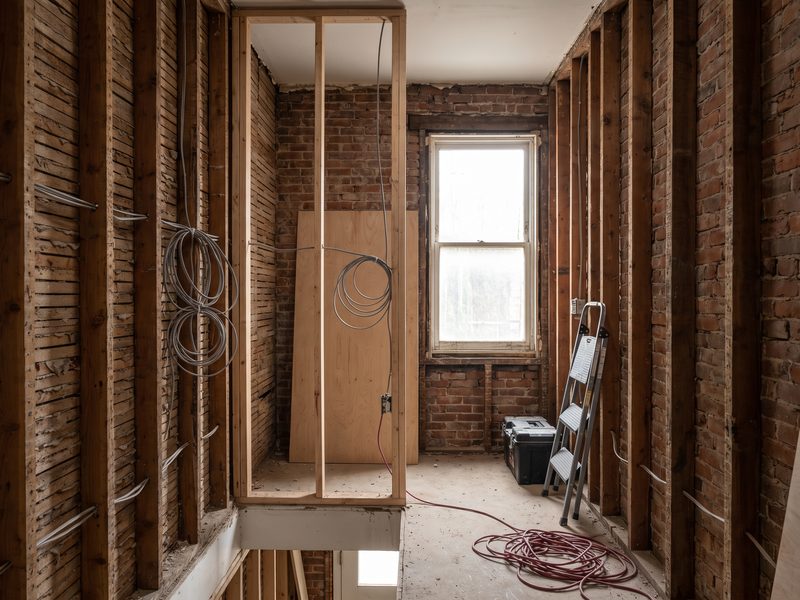
The second half of the problem is the wall itself. A 1910 house was not built with gypsum board. It was built with wood lath and three coats of plaster, and later owners skimmed it, patched it and boarded over it. Joint compound, textured coatings, resilient floor tile and the black mastic beneath it, pipe wrap and boiler insulation are all materials that have historically been made with asbestos in some product lines.
What triggers lead-safe work practices during a water damage repair?
The federal trigger is the EPA Renovation, Repair and Painting Rule, usually called the RRP Rule. EPA describes it as requiring anyone paid to perform work that disturbs painted surfaces in pre-1978 homes, childcare facilities and preschools to be a certified firm. Employees have to be trained in lead-safe work practices that limit what occupants are exposed to. It is a rule about who does the work and how, not about whether the damage was your fault.
Tenure matters too. EPA notes that the rule generally does not reach a homeowner doing the work in their own pre-1978 home. It does apply where the home is rented out in whole or in part, which covers many English basement units in the District. If you rent, EPA says the landlord or the management company has to comply when work disturbs paint.
None of that is an invitation to pick up a saw yourself. The exemption describes what the federal rule regulates. It does not make the dust safer, and it does not help you if a small child lives in the house.
- Built before 1978, painted surface, paid crew: assume lead-safe work practices apply until a test says otherwise
- Rental units and in-law or English basement apartments are covered even when the owner lives upstairs
- Certification sits with the firm, and a certified renovator has to be assigned to the job and on site for the steps that matter, including setting up the containment
- Occupant notification is required rather than a courtesy, and EPA says the firm has to hand you the Renovate Right pamphlet no more than sixty days before work begins
Where does asbestos actually turn up in an old DC row house?
Asbestos was used in building products for its strength and heat resistance, and it appears in places that have nothing to do with each other. No one can tell you from across the room that a given material contains it. What a trained eye can do is recognize the product families that were commonly made with it during the years these houses were built and renovated, then send a sample to a laboratory.
Ceilings deserve their own mention. Textured and sprayed ceiling finishes were widely used in mid-century renovations and are handled differently from a wall. Our sister site covers the asbestos question on older ceilings at https://restorationdoctors.com/blog/water-damage-popcorn-ceiling-asbestos, and the reasoning there applies to a District row house that was updated in the same decades.
The honest position is that age plus product type equals a question, never an answer. Two houses on the same block, built the same year, can test differently because one was re-skimmed during a later remodel and the other was not.
- Joint compound and skim coats used to smooth or patch plaster and board
- Textured or sprayed ceiling finishes applied during later remodels
- Resilient floor tile in nine-inch squares, plus the dark mastic adhesive under it
- Pipe wrap, boiler jacket insulation and duct seam tape in basements and crawl spaces
Who is allowed to test, and when does testing have to happen first?
Testing is a licensed activity, not an errand. For lead, EPA recognizes certain test kits when they are used by a trained professional, and a formal answer comes from a certified inspector or risk assessor who samples surfaces and reports on them. For asbestos, the answer comes from a laboratory that analyzes a bulk sample collected by an accredited inspector under controlled conditions.
The District runs its own layer on top of the federal one. The Department of Energy and Environment operates a Lead-Safe and Healthy Housing Division that handles lead-based paint certifications, accredits training providers, and runs notification and permit review programs covering lead and asbestos work in the city. That is the office to check when you want to know whether a specific job in a specific building needs paperwork filed before it starts.
Sequence is the part people get wrong. Sampling happens before the demolition, because once the material is in a bag the evidence of what it was and where it came from is gone. A same-day sample for a small area is normal on an emergency job, and a good crew stabilizes the loss with extraction and air movement while the laboratory works.
| If this is true | Then before any cutting | Why it matters |
|---|---|---|
| The building predates 1978 and the wet surface is painted | Treat it as lead-present, or have a certified professional test the coating | The federal RRP Rule turns on the building's age and on how much painted surface the work disturbs, and a flood cut is well past the small-repair threshold |
| The wall is plaster, or has a skim coat, texture or old joint treatment | Have an accredited inspector sample the material for laboratory analysis | Joint and texture products were made with asbestos in some lines for decades |
| A sample comes back positive, or testing is declined by the owner | The work proceeds under the stricter set of controls and a certified crew | Assuming presence is a legitimate option; assuming absence is not |
| The building is a rental, a condo or a shared row-house structure | Confirm notification duties and building rules before mobilizing | Obligations can fall on the owner, the manager and the association at once |
What does a compliant containment look like when lead or asbestos is in play?
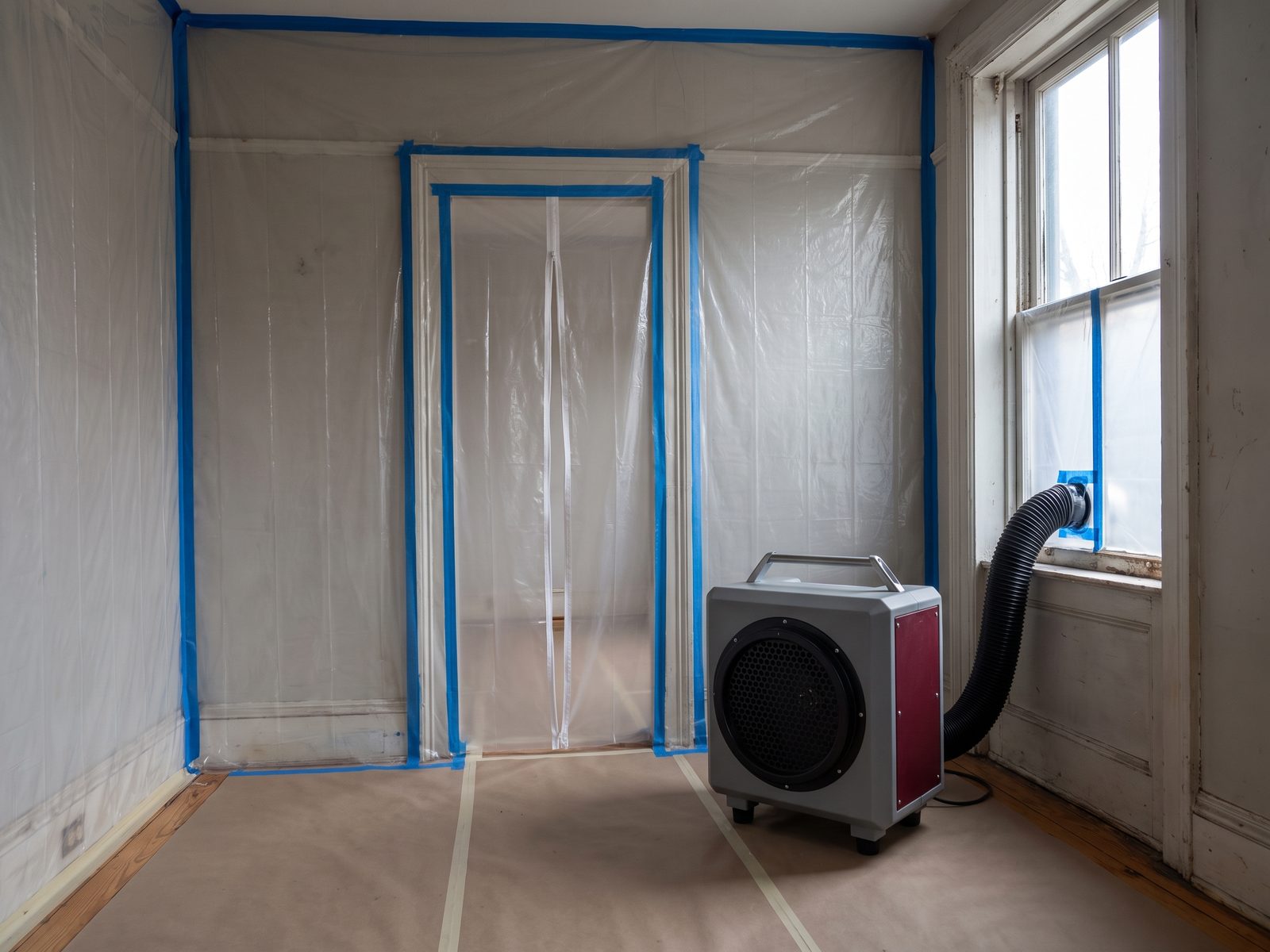
The goal is a work area that keeps its own dust. On a lead-safe job the room is isolated, the floor is covered and taped, and the system serving the space is shut down with its openings sealed. Everything leaving the area is bagged inside the containment rather than carried out loose.
On regulated asbestos work the controls step up again. A licensed abatement contractor works inside a sealed enclosure, with a decontamination route, negative air pressure held by machines filtering through HEPA media, and wet methods throughout so the material never becomes airborne dust. In a row house, the stair and the front hall are usually the weak points, and they need a barrier of their own.
- Plastic sheeting sealed to walls and floor, with a zippered entry rather than an open doorway
- Supply and return registers in the work area sealed, and the system shut off while work runs
- Negative pressure held with HEPA filtration so air moves into the work area, never out of it
- Waste bagged inside the containment, then wiped down before it crosses the barrier
- Post-work cleaning verified against a standard, with clearance testing where the material called for it
Does plaster and lath even need a flood cut, or can it be dried in place?
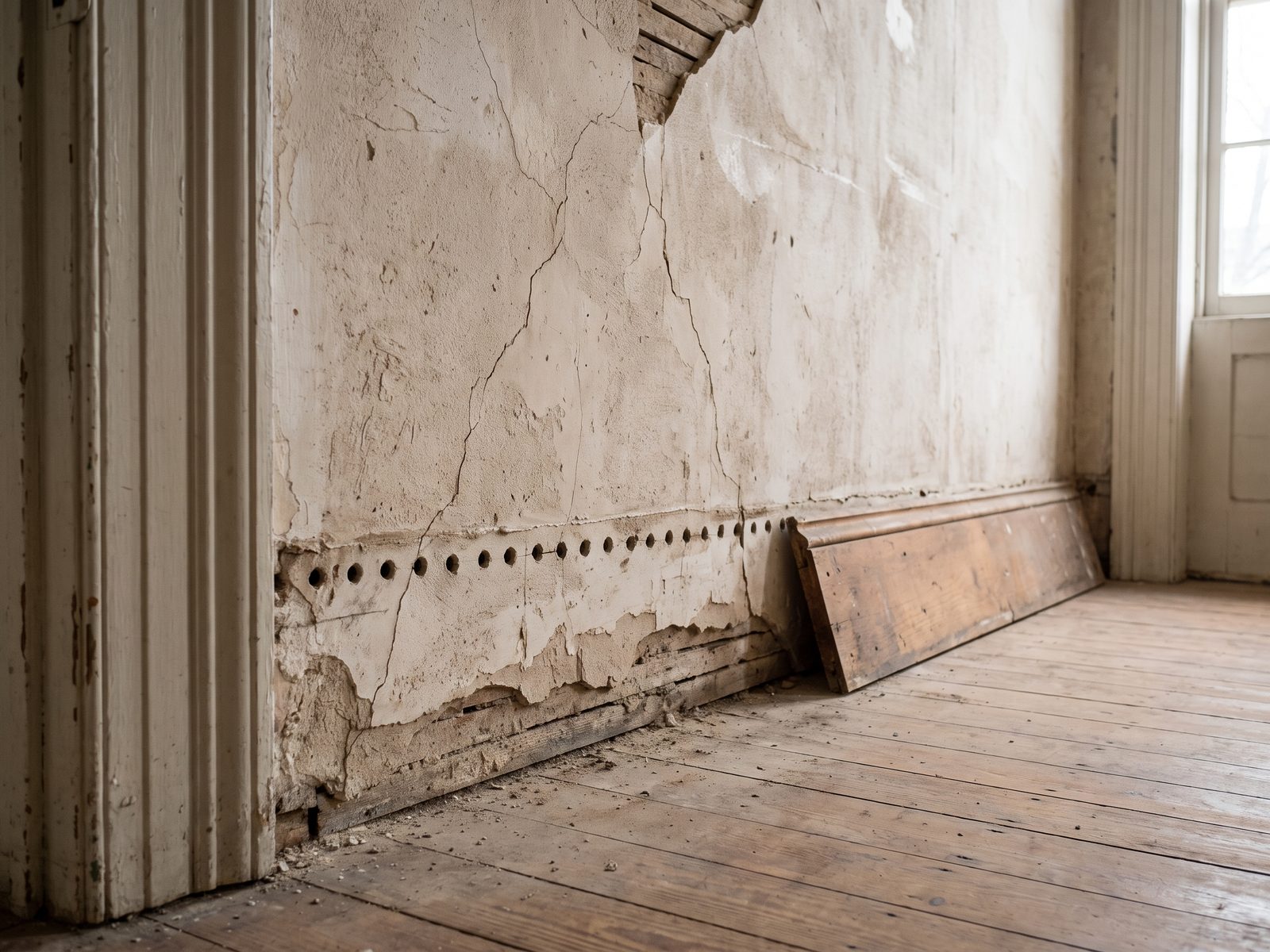
Often it can, and that is one of the quiet advantages of an older wall. Three-coat plaster over wood lath is dense and slow, so it takes on water more grudgingly than gypsum board does. It also holds its shape. Board that has been standing in water sags, crumbles at the paper and loses strength, while plaster can come through a short exposure intact if the water was clean and the drying started quickly.
The trade is time and access. Plaster gives up moisture slowly, and the wet zone is usually the brown coat and the lath behind it rather than the visible face. Drying it means creating a path for air into the cavity without demolishing the finish. That means removing the baseboard, drilling a discreet line of holes low on the wall, and pulling air through the cavity while the room is dehumidified.
The IICRC S500 standard for professional water damage restoration is the reference a legitimate crew works to, and its logic is that the drying goal is a documented dry standard, not a visual one. That means daily readings from the same marked points, compared against a dry reference elsewhere, until the numbers stop moving.
What does this do to the schedule and to the claim?
Expect the front of the job to look slower and the back of it to look the same. Sampling and laboratory turnaround add time before demolition. Containment adds a setup day on a larger area. Regulated waste has to be bagged, tracked and taken to a facility that accepts it.
On the claim side, the added cost is usually written as its own set of line items covering testing, containment, protective equipment, HEPA filtration and regulated disposal. Many carriers expect the laboratory report attached to the estimate before they will consider those lines, which is another reason to sample before demolition rather than after. Costs vary widely with the size of the area and the results.
We do not promise how your carrier will treat any of it. Coverage depends on your policy, the cause of the loss and the wording on your declarations page, and the decision belongs to the adjuster handling the file. What we can do is document the condition, the readings and the reason each control was used, so the file has something real in it.
What should you refuse to let a crew do in your house?
The list below is short and it is not negotiable. Every item puts fine dust into a home where people sleep, and every item still happens on jobs where the pressure is to get the walls open before dark.
Refusing takes one sentence. Ask the crew to stop, ask for the certification and the test results, and call the office. The alternative is a contaminated house and a problem that outlives the water damage.
- Dry sanding, dry scraping or grinding a painted surface in a building this old
- Cutting into painted plaster or board with no plastic up and no floor protection
- Using an ordinary shop vacuum for the debris instead of a HEPA unit
- Telling you that testing is unnecessary because the wall is only getting cut, not removed
- Handing you a scraper and suggesting you get a head start before the crew returns
How do you tell whether the crew in front of you knows any of this?
Ask four questions in the first ten minutes and listen to the shape of the answers. First: when was this building built, and does that change how you work here? Second: what are you going to test, and who does the testing? Third: what does containment look like here? Fourth: can you show me your firm certification and the training on the person who will be cutting?
The paperwork is the tell that outlasts the conversation. You should end up holding an occupant notification, a copy of the laboratory report if sampling was done, daily moisture readings from marked points, photographs of the containment, and disposal records for the waste. If none of that exists, the controls probably did not either.
If you are unsure who to believe, go to the source material. These are the standards and agency pages this guide is built on, and all of them are public.
- EPA, Lead Renovation, Repair and Painting Program: https://www.epa.gov/lead/renovation-repair-and-painting-program
- EPA, Protect Your Family from Sources of Lead: https://www.epa.gov/lead/protect-your-family-sources-lead
- EPA, Learn About Asbestos: https://www.epa.gov/asbestos/learn-about-asbestos
- DC Department of Energy and Environment, Lead in the District: https://doee.dc.gov/lead
- IICRC standards, including the ANSI/IICRC S500 Standard for Professional Water Damage Restoration: https://www.iicrc.org/iicrcstandards/
- EPA, Renovate Right (the pamphlet a firm must give you before work begins): https://www.epa.gov/lead/renovate-right
- EPA pre-renovation education rule, 40 CFR 745.84 (the sixty-day pamphlet window): https://www.ecfr.gov/current/title-40/section-745.84