Mold Clearance Test in DC: Who Can Sign It and What It Proves
BY RESTORATION DOCTOR OF WASHINGTON DC · WASHINGTON DC & SOUTHERN MARYLAND
A mold clearance is an independent check that a remediation met the protocol it was written against, and in the District that verification report belongs to the licensed assessment professional rather than to the remediation contractor. A pass says the work area met the stated criteria on the day it was sampled, not that mold will stay away if the water feeding it is still coming in.
Call (202) 922-1444What is mold clearance and when is it actually required?
A mold clearance test in DC is an independent check, run after the crew has finished but before the containment comes down, confirming that the work area meets the criteria written into the remediation protocol. In the District that check ends in a verification report, and under the city's mold licensing rules the person who issues it is a licensed indoor mold assessment professional, not the contractor who did the removal.
Clearance is not a legal requirement on every job, but it stops being optional sooner than most owners expect. Size is the first trigger. At ten square feet or more of affected surface, DOEE's licensure guidance has an assessment professional assess the property first. Once a licensed assessor is on the project, the mold regulations give that assessor ten days after successful completion to issue a verification report. Three other situations make verification the governing document even on a smaller job. A licensed assessor wrote a protocol that specifies it. A landlord is closing out a tenant mold complaint. An insurer, association or buyer wants a document in the file that a third party signed. Outside all of those, a small cleanup can finish on a photograph and an invoice.
Two roles, two licenses, and a paper trail running between them. The assessor's report describes the problem, the protocol defines the finish line, and the verification report says the finish line was reached. A District job that skips the middle document has nothing for the last one to be measured against.
Who is allowed to perform and sign a clearance in the District?
A licensed indoor mold assessment professional. The District licenses mold work under D.C. Code section 8-241.03, which directs the agency to license people for indoor mold assessment and remediation and to keep a public list of who holds those licenses. Open the list before you hire anyone. It is the only place the two license types sit side by side.
The operative rules sit in chapter 32 of title 20 of the District's municipal regulations, at sections 3204.6 and 3204.7, where what the industry calls post remediation verification is simply the verification report. They give the assessment professional three deliverables on a residential job: an assessment report, a remediation protocol before the remediation starts, and a verification report within ten days after remediation is successfully completed. That verification report goes to the client, the current resident of the unit, and the remediation professional.
The remediation professional has its own duty on the other side of that handoff. It passes the completed verification report to the client within ten days of receiving it, and the client then has ten days to put it in the tenant's hands.
- Assessment license: writes the assessment report, the protocol and the verification report
- Remediation license: performs the removal and cleaning described in the protocol
- On a job of ten square feet or more, each role files its own notification with the agency, naming its own license number
- A verification report with no assessor license number on it is not finished paperwork
Why can't the remediation company clear its own work?
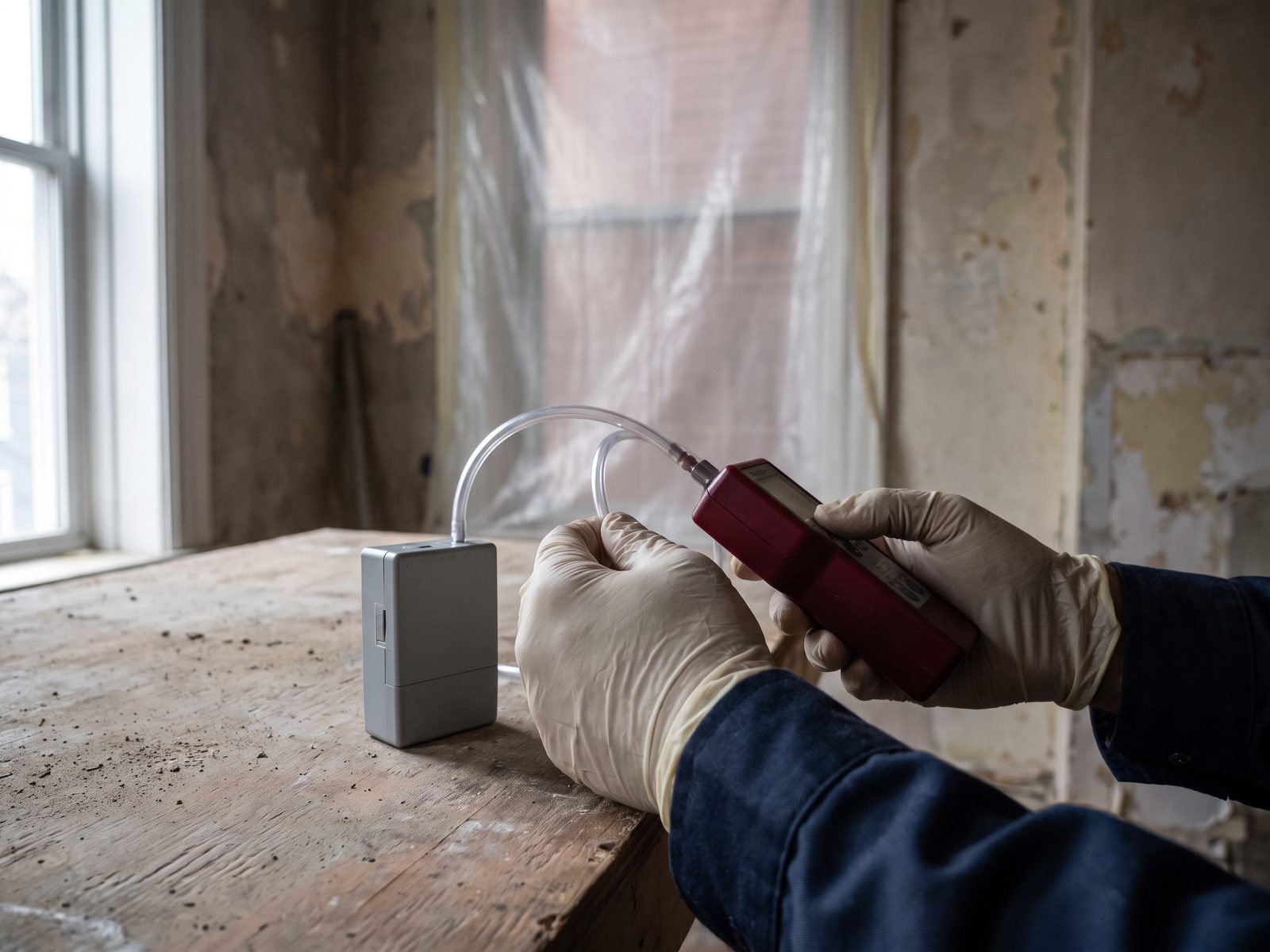
Because the assessor writes the definition of done and then decides whether done was reached. Hand both documents to the crew being paid by the square foot and the check disappears. It is the same reason auditors do not audit their own books, and the reason the District put the verification report on the assessment license.
Be precise about how strong the rule is, because contractors on both sides overstate it. In the 2021 final rulemaking for chapter 32, a commenter asked the agency to forbid a licensee from performing assessment and remediation on the same project. The agency declined, saying separate professionals could be costlier for landlords and could delay remediation for tenants.
So the separation lives in the structure of the paperwork rather than in a flat ban. The practical effect is close to the same. If one firm holds both licenses and writes both documents, the verification report has stopped being independent evidence and become a self-assessment. On a rental dispute or an insurance file, that difference is the whole value of the document.
What does a clearance test physically involve?
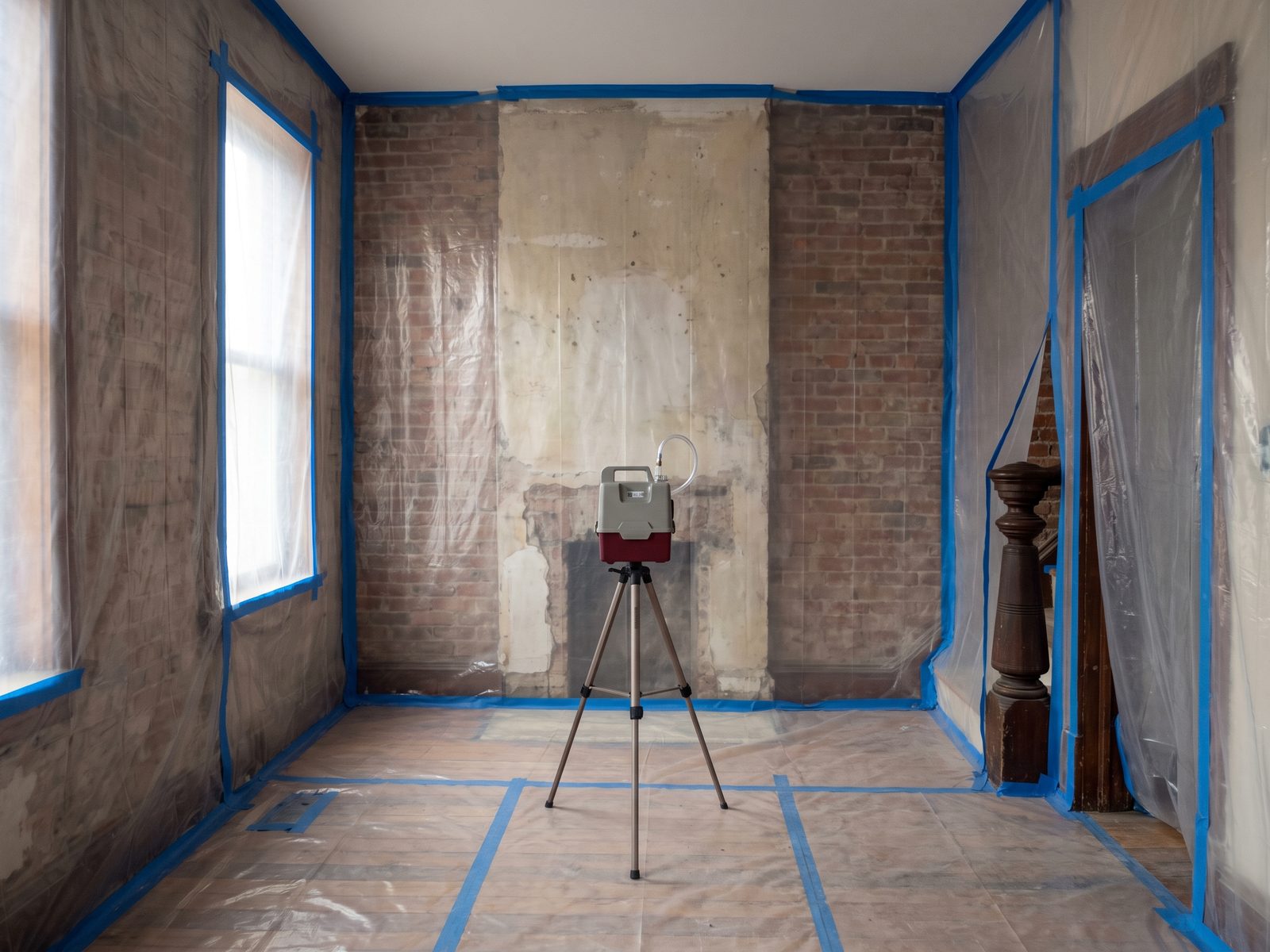
It starts with eyes and hands, not with a pump. The assessor is checking the work against the protocol, which on a competent job is written to the IICRC S520 mold remediation standard. The assessor walks the work area while the containment is still standing and the negative air machine is still running. What they are looking for: remaining growth, settled dust on horizontal surfaces, unsealed cut edges, and material the protocol said to remove that is still there. A visual failure ends the visit there.
Then come the readings. Moisture meters on the framing, the sheathing and any material that stayed, plus temperature and relative humidity, because a room can be clean and still too wet to close. Air sampling, when the protocol calls for it, runs at a calibrated flow rate for a set time, with an outdoor sample taken the same day as the comparison baseline.
The method matters more than the instrument. Two assessors sampling the same room on the same afternoon should get comparable results, and that happens only when flow rate, duration, cassette type and sample location are recorded and repeatable. Ask for the sampling plan in writing before the visit. Our sister site covers the diagnostic side, including whether mold testing is worth paying for before anything is torn out, at https://restorationdoctors.com/blog/is-mold-testing-worth-it.
What does a passing result prove, and what does it not prove?
A pass is a statement about one area, on one day, against one written standard. It says the assessor inspected the work area, found it visually clean and dry enough to close, and that any samples met the criteria the protocol set. That is a useful finding. It is also narrower than most people read it to be.
What a pass does not do is certify the building, certify anyone's health, or predict the future. Mold is a moisture problem wearing a biology costume. If the party wall still wicks, or the basement in August sits above the sixty percent relative humidity EPA treats as the indoor ceiling, growth returns whatever the report said in May.
| The question you actually have | What a passing clearance supports | What it does not settle |
|---|---|---|
| Was the remediation done to the protocol? | Yes, for the area described, on the date sampled | Whether the protocol was written broadly enough |
| Is the rest of the house clean? | Nothing beyond the work area named in the report | Adjacent rooms, chases, crawlspaces or the unit next door |
| Is the building dry? | Moisture readings at the time of the visit | Whether the source was repaired and stays repaired |
| Is it safe for my family? | Nothing. Clearance is not a health finding | Individual sensitivity, a question for a physician |
| Will mold come back? | Nothing forward-looking | Humidity control, drainage, plumbing and ventilation |
| Can I tell a buyer the house is mold free? | That an area was remediated and verified once | The condition of the property at any later date |
What happens if the clearance fails?
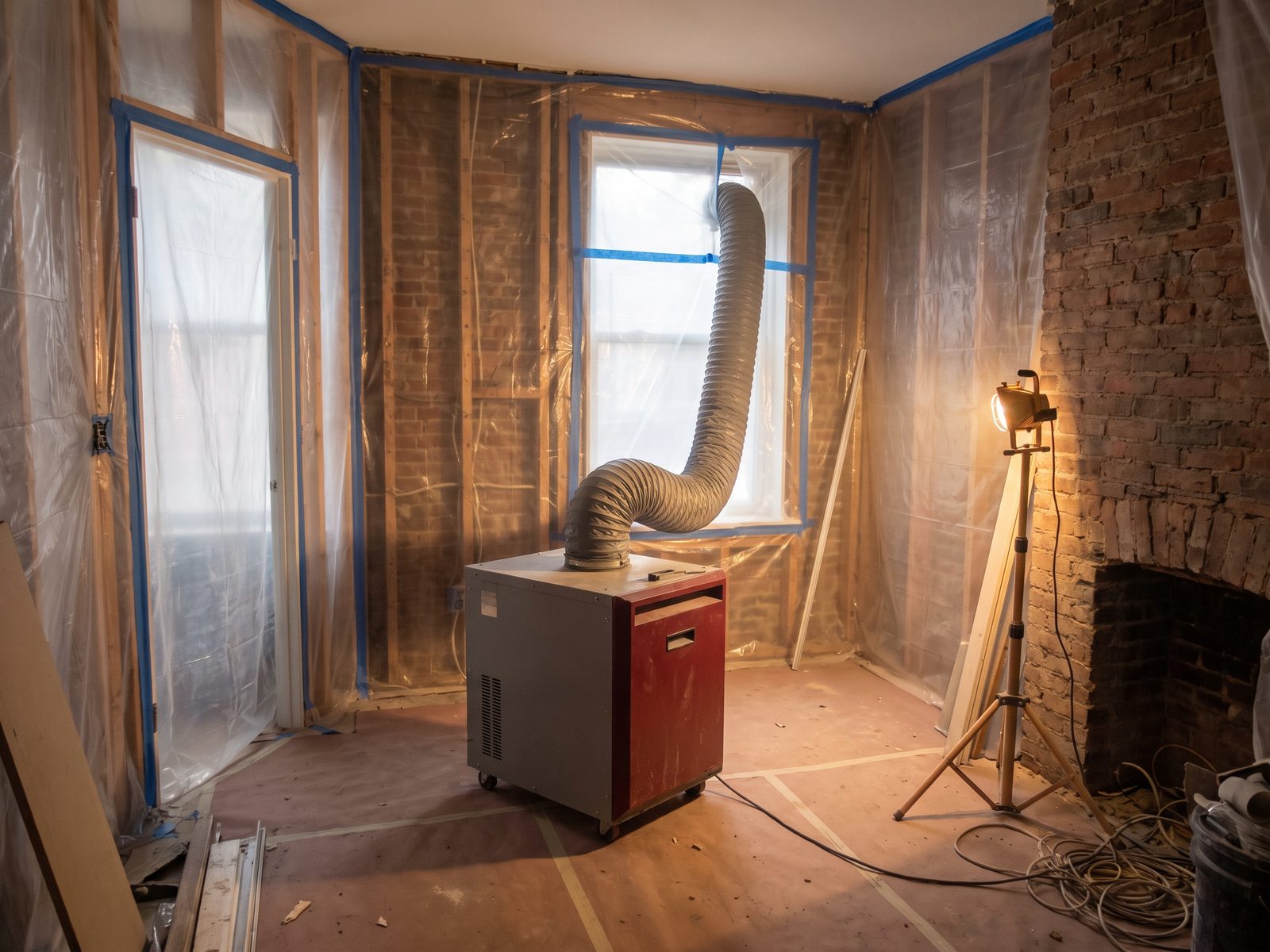
A failure is not a catastrophe and it is not unusual. The containment stays up, the assessor writes what did not meet the protocol, and the crew goes back in to correct it. A visual failure often means another cleaning pass and another HEPA vacuum cycle. A moisture failure means more drying time before anyone samples again.
Who pays for the re-test is a contract question, and it is the most useful thing to settle before work starts. The fair arrangement is that the first clearance is a budgeted cost and any re-test caused by incomplete remediation is the remediation contractor's expense. Write that into the contract rather than discovering it in an argument.
Repeated failures usually point at something structural rather than sloppy cleaning. A wet cavity nobody opened. A return duct pulling air from an unconditioned space. A source that was never actually fixed. When the second clearance fails for the same reason as the first, stop re-cleaning and go back to the moisture investigation.
- Containment and negative air stay in place until the area passes
- The assessor issues a written statement of what failed and why
- Correction is scoped from the original protocol, not renegotiated
- Two failures for the same cause means the moisture source is still live
How should clearance be arranged and paid for so the independence is real?
Hire the assessor yourself, on a separate contract, before the remediation contract is signed. That sequence is what makes independence more than a word. The assessor who wrote the protocol has an interest in the protocol being followed, and none in the crew finishing early.
Pay the assessor directly. Money routed through the remediation contractor makes the assessor a subcontractor of the party being checked, which is what the structure exists to avoid. If a remediation company offers to include clearance in its price, ask who holds the assessment license and who signs the report.
Insurance complicates this predictably. A carrier may reimburse verification as part of a covered mold loss, and it may not. Ask the adjuster in writing before the visit, and do not let a coverage question decide who signs the report.
- Check both firms on the District's public list of licensed mold professionals
- Engage the assessor first and keep that contract separate
- Confirm the assessor has no ownership or referral relationship with the remediator
- Keep the assessment invoice and the remediation invoice on separate paper
What should the final report contain before you accept it?
Treat the report as the deliverable you bought, because it is. A one-page letter saying the area passed is not a verification report, and it will not carry weight with an adjuster or a tenant's attorney. Work down this checklist and send anything missing back before you pay the final invoice.
- 1. The assessor's name, license number and business details, and the date the document was issued
- 2. The property address and a clear description of the work area verified
- 3. The remediation protocol it was verified against, by title and date
- 4. The date and time of the inspection, and who was present
- 5. Visual inspection findings written out, not summarized as the word passed
- 6. Moisture readings with the material and location for each one, plus temperature and relative humidity
- 7. If samples were taken: the method, flow rate, duration, each location, and the outdoor comparison sample
- 8. The laboratory report attached in full, with the lab named and its analysis dates
- 9. The pass or fail criteria, stated before the result rather than implied by it
- 10. Any area, cavity or room excluded from the verification
- 11. The moisture source and whether the assessor confirmed it was repaired
- 12. A signature, and confirmation that copies went to the client and the current resident
Do you need clearance on a small job, and how do you decide?
Often you do not. A patch of growth on a bathroom ceiling after humid weather, cleaned properly once the exhaust fan is fixed, does not need a third party to sign anything. Paying for verification there buys paperwork, not certainty. That advice costs us work and we give it anyway.
The decision turns on four things: the size of the affected area, whether anyone else has a stake in the answer, whether an occupant has a documented sensitivity, and whether cavities were opened.
Row houses and English basements in the District tilt the answer toward yes more often than a detached house does. Party walls move moisture between properties, below-grade rooms run wetter, and condo or co-op ownership means a second party has a right to the file. When a neighbor or a board will read the outcome, get it written by someone with no stake in it.
- Ten square feet or more of affected surface: get clearance
- A landlord, tenant, board or buyer is waiting on the outcome: get clearance
- An occupant has asthma or a diagnosed immune condition: get clearance
- Wall or ceiling cavities were opened and dried: get clearance
- Small visible surface growth, cause fixed, owner-occupied, nobody disputing it: usually not
How does clearance interact with an insurance claim or a landlord dispute?
On a claim, the verification report closes the mitigation file. Adjusters read it for three things: the protocol it was measured against, the scope of the area verified, and whether the moisture source was addressed. A report that skips the source invites the question that stalls payment, which is whether the loss was sudden or the result of a long-running leak.
On a rental dispute the report carries more weight, because the District writes the obligations into the D.C. Code. An owner who receives written notice of mold from a tenant must inspect within seven days and remediate within thirty days of that inspection, and where contamination exists a licensed professional has to do the remediation. The verification report is the owner's evidence that the second half of that duty was met.
Keep the whole set in one folder: the assessment report, the protocol, the daily moisture records, the photographs, the verification report and the lab results. The documents behind everything above:
- D.C. Code, certification of mold professionals, https://code.dccouncil.gov/us/dc/council/code/sections/8-241.03
- D.C. Code, residential mold remediation obligations, https://code.dccouncil.gov/us/dc/council/code/sections/8-241.04
- DOEE mold licensure guidance document, https://doee.dc.gov/sites/default/files/dc/sites/ddoe/service_content/attachments/Mold%20Licensure%20-%20Guidance%20Document%20-%20Final.pdf
- DOEE final rulemaking, 20 DCMR chapter 32, mold and radon licensure, https://doee.dc.gov/sites/default/files/dc/sites/ddoe/service_content/attachments/Final%20Rulemaking%20w-CLC%2020%20DCMR%20%20Ch.%2032%20%20Mold%20and%20Radon%20Licensure%20and%20Certification%20%281%29%5B3%5D.pdf
- DOEE list of licensed mold professionals, https://doee.dc.gov/node/1186841
- IICRC standards, including S500 water damage restoration and S520 mold remediation, https://iicrc.org/iicrcstandards/
- EPA, A Brief Guide to Mold, Moisture and Your Home, which sets the below sixty percent indoor humidity guidance, https://www.epa.gov/mold/brief-guide-mold-moisture-and-your-home