How Fast Does Mold Grow After Water Damage in DC?
BY RESTORATION DOCTOR OF WASHINGTON DC · WASHINGTON DC & SOUTHERN MARYLAND

Mold typically begins growing 24 to 48 hours after water damage, and visible colonies can appear within 3 to 7 days if wet materials are not dried. In Washington, D.C.'s older row houses and English basements — with absorbent plaster, high regional humidity, and slow-drying cavities — that window often lands at the shorter end. The most reliable way to prevent mold is professional structural drying to verified dry standards, which typically takes 3 to 5 days of monitored work. Keeping indoor relative humidity below 50% afterward starves any remaining spores of the moisture they need.
Call (202) 922-1444How fast does mold grow after water damage?
Mold generally begins to grow within 24 to 48 hours after water damage, and visible, spreading colonies can develop within 3 to 7 days when wet materials stay wet. That two-day window is the single most important fact for any D.C. homeowner facing a leak, a burst pipe, or a flooded basement: the clock starts the moment materials get wet, not the moment you notice a problem.
Mold spores are already present in virtually every building. They are microscopic, airborne, and dormant until they land on a damp organic surface. Once moisture, a food source (paper, wood, drywall, dust), and mild room temperature come together, germination can begin in as little as a day. This is why speed of response matters far more than the size of the original spill.
The practical takeaway is simple. If you dry the structure fast — within that first 24 to 48 hours — you can usually prevent mold entirely. If wet materials sit for several days, especially inside walls or under flooring, you shift from a water problem to a mold problem, which is more expensive, more disruptive, and governed by stricter remediation protocols under the ANSI/IICRC S520 Standard for Professional Mold Remediation.
At Restoration Doctor of Washington DC, our emergency crews focus on beating that window with rapid extraction and monitored structural drying. If you are inside the first two days, call (888) 293-5663 — that is when prevention is still on the table.

Why does mold grow faster in DC row houses and English basements?
Mold grows faster in D.C. row houses and English basements because of a combination of high regional humidity, older building materials, and enclosed spaces that trap moisture. Washington summers routinely push outdoor humidity well above the 60% threshold that favors mold growth, and older homes hold that moisture longer than modern construction.
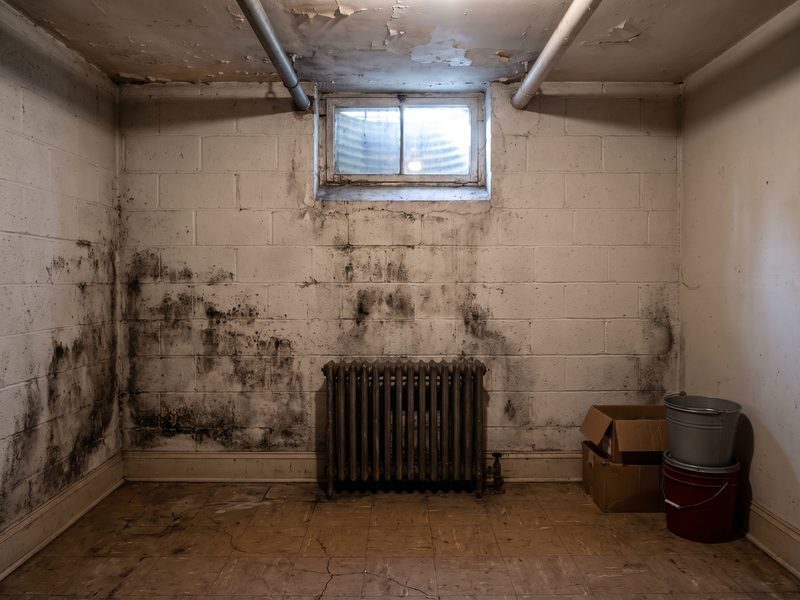
Many D.C. homes were built with plaster over lath, solid masonry party walls, and original wood framing. These materials are absorbent and dry slowly. An English basement — partially or fully below grade — adds another layer of risk: limited airflow, cooler surfaces where condensation forms, and direct contact with damp foundation walls. Water that reaches these spaces can linger for days without obvious signs.
Row houses share the problem sideways as well as down. Because homes share party walls, a leak in one unit can wick moisture into a neighbor's wall cavity, and moisture trapped inside those shared assemblies is nearly impossible to detect without meters. Condos and townhomes face similar hidden-cavity risks around bathrooms, kitchens, and stacked plumbing.
The result is that the generic 24-to-48-hour rule often lands at the aggressive end in these homes. A basement that would take a modern slab home 24 hours to become risky can become a mold environment even sooner, because the surrounding materials in an older D.C. home often carry elevated moisture before the water event even happens.
- High Mid-Atlantic humidity keeps indoor moisture elevated for months at a time.
- Plaster, lath, and old-growth wood framing absorb and hold water longer than modern drywall.
- Below-grade English basements have poor airflow and cool surfaces that encourage condensation.
- Shared party walls let moisture migrate between units and into hidden cavities.
- Older homes often lack vapor barriers, so foundation moisture moves freely indoors.
What are the stages of mold growth after a leak?
Mold growth after a leak moves through predictable stages: dormant spores activate within hours, germination and root structures form within 24 to 48 hours, and visible colonies appear within 3 to 7 days. Understanding this timeline helps you judge how urgent your situation actually is.
In the first several hours, water saturates porous materials and raises surface moisture and local humidity. Spores that were harmlessly settled in dust now have everything they need. Between roughly 24 and 48 hours, the spores germinate and send out hyphae — the microscopic root threads that anchor mold to a surface and begin digesting it. At this stage there may be no visible sign, only a faint musty odor.
By day three to five, colonies become large enough to see and to spread. New spores are released into the air, which is how a single wet spot in one room can seed problems elsewhere. Past a week, growth compounds quickly and can penetrate deeper into plaster, wood, and cavity insulation, moving the job firmly into remediation territory.
The table below summarizes the typical progression. Treat it as a general guide — in humid D.C. conditions and with older, absorbent materials, each stage can arrive earlier.
| Time After Water Exposure | What Is Happening | Visible? |
|---|---|---|
| 0-24 hours | Materials saturate; spores activate in the damp environment | No |
| 24-48 hours | Germination begins; hyphae root into wet surfaces | Rarely; possible musty smell |
| 3-7 days | Colonies form, become visible, and release new spores | Yes |
| 1-3 weeks | Growth spreads and penetrates deeper into materials | Yes, often extensive |

What humidity level causes mold to grow indoors?
Mold growth becomes likely when indoor relative humidity stays above 60%, and it accelerates sharply above 70%. The goal in any dried structure is to keep indoor relative humidity below 50% — in line with EPA guidance — which starves mold of the moisture it needs to germinate and spread.
Humidity matters because mold does not strictly need standing water — it needs damp materials and moist air. Even after visible water is extracted, elevated humidity can keep drywall, wood, and contents at a moisture content high enough for growth. This is the trap many homeowners fall into: they mop up the puddle, assume the problem is solved, and leave the surrounding materials quietly wet.
This is where psychrometry — the science of how air holds and releases moisture — guides professional drying. Under the ANSI/IICRC S500 Standard for Professional Water Damage Restoration, technicians measure temperature, relative humidity, and the moisture content of specific materials, then engineer airflow and dehumidification to pull water out of the structure and out of the air simultaneously. Simply running a household fan often moves humid air around without actually removing moisture from the building.
In D.C.'s climate, controlling humidity is a year-round concern. Summer brings soaking outdoor air, while winter heating can drive condensation onto cold exterior walls and basement surfaces. Both create conditions where mold can take hold if a water event goes unaddressed.
- Below 50% RH: mold growth is unlikely; this is the target for a dried structure.
- 50-60% RH: caution zone; sustained levels can support growth on damp materials.
- Above 60% RH: growth becomes likely on organic surfaces.
- Above 70% RH: growth accelerates rapidly.
How can you tell if mold is already growing in your walls?
You can suspect hidden mold when you notice a persistent musty or earthy odor, unexplained staining or bubbling on walls, or worsening allergy-like symptoms indoors — even before you see any actual growth. In enclosed D.C. wall cavities, smell and moisture readings often reveal mold before your eyes do.
A musty smell is the most common early warning. It is caused by microbial volatile organic compounds released as mold digests materials, and it frequently appears while colonies are still hidden inside walls, under flooring, or behind baseboards. Discoloration — greenish, black, gray, or white patches — that returns after cleaning is another strong sign, as is paint that bubbles, plaster that softens, or wallpaper that lifts.
Physical symptoms can also point to a problem. Coughing, sneezing, itchy eyes, throat irritation, or headaches that improve when you leave the house may indicate elevated indoor spore levels. These are not diagnostic on their own, but combined with a recent leak or water event they warrant investigation.
Because so much D.C. mold hides inside plaster walls and shared cavities, confirmation usually requires moisture meters and, in some cases, thermal imaging to map where materials are still wet. Our team documents these findings with daily moisture logs and CompanyCam photos so the extent of the problem — and the response — is clearly recorded.
- Persistent musty or earthy odor, especially in basements or after a leak.
- Recurring stains or discoloration that come back after cleaning.
- Bubbling paint, softening plaster, or lifting wallpaper.
- Allergy-like symptoms that ease when you leave the home.
- Visible growth around baseboards, under sinks, or behind furniture on exterior walls.

Why does the 24-48 hour window matter for your insurance claim?
The 24-to-48-hour window matters for your insurance claim because most policies expect you to take reasonable, prompt steps to prevent further damage — and mold that develops from delayed action can be treated as a maintenance issue rather than a covered sudden loss. Acting fast protects both your home and your claim.
Insurance carriers distinguish between damage from a sudden event (a burst pipe, an overflow) and damage that results from ongoing neglect. If water sits for a week and mold spreads, an adjuster may argue that the mold portion of the loss was preventable. Documenting rapid response — timestamped photos, moisture readings, and a professional drying record — helps establish that you acted in good faith and mitigated the loss.
This is where our approach is different, and it is worth understanding clearly. Restoration Doctor of Washington DC bills you, the homeowner, directly and hands you a carrier-ready claim file: an Xactimate scope, CompanyCam photo documentation, and daily moisture logs. We work for you, not your insurance company. That documentation is exactly what supports a clean, well-substantiated claim.
Because we are the DAMAGE CLAIM SPECIALISTS, our field process is built around capturing evidence from the first hour on site. If you want a deeper look at how coverage decisions actually play out, our article on whether D.C. homeowners insurance covers water damage walks through what carriers expect and how proper documentation strengthens your position.
- Fast response supports the 'sudden and accidental' framing most policies favor.
- Delayed drying can shift blame toward 'preventable' or 'maintenance' damage.
- Timestamped moisture logs and photos document good-faith mitigation.
- A carrier-ready file (Xactimate scope + photos + logs) strengthens your claim.
How does professional drying prevent mold after water damage?
Professional drying prevents mold by removing water from materials and air fast enough to stop germination before it starts — typically restoring a structure to verified dry standards in 3 to 5 days of monitored drying. The goal is to beat the 24-to-48-hour growth window and then confirm, with instruments, that materials are genuinely dry.
The process follows ANSI/IICRC S500. First, technicians extract standing water and assess the water category, because Category 1 clean water, Category 2 gray water, and Category 3 grossly contaminated water each require different handling and different decisions about what can be dried in place versus removed. Next, they set up air movers and dehumidifiers engineered to the size and conditions of the space, using psychrometric readings to drive both surface and cavity moisture out of the structure.
What separates professional drying from DIY fans is measurement. Crews take daily moisture readings on affected materials and compare them to unaffected reference points, adjusting equipment until readings hit a documented drying goal. This prevents the common failure of a home that looks and feels dry on the surface while framing, subfloor, or cavity insulation remains wet enough to grow mold.
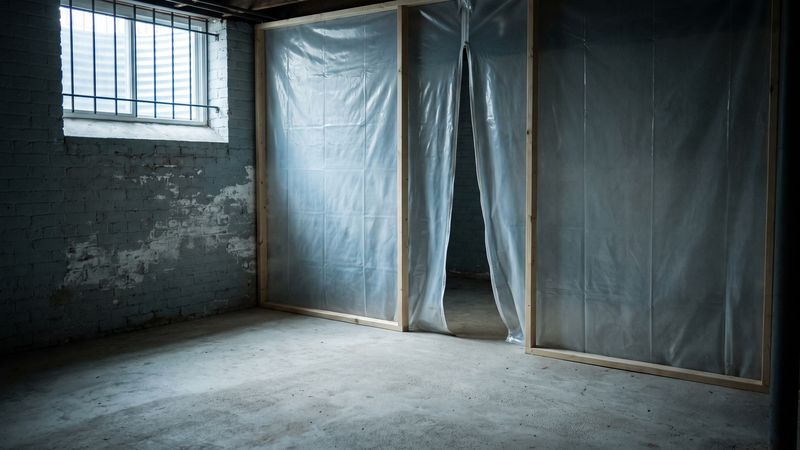
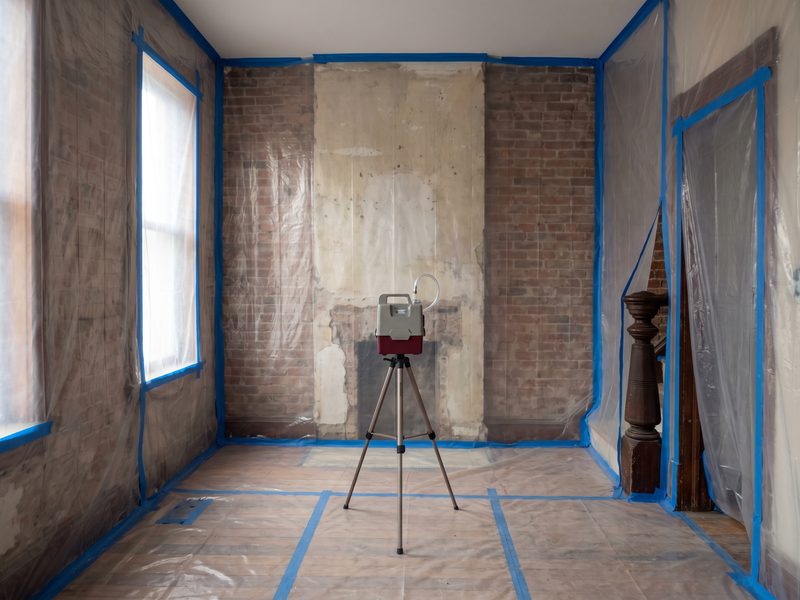
If mold has already established because response was delayed, the job shifts from drying to remediation under ANSI/IICRC S520 — containment, negative air pressure with HEPA filtration, safe removal of affected porous materials, and post-remediation verification. Wherever possible, our emphasis is on speed at the water damage restoration stage so remediation never becomes necessary.

What should you do in the first 24 hours after water damage in DC?
In the first 24 hours, stop the water source, protect yourself from potentially contaminated water, remove what water you safely can, and get professional drying started before the 24-to-48-hour mold window closes. Prompt action in this window is the difference between a straightforward dry-out and full remediation.
Start by shutting off the water supply if the source is plumbing, and cut power to affected areas if there is any risk of electrical contact with water. Move valuables, documents, and moisture-sensitive items to a dry area. Lift fabrics and small furniture off wet flooring to prevent staining and slow the spread of moisture into other materials. Do not use a household vacuum on water, and avoid contact with water from sewage backups or exterior flooding, which is handled as Category 3 water under the S500.
Ventilate if outdoor conditions are drier than indoor conditions, but be careful — on a humid D.C. day, opening windows can make things worse by loading the structure with more moisture. This is exactly why controlled, measured drying beats guesswork. Document everything with photos and notes as you go; this record supports your claim later.
Then call a professional. Our 24/7 emergency line is (888) 293-5663, and our emergency crews can begin extraction and monitored drying quickly enough to prevent mold in most cases. If you are anywhere in Washington, D.C. or Southern Maryland, you can also reach us through our contact page to get a crew dispatched.
- Stop the water source and shut off power to affected areas if safe.
- Move valuables and lift fabrics or furniture off wet flooring.
- Avoid contact with sewage or floodwater — treat it as contaminated.
- Do not rely on household fans or vacuums; they rarely dry cavities.
- Document with photos, then call for professional extraction and drying.