Mold in a DC Rental: The Landlord's Legal Clock and What Tenants Can Do
BY RESTORATION DOCTOR OF WASHINGTON DC · WASHINGTON DC & SOUTHERN MARYLAND
The District places a duty on housing providers to assess and remediate reported mold within a defined window and gives tenants an inspection and complaint route if that does not happen. Written notice is what starts the clock, so the tenant's first move is a dated written report and photographs, not a phone call.
Call (202) 922-1444Does DC actually have a mold law for rental housing?
Yes. DC mold law for rental housing sits in the D.C. Code, and unlike most landlord and tenant rules it puts a dated clock with two deadlines on the housing provider. Under D.C. Code section 8-241.04, a residential property owner who gets written or electronic notice from a tenant about indoor mold has to inspect within 7 days. Remediation follows within 30 days of that inspection, unless a court or the Mayor orders a shorter window.
The notice can describe indoor mold or suspected indoor mold, and it can cover the dwelling unit or a common area. That matters in a District where the wet wall is often in a shared laundry room or a basement corridor rather than inside anyone's unit.
Section 8-241.01 defines indoor mold and indoor mold contamination. Section 8-241.02 tells the Department of Energy and Environment to set the threshold at which professional remediation becomes mandatory. Section 8-241.03 is the licensing section, and DOEE keeps a public list of licensed professionals. Section 8-241.05 is what gives the duty teeth.
What must a housing provider do once a tenant reports mold?
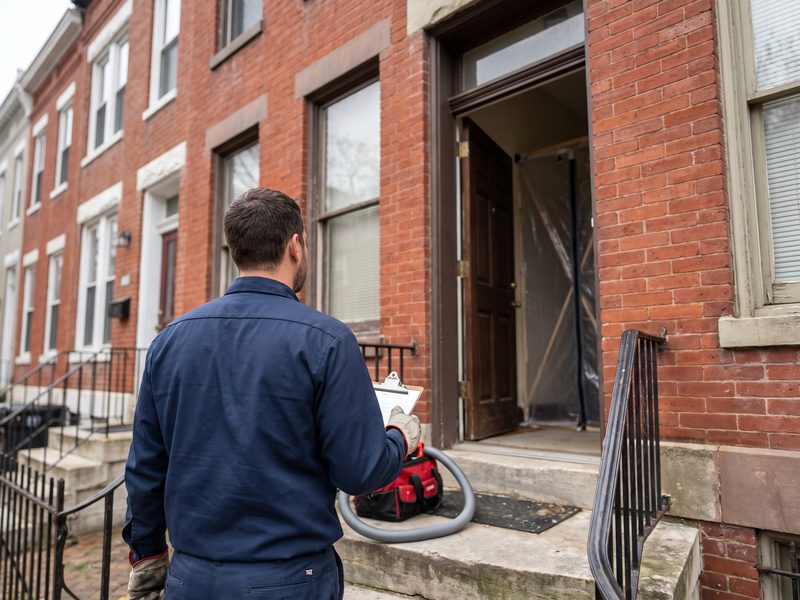
Two obligations, and both are dated. Inspect the unit or common area the notice identified, within 7 days. Then remediate the condition within 30 days of that inspection. The inspection is not optional because the owner thinks the complaint is thin. Section 8-241.04 places the duty on the residential property owner rather than on whoever manages the building, so route the notice to the owner of record as well as the management company and keep both copies.
How the work must be performed depends on how much mold there is. Below the professional threshold, section 8-241.04(b) requires the owner to clean and remove the mold from the contaminated surface under DOEE guidance, and the owner may do that work without a licensed professional. Where the owner knows or has reason to know that indoor mold contamination exists, subsection (c) requires a licensed remediation professional. A gap in the guidance does not excuse an owner from removing visible mold.
| Point on the clock | What the housing provider owes | What the tenant should be doing |
|---|---|---|
| Day zero: written notice | The duty attaches when written or electronic notice arrives, not when a voicemail is left. | Send it in writing, keep your own copy, and photograph every affected surface the same day. |
| Within 7 days | Inspect the unit or common area named in the notice. | Be present if you can, photograph what the inspector examines, and ask what was found. |
| At the inspection result | Decide whether the condition meets the professional threshold DOEE sets under section 8-241.02. | Ask whether a professional assessment was done and request the written report. |
| Within 30 days of the inspection | Remediate. Below the threshold the owner must still clean the contaminated surface, and may do it without a licensed professional; at or above it a licensed professional does the work. | Record start and finish dates, the company that did the work and whether the moisture source was repaired. |
| After the work | Furnish a remediation report where DOEE requires one under section 8-241.02(b). | Re-photograph the area and note any return of staining or odor. |
| Past 60 days with no remediation | Section 8-241.05 lets a court award treble damages, but only on five findings including bad faith. | Speak with the Office of the Tenant Advocate or a lawyer before acting on rent or lease. |
How does a tenant give notice in a way that starts the clock?
The statute is specific: written or electronic notice. A phone call to the leasing office does not start anything a court can measure. Email is fine. A letter is fine. A portal message is fine, if you can export it with the date visible. Send it to the contact named in the lease and copy the management company.
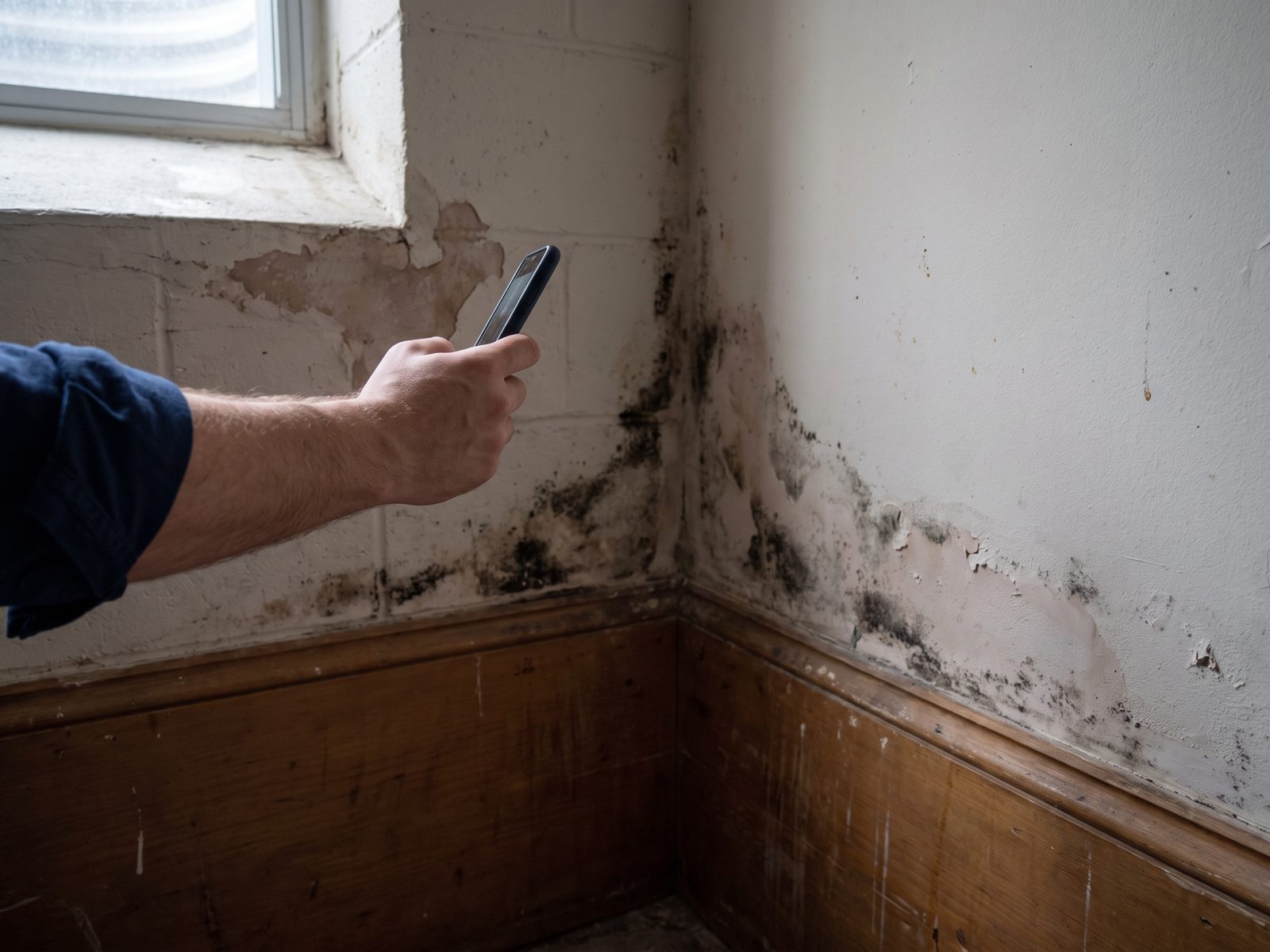
Keep the notice factual and short. Describe what you see and smell, name each room, and say when it started. Attach photographs taken the same day. Ask for the inspection the statute requires. Do not diagnose the species. The law turns on indoor mold as a condition, not on a name.
There is a second disclosure the District requires, and it runs before the tenancy rather than during it. Under D.C. Code section 42-3502.22, a housing provider filling a unit has to disclose, on the application, known indoor mold contamination in that unit or its common areas in the previous three years, unless a licensed professional remediated it. If you are already in a dispute, ask what was disclosed at application and compare it to what the building's maintenance history shows.
- Date the notice and keep the sent copy outside the property portal.
- Name every location: the unit, the closet, the shared laundry, the stairwell, the areaway.
- Photograph each area wide for context and close for detail, on the day you send the notice.
- Say whether anything is actively wet, and report active water immediately.
- Ask for the 7-day inspection by name and request the result in writing.
What can a tenant do if nothing happens?
There are three routes, and they are not mutually exclusive. The first is housing code enforcement, and since June 2026 the Department of Buildings runs all of it, mold violations included. Mold that has reached the point of a defective surface condition is a housing code problem, and DOB takes housing and property maintenance inspection requests directly from tenants. A tenant can file the request online or through the city's service request line, and DOB can issue a notice of infraction against the owner.
The second route is DOEE, but only for half of the problem. DOEE sets the standards under section 8-241.02 and licenses assessors and remediators under section 8-241.03. It no longer takes mold complaints against a landlord or inspects a rental unit for mold, and it says so on its own tenant page: since June 2026 the Department of Buildings handles every housing code enforcement action, mold violations included. What DOEE still wants to hear about is a crew doing licensed work without a District license, which is a different complaint and a real one.
The third route is private. Section 8-241.05 is written for a tenant's own claim or defense under the Property Maintenance Code and Housing Code. If a professional assessment found contamination in the unit and the owner received it in writing, the statute creates a rebuttable presumption that the owner violated the duty to keep the property free of defective surface conditions. A court may reimburse the assessment cost and award attorney fees. Treble damages are discretionary and narrow. On top of those two findings, the court may award them only where the tenant discovered the mold, the owner did not remediate within 60 days, and the court finds bad faith.
Who inspects, and what does an inspection produce?
Three different people may look at the same wall and produce three different documents. The housing provider's own inspection under section 8-241.04(a) is the one the statute requires, and a maintenance supervisor often performs it. A District housing inspector responding to a complaint produces a notice of violation or a clean report. A licensed mold assessment professional produces the document with the most legal weight, because section 8-241.05 keys its presumption to a professional assessment.
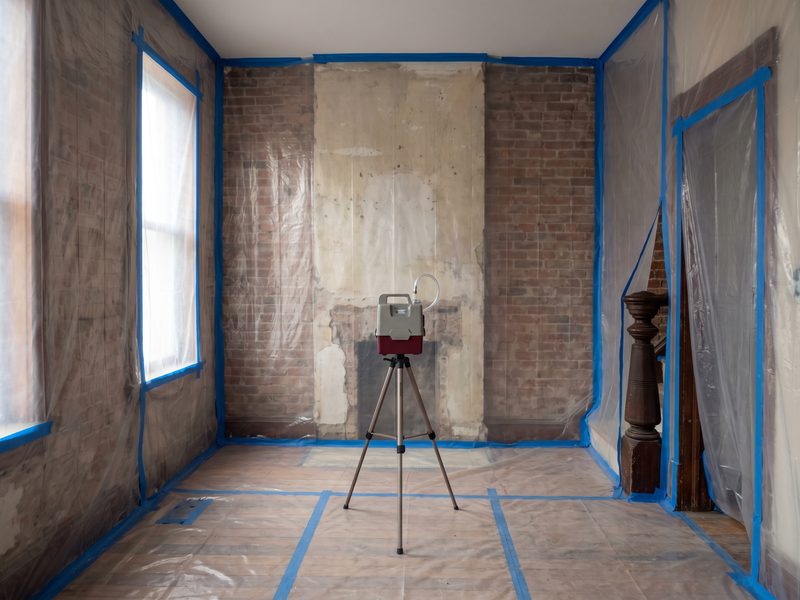
A good assessment is not a swab and a certificate. It maps the moisture first, because mold is a symptom and water is the disease. Expect meter readings on the wet wall and on a dry control wall, a thermal scan, and a written scope a remediator can price. That scope is what IICRC S520, the industry standard for professional mold remediation, treats as the basis of the work plan.
- Moisture readings from affected materials and from an unaffected control area.
- A stated probable cause: a failed areaway drain, a leaking supply line, bulk water at grade or condensation.
- The extent of affected material by room and by surface, written down rather than estimated.
- A clear statement of whether the condition meets the threshold that requires a licensed remediator.
- A scope of work that names the containment and cleaning steps, plus the repair that stops the water.
Does the landlord have to use a licensed remediator?
It depends on the size of the problem. Section 8-241.04(c) is the trigger: where an owner knows or has reason to know that indoor mold contamination exists in a unit or a common area, the mold has to be remediated by a licensed professional. Contamination is a defined term: indoor mold at or above the threshold DOEE sets, which DOEE's mold licensure guidance puts at 10 affected square feet, with both a licensed assessor and a licensed remediator required above the line. Below the line the owner must still clean the contaminated surface, and may do it in house.
For a housing provider, a professional assessment that finds contamination converts a maintenance task into a licensed one, and doing it in house after that point is the expensive mistake. For a tenant, the license question is checkable: DOEE keeps a public list of licensed assessors and remediators, and a company that cannot produce a District license number should not be doing the work.
One thing the District decided not to regulate: a licensed firm may do both the assessment and the remediation on the same job. DOEE was asked to forbid that and declined, on the view that requiring two firms would cost landlords more and slow the work down for tenants. That leaves the check to you. Where one company writes the assessment and then prices the work it recommended, get the assessment in writing before the scope is priced, and treat a second opinion as cheap. Ask who is doing which half before anyone signs.
What are a tenant's options for relocation, rent and damaged belongings?
This is where a tenant most needs advice rather than an article. Withholding rent, paying into escrow or terminating a lease each carry their own procedural traps in the District, and doing one incorrectly can cost a tenant the tenancy. The Office of the Tenant Advocate is the District agency set up for exactly this conversation. It gives tenants technical advice and legal services on disputes with landlords, offers legal representation in some cases, and publishes a resource guide pointing to court and pro bono options for the rest. Section 8-241.05 makes attorney fees recoverable in the right case, which changes the arithmetic on hiring a lawyer.
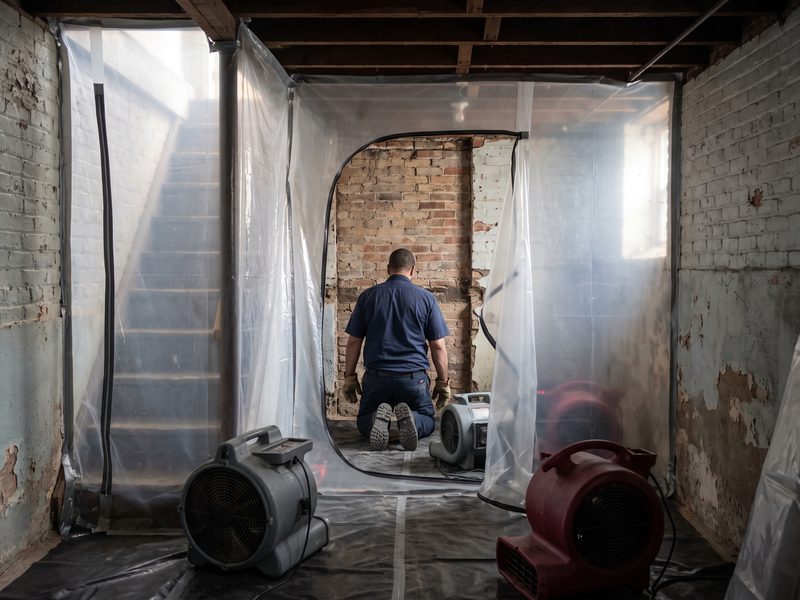
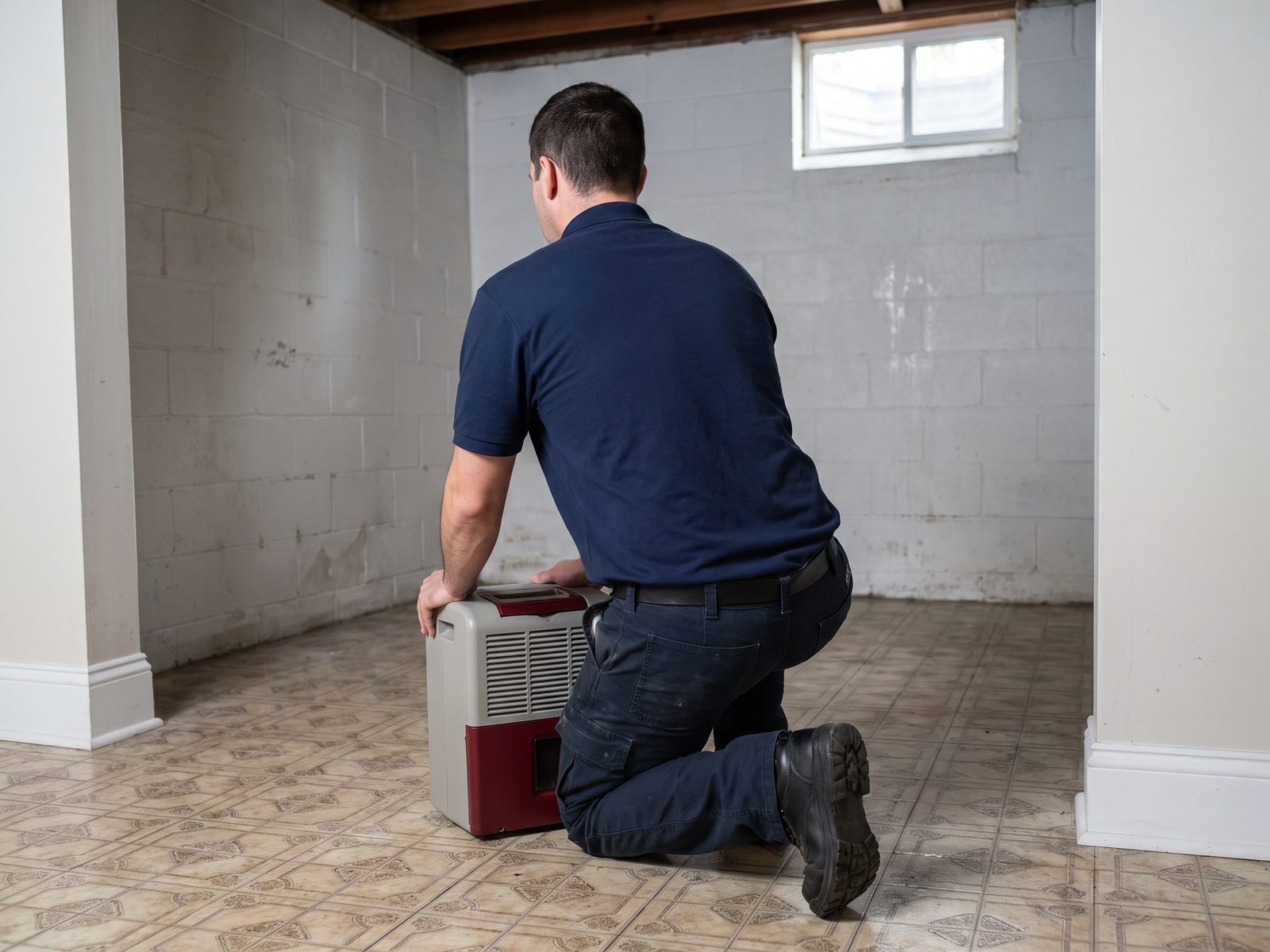
Relocation is usually negotiated rather than ordered. Where a remediation needs containment plus negative pressure and demolition of finishes, staying in a one-bedroom English basement through the work is often impractical, and many housing providers will offer a hotel or a vacant unit rather than argue. Get any such offer in writing, including who pays and for how long.
The health question is separate from the legal one. The EPA's guidance on mold, moisture and your home is the plain-language reference for what exposure does and does not mean. Our sister site restorationdoctors.com takes up the broader habitability question for readers outside a jurisdiction with a statutory clock at https://restorationdoctors.com/blog/is-it-safe-to-live-in-a-house-with-mold.
Who pays for the tenant's own property: renters insurance or the landlord?
The building is the owner's problem and your belongings are yours. A renters policy covers personal property, additional living expenses and liability, and it is what responds when a mattress or a bookshelf has to be discarded. Many renters policies exclude mold that grew over time from ongoing dampness, while covering mold that follows a sudden event such as a burst supply line. Your declarations page and any mold endorsement decide it, not a general rule.
The landlord's insurance usually does not cover a tenant's contents at all. Where belongings were ruined because the owner ignored the statutory clock, the claim against the owner is a liability claim, and it belongs with the same advisers handling the rest of the dispute. Complaints about an insurer go to the District's Department of Insurance, Securities and Banking, which is a different question from a dispute with a housing provider. Whatever the answer turns out to be, photograph every ruined item before it goes out.
What is different about an English basement apartment specifically?
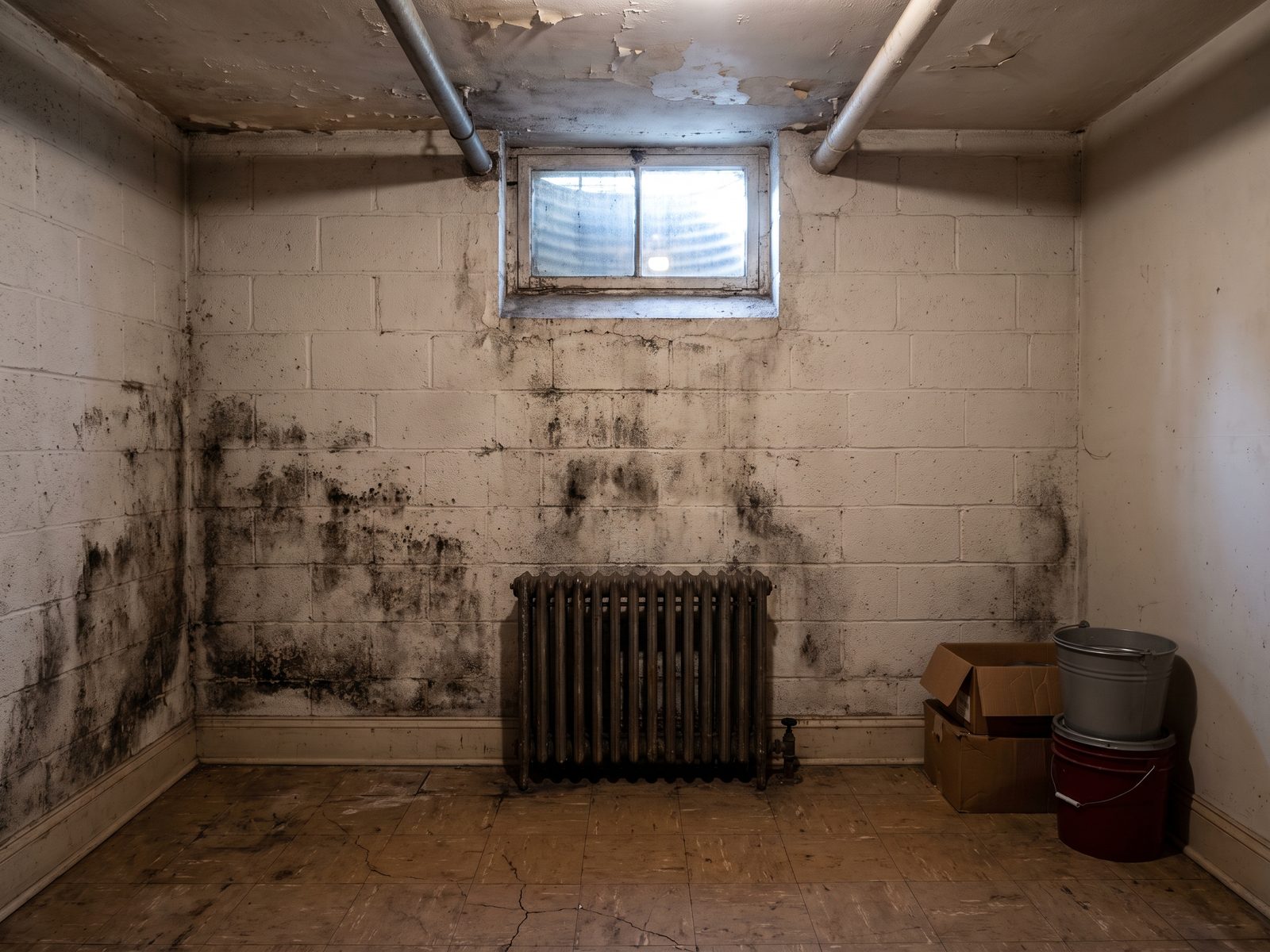
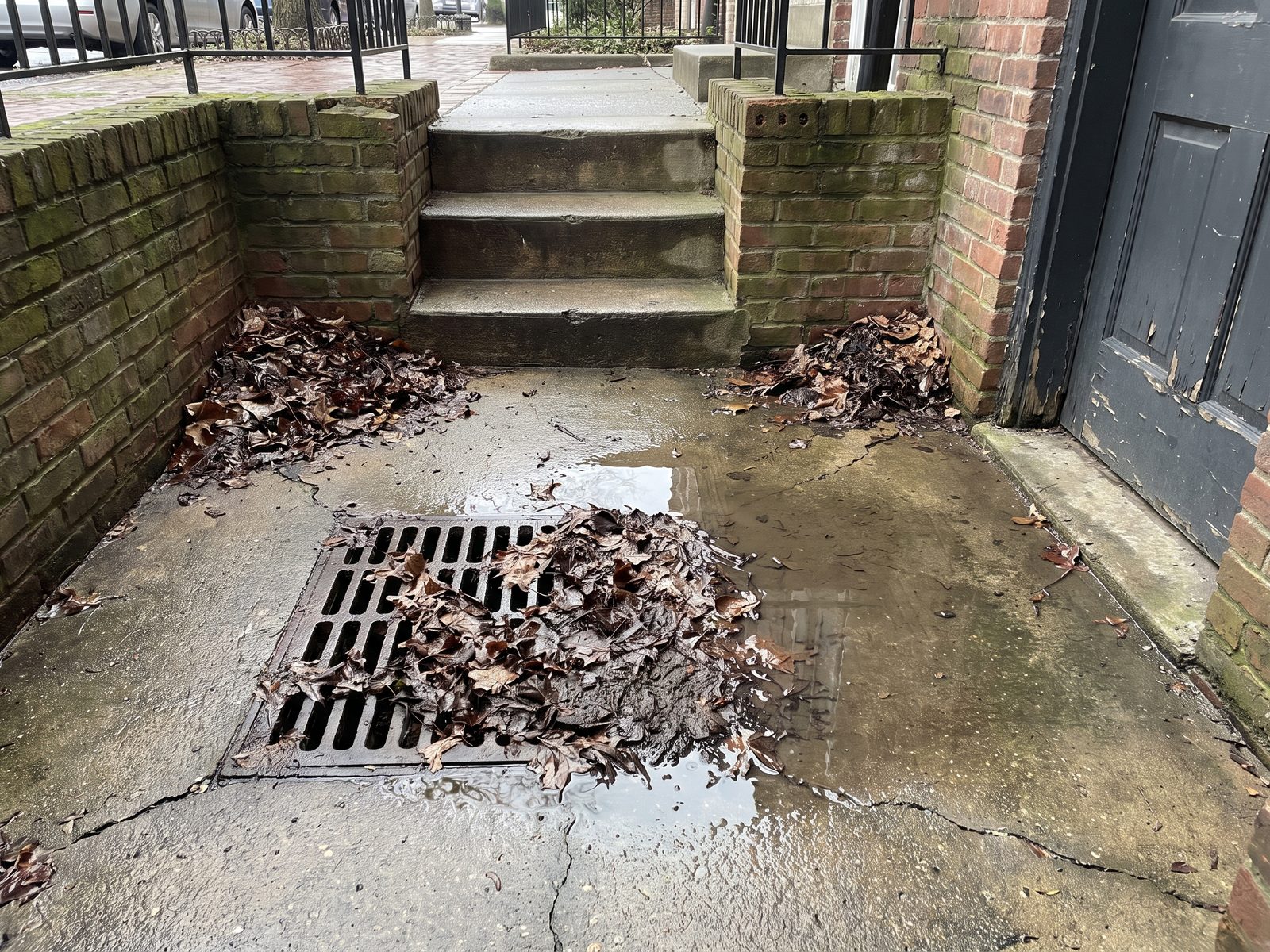
The English basement is the District's most mold-prone rental unit, and the reasons are structural. The floor sits below grade against soil that stays damp most of the year. Often only one wall faces outside air, so the other three never dry from the outside. The ceiling is the underside of the main house, so a leak upstairs lands here. The areaway drains through one small grate that fills with leaves every autumn, and when it backs up the water goes to the door.
Add the mechanical rooms. The shared laundry sits in or beside the lower unit, along with the water heater and the boiler, so a failure in any of them wets the tenant's space first. Summer makes it worse: warm humid air meeting cool below-grade walls produces condensation with no leak involved, and a unit can develop a mold problem in July without a drop of plumbing water.
For notice purposes, the split-house arrangement matters. Much of what fails here lives in a common area or the main house above, and section 8-241.04 covers common areas as well as the dwelling unit. Write the notice to describe the whole path: the areaway drain, the laundry room floor, the corridor wall, then the bedroom. An owner who fixes only the bedroom wall has treated the stain and left the cause running.
What should both sides document from day one?
Every one of these disputes turns into a dated file, and the side with the better file usually spends less. For a tenant the file is the notice plus the photographs and every reply. For a housing provider it is the inspection date, what was found, what was done, who did it and what license they held.
The most useful habit is photographing the same spot at the same angle on a schedule, because a sequence shows whether a condition is growing, static or resolved. The second is writing down the moisture reading rather than the impression. A reading on the wet wall and on a dry control wall turns a disagreement about dampness into a number either side can check.
If you are the housing provider, treat the 7-day inspection as an appointment, not a formality, and put what you find in writing the same week. If you are the tenant, keep copies outside any system the landlord controls. The sources below are worth reading.
- D.C. Code section 8-241.04, inspection and remediation: https://code.dccouncil.gov/us/dc/council/code/sections/8-241.04
- D.C. Code section 8-241.05, violations and damages: https://code.dccouncil.gov/us/dc/council/code/sections/8-241.05
- D.C. Code section 8-241.03, licensing and certification of mold professionals: https://code.dccouncil.gov/us/dc/council/code/sections/8-241.03
- D.C. Code section 42-3502.22, rental application mold disclosure: https://code.dccouncil.gov/us/dc/council/code/sections/42-3502.22
- DOEE, Mold: What To Do: https://doee.dc.gov/service/mold
- DOEE, Mold Information for Tenants, including the June 2026 transfer of mold complaints to DOB: https://doee.dc.gov/node/1257871
- DOEE mold licensure guidance, the 10 square feet line: https://doee.dc.gov/sites/default/files/dc/sites/ddoe/service_content/attachments/Mold%20Licensure%20-%20Guidance%20Document%20-%20Final.pdf
- Office of the Tenant Advocate: https://ota.dc.gov/
- DC Department of Buildings, housing inspections: https://dob.dc.gov/service/get-inspection
- DC Department of Buildings, request a housing inspection: https://inspections.dob.dc.gov/forms/housing_inspection/step_1
- DC Department of Insurance, Securities and Banking: https://disb.dc.gov/
- EPA guide to mold, moisture and your home: https://www.epa.gov/mold/brief-guide-mold-moisture-and-your-home
- IICRC S520, professional mold remediation: https://iicrc.org/s520/