How Downspouts and Grading Cause DC Basement Water

BYSteve Jafari, General ManagerWASHINGTON DC & SOUTHERN MARYLAND
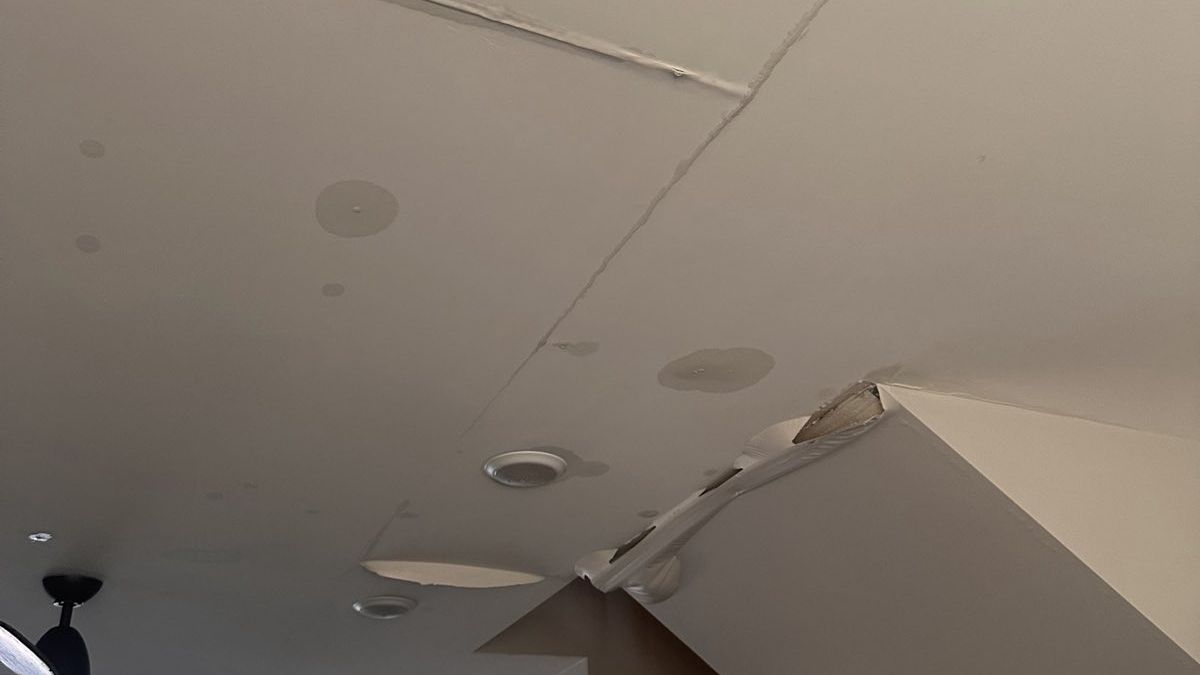
In Washington, D.C., a large share of basement water problems trace back to downspouts and grading: roof runoff gets dumped right next to the foundation, and the soil slopes it in through the wall instead of away from it. The fix is usually inexpensive — extend downspouts at least four to six feet out, keep gutters and leaders clear, and re-grade the soil so it falls away from the house (roughly six inches of drop over the first ten feet is the common building-science target). Water that appears during or right after rain, rather than on dry days, almost always points to runoff and grading rather than plumbing. Correcting water at the foundation prevents far more expensive flooding, demolition, and mold remediation inside.
Call (202) 922-1444How do downspouts and grading cause basement water in DC homes?
Downspouts and grading cause basement water when roof runoff is discharged at the foundation and the surrounding soil slopes toward the house instead of away from it. Water follows gravity: if your downspout dumps hundreds of gallons beside a D.C. row house and the grade pitches back toward the wall, that water pools against the foundation, saturates the soil, and pushes through cracks, cold joints, mortar lines, and the basement slab.
A roof is a large collection surface. During a heavy Mid-Atlantic storm, every inch of rain that lands on it is funneled into a handful of downspouts. When those downspouts empty at the base of the wall — which is common on older D.C. housing stock — all of that concentrated water has nowhere to go but straight down along the foundation and into the English basement below.
This is why basements flood after storms even when there is no plumbing leak, no sewer backup, and no appliance failure. The mechanism is hydrostatic pressure: saturated soil presses water against and under the foundation until it finds the path of least resistance inside. The wall doesn't need a hole; it only needs sustained pressure and time. Fixing the downspout and the grading relieves that pressure at the source, before the water ever touches the structure.
Why are DC row houses and English basements so vulnerable to roof runoff?
D.C. row houses and English basements are especially vulnerable because they sit low, share walls, and were built before modern drainage details were standard. Many Capitol Hill, Petworth, and Columbia Heights homes have below-grade living space with the foundation wall only inches from a neighbor's downspout, or a narrow side passage that traps water with no outlet.
Row houses also share party walls, so runoff from an adjacent property can travel along the foundation line and surface in your basement rather than theirs. Narrow lots leave little room to move water away from the structure, and decades of soil settlement have often reversed the original grading, so a yard that once shed water away from the house now tilts gently back toward it. Added hardscape — patios, walkways, concrete aprons — frequently pitches the wrong way too.
English basements add a second layer of risk because the finished floor sits well below grade. Any water that reaches the foundation has a tall, continuous below-grade surface to exploit, and once it gets in, it meets drywall, flooring, cabinetry, and belongings instead of a bare utility slab. The same intrusion that would be a mop-up job in an unfinished cellar becomes a demolition-and-drying project in a finished English basement.
- Below-grade living space means water that enters has finished materials to damage, not just a utility slab.
- Shared party walls let a neighbor's roof runoff migrate along the foundation into your home.
- Narrow urban lots and alley-facing rears leave little room to redirect water.
- Decades of soil settlement frequently reverse the original protective grading.
- Historic foundations (brick, rubble stone, early poured concrete) have more joints and pathways for water than modern reinforced walls.
What are the warning signs that your downspouts and grading are the problem?
The clearest sign is timing: if your basement gets wet during or shortly after rain rather than at random, roof runoff and grading are the likely culprits. Plumbing leaks and sewer backups don't wait for the weather, but foundation water driven by downspouts and grading tracks the storm almost exactly — often appearing within hours of a heavy downpour and tapering off a day or two later as the soil drains.
Walk your home during a steady rain and watch where the water actually goes. Downspouts that splash straight down at the wall, gutter seams that overflow mid-run, and puddles that linger against the foundation after the rain stops all point to the same root cause. Inside, look for staining and white, chalky efflorescence low on the basement walls, and dampness that is consistently worse in the corner closest to a downspout. That pattern — wet low, dry high, worst near a discharge point — is the signature of surface water, not a pipe.
- Water appears during or right after rainfall, not on dry days.
- Puddles sit against the foundation and drain slowly or not at all.
- Downspouts discharge within a foot or two of the wall with no extension.
- Soil, mulch, or pavement slopes toward the house instead of away.
- White chalky efflorescence or tide-line staining near the base of basement walls.
- Musty smell or visible mold on the lowest section of finished basement walls.
What are the cheap fixes that actually prevent basement flooding?
The most effective fixes are also among the cheapest: extend your downspouts well away from the foundation and re-grade the soil so it slopes away from the house. These two corrections address the concentrated discharge and the surface flow that together cause most storm-driven basement water in D.C.
Downspout extensions, splash blocks, and buried drain lines carry roof water past the backfill zone — the loose, more permeable soil that rings the foundation and absorbs water far faster than the undisturbed ground beyond it. Re-grading ensures the soil immediately around the house falls away so rain sheds off instead of ponding. Both are routine, low-tech projects, and either one costs a small fraction of repairing a flooded, mold-damaged basement.
Keep gutters and downspout leaders clear as well. A clogged gutter overflows at the seams and dumps water exactly where you don't want it — right at the wall — no matter how good your extensions are. In D.C.'s leafy neighborhoods, a fall and a spring cleaning is the minimum; homes under mature oaks and maples often need more. It's also worth knowing that the District's RiverSmart-style stormwater programs encourage keeping roof runoff on-site and away from foundations, so good drainage practice and good environmental practice point the same direction.
| Fix | Effort | What it prevents |
|---|---|---|
| Clean gutters and downspouts | Low | Overflow that dumps water at the wall |
| Add splash blocks | Low | Soil erosion and pooling at the discharge point |
| Extend downspouts 4–6+ feet out | Low to moderate | Saturation of the foundation backfill zone |
| Bury drain lines to daylight or a drywell | Moderate | Concentrated runoff near the house |
| Re-grade soil to slope away | Moderate | Surface water ponding against the foundation |
| Seal obvious wall and cove cracks | Moderate | Entry points for pressurized water |
How far should DC downspouts discharge from the foundation?
As a working rule, downspouts should discharge at least four to six feet from the foundation, and farther on tight lots where water has nowhere to spread. The goal is to get the water past the loose backfill soil that rings the foundation so it can't soak straight back down to the footing and re-enter the wall it just left.
On a cramped D.C. row house lot, a surface extension may not reach far enough, so many homeowners run a buried solid pipe to a lower spot in the yard, toward the alley, or into an approved drywell. The discharge point should always sit lower than the intake and should release water where it will flow away from both your home and your neighbor's. Before trenching near a party wall or in public space, check District requirements so your drainage solution doesn't simply shift the problem next door — a common source of row house disputes.
The ground in the first several feet around the house should also fall away at a modest, continuous slope. The common building-science target is about six inches of drop over the first ten feet — a gentle pitch you'll barely notice underfoot, but enough to shed the bulk of surface water before it ever reaches the wall. If hardscape prevents re-grading, surface channels or drains at the wall line can do the same job.
What happens if you ignore roof runoff at the foundation?
Ignoring roof runoff at the foundation turns a cheap drainage fix into an expensive restoration project. Repeated saturation drives water through the wall and under the slab, and once it's inside a finished English basement it soaks drywall, insulation, carpet, and baseboards — porous materials that hold moisture and feed mold.
The ANSI/IICRC S500 standard classifies water by contamination level, and the classification matters for what must be removed. Water that enters through soil picks up contaminants on the way in, and if it mingles with a sewer backup during the same storm — a real risk in D.C.'s combined-sewer neighborhoods — it is treated as grossly contaminated Category 3 water, which generally means removing rather than drying porous materials. Even cleaner intrusions degrade: water that sits begins to support microbial growth, and once mold takes hold on porous surfaces, remediation falls under the ANSI/IICRC S520 standard. What started as a splashing downspout becomes a demolition, drying, and rebuild job.
Chronic foundation water can also undermine the structure itself, eroding soil support and widening cracks over successive seasons. The cost of the drainage fix stays small; the cost of ignoring it grows with every storm. When water does get in, professional restoration typically runs in the thousands depending on how much water entered, how far it spread, how much material has to be removed, and how many days of drying are needed — the real figure comes only after an on-site inspection.
When should you call a restoration professional versus DIY the fix?
Handle the prevention yourself, but call a restoration professional once water has already entered and soaked finished materials. Cleaning gutters, adding extensions, and re-grading are reasonable homeowner projects. Drying a wet basement to a verified standard, finding hidden moisture inside wall cavities, and remediating mold are not — moisture you can't see is exactly the moisture that causes problems weeks later.
Restoration Doctor of Washington DC is hired directly by the property owner under a written agreement to dry the structure and document the loss. We measure moisture with meters, monitor the dry-out daily until materials reach verified drying goals, and hand you the project documentation — an Xactimate scope, CompanyCam photos, and daily moisture logs — so you have a clear, dated record of exactly what happened and what was done. We do not interpret your policy or negotiate with your insurer; we invoice you, the homeowner, and give you the paperwork to manage your own claim.
If your basement floods repeatedly, a professional assessment can also trace the water back to its true source and confirm whether downspouts and grading are the actual cause before you spend money on the wrong fix — an interior sealant, for example, does nothing about water pressure building on the other side of the wall. Reach out through our contact page or our water damage restoration page when water is actively getting in. We serve Washington, D.C. and Southern Maryland, and we're licensed under DC DLCP #410524000721.
- DIY: cleaning gutters, splash blocks, downspout extensions, minor re-grading.
- Call a pro: standing or recurring water inside, soaked drywall or flooring, musty odors.
- Call a pro: visible mold on basement walls or a damp finished basement that won't dry.
- Call a pro: Category 3 water, sewage backup, or water of unknown origin.