Smart Water Sensors and Automatic Shutoffs for DC Homes

BYSteve Jafari, General ManagerWASHINGTON DC & SOUTHERN MARYLAND
Water leak detection in DC starts with inexpensive point sensors near water heaters, washing machines, and basement fixtures, paired with a whole-home automatic shutoff valve that cuts the supply when a leak is detected. For D.C. row houses, condos, and English basements, this combination is the single most effective way to keep a small drip from becoming a flood that degrades from clean Category 1 water into a contaminated loss — and many insurers offer a premium credit for installing one.
Call (202) 922-1444What is water leak detection and how does it work in a DC home?
Water leak detection is a system of sensors and valves that notices water where it shouldn't be and either alerts you or automatically shuts off your home's water supply. In a DC home, the two layers that matter most are point-of-use sensors that sit on the floor near fixtures and a whole-home shutoff valve installed on the main water line where it enters the house.
Point sensors detect moisture through small metal contacts or a sensing cable; when water bridges the contacts, the device sounds an alarm and pushes a notification to your phone through Wi-Fi or a hub. Flow-based systems work differently — they monitor the rate and duration of water moving through your main line and recognize the signature of a leak, such as water running continuously for far longer than a normal shower or dishwasher cycle.
The reason this matters so much in Washington is housing stock. Many DC row houses, Federal and Victorian townhomes, and converted condos have finished English basements, original cast-iron or galvanized plumbing, and water heaters tucked into closets or cellar corners where a slow leak can run for hours unseen. A sensor that texts you the moment water appears — or a valve that simply closes the main — buys back the time you'd otherwise lose discovering the damage. The same logic applies across our Southern Maryland service area, where older homes in places like Silver Spring and Takoma Park share many of the same plumbing vintages.
What's the difference between a leak sensor and an automatic shutoff valve?
A leak sensor detects water and alerts you; an automatic shutoff valve actually stops the water. They solve two different halves of the same problem, and the strongest protection combines both so that detection triggers an immediate shutoff without you lifting a finger.
Point sensors are small, battery-powered pucks or strips you place directly on the floor at the most likely failure points. They are inexpensive, easy to install yourself, and ideal for catching localized leaks like a weeping supply line or an overflowing condensate pan. Their limitation is that they only know about water that physically reaches them, and an alert does nothing if you're traveling and can't get home to close the valve.
A whole-home automatic shutoff valve installs on your main supply line and motorizes the shutoff. Flow-based models learn your household's normal usage and close automatically when they sense an abnormal, continuous flow; sensor-linked models close the moment a paired puck detects water. For an unoccupied condo, a weekend rowhome, or any property where nobody may be home when a pipe lets go, the automatic valve is what prevents thousands of gallons from running unchecked.
- Leak sensors: cheap, DIY, catch localized water, but only alert — they don't stop the flow.
- Automatic shutoff valves: installed on the main line, physically cut the water, protect the whole house even when you're away.
- Best practice: pair them so detection automatically triggers shutoff.
- Flow-based valves also catch hidden leaks inside walls that no floor sensor would ever reach.
Where should I place water sensors in a DC row house or condo?
Place water sensors at every point where a failure would release water onto a floor or into a finished space: next to the water heater, behind or beneath the washing machine, under kitchen and bathroom sinks, by the dishwasher, near the sump pit, and on the lowest level of any English basement. In DC homes, the basement and the water heater closet are the two highest-priority locations because that's where leaks run longest before anyone notices.
Think about the path water takes by gravity. In a multi-story row house, a second-floor bathroom supply leak can travel down through the joists and first show up as a stain on a first-floor ceiling, so a sensor on the bathroom floor near the toilet and vanity catches the problem at its source. In a condo, your biggest exposure is often a leak that damages the unit below yours, which makes under-sink and behind-toilet sensors a courtesy to your neighbors as well as protection for your own finishes.
English basements deserve special attention. Many are below grade with a single sump pump as the only defense against groundwater, and a sensor placed at the low point of the slab will warn you the instant the pump fails or the pit overflows — often the first sign of trouble during a heavy regional storm.
- Water heater and its drain pan
- Behind and under the washing machine and near the hose bibs
- Under every kitchen and bathroom sink and the dishwasher
- Beside the sump pit and at the lowest point of a finished basement
- Near toilet supply lines and behind refrigerators with ice makers
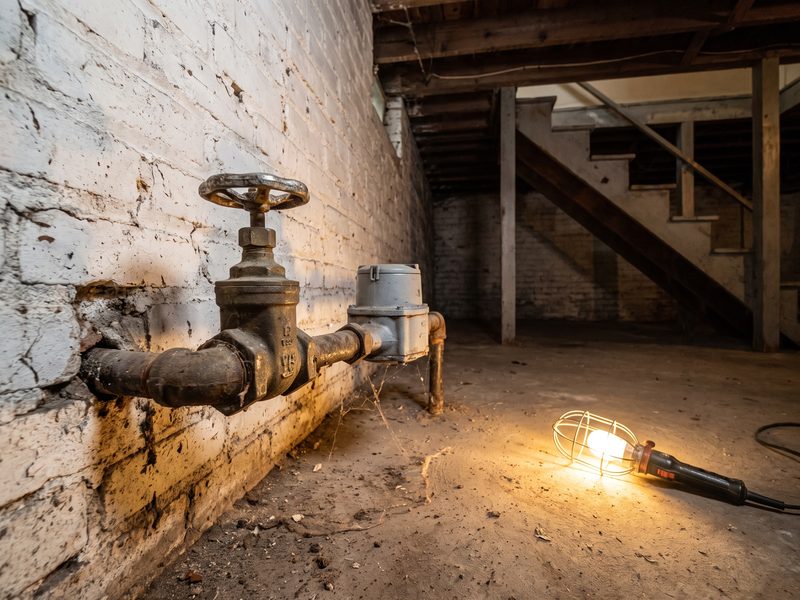
- At the main shutoff and water meter where the supply enters the home
Can a whole-home shutoff valve really prevent major water damage?
Yes. A whole-home automatic shutoff valve is the most effective single device for preventing catastrophic water damage because it addresses the one factor that determines how bad a flood becomes: time. The longer water flows, the more it spreads, the deeper it wicks into drywall and subfloor, and the more likely it is to degrade from a clean Category 1 event into a Category 2 or Category 3 contaminated loss as described in the IICRC S500 standard.
Consider a burst washing-machine supply hose or a failed water-heater tank. A standard half-inch supply line can release a startling volume of water per hour, and if it happens while you're at work or away for the weekend, that water keeps coming until someone shuts the main. A flow-based valve recognizes that continuous, abnormal flow and closes the line — stopping the event near its onset rather than hours later.
The valve doesn't just save your floors. By cutting the supply early it limits how far water migrates into wall cavities and insulation, which in turn reduces the risk of secondary mold growth that can begin within 24 to 48 hours in damp, enclosed spaces. That early cutoff is exactly what keeps a manageable dry-out from becoming a gut-and-rebuild.
Will smart water sensors lower my DC homeowners insurance premium?
Often, yes. Many insurers offer a premium credit or discount for installing a monitored or automatic water shutoff system, because water damage is one of the most frequent and costly residential claims. The exact discount varies by carrier and policy, so the dependable move is to call your agent, describe the specific system you're installing, and ask whether it qualifies and what documentation they need.
Insurers favor these systems for a simple reason: a device that stops a leak at minute one dramatically reduces the size of a potential claim. Some carriers want proof of a professionally installed automatic shutoff valve, while others accept a monitored sensor system with alerts. Keep your purchase receipt, the model information, and any professional installation invoice, because that's typically what qualifies you for the credit.
Beyond the discount, these systems help on the back end if you ever do file a claim. When a shutoff valve logs the moment it closed and your sensors timestamp the alert, you have a clear record of early detection and response. At Restoration Doctor of Washington DC, when we're hired to dry out and repair a loss, we document the damage with an Xactimate scope, CompanyCam photos, and daily moisture logs and hand that package to you — the homeowner — to use with your carrier. We bill you directly, and while we don't interpret your policy or negotiate your claim, thorough documentation on both ends makes the process cleaner.
Do I need professional installation or can I set these up myself?
Point sensors are genuinely do-it-yourself — you unbox them, place them on the floor, connect them to your Wi-Fi or hub, and you're protected in minutes. A whole-home automatic shutoff valve, however, is plumbed into your main supply line and is best installed by a licensed plumber, especially in older DC homes with aging galvanized or cast-iron pipe that can complicate the connection.
In many row houses and condos the main shutoff sits in a basement, a utility closet, or a shared mechanical area, and splicing a motorized valve into that line calls for proper fittings, a clean shutoff point, and sometimes a short section of pipe replacement. If your building is a condo or co-op, check your association rules first, because work on shared or building-side plumbing may require board approval or a specific licensed contractor.
If you're weighing a sensor-only approach against a full automatic system, start with sensors at your highest-risk fixtures today and plan the valve as the next upgrade. The sensors cost little and protect you immediately; the valve is the bigger investment that delivers whole-home, away-from-home protection once it's in.
What should I do the moment a water sensor goes off?
Shut off the water first, then protect people and electronics, then document everything. If you have an automatic valve it has likely already closed the main; if not, go to your main shutoff and turn it off, then locate the source of the leak. Knowing where your main shutoff is before an emergency — and making sure every adult in the home knows too — is half the battle.
Once the water is stopped, move valuables and electrical items out of the wet area, avoid stepping into standing water near outlets or appliances, and if the water may be contaminated from a sewer backup or toilet overflow, keep people and pets away and treat it as Category 3 water. Take photos and short videos before you move or remove anything, because that visual record supports any insurance conversation later.
Then call for professional help, because what you can see is rarely the full extent. Water wicks into drywall, baseboards, subfloor, and wall cavities where it won't dry on its own and where mold can take hold within a day or two. Our team follows IICRC S500 procedures to measure moisture, extract standing water, and run structural drying until meters confirm the drying goals are met — monitored and logged daily — so nothing damp gets sealed up behind a wall. If you're facing an active leak, call Restoration Doctor of Washington DC at (202) 922-1444 any time, or reach us through our water damage restoration page or contact page.
- Close the main shutoff valve immediately (or confirm your automatic valve has).
- Move electronics, documents, and valuables out of the wet zone.
- Stay out of standing water near outlets and appliances.
- Treat sewage or toilet-overflow water as Category 3 water and keep people and pets away.
- Photograph and video the damage before moving anything.
- Call a licensed restoration professional for a hidden-moisture assessment.
How much does a water leak detection system cost in DC?
The hardware cost of water leak detection spans a wide range, and the honest answer is that it depends on how much of your home you want to protect and whether you add an automatic shutoff valve. Individual point sensors are inexpensive and sold singly or in packs; a whole-home flow-based shutoff valve is a larger purchase, and professional plumbing installation adds to that.
Rather than fixate on the device price, weigh it against what it prevents. Water damage restoration and reconstruction work typically runs in the thousands, driven by how much water escaped, how far it spread through walls and floors, how much material had to be removed, and how many days of drying the structure needed. A sensor system that stops a leak at the first drip is small insurance against that much larger exposure.
When restoration is unavoidable, the real figure only comes after an on-site inspection, because no one can price a loss accurately without measuring moisture and seeing how far it traveled. If you've had a leak, we assess the damage in person, scope it with Xactimate, and give you documentation you can take to your carrier — and we invoice you, the property owner, directly.