Washing Machine Overflow in a DC Home: Cleanup and Prevention

BYSteve Jafari, General ManagerWASHINGTON DC & SOUTHERN MARYLAND
A washing machine overflow in a DC home means shutting off the supply valve and power immediately, then extracting water before it migrates into subfloors, walls, and the unit below. Supply-hose failures and clogged drains are the two most common causes, and upgrading to braided stainless-steel hoses with a quarter-turn lever shutoff is the single best prevention step. If water has soaked drywall, flooring, or reached a lower-level English basement, a professional dry-out verified with moisture meters is what protects you from hidden mold.
Call (202) 922-1444What should you do first when your washing machine overflows in a DC home?
Shut off the water supply to the machine and cut power to the unit, then start moving water away from walls and flooring. Those first few minutes decide whether you have a quick cleanup or a multi-room claim, because escaped laundry water migrates fast across the tight footprints common in DC row houses, condos, and English basement apartments.
Most DC laundry closets have two braided or rubber supply lines feeding a shutoff behind or beside the machine. Turn that valve clockwise until it stops. If there is no local valve — common in older townhomes where laundry was added later — shut off the home's main water supply instead. Then unplug the machine or trip its breaker, since standing water and an energized appliance are a shock hazard.
Once the source is stopped, begin removing standing water with towels, a wet/dry vacuum, or a mop and bucket. Pull wet items out of the drum and off the floor, lift area rugs, and open the closet or room to improve airflow. Speed matters here: the longer water sits, the deeper it wicks into subfloor and the more likely it reaches the ceiling of a lower unit.
- Turn the supply valve clockwise to shut off water — or use the home's main shutoff if there's no local valve
- Unplug the machine or trip its breaker before touching standing water
- Extract water with a wet/dry vacuum and towels, working outward from the machine
- Lift rugs, stored items, and wet laundry off the floor immediately
- Photograph everything before you clean — your documentation starts now
Why do washing machine supply hoses fail — and is the overflow clean water?
Supply hoses fail because they sit under constant household water pressure 24 hours a day, and the most common culprit is an aging rubber hose that cracks, blisters, or bursts at the crimped fitting. When a supply hose lets go, it releases pressurized water continuously until someone shuts the valve — which is why a hose failure that starts while you're at work can flood an entire laundry room and seep into the floor below.
Supply-side water from a washing machine is generally Category 1 under the ANSI/IICRC S500 standard, meaning it originates from a sanitary source. That's the good news. The bad news is that Category 1 water does not stay clean. Once it sits, spreads through soiled subfloor, or soaks carpet and pad, it can deteriorate to Category 2 (gray water), and longer delays or contact with contaminants can push it toward Category 3. The clock on contamination starts the moment the water escapes.
There's a second failure mode that is not clean at all: a drain overflow. When the standpipe or drain line clogs, the water the machine pumps out during a cycle backs up and spills over. That discharge carries detergent, lint, and fabric soils, and it can include sewage if the laundry line ties into a shared stack that has backed up. Drain-overflow water should be treated as gray or black water and handled with more caution than a supply-hose leak.
How fast does washing machine water spread in a row house or condo?
Faster than most homeowners expect — water follows gravity and the path of least resistance, so in a multi-level DC row house or a stacked condo it can reach the floor below within minutes of a hose failure. Hardwood seams, tile grout lines, and the gaps around a laundry closet all become channels, and a slab or subfloor that looks flat almost always slopes somewhere.
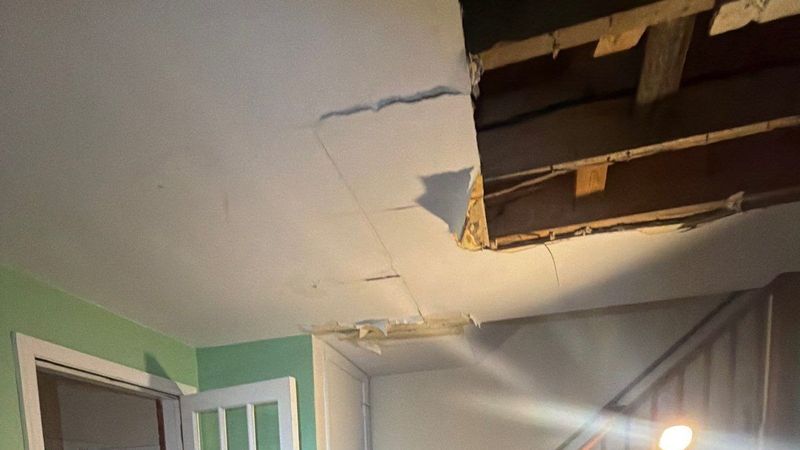
In DC's older housing stock, laundry areas are frequently tucked into a hallway closet, a kitchen nook, or a finished basement. These spaces often sit against party walls shared with a neighbor or above a lower unit. Water that reaches the wall cavity wicks up drywall and down into the floor assembly, where it can saturate joists, insulation, and the ceiling of the room below long before you see a stain.
This is why extraction and drying can't stop at the visible puddle. Moisture meters and thermal imaging trace how far water actually traveled — behind baseboards, under cabinet toe-kicks, into the subfloor, and across into adjoining rooms. If you only dry what you can see, trapped moisture in the assembly becomes the mold problem you discover weeks later. Our water damage restoration process is built around finding that hidden migration before it causes secondary damage.
How is a washing machine overflow dried out professionally?
Professional dry-out follows the ANSI/IICRC S500 standard: extract standing water, remove unsalvageable wet materials, then install drying equipment and monitor moisture daily until materials reach a verified drying goal. The goal is not to run fans for a set number of days — it's to return wood, drywall, and subfloor to a documented dry standard, confirmed by meter readings.
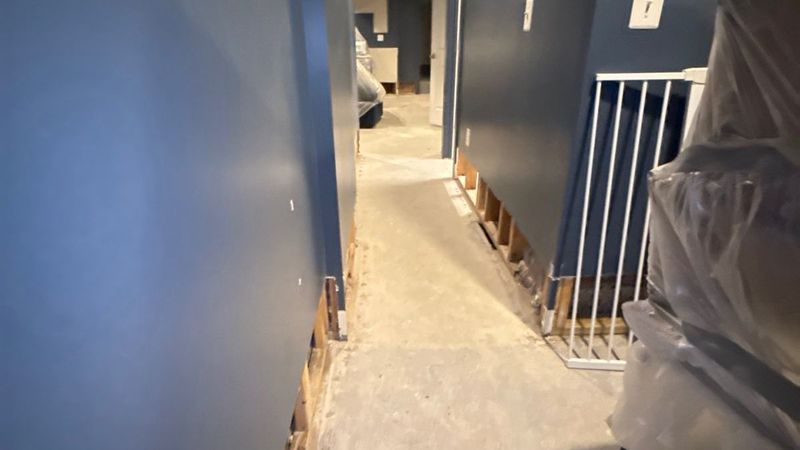
The process starts with thorough water extraction, because removing bulk water mechanically is far faster and more effective than evaporating it with air movers. Next comes assessment: moisture meters establish how wet each material is and how far the water spread, and comparison to dry-standard readings in unaffected areas sets the target. Saturated carpet pad, swollen MDF baseboard, and delaminated flooring are typically removed, while structural wood and drywall can often be dried in place when readings and contamination level allow.
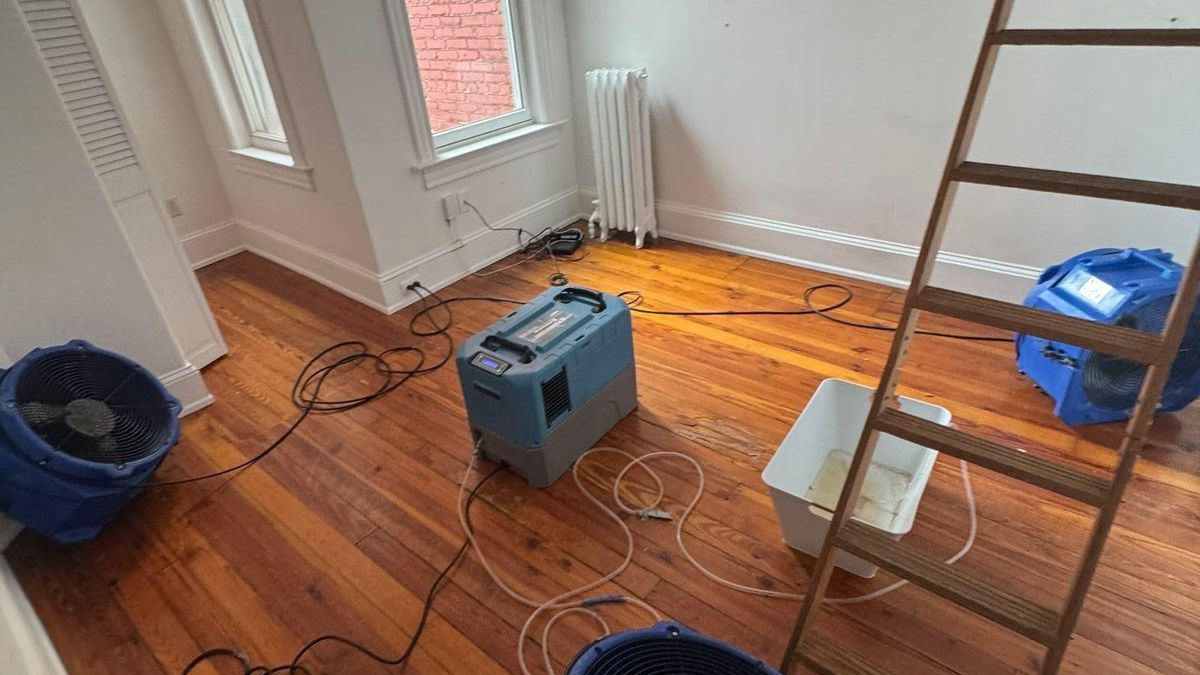
Then psychrometry takes over. Air movers increase evaporation at wet surfaces while commercial dehumidifiers pull that moisture out of the air so it can't re-deposit elsewhere in the home. Technicians log temperature, relative humidity, and material moisture content each day, adjusting equipment as the structure dries. When meters confirm materials have reached the drying goal, equipment comes out — not before. You receive that documentation, including an itemized scope and photos, so you have a complete record of the work.
- Extraction — remove standing water mechanically before drying begins
- Assessment — moisture meters map how far water spread and set the drying goal
- Removal — unsalvageable pad, baseboard, and flooring are taken out
- Drying — air movers plus dehumidifiers create controlled evaporation
- Monitoring — daily moisture logs track progress to a verified dry standard
When should you call a professional instead of cleaning it yourself?
Call a professional when water has soaked into flooring, wicked up drywall, reached a lower level, or sat for more than a few hours — and always when the overflow came from the drain rather than the supply line. A small supply leak you catch instantly and wipe up with towels may be a DIY job; anything that penetrated building materials is not, because surface drying leaves moisture trapped in the assembly.
A good self-test is to touch the baseboards and the wall behind the machine, and to check the ceiling of the room directly below. If drywall feels cool and damp, if flooring is cupping or lifting, or if a stain is spreading on a lower ceiling, the water has gone where towels can't reach. At that point only metered drying can tell you when the structure is actually dry.
Drain overflows and any water that may have contacted sewage deserve special caution. Gray and black water carry bacteria and require contained cleanup, appropriate antimicrobial treatment, and removal of contaminated porous materials under S500 Category 2 and Category 3 protocols. If you're unsure which category you're dealing with, treat it as the dirtier one and call us at (202) 922-1444 — describing the source over the phone usually makes the right path clear. You can also reach our team any time through our contact page, and we respond to water emergencies 24/7 across Washington, D.C. and Southern Maryland.
Will insurance cover a washing machine overflow in DC?
Sudden and accidental washing machine overflows — like a supply hose that bursts without warning — are commonly covered under homeowner and condo policies, while damage from long-term seepage or neglected maintenance is often excluded. The specific answer depends entirely on your policy language, and that interpretation is your insurer's job, not ours.
Here's how we fit into the claim: Restoration Doctor of Washington DC is hired directly by you, the property owner, under a written agreement, and we invoice you for the restoration work. We document the loss thoroughly — an itemized Xactimate scope, CompanyCam photo documentation, and daily moisture logs — and hand that package to you so you have a clear, professional record to provide to your carrier. We do not interpret your policy, negotiate with your insurer, or represent you in the claim.
For condo and co-op owners in DC, coverage gets more layered because your unit policy, the building's master policy, and the question of who is responsible for the shared stack or the unit below all interact. Keep every photo, every invoice, and your mitigation documentation together. For more on how claim documentation works with our process, see our FAQ page, and act quickly either way — most policies require you to mitigate promptly to prevent further damage.
How do braided stainless-steel hoses prevent the next overflow?
Braided stainless-steel supply hoses resist the cracking, blistering, and burst failures that plague old rubber hoses, and paired with a quarter-turn lever shutoff they are the most effective, lowest-effort prevention upgrade you can make. The stainless mesh jacket reinforces the inner tube and handles constant household pressure far better than bare rubber, dramatically reducing the odds of a sudden line failure.
But a better hose is only part of the fix. The single most powerful habit is turning off the supply valve when the machine isn't in use, because a hose can't burst under pressure it isn't carrying. A lever-style quarter-turn valve makes this painless, where old multi-turn gate valves are stiff enough that most people never bother. Pulling the machine out and leaving a few inches of gap also prevents the hose from kinking against the wall, a common hidden failure point.
For DC homeowners who travel or own rental units, consider an automatic shutoff device — a leak sensor that closes the water supply when it detects moisture on the floor. That single intervention can be the difference between a damp laundry closet and a saturated ceiling in the unit below. Combine good hardware with inspection: look at your hoses a couple of times a year and replace them on a schedule rather than waiting for them to fail.
| Measure | What it prevents | Effort |
|---|---|---|
| Braided stainless-steel supply hoses | Burst and crack failures of aging rubber lines | One-time swap |
| Quarter-turn lever shutoff valve | Constant pressure on hoses between uses | Minor plumbing upgrade |
| Shut off supply when not in use | Unattended hose bursts while you're away | Habit, every wash day |
| Leak-sensor auto shutoff | Unnoticed overflows flooding lower levels | One-time install |
| Clean the drain standpipe / lint trap | Drain backups and gray-water overflow | Periodic maintenance |
| Replace hoses on a schedule | Age-related failure before it happens | Every few years |
What are the signs of hidden water damage after a laundry overflow?
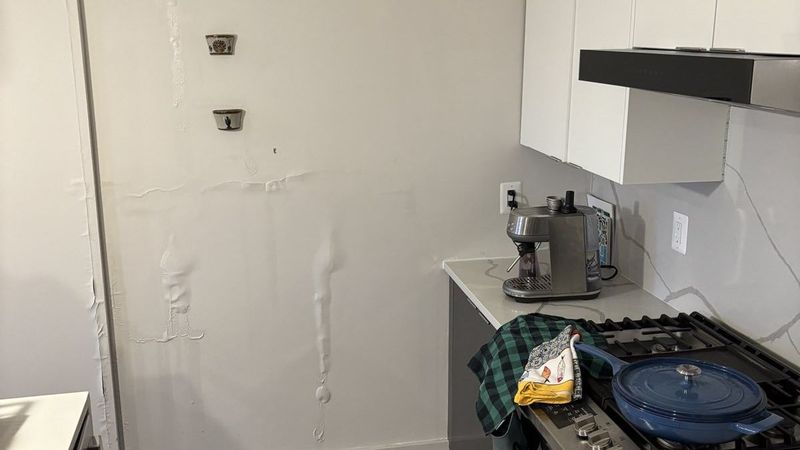
The warning signs of hidden water damage are musty odors, cupping or buckling floors, soft or discolored drywall, peeling paint, and stains appearing on a ceiling below the laundry area. These show up when water soaked into the structure and was never fully dried — the surface looked fine, but moisture stayed trapped in the assembly.
Mold is the real consequence of incomplete drying. Under the right conditions, mold can begin colonizing damp organic materials like drywall paper and wood within 24 to 48 hours, which is exactly why metered verification matters so much and why the ANSI/IICRC S520 standard governs remediation when growth does take hold. A laundry closet is often enclosed and poorly ventilated, creating the still, humid micro-environment mold thrives in. If you notice a persistent musty smell near the machine weeks after an overflow, assume moisture is still present until a meter proves otherwise.
If you suspect hidden moisture or you're already seeing growth, don't paint over it or spray bleach and hope. Those approaches hide the symptom while the colony continues feeding on wet material behind the surface. Our mold remediation work addresses the moisture source and removes affected materials under containment so spores don't spread through the home during cleanup. The durable fix is always the same: find the water, dry to a verified standard, and only then restore finishes.