Toilet Overflow Cleanup in a DC Home: Clean vs Contaminated

BYSteve Jafari, General ManagerWASHINGTON DC & SOUTHERN MARYLAND
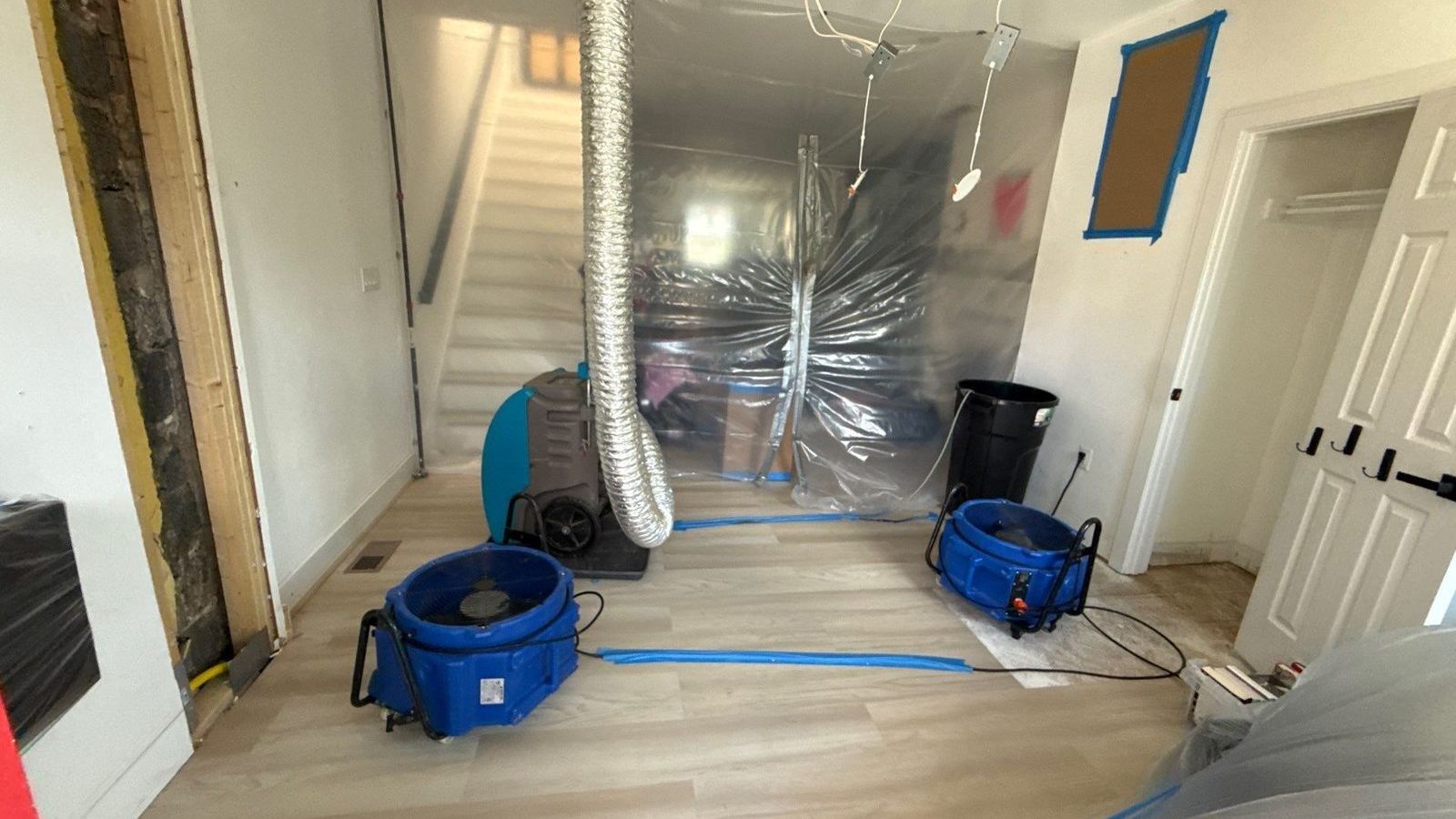
Toilet overflow cleanup in a DC home hinges on one decision: how contaminated the water is under the IICRC S500 standard. Clean overflow from the tank or supply line starts as Category 1; bowl water with urine but no feces is Category 2 (gray water); any overflow containing feces or coming from a backed-up drain line is Category 3 (black water) — a biohazard that requires disinfection, removal of porous materials, and verified drying of the subfloor. Gray water degrades toward Category 3 the longer it sits, so when in doubt, treat the spill as contaminated and call a licensed restoration team.
Call (202) 922-1444Is a toilet overflow clean water or contaminated water?
A toilet overflow is clean water only when it comes from the supply line or tank before it reaches the bowl — everything from the bowl onward carries some level of contamination. Under the ANSI/IICRC S500 standard that guides professional water damage restoration, water is classified by how much biological and chemical contamination it carries, and that classification decides everything that follows: what can be dried in place, what must be thrown away, and how aggressively the area has to be disinfected.
For toilet overflow cleanup in DC, the practical rule follows the S500 framework. Water that escaped from the tank or supply line starts as Category 1 (clean), though it begins degrading the moment it touches a bathroom floor. A bowl overflow containing urine but no feces is Category 2 (gray water) — significantly contaminated, but not sewage. An overflow containing feces, or any water that came from a backed-up drain or sewer line beyond the trap, is Category 3 (black water) — the most hazardous classification, carrying bacteria, viruses, and other pathogens.
This distinction is not cosmetic. It determines whether your bathroom floor can be salvaged or whether porous materials have to be removed and replaced. Because DC row houses and condos often stack bathrooms over finished living space, an overflow on an upper floor can send contaminated water into ceilings and wall cavities below, compounding the problem before anyone notices it.
What is the difference between Category 2 and Category 3 water?
Category 2 (gray) water contains significant contamination and can cause illness if contacted or ingested, while Category 3 (black) water is grossly contaminated and may contain pathogenic, toxigenic, or other harmful agents — including sewage. A toilet overflow can fall into either category depending on its source and what the water carried with it.
Time and temperature matter. Category 2 water left standing in a warm DC bathroom degrades toward Category 3 as bacteria multiply — the S500 standard recognizes that water category can deteriorate over time, so classification is a moving target, not a fixed label. That is why a spill treated casually overnight often has to be handled as a biohazard by morning.
Here is how restoration professionals generally sort the two in a toilet overflow scenario.
| Factor | Category 2 (Gray) | Category 3 (Black) |
|---|---|---|
| Typical source | Bowl overflow with urine but no feces; discharge from dishwashers or washing machines | Overflow containing feces, or a backed-up sewer or drain line beyond the trap |
| Contents | Urine, soaps, residues, significant bacteria | Feces, sewage, pathogenic and toxigenic agents |
| Health risk | Illness possible on contact or ingestion | Serious illness; full biohazard protocols required |
| Porous materials | May be salvageable if dried fast | Typically removed and discarded |
| If left standing | Degrades toward Category 3 | Already the worst case |
How do I clean up a clean toilet overflow myself?
If the overflow is genuinely clean water — from the tank or supply line, with no waste involved — a small, fresh spill confined to a hard-surface bathroom floor can often be handled safely by a homeowner. The goal is to remove the water fast, before it wicks into grout, baseboards, and the subfloor, and before the water has time to degrade to a higher category.
Work quickly and protect yourself even with clean water, because a toilet environment always carries some bacteria. Shut off the supply valve behind the toilet to stop the flow, then address the standing water and dry the area thoroughly.
Keep in mind that water spreads sideways and downward through the smallest gaps. In a DC bathroom, water commonly travels under vinyl or tile, along the tile-to-tub joint, and into the gap where the floor meets the toilet flange — places a mop never reaches.
- Shut off the water supply valve at the wall and stop using the fixture.
- Put on gloves and waterproof footwear before touching anything.
- Remove standing water with towels or a wet/dry vacuum rated for water.
- Pull wet bath mats, rugs, and towels and launder them hot.
- Wipe hard surfaces with a disinfectant and let it dwell for the full contact time on the label.
- Run air movement and a dehumidifier; check baseboards and the toilet base for lingering moisture.
- If water reached a lower floor or you smell sewage, stop and call a professional.
When does a toilet overflow require professional cleanup?
Call a professional whenever the overflow contained waste, came from a sewer or drain backup, soaked into porous materials, or reached beyond the bathroom into subfloor, walls, or a lower level. These are Category 3 situations, and effective cleanup requires containment, personal protective equipment, antimicrobial treatment, and verified drying that most homeowners cannot safely replicate.
DC housing stock raises the stakes. In a row house or townhome, an upstairs toilet overflow can push contaminated water through the floor system into the ceiling below, soaking joists and insulation you cannot see or reach. In a condo, a single unit's overflow can migrate into neighboring units and shared assemblies, turning a private cleanup into a building-wide concern. English basement bathrooms sit low in the plumbing system, so they are often the first place a main-line backup surfaces.
A professional team also documents the loss properly — moisture readings, photographs, and a written scope — which matters if you later file an insurance claim. Our sewage cleanup service follows Category 3 biohazard protocols from the first walkthrough, and Restoration Doctor of Washington DC can be reached around the clock at (202) 922-1444 for losses anywhere in Washington, D.C. and Southern Maryland.
- Any overflow containing or contacting feces or sewage.
- Water from a sewer or main-line backup rather than the toilet itself.
- Overflow that reached carpet, drywall, cabinetry, or subfloor.
- Water that traveled to a lower floor, ceiling, or adjoining unit.
- A persistent sewage odor after surface cleanup.
- Anyone in the home who is immunocompromised, elderly, or very young.
How do professionals disinfect a contaminated toilet overflow?
Professionals disinfect a Category 3 overflow by first removing all gross contamination and unsalvageable porous materials, then applying EPA-registered antimicrobials to every surface the water touched, with attention to the full dwell time each product requires to actually kill pathogens. Disinfection is a step in a sequence, not a spray-and-wipe shortcut — it only works on surfaces that have already been cleaned and are being dried to standard.
The process starts with containment so the contaminated zone is isolated from the rest of the home, and technicians wearing appropriate PPE extract standing water and bag waste for proper disposal. Materials that cannot be reliably decontaminated — saturated carpet pad, wet drywall, particleboard cabinet bases — are removed, because porous materials hold pathogens even after surface treatment.
After cleaning and antimicrobial application, the structure is dried and then re-evaluated as needed. The S500 standard treats drying and decontamination as linked: a surface that stays damp can re-grow bacteria, so verified dryness is part of a successful disinfection, not an afterthought.
- Establish containment and set up negative air or air scrubbing where appropriate.
- Extract standing water and remove visible waste and debris.
- Remove and bag porous, unsalvageable materials for disposal.
- Clean all affected surfaces before applying any disinfectant.
- Apply EPA-registered antimicrobials and respect full contact dwell times.
- Dry the structure to verified standards and confirm the area is decontaminated.
Does a toilet overflow damage the subfloor, and how do you know?
Yes — a toilet overflow commonly damages the subfloor, because water pools around the base of the toilet and seeps through the flooring into the plywood or plank beneath, where it lingers long after the visible surface looks dry. The only reliable way to know is to measure moisture with meters rather than judging by sight or touch, which professionals do during inspection and throughout drying.
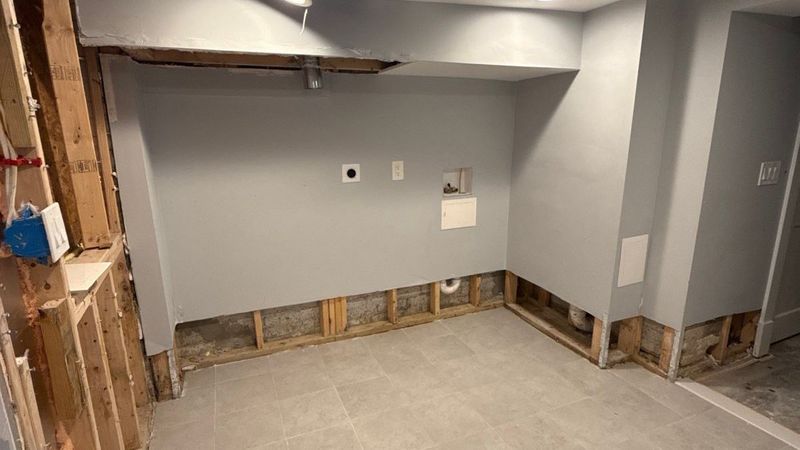
In older DC homes you may be dealing with layered flooring: original hardwood or plank subfloor, later plywood underlayment, and a tile or vinyl finish on top. Contaminated water trapped between those layers cannot be surface-dried, and on a Category 3 loss the affected porous subfloor material often has to be removed because it cannot be disinfected in place. Where moisture has migrated into joists or a lower ceiling, the assessment extends below the bathroom.
Technicians use penetrating and non-penetrating moisture meters to map how far water traveled and to set a drying goal based on unaffected areas of the same material. Drying continues — monitored and logged daily — until meters confirm the structure has reached that drying goal, which is the only legitimate way to call drying complete. Our water damage restoration process documents those readings so nothing is closed out on a guess.
What happens if a contaminated overflow is not cleaned properly?
If a contaminated overflow is not fully cleaned and dried, the result is lingering bacteria, persistent odor, and mold growth in the materials that stayed damp — along with the risk of ongoing illness for the people living there. Pathogens from Category 3 water do not simply evaporate, and moisture trapped in a subfloor or wall cavity becomes an incubator for microbial growth within days.
Mold is the most common secondary problem. Once organic materials like drywall paper, cabinet bases, and subfloor adhesives stay wet, mold can colonize them, which shifts the project into remediation territory governed by the ANSI/IICRC S520 standard. In the humid DC climate, warm bathrooms and poorly ventilated English basements accelerate that process.
There are structural consequences too. Repeated or prolonged moisture weakens subfloor, rots joists, swells trim and door casings, and can loosen tile. Addressing a contaminated overflow correctly the first time is almost always less disruptive and less expensive than cleaning up after a job that was cut short. If you suspect growth has already started, our mold remediation service can assess it.
How much does toilet overflow cleanup cost in DC?
Professional toilet overflow cleanup in DC typically runs in the thousands, and the real figure comes only after an on-site inspection — because the price is driven by the specifics of your loss, not by a flat rate. A small, clean overflow dried in place sits at the low end, while a Category 3 sewage backup that soaked subfloor, drywall, and a lower ceiling costs substantially more because of the labor, disposal, and reconstruction involved.
The main cost drivers are how much water escaped, how far it spread, how much porous material had to be removed, and how many days of monitored drying the structure needed. Biohazard handling, containment, and antimicrobial treatment on a contaminated loss add to the scope compared with a simple clean-water cleanup.
We bill the homeowner directly and provide full project documentation — an itemized Xactimate scope, CompanyCam photos, and daily moisture logs — which you can submit to your insurer. We do not interpret your policy, negotiate with your carrier, or represent you in the claim; our role is to perform the restoration correctly and hand you the paperwork that supports it. You can read more about how that works on our FAQ page.