Sewage Cleanup in a DC Basement: Why DIY Is Dangerous

BYSteve Jafari, General ManagerWASHINGTON DC & SOUTHERN MARYLAND
Sewage cleanup in a DC basement is dangerous to do yourself because raw sewage is Category 3 water carrying bacteria, viruses, and parasites that require respirators, chemical-resistant PPE, EPA-registered antimicrobial disinfection, and removal of porous materials you cannot truly sanitize. A wet-vac and household bleach will not make a contaminated basement safe — bleach is neutralized by organic matter and never reaches contamination inside drywall, carpet pad, and wall cavities. Mold can begin colonizing wet organic materials within 24 to 48 hours, so delay compounds the hazard. Proper remediation follows ANSI/IICRC S500 Category 3 protocols, dries the structure to a verified standard confirmed by moisture meters, and is documented end to end with a written scope, photos, and daily moisture logs.
Call (202) 922-1444Why is DIY sewage cleanup in a DC basement so dangerous?
DIY sewage cleanup in a DC basement is dangerous because raw sewage is Category 3 water — the most contaminated classification under the ANSI/IICRC S500 standard — and it carries disease-causing bacteria, viruses, fungi, and parasites. Cleaning it without the right respiratory protection, skin protection, disinfection, and material-removal protocols exposes you and your household to real pathogens and leaves hidden contamination behind the drywall and under the floor.
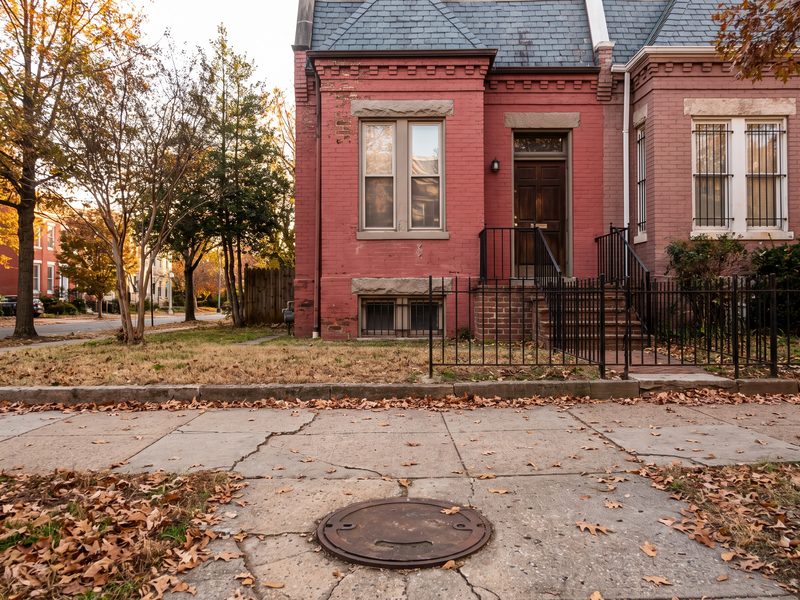
DC's older housing stock makes this worse. Many row houses, townhomes, and English basements sit on combined sewer lines or have below-grade fixtures that back up when a lateral clogs or when heavy rain overwhelms the system. When that water comes up through a floor drain or a basement toilet, it is not clean — it contains fecal matter and everything else that travels through a municipal sewer.
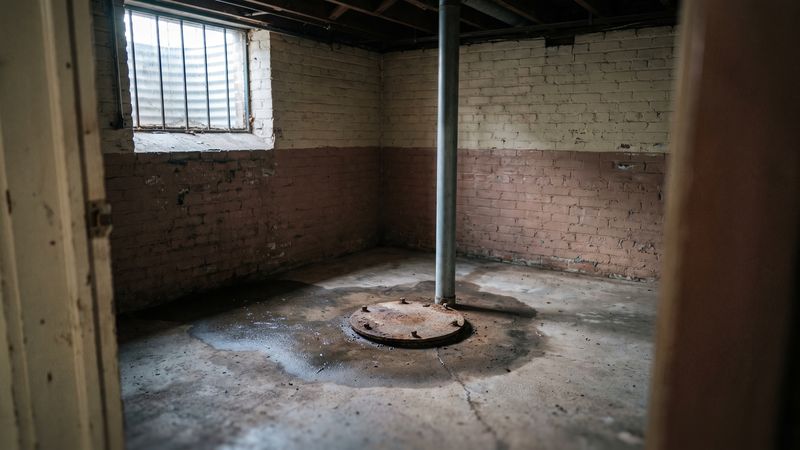
The core problem is that sewage does not stay on the surface. It wicks into drywall, soaks into carpet pad, seeps under baseboards, and settles into the porous cinder block and concrete common in District basements. Mopping the floor addresses what you can see and ignores the contamination that drives bacterial growth and odor for weeks afterward. That is why this is remediation work, not cleaning, and why it should follow a documented protocol rather than a Saturday afternoon of guesswork.
What is Category 3 water and why does it matter?
Category 3 water, commonly called black water, is grossly contaminated water that can contain pathogenic, toxigenic, or other harmful agents under the IICRC S500 standard. Raw sewage, toilet backups that originate beyond the trap, and water from a sewer main are all Category 3 — and the classification matters because the required response is fundamentally different from a clean-water leak.
Water damage is classified by how contaminated the source is, and that classification dictates everything that follows: what gets saved, what gets removed, and what protective equipment is mandatory. A clean supply-line leak (Category 1) can degrade to Category 2 and then Category 3 as time passes or as the water contacts contaminated materials. Sewage starts at Category 3 and never improves on its own.
The distinction is not academic. It determines whether a wet material can be dried and kept, or whether it must be cut out and discarded as contaminated waste. Treating a sewage backup like an ordinary basement leak is the single most common — and most dangerous — mistake a homeowner can make. If you want a deeper walkthrough of how the categories work, we cover them in detail in our guide to Category 1, 2, and 3 water.
| Category | Description | Common DC basement example |
|---|---|---|
| Category 1 | Clean water from a sanitary source | Broken supply line to a basement sink |
| Category 2 | Significantly contaminated, 'gray water' | Washing machine or dishwasher discharge |
| Category 3 | Grossly contaminated, 'black water' | Sewer backup through a floor drain or basement toilet |
What health hazards does basement sewage actually carry?
Basement sewage can carry bacteria such as E. coli and Salmonella, viruses including hepatitis A and norovirus, parasites like Giardia and Cryptosporidium, and mold spores that bloom on the wet organic material left behind. Exposure can happen through ingestion, through broken skin, and through breathing aerosolized droplets — and later, airborne mold spores.
The risk is not limited to the moment of the backup. As contaminated porous materials stay wet, bacterial counts climb and mold can begin colonizing within 24 to 48 hours in a warm, humid DC basement. Dried sewage residue can also become airborne as dust when it is disturbed, which means a basement that looks dry can still be a respiratory hazard months later.
Vulnerable people face the highest risk. Infants, older adults, pregnant people, and anyone with a compromised immune system or a respiratory condition should stay completely out of a sewage-affected area until it has been remediated and dried to a verified standard.
- Bacteria: E. coli, Salmonella, Shigella, and others from fecal matter
- Viruses: hepatitis A, norovirus, rotavirus
- Parasites: Giardia and Cryptosporidium
- Mold: can colonize wet organic materials within 24 to 48 hours
- Routes of exposure: ingestion, skin contact, and inhalation of aerosols or dust
What PPE and equipment does professional sewage cleanup require?
Professional sewage cleanup requires full personal protective equipment: a properly fitted respirator, chemical-resistant gloves, eye protection, and impermeable suits and boots that prevent skin contact with Category 3 water. This is not gear a typical homeowner has on hand, and improper or missing PPE is a primary reason DIY attempts end in illness.
Beyond protecting the worker, the job depends on equipment most households do not own. Containment with plastic sheeting and negative air pressure keeps contamination from spreading to clean parts of the home. HEPA air scrubbers capture airborne particles, and professional-grade extraction removes bulk sewage safely rather than pushing it around with a shop vac — which then becomes a contaminated object itself.
Drying the structure correctly is a science called psychrometry — managing temperature, humidity, and airflow with commercial dehumidifiers and air movers until moisture meters confirm the affected materials have returned to a verified dry standard. Our sewage cleanup process is built around these controls, and you can see how it fits our broader approach on our sewage cleanup service page.
- Fitted respirator with appropriate cartridges
- Chemical-resistant gloves, impermeable suit, and boots
- Eye and face protection
- Containment sheeting and negative air pressure
- HEPA air scrubbers and professional extraction
- Commercial dehumidifiers, air movers, and moisture meters
Can you disinfect a basement with household bleach after sewage?
No — household bleach alone cannot reliably disinfect a basement after a sewage backup, and relying on it gives a false sense of safety. Bleach is quickly neutralized by the organic matter in sewage, it does not penetrate porous materials, and splashing it around an enclosed basement creates its own fume hazard without actually decontaminating the structure.
Proper disinfection follows a sequence: remove the gross contamination and all unsalvageable porous materials first, clean the remaining surfaces, then apply EPA-registered antimicrobials appropriate for the pathogens involved. Order matters — applying disinfectant over a layer of sewage residue sanitizes nothing, because the chemical never reaches the surface it needs to treat.
Disinfection is also not a one-pass event. Surfaces may need repeated treatment, and the basement must be dried to a verified standard so that residual moisture does not fuel bacterial regrowth or mold after the crew leaves. Spraying and walking away is exactly the shortcut that leaves a basement smelling of sewage weeks later. We cover the bleach question in more depth in our article on whether bleach kills mold on drywall — the short answer there is the same one here: chemistry alone does not fix contamination inside porous materials.
Which materials must be removed and which can be saved?
Porous materials saturated with Category 3 sewage generally must be removed and discarded because they cannot be reliably decontaminated — this includes carpet, carpet pad, drywall, insulation, particleboard, and most upholstered or paper-based items. Non-porous and semi-porous materials like sealed concrete, tile, metal, and solid wood framing can often be cleaned, disinfected, and dried in place.
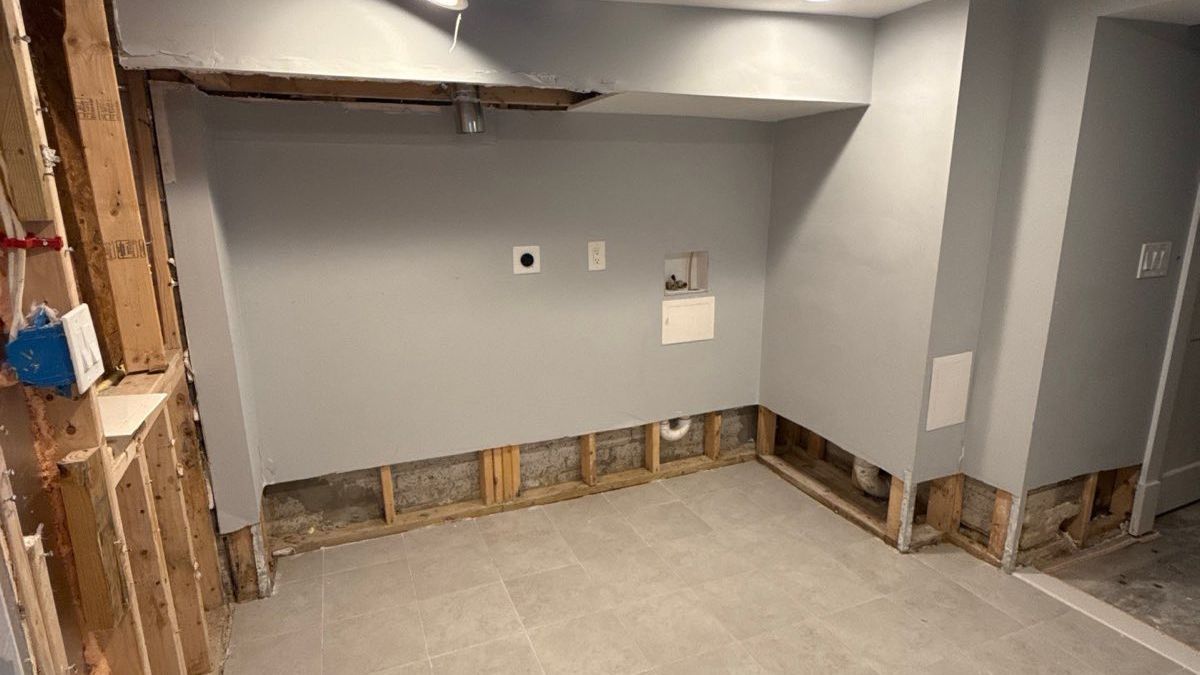
In a typical DC English basement, that means wet drywall is cut out above the water line, baseboards and trim come off, and any carpeting goes. The cinder block or poured foundation walls and the concrete slab usually stay, but they are cleaned, treated, and monitored with moisture meters until dry. Wall cavities are opened so the framing and the back side of the wall can dry rather than sealing moisture and contamination inside. In homes built before 1978, that demolition also has to account for lead paint and possible asbestos, which is one more reason flood cuts in older District housing are not a DIY job.
This selective demolition is one of the clearest reasons DIY fails. Homeowners understandably try to save materials, but a carpet pad that has absorbed sewage is a reservoir of bacteria that no amount of surface cleaning will fix. Removing it is not waste — it is the only way to make the space safe.
| Material | Usual outcome | Why |
|---|---|---|
| Carpet and pad | Remove | Porous, absorbs sewage, cannot be sanitized |
| Drywall and insulation | Remove to above the water line | Wicks contamination and moisture upward |
| Particleboard / MDF | Remove | Swells and holds pathogens |
| Sealed concrete slab | Clean and save | Non-porous, can be disinfected and dried |
| Solid wood framing | Clean, treat, dry | Semi-porous, salvageable when dried to standard |
Why do DC basements and English basements flood with sewage?
DC basements and English basements flood with sewage largely because of the city's aging infrastructure and below-grade living spaces. Large portions of the District are served by a combined sewer system that carries both stormwater and sewage in the same pipe, so during heavy rain the system can surcharge and push wastewater back up through the lowest fixtures in a home — which are almost always in the basement.
Row houses and townhomes compound the problem. Decades-old lateral lines, tree-root intrusion, and shared or undersized drainage mean a blockage downstream can send sewage backward into a floor drain, a basement toilet, or a laundry standpipe. English basements and finished garden-level units — common across neighborhoods like Columbia Heights, Petworth, and Capitol Hill — put living space and absorbent finishes right at the elevation where backups appear.
Because the water comes up from the sewer rather than down from a clean pipe, these events are Category 3 from the first minute. A backwater valve and keeping grease and wipes out of the drain reduce the odds, but when a backup does happen, the response has to treat it as the biohazard it is. For more on how the District's combined system contributes to these events, see our article on sewer backups and DC's combined sewer system.
What does professional sewage cleanup involve step by step?
Professional sewage cleanup follows a defined sequence: stop the source, set up containment, remove bulk sewage and contaminated porous materials, clean and disinfect, dry to a verified standard, and document the entire project. Each step protects the household and the building while creating the record a homeowner needs.
At Restoration Doctor of Washington DC (DC DLCP license #410524000721), we are hired directly by the property owner under a written agreement, and we hand you the documentation — an Xactimate scope, CompanyCam photo documentation, and daily moisture logs. We do not interpret your policy, negotiate with your insurer, or represent you in the claim; we focus on performing and documenting the restoration so you have a clear record. Our work follows ANSI/IICRC S500 for water damage restoration and ANSI/IICRC S520 where mold remediation is involved, under Category 3 protocols.
The dry-out phase runs until moisture meters confirm the affected materials have reached verified dry standards — monitored daily rather than assumed from a calendar. Only then does reconstruction of the removed drywall, trim, and flooring begin. If you are dealing with an active backup anywhere in Washington, D.C. or Southern Maryland, start with our contact page or our water damage restoration page so we can get the process moving safely. You can reach us at (202) 922-1444.
- Stop or confirm the source is no longer discharging
- Establish containment and negative air pressure
- Extract bulk sewage with professional equipment
- Remove contaminated porous materials as contaminated waste
- Clean and apply EPA-registered antimicrobials
- Dry with commercial equipment to verified moisture standards
- Document scope, photos, and daily moisture logs
How much does sewage cleanup in a DC basement cost?
Sewage cleanup in a DC basement typically runs in the thousands, but the honest answer is that the real figure only comes after an on-site inspection. The cost is driven by how much sewage entered, how far it spread, how much porous material has to be removed, and how many days of monitored drying the structure needs to reach a verified dry standard.
A contained backup limited to a small utility area is a very different project from sewage that saturated a finished English basement with carpet, drywall, and built-ins. Because those variables change the scope so dramatically, any flat number quoted sight-unseen is a guess. We assess the actual contamination and affected materials before scoping the work.
If sewage damage is a covered peril under your policy — in DC, sewer backup coverage is often a separate endorsement rather than part of a standard homeowners policy — documentation matters, which is why we provide a detailed scope, photo records, and daily moisture logs directly to you. For questions about how restoration and claims documentation fit together, our FAQ page is a good starting point.