Spring Storm Prep for DC Homeowners: A Water-Damage Checklist

BYSteve Jafari, General ManagerWASHINGTON DC & SOUTHERN MARYLAND
Spring storm prep in DC comes down to four systems: clean, free-draining gutters and downspouts; a tested sump pump, ideally with a battery backup; a working backwater valve on your sewer line; and soil graded to carry water away from the foundation. Handle these before the April–June rains, and you stop most basement and English-basement flooding before it starts. If water does get in anyway, document everything with photos before you move anything, then call a licensed restoration team right away — fast extraction and verified drying are what keep a wet basement from becoming a mold problem.
Call (202) 922-1444What is the best spring storm prep for DC homeowners?
The best spring storm prep for DC homeowners is to make sure water has a clear, fast path away from your home before the heavy spring rains arrive. That means clean gutters and downspouts, a tested sump pump, a functioning backwater valve on your sewer line, and soil graded to slope away from the foundation. Those four systems do the vast majority of the work of keeping a basement or English basement dry.
Washington, D.C. gets its wettest, most intense storms from late spring through summer, when warm, moisture-heavy air produces fast downpours that overwhelm old drainage. Much of the District's housing stock — brick row houses, converted townhomes, and below-grade English basement apartments — predates modern waterproofing, and a large share of the older neighborhoods still sit on combined sewer lines that can back up during a hard rain. That combination is exactly why spring is the season to inspect, test, and repair before a storm forces the issue.
Think of this as a checklist you work through on a dry weekend in March or early April. Each item is something you can inspect yourself, and each one has a clear signal that tells you whether to call a professional. The goal is simple: when the first real storm hits, every drop of water that reaches your home already has somewhere to go.
How do I prepare my gutters and downspouts before storm season?
Clean every gutter and downspout so water flows freely, then confirm each downspout discharges at least several feet away from your foundation — not into a splash zone right against the brick. Clogged gutters are among the most common causes of preventable water intrusion, because overflowing water sheets straight down the exterior wall and pools at the base of the house, exactly where you don't want it.
On a DC row house, gutters fill with maple seeds, oak catkins, and shingle grit over the winter. When they clog, rainwater spills over the back edge and runs behind the gutter, soaking the fascia, the rim joist, and eventually the top of the foundation wall. On a flat or low-slope row house roof, a blocked internal drain or scupper is even worse — water ponds on the roof membrane and finds the smallest seam.
Pay special attention to downspouts that empty near a below-grade entrance or an English basement stairwell. A downspout dumping right at a basement doorway is a direct feed into your living space. Extensions, splash blocks, or a buried drain line that daylights away from the house all help redirect that flow.
- Flush each gutter run with a hose and watch that water exits the downspout freely, not back over the lip.
- Check that downspout elbows are connected and discharge several feet from the foundation.
- Clear leaves and debris from flat-roof scuppers and internal roof drains common on DC row houses.
- Add extensions to any downspout that drains near an English basement entrance or stairwell.
- Look for rust, separated seams, or sagging sections that let water escape before it reaches the downspout.
How do I test my sump pump before spring storms?
Test your sump pump by slowly pouring a few buckets of water into the pit until the float rises — the pump should switch on, discharge the water, and shut off cleanly. Do this before storm season so you discover a stuck float, a seized motor, or a blocked discharge line on a dry day instead of during a 2 a.m. downpour.
A sump pump is the last line of defense for many DC basements and English basements. It collects groundwater that rises against the foundation during heavy rain and pushes it out through a discharge pipe. If the pump fails during a storm, the pit overflows and water comes up through the floor. Because the heaviest spring storms often knock out power, a pump that relies solely on house current can fail at the exact moment you need it most.
That is why a battery backup or a water-powered backup is worth considering, especially for a finished basement or a below-grade rental unit. Also confirm the discharge line carries water well away from the house and isn't crushed, clogged, or routed back toward the foundation — a pump that empties into a puddle against the wall simply recirculates the problem.
- Pour water into the pit to trigger the float and confirm the pump runs and shuts off on its own.
- Listen for grinding, humming without pumping, or a motor that won't cycle — all signs of failure.
- Check that the check valve holds so water doesn't drain back into the pit after each cycle.
- Consider a battery or water-powered backup in case a storm cuts power.
- Trace the discharge line to make sure it carries water several feet from the foundation and isn't clogged.
What is a backwater valve and does my DC home need one?
A backwater valve is a one-way flap installed on your sewer or drain line that lets wastewater flow out while automatically closing to block sewage from flowing back into your home. If your home has a basement or English basement connected to D.C.'s sewer system, a backwater valve is one of the most valuable protections you can install — because the older parts of the District run on combined sewers that carry both stormwater and sewage in the same pipe.
During an intense spring storm, that combined system can fill faster than it can drain. When the main line surges, the pressure pushes water and sewage backward toward the lowest fixtures in your home — typically a basement floor drain, toilet, or laundry standpipe. Without a backwater valve, that contaminated water comes up through those fixtures and spreads across the floor. Under the IICRC S500 standard, sewer backflow is Category 3 water — grossly contaminated and requiring professional handling with proper protective equipment.
Backwater valve installation is licensed plumbing work, and the valve needs periodic inspection to make sure the flap seats cleanly and isn't fouled by debris. If you've ever had even a minor backup during a storm, treat that as a warning sign. And if sewage does reach your floor, don't clean it yourself — our sewage cleanup team follows Category 3 protocols to remove contaminated material and disinfect the space safely.
How does yard grading and soil slope prevent basement flooding?
Yard grading prevents basement flooding by sloping the soil away from your foundation so rainwater drains outward instead of pooling against the walls. The common rule of thumb is that the ground should fall away from the house about six inches over the first ten feet. When soil slopes toward the building — or sits flat — every storm drives water straight down against the foundation, where it finds cracks, cold joints, and porous mortar.
On older DC properties, grading problems develop quietly over years. Soil settles next to the foundation, planting beds get built up above the sill, new patios or walkways tilt the wrong direction, and mulch piles against the brick and holds moisture. Row houses with shared walls and narrow side yards have especially tight drainage, and a neighbor's downspout or a sloping alley can send water your way. Below-grade entrances and window wells are the first places that flooding shows up.
Walk your foundation after a hard rain and look for standing water, mud lines on the brick, or erosion channels — those tell you where water is collecting. Correcting the slope, extending downspouts, installing a trench drain at a basement entrance, and keeping window wells clear and covered all reduce the hydrostatic pressure pushing against the walls. Less water against the foundation means less water finding its way in.
- Confirm soil slopes away from the foundation, falling roughly six inches over the first ten feet.
- Pull mulch and soil down below the sill and masonry weep holes.
- Check that patios, walkways, and driveways tilt away from the house, not toward it.
- Keep window wells clear of debris and consider covers to block direct rainfall.
- Look for standing water or mud lines along the foundation after a storm to spot problem areas.
What should I check inside my home and foundation before storm season?
Inside your home, inspect the foundation walls and floor for existing cracks, efflorescence, and damp spots, and make sure floor drains are clear and any water sensors have fresh batteries. Catching a hairline crack or a slow seep now lets you address it before a storm turns it into an active leak. Spring prep is as much about the interior envelope as the exterior drainage.
In a DC row house or English basement, look for white, chalky efflorescence on the brick or block — that mineral residue is a sign water has been moving through the masonry. Check the rim joist and the base of the walls for staining or soft drywall. Test any floor drains by pouring water in to confirm they carry it away rather than gurgling or backing up, which can signal a partial sewer blockage worth investigating before storm season.
Inexpensive battery-powered water alarms placed near the sump pit, water heater, laundry area, and low spots give you early warning. For a below-grade rental unit, that early alert can be the difference between a quick extraction and a saturated floor. If you find active moisture, standing water, or mold, don't wait for the next storm — early water intrusion is far cheaper and simpler to resolve than a fully flooded basement.
- Inspect foundation walls for cracks, efflorescence, and damp or stained areas.
- Test floor drains to confirm they carry water away without backing up.
- Place battery water alarms near the sump pit, water heater, and laundry.
- Check the rim joist and wall base for soft drywall, staining, or musty odor.
- Clear stored items off the floor so a minor intrusion doesn't ruin belongings.
What should I do if my DC basement floods during a storm?
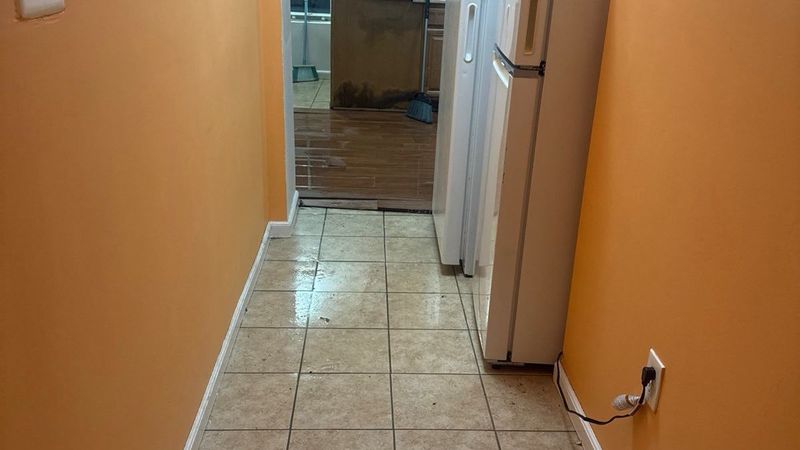
If your basement floods during a storm, protect your safety first: stay out of standing water that may be near electrical outlets or a live panel, shut off power to the affected area only if you can do so safely, and then call a licensed water damage restoration team. Fast extraction and professional drying are what prevent a wet basement from turning into structural damage and mold.
Document everything before you start moving things. Take clear photos and video of the water, the affected rooms, and any damaged belongings while they're in place — this documentation supports your records and your insurance process. Note where the water appears to be coming from, whether that's a floor drain, a window well, a foundation crack, or a sewer backup, because the source determines both the cleanup approach and the water category under IICRC S500.
Restoration Doctor of Washington DC (DC DLCP #410524000721) extracts standing water, sets professional air movers and dehumidifiers, and monitors the structure with moisture meters until readings reach the dry standard — tracked with daily moisture logs rather than guesswork. We bill the homeowner directly and hand you the project documentation, including the Xactimate scope, CompanyCam photos, and those daily logs, so you have a complete record for your own files and claim. We do not interpret your policy or negotiate with your insurer; that stays between you and your carrier. If the water came from a sewer backup, our sewage cleanup process follows Category 3 protocols because that water is contaminated and unsafe to handle without proper equipment. We serve Washington, D.C. and Southern Maryland — call (202) 922-1444 if a spring storm gets ahead of your checklist.