Bathroom Leaking Through the Ceiling Below in a DC Home

BYSteve Jafari, General ManagerWASHINGTON DC & SOUTHERN MARYLAND
A bathroom leak through the ceiling in a DC home is most often caused by a failed toilet wax ring, a cracked shower pan or tile grout, or a leaking supply or drain line in the floor cavity. Shut off the water source, place a container under the drip, and avoid guessing — the real source is frequently a foot or more from where the stain appears, because water travels along joists and pipe runs before it drops. Correct repair means finding the exact failure point, fixing it, and drying the floor cavity to a verified moisture standard measured with meters — not just patching and painting the ceiling. Water from a toilet wax ring or drain line should be treated as contaminated, not handled like a clean spill.
Call (202) 922-1444Why is my bathroom leaking through the ceiling below?
A bathroom leak through the ceiling in a DC home is almost always water escaping the bathroom floor assembly above and traveling down through the joist cavity until it reaches the drywall or plaster below. The three most common sources are a failed toilet wax ring, compromised shower or tub waterproofing (pan, grout, or caulk), and a leaking water supply or drain line running under the floor.
The frustrating part is that water does not fall straight down. It follows framing, pipe runs, and the path of least resistance before it finally shows up as a stain, a bubble, or a drip — often a foot or more from the actual leak. That is why the brown ring on your living room or English basement ceiling rarely sits directly below the thing that is broken.
In D.C.'s older row houses and converted townhomes, the floor structure between levels is frequently original wood joists with plaster or drywall below. These assemblies hold moisture, hide the travel path, and give mold a head start before anyone notices the ceiling. The first job is not patching the ceiling — it is identifying which fixture or line is failing above it.
Is it the toilet wax ring, the shower pan, or a supply line?
You can often narrow the source by noting when the ceiling leak appears. A wax ring failure typically leaks only when the toilet is flushed, a shower pan or grout failure leaks during and shortly after showering, and a supply-line leak drips continuously because those lines are always under pressure.
Each source has a distinct signature. A wax ring seals the base of the toilet to the drain flange; when it dries out, shifts, or the toilet rocks loose, waste water escapes at the floor and seeps into the subfloor with every flush. A shower pan or tile system fails when grout cracks, caulk separates, or the waterproof membrane under the tile is breached, letting shower water bypass the drain. Supply lines — the braided or copper feeds to the toilet, sink, or shower valve — leak under constant pressure, so their damage tends to be steady and can escalate fast.
Use the timing clues below to form a working theory, but confirm before you cut or repair. The wrong assumption leads to an opened ceiling, a patched spot, and the same stain returning a week later.
| Likely source | When it leaks | Typical clue |
|---|---|---|
| Toilet wax ring | Only when flushed or used | Toilet rocks; stain or softness at toilet base; sewage odor |
| Shower pan / tile grout | During and after showering | Loose or cracked grout; stain appears only on shower days |
| Tub surround / caulk | After baths or showers | Separated caulk at tub edge; water escaping at wall-floor joint |
| Supply line (toilet/sink/valve) | Continuously, under pressure | Steady drip that worsens; wet spot grows even when fixture is unused |
| Drain line (P-trap/branch) | When fixture drains | Wet cabinet base; odor; leak tied to sink or tub use |
What should I do right now to stop the damage?
Right now, stop adding water to the leak and contain what is already coming through. If you suspect a supply line or the toilet, shut off the fixture's local valve, or close the home's main water shutoff if you cannot isolate it. If the leak tracks with the shower or tub, simply stop using that fixture until the source is found.
Protect the space below while you work. Move furniture, electronics, and rugs out from under the drip, place a bucket or bin to catch water, and lay towels to limit spread across flooring. If the ceiling is bulging or sagging with trapped water, keep people out from underneath — a water-filled drywall pocket can let go all at once.
Electrical safety comes first in a multi-floor leak. Water traveling through a ceiling can reach light fixtures, fans, and junction boxes, so if water is near any fixture or you see staining around a ceiling light, keep that circuit off until it has been checked.
- Shut off the fixture valve or the main water supply if a supply line or toilet is suspected.
- Stop using the shower or tub if the leak tracks with bathing.
- Place a container under the drip and move valuables clear.
- Keep clear of any bulging, water-filled ceiling area.
- Turn off the affected circuit if water is near a light or fan.
- Photograph everything before you clean up — it supports your insurance documentation.
How far can water spread between floors in a DC row house?
Water from a single bathroom leak can spread well beyond the room above and travel laterally for several feet along joists before dropping into the ceiling below. In a DC row house or townhome, the narrow, deep floor plan and continuous joist runs let water migrate along framing toward exterior walls, stair soffits, and adjoining rooms.
The materials in older D.C. housing stock make this worse. Original subfloors, plaster keys, and layered flooring act like a sponge, wicking moisture outward instead of letting it drain. In condos and stacked units, a leak that starts in one unit's bathroom can show up as a ceiling stain in the unit directly below, which turns a simple repair into a multi-owner conversation about responsibility and access.
English basements add another dimension. A bathroom leak on the main floor can travel down through two levels of structure, reaching basement ceilings and the top of basement walls, where limited airflow and existing dampness invite mold. The longer moisture sits inside these cavities, the more material has to be dried or removed — which is a core reason prompt professional drying matters. Our team handles this through structured water damage restoration that follows the moisture, not just the visible stain.
Can I just paint over the ceiling stain, or is there hidden damage?
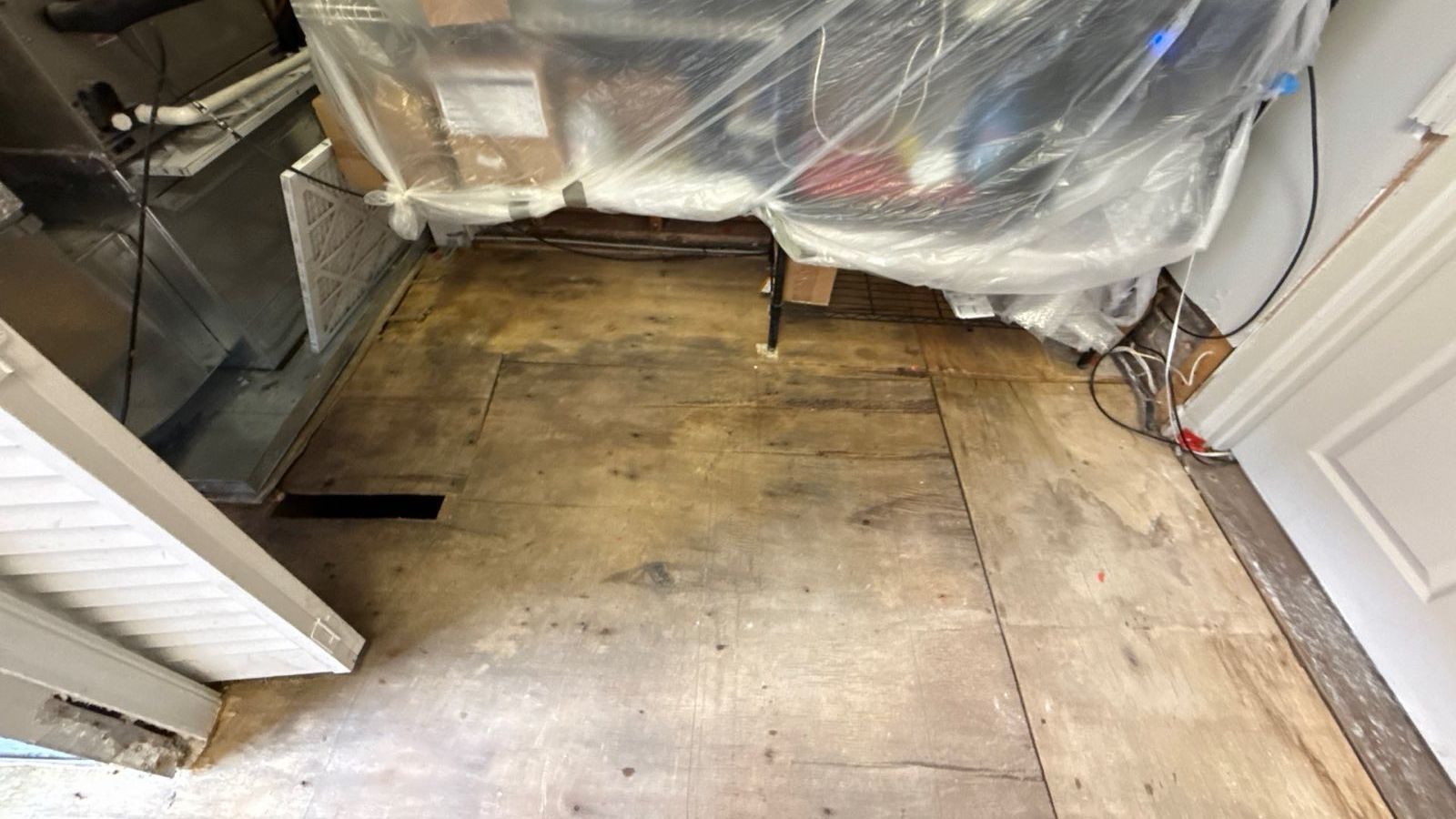
Painting over the stain without fixing the source and drying the cavity will not work — the stain returns, and hidden moisture keeps feeding mold and wood rot inside the floor. A ceiling stain is a symptom; the damage lives in the joist bay, subfloor, and insulation above it.
Drywall and plaster can hold moisture long after the surface looks dry, and a sealed-over ceiling traps that dampness against wood framing. Under the right conditions, mold can begin growing inside wall and ceiling cavities within one to three days, which is why cosmetic fixes so often fail in humid interior spaces. The correct sequence is: find the source, repair it, dry the structure to a verified standard, then restore finishes.
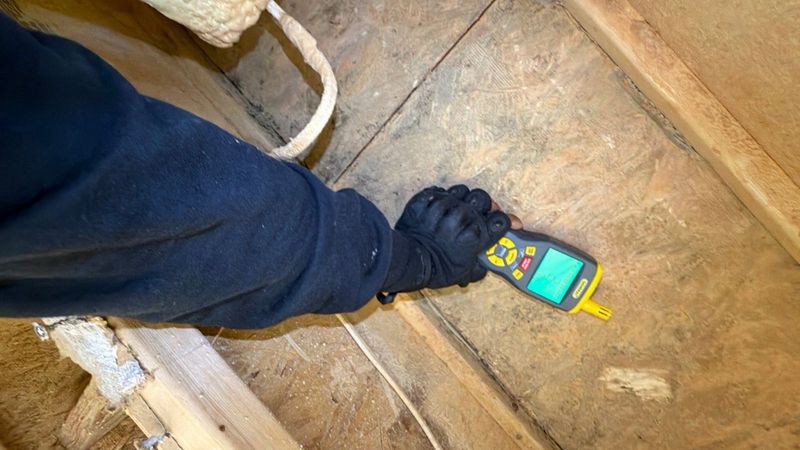
Verified drying is not a guess or a calendar date. Using moisture meters and thermo-hygrometers, the affected framing and subfloor are measured against a dry standard established from unaffected, similar materials, and drying continues until readings confirm the structure has returned to that goal. That measured, psychrometric process is at the heart of the ANSI/IICRC S500 standard our work follows, and it is the only reliable way to know a ceiling leak is truly resolved.
Is water from a bathroom ceiling leak a health hazard?
It depends on the source. Under the ANSI/IICRC S500 framework, Category 1 is water from a sanitary source such as a supply line, Category 2 carries significant contamination that can cause illness if ingested — shower, tub, and sink drain water typically falls here — and Category 3 is grossly contaminated water, including sewage and anything that has passed beyond a toilet trap. Water that sits inside a ceiling cavity can also degrade to a higher category over time as it picks up contaminants from building materials.
That classification matters for your leak. A burst supply line starts as Category 1 and, handled promptly, is the most straightforward cleanup. A failed toilet wax ring releases water from beyond the trap, which S500 treats as Category 3 regardless of what it looks like, and a branch drain carrying bathroom waste is in the same range. Those losses call for containment, protective equipment, and removal of porous materials that cannot be reliably decontaminated — not a mop and a fan.
Beyond the water itself, lingering moisture is a mold concern. Soaked drywall, insulation, and wood are ideal mold substrates, and interior bathroom and basement spaces in D.C. hold humidity that accelerates growth. If the leak involved contaminated water or has been active for a while, professional handling under the appropriate category protocols and, where needed, mold remediation protects both the structure and the people in the home.
Does homeowners insurance cover a bathroom leak through the ceiling?
Homeowners and condo policies often cover sudden, accidental water damage — like a supply line that suddenly fails — while long-term seepage, slow leaks, and lack of maintenance are commonly excluded. Coverage depends entirely on your specific policy and the cause, so your carrier and policy language make the final determination, not your restoration contractor.
Restoration Doctor's role is to document the damage thoroughly, not to interpret your policy or negotiate with your insurer. You hire us directly under a written agreement, and we invoice you, the homeowner. What we hand you is the documentation that supports a claim: an itemized Xactimate scope, CompanyCam photo documentation of the source and affected areas, and daily moisture logs showing the drying process. You submit and manage the claim with your carrier.
Good documentation matters most when a claim hinges on "sudden versus gradual." Clear photos of a burst supply line or a failed wax ring, paired with dated moisture readings, help your adjuster understand what happened and when. For more on how we document damage and what to expect, see our FAQ, and keep every photo you took before cleanup.
How do professionals find and fix a bathroom ceiling leak?
Professionals locate the source by combining the leak's timing with moisture mapping, then open the smallest area necessary to confirm and repair the failure before drying the structure. Rather than tearing out a whole ceiling on a hunch, the goal is targeted investigation guided by measurements.
The process starts with diagnostics: moisture meters trace the wet path back toward its origin, and sometimes a controlled test — running the shower, flushing the toilet, or isolating a supply valve — confirms which fixture is responsible. Once the source is identified, the repair follows the cause: replacing a wax ring and resetting the toilet, rebuilding failed shower-pan waterproofing, or repairing the leaking supply or drain line. Only then does drying begin.
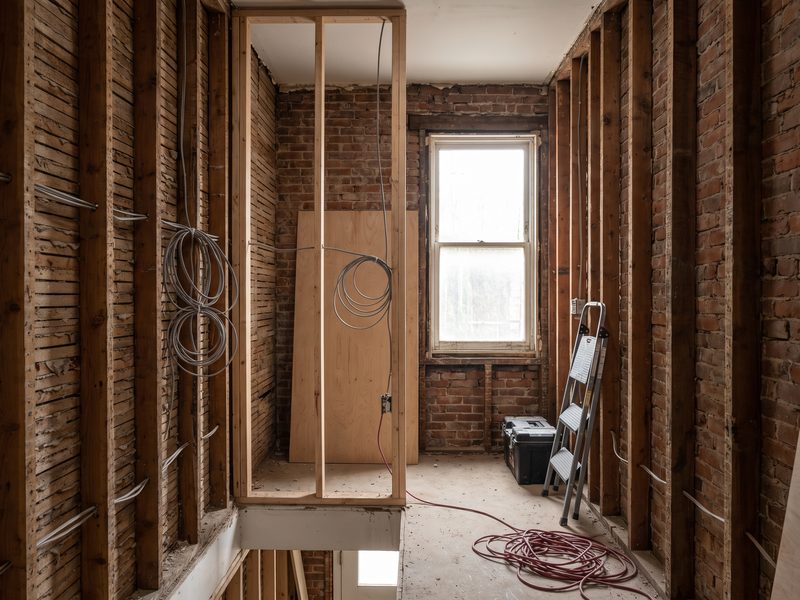
Structural drying uses air movers and dehumidifiers sized to the space, with daily monitoring until moisture meters confirm the framing, subfloor, and ceiling have reached their drying goals. Contaminated or long-standing leaks may require removing saturated drywall, insulation, and flooring that cannot be dried or decontaminated in place. When the structure is confirmed dry, reconstruction restores the ceiling and bathroom finishes. If you are watching a ceiling stain spread below a DC bathroom right now, contact us any time — we answer emergencies 24/7 across Washington, D.C. and Southern Maryland.
What does it cost to fix a bathroom leak through the ceiling in DC?
The honest answer is that it depends on how much water escaped, how far it spread, how much saturated material has to be removed, and how many days of drying the structure needs — so repairing a bathroom ceiling leak typically runs in the thousands, with the real figure set after an on-site inspection. A clean supply-line leak caught early costs far less to resolve than a wax-ring failure that soaked two floors of a row house for a week.
Several factors drive the price: the water category (clean versus contaminated), the square footage affected, whether drywall, insulation, and flooring must be removed, the size and duration of the drying effort, and the extent of reconstruction needed to restore the ceiling and bathroom. Mold involvement, if moisture sat long enough to cause growth, adds remediation work under a separate protocol.
Because every leak and every DC floor assembly is different, no responsible contractor can quote a reliable number sight unseen. An on-site inspection with moisture readings gives you an accurate, documented scope. If you plan to file a claim, that same Xactimate scope and the accompanying photo and moisture documentation are what you hand your carrier.