What Does Water Damage Restoration Cost in Washington DC?

BYSteve Jafari, General ManagerWASHINGTON DC & SOUTHERN MARYLAND
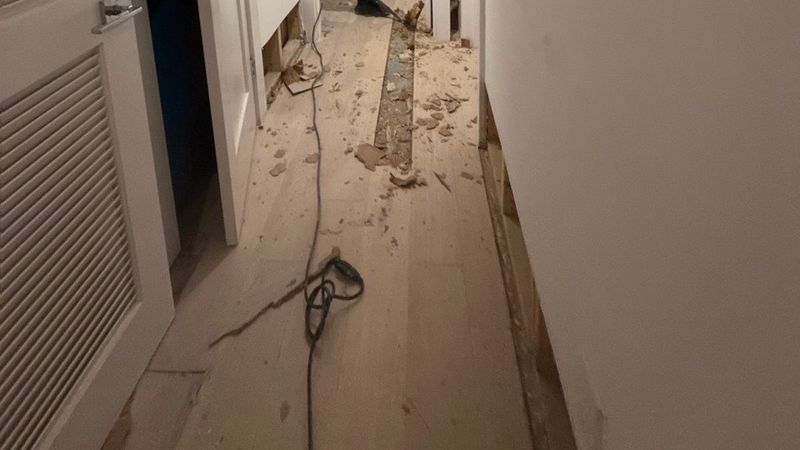
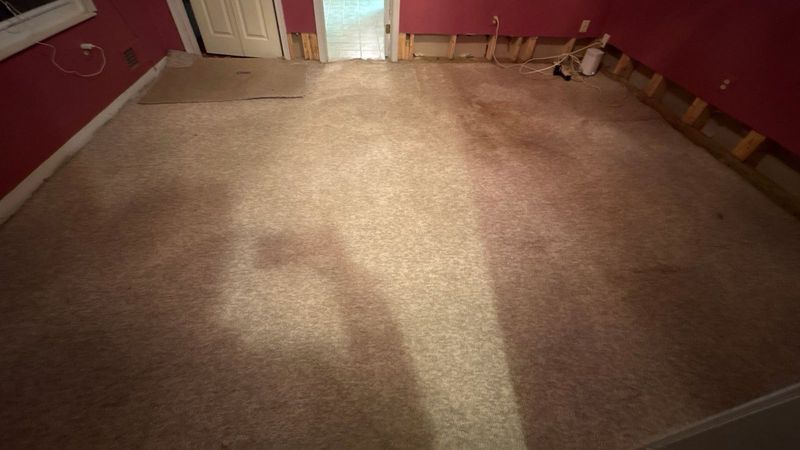
Water damage restoration cost in DC typically runs in the thousands, and the exact figure depends on the water category (clean, gray, or black), the class of saturation, how far the water spread, and how much material has to be removed and dried. There is no honest flat rate — the real number comes after an on-site inspection and a written, line-by-line scope. If the loss is sudden and accidental, a homeowner's insurance policy often offsets a large share, leaving you responsible mainly for your deductible. Acting fast matters too: the sooner drying begins, the less material crosses from 'can be dried' to 'must be removed.'
Call (202) 922-1444What does water damage restoration cost in Washington DC?
Water damage restoration cost in DC typically runs in the thousands, and the final figure depends almost entirely on the specifics of your loss rather than any published rate. A small, contained leak caught early in a condo kitchen sits at the low end of that range, while a Category 3 sewage backup across a finished English basement sits far higher. Anyone who quotes you a precise price over the phone before seeing the damage is guessing.
The reason there is no flat rate is that restoration is not a single service — it is a sequence of steps (extraction, structural drying, antimicrobial treatment, material removal, and reconstruction) that scales with the size and severity of the loss. The honest answer is that the price is built from what the water actually did to your property, measured on site. At Restoration Doctor of Washington DC, we document the full scope in Xactimate, the same estimating platform insurers use, so the number you receive reflects line-by-line work rather than a round guess.
In a city built on row houses, older townhomes, and below-grade English basements, two homes on the same block can produce very different invoices from the same storm. What follows is exactly what moves that number up or down.
What are the biggest factors that drive water damage cost in DC?
The biggest factors that drive water damage cost in DC are the water category (how contaminated it is), the class of water loss (how much material is saturated), the square footage affected, how far the water migrated, and how much building material has to be removed rather than dried. Time is also a cost driver — water that sits unaddressed turns a drying job into a demolition job, and mold growth can begin on wet materials within roughly 24 to 48 hours, which adds remediation to the scope.
Each of these factors compounds the others. A large volume of clean water caught quickly can be cheaper to resolve than a small volume of contaminated water that has wicked into drywall, insulation, and subfloor. The goal of an on-site inspection is to measure all of these variables before any number is finalized.
- Water category: clean (Category 1), gray (Category 2), or black (Category 3) — contamination raises cost and dictates whether material must be discarded
- Class of loss: how much of the room and its materials absorbed water, from minimal wetting (Class 1) to deeply saturated, slow-drying materials (Class 4)
- Affected square footage and number of rooms or floors involved
- Migration distance: how far water traveled through walls, cavities, and into lower levels
- Material removal: how much drywall, flooring, cabinetry, or insulation cannot be dried and must be replaced
- Elapsed time before mitigation began, which determines whether mold has started
- Accessibility of the area, a real issue in tight DC row houses and finished basements
How does water category change the price?
Water category changes the price dramatically because it determines whether materials can be dried and saved or must be removed, bagged, and replaced under contamination protocols. The three categories defined in the ANSI/IICRC S500 Standard for Professional Water Damage Restoration — Category 1 (clean), Category 2 (gray), and Category 3 (black) — carry very different labor, disposal, and safety requirements.
Category 1 is water from a sanitary source, like a broken supply line or an overflowing tub. If it is addressed quickly, much of the structure can often be dried in place, which keeps cost lower. Category 2, or gray water, carries significant contamination — think washing machine discharge, dishwasher overflow, or a failed sump pump — and some porous materials usually have to go. Category 3, black water, is grossly contaminated: sewage backups, toilet overflows involving feces, and rising flood water carrying pathogens. It requires containment, personal protective equipment, antimicrobial treatment, and removal of most porous materials it touched. That is why a sewage event is one of the most expensive water losses a DC homeowner can face. You can read more about that specific work on our sewage cleanup page.
It is also worth knowing that a Category 1 loss can deteriorate into Category 2 or 3 over time. Clean water left sitting in a warm basement becomes contaminated as it absorbs soils and supports microbial growth, which is one more reason early mitigation protects both your home and your budget.
| Category | Source examples | Typical cost impact |
|---|---|---|
| Category 1 (clean) | Broken supply line, tub overflow, rainwater that contacts no contaminants | Lowest — more material can be dried in place |
| Category 2 (gray) | Dishwasher or washing machine discharge, sump pump failure | Moderate — some porous materials removed |
| Category 3 (black) | Sewage backup, toilet overflow with feces, rising flood water | Highest — containment, PPE, antimicrobial treatment, and extensive material removal |
What is a water damage class and why does it matter for cost?
A water damage class describes how much water the affected materials have absorbed and how hard the space will be to dry, and it matters for cost because drying effort scales directly with it. The ANSI/IICRC S500 standard defines four classes based on the evaporation load, from Class 1 (the least absorbed water) to Class 4 (deeply saturated, low-evaporation materials like hardwood, plaster, and concrete).
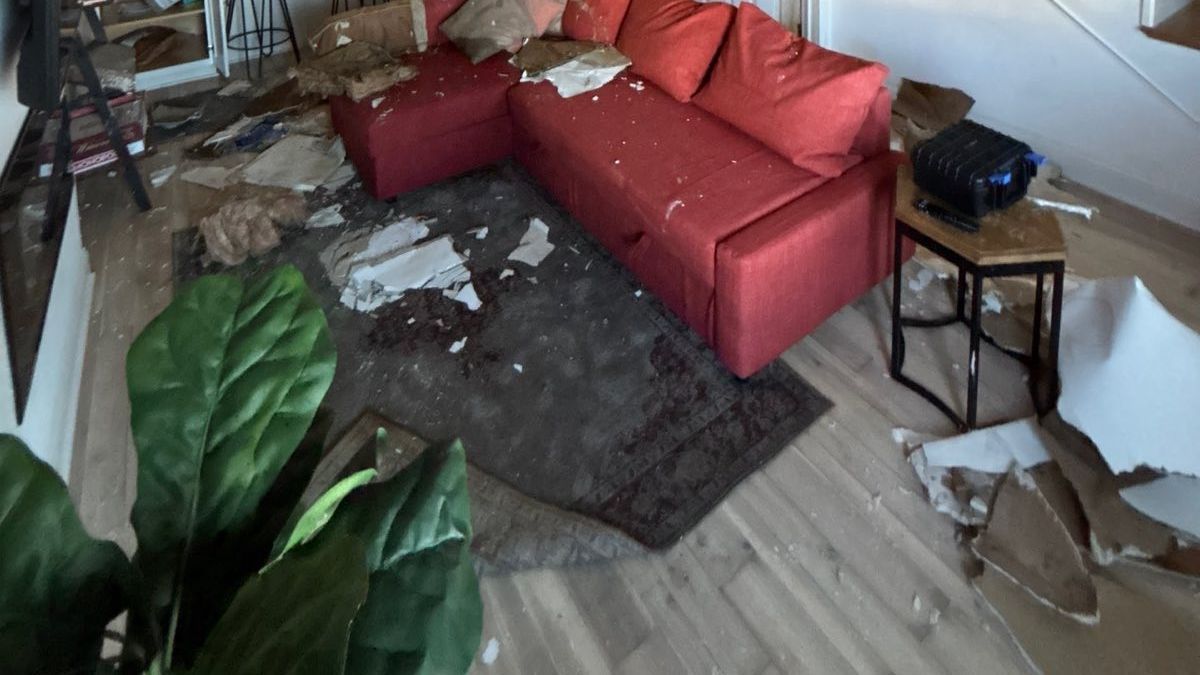
Class 1 affects a limited area with materials that release moisture easily, so drying is faster and equipment needs are modest. Class 2 involves a larger wetted area, with water wicking up walls. Class 3 means the greatest evaporation load — often water from overhead saturating ceilings, walls, insulation, and flooring throughout the space. Class 4 is the specialty case: water trapped in low-permeance materials that need extended drying time, specialty equipment, or both. The higher the class, the more air movers, dehumidifiers, and days of monitored drying are required, and equipment-days are a real line item in any honest estimate.
DC's older housing stock raises the stakes here. Plaster-and-lath walls, original hardwood, and brick foundations hold moisture longer than modern drywall, which can push a loss into a higher class and extend the structural dry-out.
Why do DC row houses, condos, and English basements cost differently?
DC row houses, condos, and English basements cost differently to restore because their construction, shared walls, and below-grade exposure change how water spreads and how hard it is to reach. The same volume of water behaves very differently depending on the building type.
In a row house, water travels along shared party walls and down through floor cavities, often affecting more structure than the visible wet spot suggests. In a condo, a leak can cross unit boundaries, which complicates both the scope of work and the insurance picture between your policy and the building's master policy. English basements — a defining feature of DC housing — sit below grade, which means they collect water, dry slowly, and are prime candidates for Category 3 losses when the city's sewer system backs up.
Accessibility also matters. Tight stairwells, finished basements, and built-in cabinetry common in older DC homes can require more careful material removal and reconstruction, all of which factors into the on-site estimate. Our team documents these conditions with CompanyCam photos so the scope reflects the actual building you live in, not a generic template. You can see the neighborhoods we serve across Washington, D.C. and Southern Maryland on our locations page.
How does the drying process affect the final bill?
The drying process affects the final bill because the work continues until moisture meters confirm the structure has returned to its drying goal, and the amount of equipment and monitoring that takes is a direct cost. We do not guess at a drying timeline or bill a flat 'dry-out fee' — the work runs until the readings are right, measured and logged daily.
Structural drying relies on psychrometry: controlling temperature, humidity, and airflow so that moisture evaporates from wet materials and is captured by dehumidifiers. Each day, technicians take moisture readings and record them in daily moisture logs, comparing wet materials against dry-standard readings from unaffected areas of the same building. The number of air movers and dehumidifiers deployed, and the number of days they run, are tied to the class and size of the loss. A deeply saturated Class 4 loss in a brick-walled basement simply takes more equipment-days than a Class 1 kitchen spill.
This is also why early action saves money. The sooner drying begins, the less material crosses the threshold from 'can be dried' to 'must be removed,' and material removal plus reconstruction is almost always more expensive than drying in place. It also keeps you ahead of mold, which can establish itself on wet building materials within a day or two. Our water damage restoration service is structured around getting equipment in fast for exactly that reason.
Does homeowners insurance cover water damage restoration in DC?
Homeowners insurance in DC often covers water damage restoration when the loss is sudden and accidental — a burst pipe, a failed water heater, or an overflowing appliance — which can offset a large share of the cost and leave you responsible mainly for your deductible. Gradual damage from long-term leaks or deferred maintenance is commonly excluded, and standard policies do not cover external flooding, which requires separate flood insurance. Sewer backup coverage is also typically a separate endorsement rather than a standard inclusion, which matters in a city with a combined sewer system.
It is important to understand our role in that process. Restoration Doctor of Washington DC is hired by you, the property owner, under a written agreement, and we invoice you directly. We provide the documentation that supports a claim — the Xactimate scope, CompanyCam photo records, and daily moisture logs — but we do not interpret your policy, negotiate with your insurer, or represent you in the claim. You or your adjuster use our documentation to process the claim, and thorough documentation is what helps a claim move smoothly.
Because every policy is different, read yours or speak directly with your carrier about what is covered and what your deductible is. Our FAQ page answers more questions about how restoration work and insurance documentation fit together.
- Often covered: sudden pipe bursts, water heater failures, appliance overflows, and accidental supply line breaks
- Often excluded: gradual leaks, long-term seepage, and lack-of-maintenance damage
- Not covered by standard policies: external flooding (needs separate flood insurance) and, in many cases, sewer backup (often a separate endorsement)
- Your main out-of-pocket cost is typically your deductible when a claim is approved
- We invoice the homeowner directly and provide documentation you can submit to your insurer
How can you get an accurate water damage cost estimate?
The only way to get an accurate water damage cost estimate is an on-site inspection, because the price is built from measured facts — category, class, affected square footage, migration, and material condition — that cannot be assessed over the phone. A written scope follows the inspection, not a verbal ballpark.
During the inspection, technicians identify the water source and category, map how far moisture has migrated using meters and thermal imaging, and determine what can be dried versus what must be removed. That assessment becomes a line-by-line Xactimate scope, supported by photo documentation, so you can see exactly what you are paying for and, if you are filing a claim, hand that package to your insurer. Restoration Doctor of Washington DC is licensed in the District under DC DLCP #410524000721.
If you are dealing with active water right now, the priority is stopping the source and starting mitigation before the loss grows and the cost climbs. Reach out through our contact page or call (202) 922-1444 for 24/7 emergency response anywhere in Washington, D.C. and Southern Maryland.