Does Bleach Kill Mold on Drywall? The Honest Answer
BY RESTORATION DOCTOR OF WASHINGTON DC · WASHINGTON DC & SOUTHERN MARYLAND

No — bleach does not reliably kill mold on drywall. Drywall is porous, so mold roots (hyphae) grow beneath the paper surface where bleach can't reach, and the chlorine evaporates while the water it leaves behind can actually fuel regrowth. The only permanent fix is physically removing the contaminated material, correcting the moisture source, and drying the structure to verified standards under ANSI/IICRC S520 protocols.
Call (202) 922-1444Does bleach actually kill mold on drywall?
No. Bleach does not reliably kill mold on drywall, and this is one of the most common and costly misconceptions we correct in D.C. homes. The answer surprises people because bleach genuinely disinfects hard, non-porous surfaces like glass, tile, and sealed countertops — but drywall is porous, and that changes everything.
Household chlorine bleach is mostly water — the sodium hypochlorite that does the disinfecting typically makes up less than ten percent of the bottle. When you wipe bleach across moldy drywall, the hypochlorite stays on the surface and quickly loses potency, while the water content soaks into the porous gypsum and paper backing. In other words, you kill the surface bloom you can see, but you drive moisture straight to the mold's root system underneath — the exact conditions mold needs to thrive.
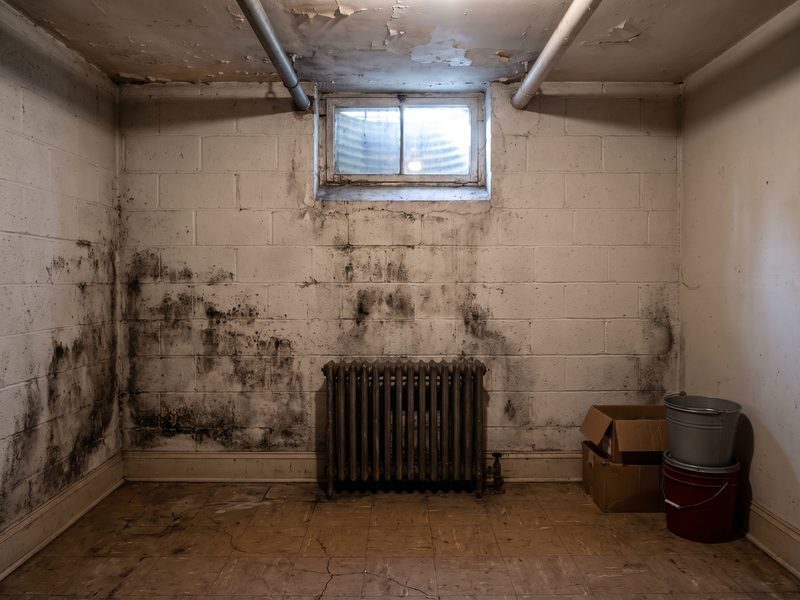
This is why so many homeowners tell us the black or green staining came back within weeks of a bleach scrub-down. The visible colony returned because it was never actually removed. It was cosmetically bleached, not remediated. Understanding that difference is the foundation of proper mold remediation.

Why does bleach fail on porous surfaces like drywall?
Bleach fails on drywall because mold is not just a surface stain — it is a living organism with a root structure that penetrates porous material. The hypochlorite in bleach cannot travel into that porous matrix, but the water in bleach can, and moisture is what keeps mold alive.
Drywall (gypsum board) is made of a soft gypsum core wrapped in paper. Both layers are highly absorbent, and the paper facing is rich in cellulose — essentially food for mold. When mold takes hold, it sends microscopic filaments called hyphae down into the paper and gypsum. What you see on the surface is only part of the organism; much of the colony lives inside the board where no topical spray can reach it.
There is also a chemistry problem. Sodium hypochlorite is an unstable compound that degrades over time in the bottle and dissipates even faster once applied to an open surface. Much of the active ingredient is gone before it could ever penetrate deep enough to matter — which is exactly why bleach performs so differently on a sealed tile surface than it does on a sheet of drywall.
- Drywall is porous — the active chlorine compound stays on top while water soaks in.
- Mold roots (hyphae) grow inside the gypsum and paper, out of bleach's reach.
- The cellulose paper facing is literally a food source for mold.
- The active ingredient dissipates quickly, leaving behind moisture that encourages regrowth.
- Bleaching only removes color — not the living organism, its roots, or its spores.
Can bleach make a drywall mold problem worse?
Yes, bleach can make a drywall mold problem worse in several ways. Because bleach is mostly water, applying it to porous drywall introduces new moisture into a material that is already the wrong kind of wet — and that added moisture can accelerate regrowth deeper in the board.
Bleaching also creates a false sense of resolution. Once the stain lightens or disappears, homeowners assume the problem is solved and stop investigating. Meanwhile the colony continues expanding behind the paint and inside the wall cavity, often spreading to insulation, framing, and adjacent rooms before anyone notices again. By the time the stain reappears, the remediation scope — and the cost — has usually grown.
There are health considerations too. Disturbing a mold colony — including scrubbing it — releases spores and microbial fragments into the air. Doing this without containment or proper personal protective equipment can spread contamination throughout a row house or condo and expose the household to more mold, not less. Chlorine fumes in an enclosed English basement or small bathroom add a respiratory irritant on top of the mold exposure, and mixing bleach with ammonia-based cleaners produces genuinely dangerous gases.

What does the IICRC actually recommend for mold on drywall?
The IICRC — through the ANSI/IICRC S520 Standard for Professional Mold Remediation — does not recommend spraying, fogging, painting over, or 'killing' mold as a primary strategy. The guiding principle of S520 is physical removal: mold-contaminated porous materials should be removed from the structure, and the underlying moisture problem must be identified and corrected so the condition cannot recur.
S520 makes an important distinction that most homeowners never hear. Whether mold is dead or alive, it can still cause health effects — dead spores and fungal fragments remain allergenic and can still trigger reactions in sensitive individuals. That is precisely why 'killing' mold with a biocide like bleach misses the point. The goal is not a dead colony sitting inside your wall; the goal is no colony at all, which only physical removal achieves.
In practice, this means porous, heavily contaminated drywall gets cut out and disposed of, not treated in place. Semi-porous and non-porous surfaces such as framing lumber may be cleaned, abraded where necessary, and HEPA-vacuumed, and the entire area is dried to a verified drying goal so mold cannot return. This is the science-based approach our team follows on every job.
How do professionals properly remove mold from drywall?
Professionals remove mold from drywall by containing the area, physically removing the affected material, cleaning adjacent surfaces, and drying the structure to verified standards. It is a controlled process designed to protect the rest of your home from cross-contamination — something a spray bottle of bleach simply cannot do.
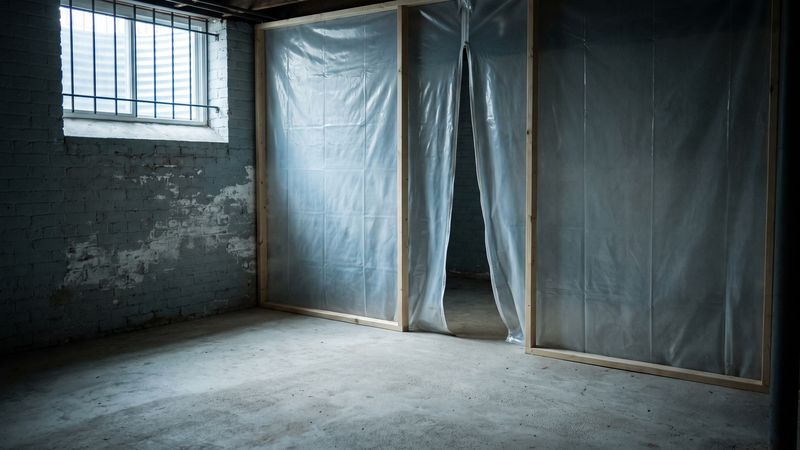
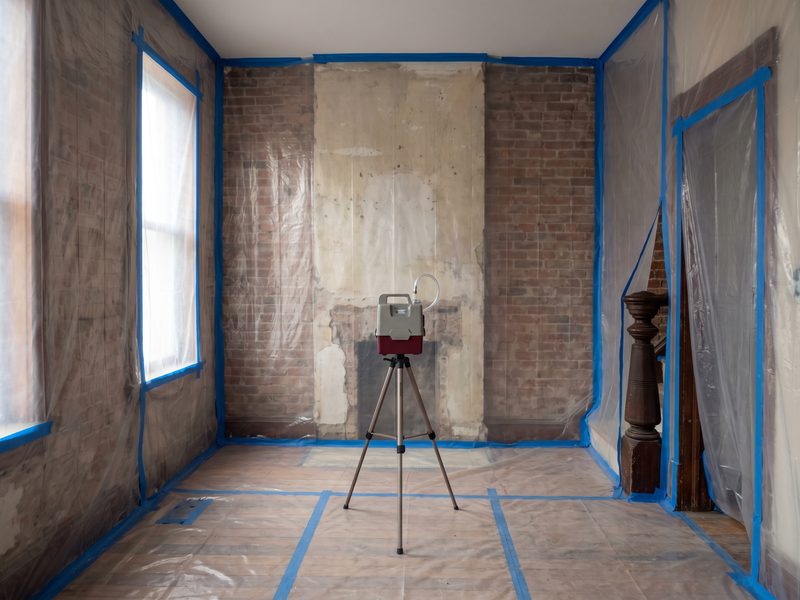
At Restoration Doctor, we follow IICRC S520 protocols step by step. We assess the moisture source first, because remediation that ignores the water source is guaranteed to fail. Then we isolate the work area with containment barriers and negative air pressure so spores don't migrate into clean rooms. Contaminated drywall is cut out along controlled lines, bagged, and removed. Remaining framing and wall cavities are HEPA-vacuumed and cleaned, air scrubbers filter the environment, and we verify moisture content with meters rather than guesswork.
A typical structural dry-out runs about three to five days depending on the materials involved and how long they were wet, and we monitor it daily against a documented drying goal. Only once the assembly is confirmed dry and clean is it safe to rebuild — and because we photograph and log every step, you have a complete record of exactly what was done behind your walls.
| Factor | Bleach (DIY) | IICRC S520 Remediation |
|---|---|---|
| Reaches mold roots in porous drywall | No | Yes — material is removed |
| Addresses moisture source | No | Yes — required first step |
| Prevents spore spread | No — can spread spores | Yes — containment & negative air |
| Handles dead mold allergens | No | Yes — HEPA removal |
| Verifies the area is truly dry | No | Yes — daily moisture logs |
| Long-term result | Regrowth likely | Permanent removal |

When is drywall mold small enough to handle yourself?
Small, surface-level mold on a hard, non-porous surface — like a patch of bathroom tile grout smaller than about a square foot — can often be cleaned safely by a homeowner. But mold that has grown into drywall is a different situation, because the material itself is contaminated and usually needs to be removed rather than wiped.
The EPA's mold guidance uses roughly a 10-square-foot threshold as a rule of thumb: contamination larger than about a 3-foot-by-3-foot patch generally warrants professional remediation. The IICRC S520 standard takes a condition-based approach rather than a strict square-footage rule, but the practical takeaway is the same — visible growth of any meaningful size on porous material calls for a professional assessment. And size is not the only trigger. Any mold caused by a Category 2 or Category 3 water source, sewage backup, or long-standing leak should be handled professionally regardless of how large the visible stain looks, because the hidden contamination is almost always larger than the surface suggests.
When in doubt, treat visible drywall mold as a signal that something behind the wall is wet. In D.C. row houses and English basements, that usually means a plumbing leak, foundation seepage, or a slow roof or party-wall intrusion — and those need to be diagnosed, not just wiped away.
- Safe to DIY: small surface mold (under ~1 sq ft) on non-porous surfaces you can fully clean.
- Call a pro: mold on or behind drywall, insulation, or framing.
- Call a pro: any area larger than about 10 square feet (~3x3 ft).
- Call a pro: mold from sewage, flooding, or Category 2/3 water.
- Call a pro: recurring mold that keeps coming back after cleaning.
What causes mold to keep coming back on D.C. drywall?
Mold keeps coming back on drywall for one core reason: the underlying moisture source was never fixed. You can remove every spore in the room, but if the wall assembly stays damp, a new colony can begin establishing within 24 to 48 hours. Moisture control is the single most important factor in permanent mold prevention.
Washington, D.C.'s older housing stock and humid summers create predictable trouble spots. English basements and below-grade condos deal with foundation seepage and high relative humidity. Row houses share party walls where a neighbor's leak becomes your problem. Historic homes often have plumbing runs buried inside wall assemblies that hide slow drips for months. In every case, the visible mold is a symptom of trapped water, not the disease itself.
This is why our remediation always begins with finding and stopping the water. If mold followed a burst pipe, appliance failure, or storm intrusion, the water damage and the mold are the same problem and need to be handled together. Fixing the moisture source and drying the structure to a verified standard is what breaks the cycle for good.

Should you call a professional for moldy drywall in Washington, D.C.?
Yes — if mold has established on or behind drywall, you should have it professionally assessed rather than relying on bleach or paint. The material is porous, the contamination is usually larger than it appears, and improper handling can spread spores through your home. Professional remediation removes the problem at the source and documents the work from start to finish.
Restoration Doctor of Washington DC is a licensed, insured restoration company (DC DLCP #410524000721) serving Washington, D.C. and Southern Maryland with 24/7 emergency response. We follow the ANSI/IICRC S520 mold standard and the S500 water damage standard, and we work for you — not your insurance company. We bill you directly and hand you a carrier-ready claim file with a full Xactimate scope, CompanyCam photo documentation, and daily moisture logs, so any claim you file is built on evidence.
If you're seeing recurring stains, a musty smell, or mold spreading across a wall, don't reach for the bleach — reach out for an assessment. Call us anytime at (888) 293-5663 or request help through our contact page, and we'll help you understand exactly what's happening behind your walls.