
Washington DC Rowhouse Water Loss: A Documented Drying Case
Restoration Doctor of Washington DC documented a water loss in a Washington, DC rowhouse in 2026 from the first visit: ceilings opened to the joists, drywall removed, dehumidifiers and air movers set, and dated readings. Equipment forms list up to 35 fans and 11 dehumidifiers on site. The file records no dry standard or outcome.
Updated October 2026
At a glance
- Phone
- (202) 922-1444
- Hours
- 24 hours a day, 7 days a week
- Service area
- Washington, DC
- Services
- Water damage, sewage cleanup, mold remediation, fire damage, storm damage, reconstruction, extraction & drying, hardwood floor drying, roof tarping, smoke & soot cleaning, contents pack-out
- DC license
- DC Basic Business License #410524000721Held by VA Water Damage LLC dba Restoration Doctor
- Maryland license
- MD Home Improvement (MHIC) #167541Held by VA Water Damage LLC dba Restoration Doctor
- Certification
- IICRC-certified, S500 / S520-aligned
What this case is
This page documents one Washington, DC rowhouse water loss from the project file Restoration Doctor keeps in CompanyCam: 648 photographs beginning in August 2026, an equipment-count form from each visit, and photographed meter displays. The exterior photographs in the file show the house sharing walls with a neighbor on each side in a continuous row, which is why we call it a rowhouse.
Everything below comes from that file. Where the file does not show something, this page says so instead of filling the gap. We do not publish the address, the street, the customer or any exterior photograph.
What the photographs show
The photographs show ceilings opened to the joists with ductwork and wiring exposed, drywall removed from walls, plank subfloor exposed in places, a stair standing open beside an opened wall with insulation, and dehumidifiers and air movers set in the gutted rooms. Many frames are thermal-camera scans of walls, floors and ceilings, and a moisture meter appears in use on drywall, framing, insulation and plank floor.
The photographs do not show who opened which surface, the source of the water, the cause of the loss or the order in which rooms were worked, so none of those is stated here.
Why a rowhouse changes the plan
A rowhouse shares walls with the houses on either side. Moisture can travel along a shared party wall into the attached home, and a narrow plan broken up by doorways and a stair core does not dry as one open space. The equipment plan follows the water through those paths, not only the room where the loss started. The method is described on the extraction and structural drying page, and the wood floors on the hardwood floor drying page.
Every photograph in this file is of the one house. The file does not show the neighboring houses or whether either was affected.
Equipment on site
An equipment-count form was photographed at each of eight visits. At the visits with the most equipment, the forms list 35 fans, 11 dehumidifiers, 3 HEPA units and 3 generators on site. The forms from the last visits list fewer machines on site.
We do not publish a removal total or a number of equipment days, because the forms record counts on site and not days. We do not publish the forms themselves, because they carry the customer's name and address.
Dated readings from the file
Three single measurements, each read from a photographed meter display. They are spot checks in different places with the meter moved between them, so they are not a drying curve.
| Date and time | Where | What the display shows |
|---|---|---|
| August 31, 2026, 1:40 PM | Where: Room air | What the display shows: 55.5% relative humidity at 92.2 F (thermo-hygrometer, humidity mode) |
| September 1, 2026, 2:00 PM | Where: Painted drywall wall, meter pressed flat against it | What the display shows: 93.1 on the meter's percent scale (internal pins) |
| September 10, 2026, 10:12 AM | Where: Plank floor, meter lying on it | What the display shows: 76.6 on the meter's percent scale (internal pins) |
The file records no dry standard, no reading from an unaffected area to compare against, no final reading and no duration, so this page draws no line between these readings and claims no drying result. Many other displays in the file read 99.9, the top of the meter's scale, and are not cited.
What the file does not show
- The source of the water or the cause of the loss.
- How long the drying took, or when it ended.
- A dry standard, an unaffected-area reading or a final reading.
- What was rebuilt, or how the job ended.
A call for a Washington, DC rowhouse loss is answered around the clock. See 24/7 emergency restoration in Washington, DC.
Documented Washington, DC project
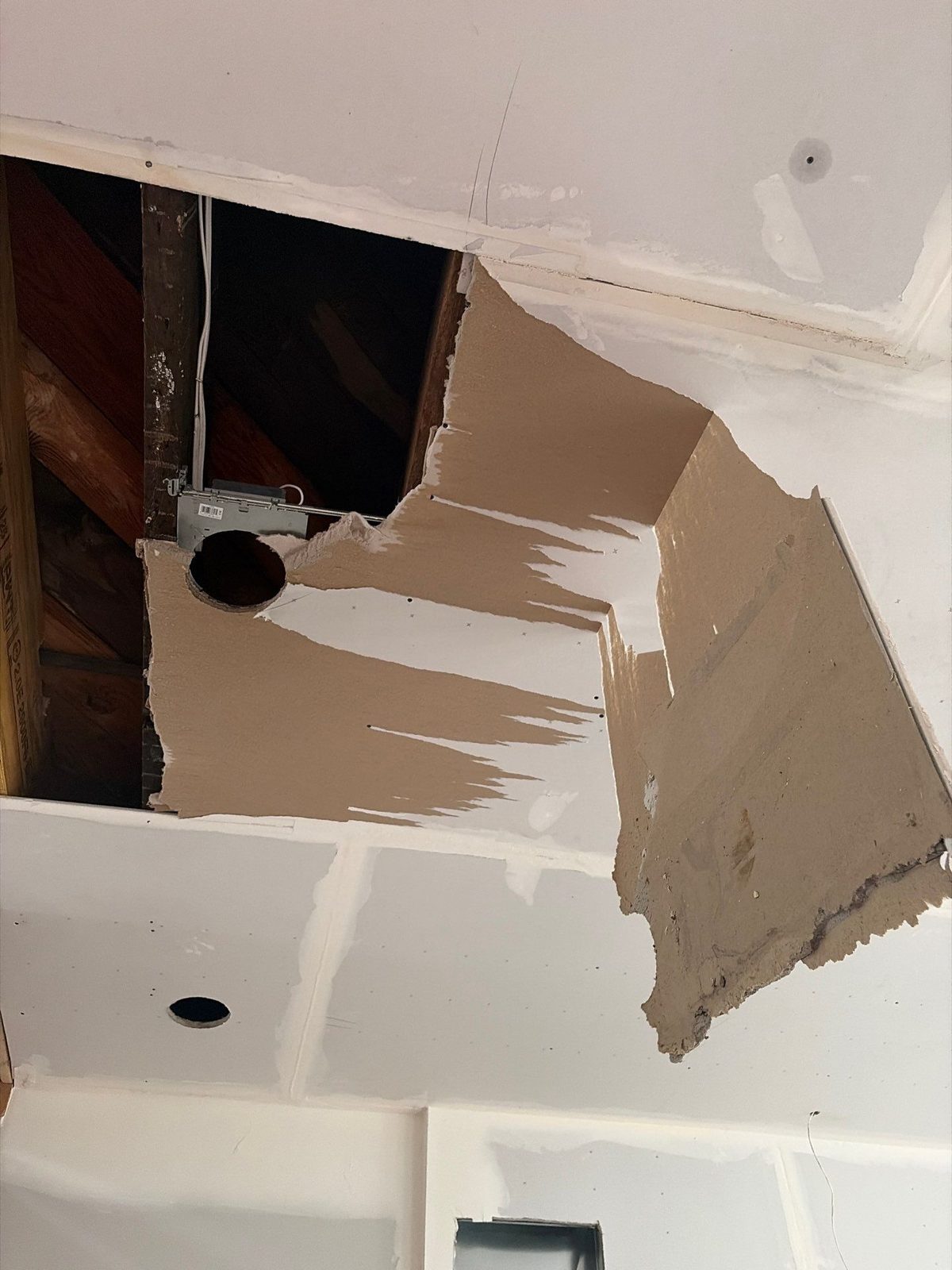
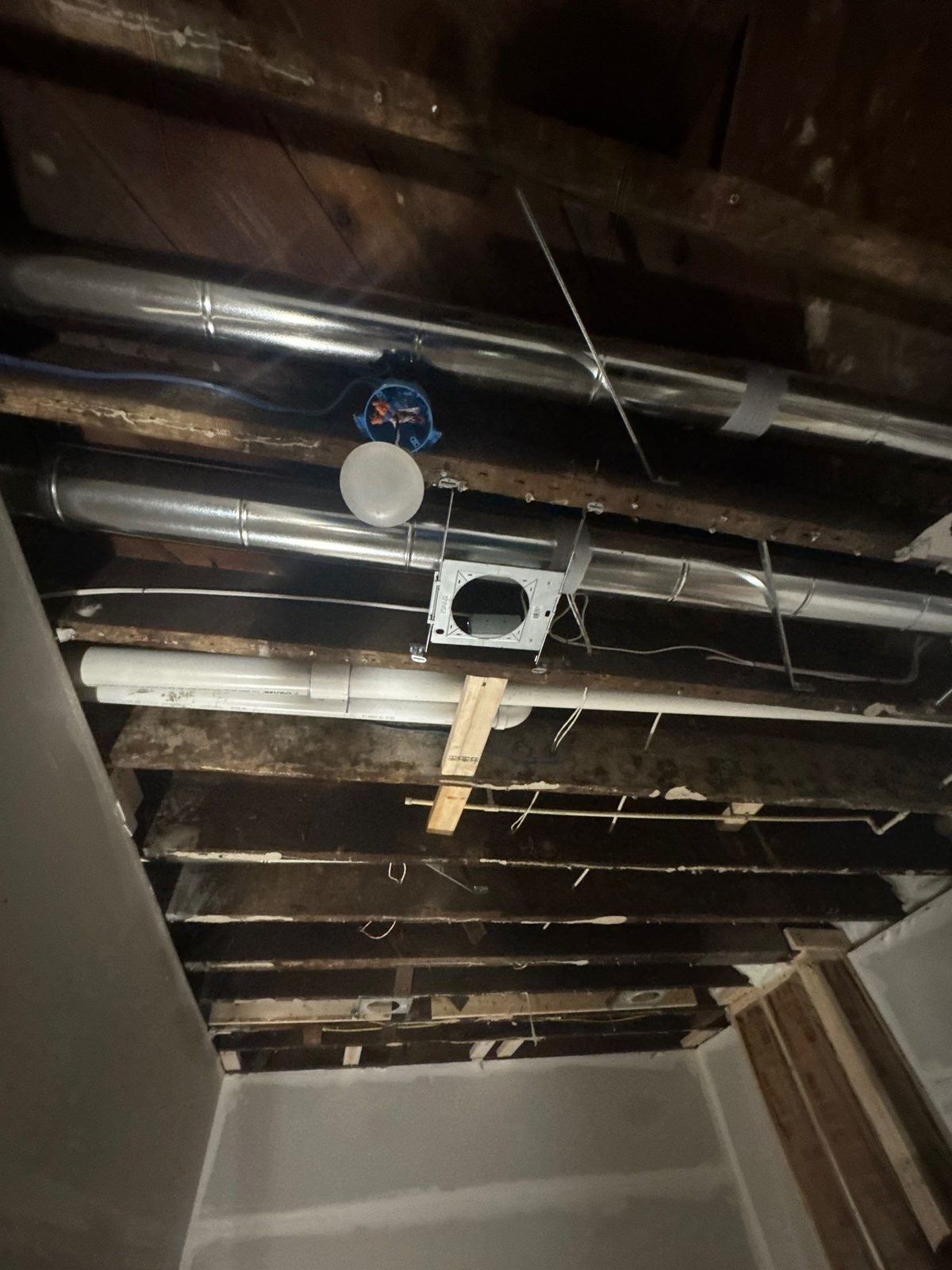
Rowhouse Ceilings Opened to the Joists
Rowhouse water loss in Washington, DC, from August 2026. Ceilings opened to the joists, from a 648-photograph file.
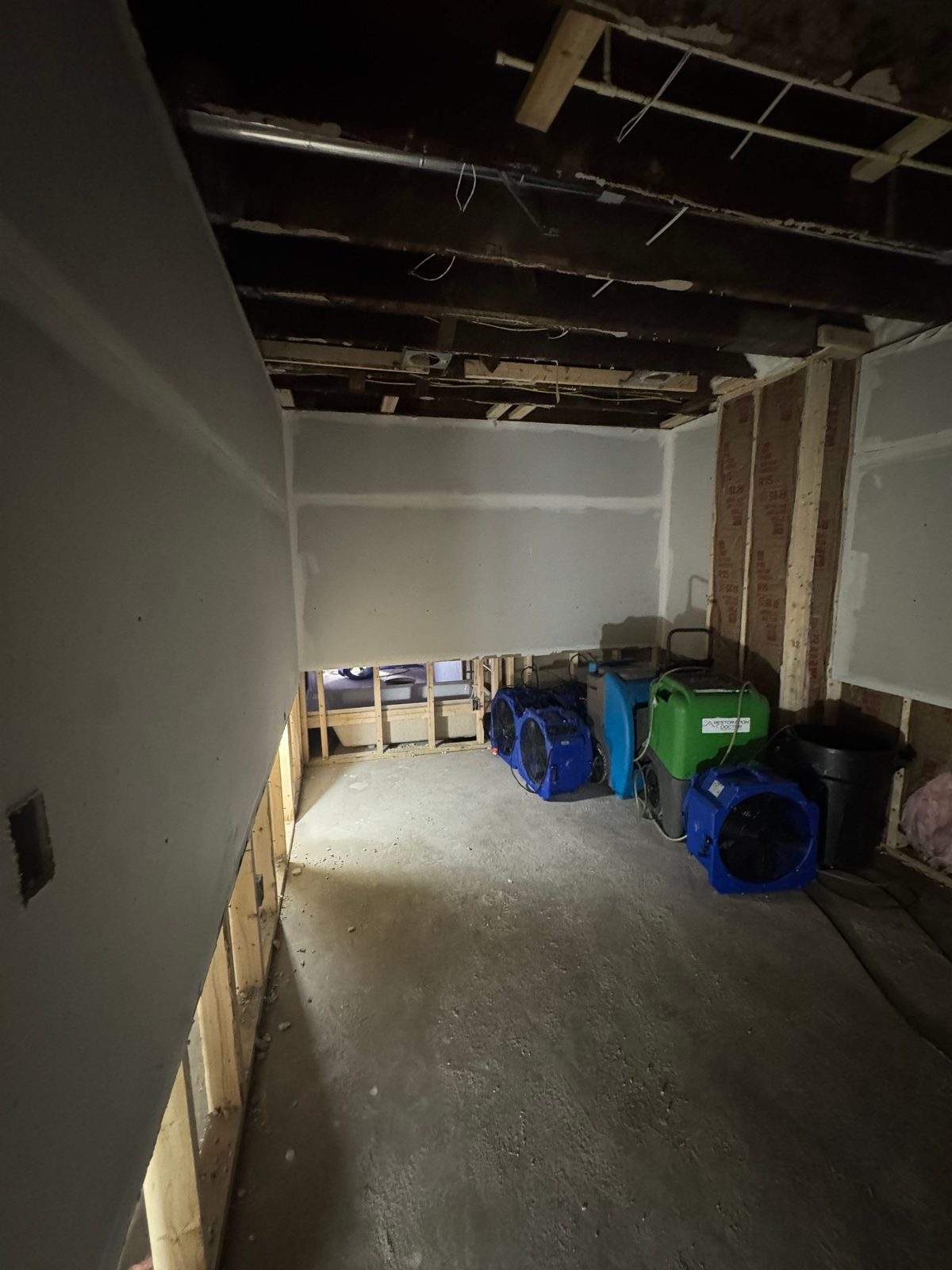
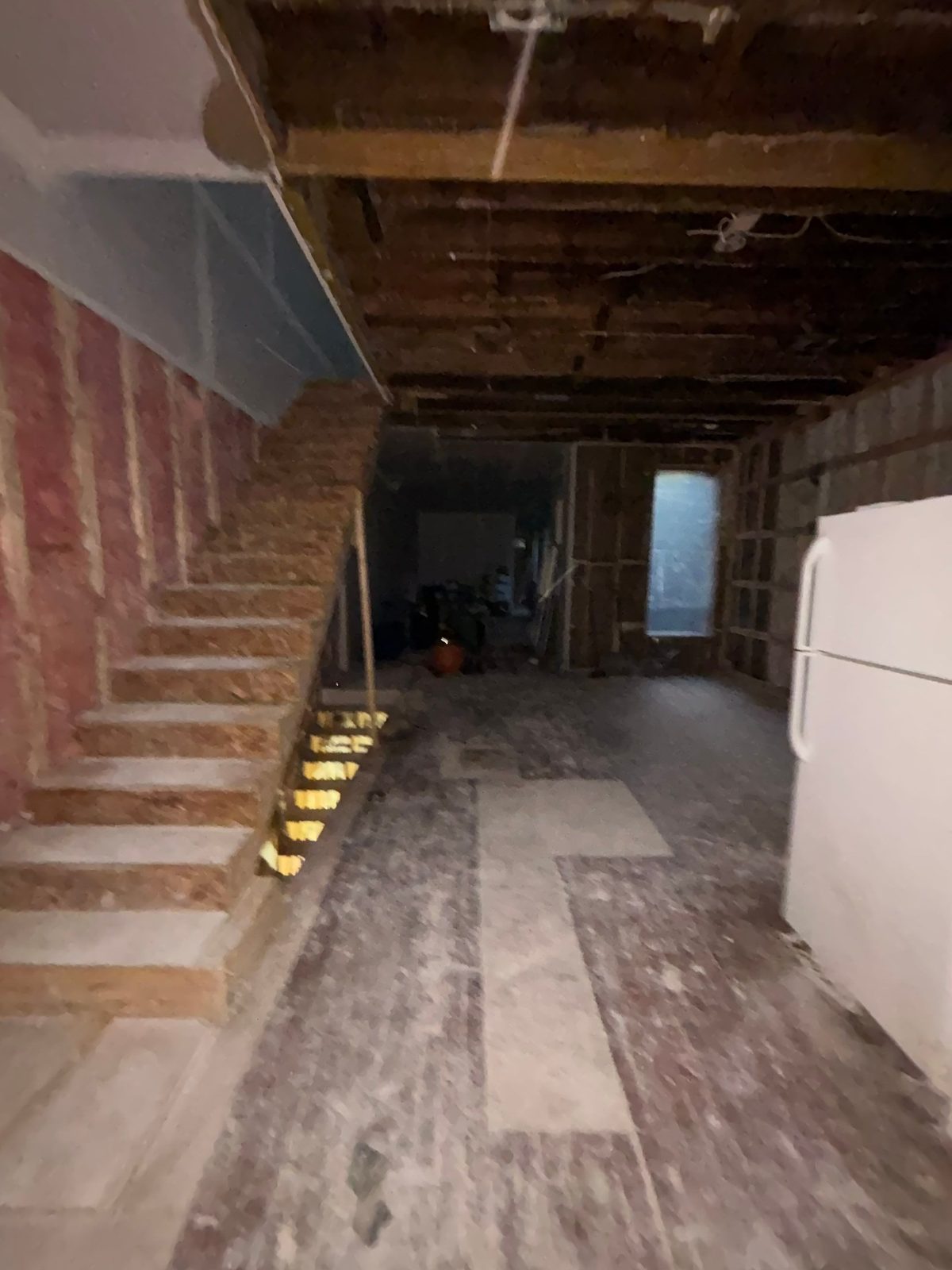
Rowhouse Walls Opened and Equipment Set
Rowhouse water loss in Washington, DC, September 2026. Drywall removed, dehumidifiers and air movers set, and a stair beside an opened wall, from a 648-photograph file.
Frequently asked questions
- What does this rowhouse water loss file show?
- Ceilings opened to the joists, drywall removed, plank subfloor exposed, a stair open beside an opened wall, dehumidifiers and air movers in the gutted rooms, thermal scans and meter readings, from 648 photographs. It does not show the source of the water, a duration, a dry standard or how the job ended.
- How much equipment was on site?
- At the visits with the most equipment, the equipment-count forms list 35 fans, 11 dehumidifiers, 3 HEPA units and 3 generators on site. The forms from the last visits list fewer. We do not publish a removal total or a number of equipment days.
- Were the readings in this file dry?
- The file records no dry standard, so we do not call a reading dry or wet. The three readings on this page are spot checks in different places, not a trend, and many other displays read 99.9, the top of the meter's scale, and are not cited.
- How long did the drying take?
- The file records no drying duration and no end reading, so we state none. Drying time depends on the building and the materials, and the dated readings and the equipment record are what show progress on a job.
- Why were ceilings and walls opened?
- Material that cannot be dried is removed, and cavities that hold water are opened so they can be dried. The crew tells you which material is coming out and why before it cuts. This file shows the openings but not the reason for each one.
- Do you publish the address or the customer?
- No. This page shows no address, street, customer name, exterior photograph or form. The equipment forms carry the customer's name and address, so only the counts on them appear here.
- Who do I call for a water loss in a Washington, DC rowhouse?
- Call (202) 922-1444. Restoration Doctor of Washington DC dispatches crews 24 hours a day, 7 days a week, and a crew can be on-site in as little as 60 minutes from your call anywhere in Washington, DC. Response times vary based on crew availability and demand.
Talk to a person now
Call (202) 922-1444 at any hour. If water is still running, call rather than type: the first thing dispatch will do is help you find the shutoff. If it can wait, send the form and we will call you back.
Call (202) 922-1444