Water Heater Burst in Your DC Home: First Steps and Cleanup

BYSteve Jafari, General ManagerWASHINGTON DC & SOUTHERN MARYLAND

When a water heater bursts in a DC home, immediately shut off the cold-water supply valve on top of the tank (or the main), cut power or gas to the unit, and move belongings off the wet floor. Then call a licensed restoration company to extract water and begin structural drying — a typical dry-out takes 3 to 5 days when monitored daily to a verified dry standard. Mold can begin developing within 24 to 48 hours, so speed matters. Coverage depends on your policy and your insurer's decision.
Call (202) 922-1444What should I do first when a water heater bursts in my DC home?
Shut off the water and power immediately, then stop the water from spreading. The two fastest actions that limit damage are closing the cold-water supply valve feeding the tank and cutting the energy source — electricity at the breaker for an electric unit, or the gas control valve for a gas unit. Every minute the tank keeps refilling and draining, more water reaches your subfloor, framing, and finished basement.
In a D.C. row house or townhome, water heaters usually sit in an English basement, a utility closet, or a mechanical room on the lowest level. That means gravity is working against you — water heads straight for the finished basement, the slab, and any stored belongings. Act in this order: stop the source, kill the power, protect people and pets from standing water near electrical equipment, and move what you can off the floor.
Once the immediate hazard is controlled, call for professional extraction. Standing water that sits longer than 24 to 48 hours migrates into drywall, baseboards, and subflooring and begins to support microbial growth. Restoration Doctor answers 24/7 at (202) 922-1444, and the sooner extraction starts, the less demolition and drywall removal your home is likely to need.
- Close the cold-water shutoff valve on top of the tank — turn a lever handle a quarter-turn until it sits perpendicular to the pipe, or turn a round handle clockwise until it stops. If it won't budge, shut off your home's main water valve.
- Turn off power: flip the water heater breaker for electric units, or set the gas control valve to "off" for gas units.
- Keep away from standing water near outlets, the electrical panel, or the unit until power is confirmed off.
- Move boxes, furniture, and valuables off the wet floor and onto dry, elevated surfaces.
- Call a licensed restoration company for extraction before water wicks into walls and subfloor.

How do I shut off the water and power to a burst water heater?
Close the cold-water supply valve located on top of the water heater — this is the dedicated shutoff for that tank. It's usually a quarter-turn lever or a round handle on the incoming (cold) line entering the top of the unit. If that valve is stuck, corroded, or you can't reach it safely through the flooding, go to your home's main water shutoff and close it there instead.
In many D.C. properties the main shutoff is on the lowest level near where the water line enters the building, often close to the water meter. Row houses and older condos sometimes have the main valve in a basement utility area or a shared mechanical space, so it pays to locate it before an emergency ever happens. Knowing exactly where it is can save you dozens of gallons of water damage.
Cutting the energy source is just as important. For an electric water heater, go to your electrical panel and switch off the double-pole breaker labeled for the water heater — never touch a wet unit or reach through standing water to do this. For a gas water heater, turn the gas control knob on the unit to the "off" position; if you ever smell gas, leave the home and call your utility. Once water and power are off, the tank can drain safely and you can focus on cleanup and drying.
| Task | Electric unit | Gas unit |
|---|---|---|
| Stop incoming water | Close cold-water valve on top of tank, or main shutoff | Close cold-water valve on top of tank, or main shutoff |
| Cut energy source | Flip the water heater breaker at the panel | Turn gas control knob to "off"; shut supply valve on gas line |
| Safety warning | Never touch a wet unit or stand in water at the panel | If you smell gas, evacuate and call the utility — don't touch the unit |
| Drain relief | Open a hot-water faucet upstairs to relieve pressure | Open a hot-water faucet upstairs to relieve pressure |
Why do water heaters burst in DC row houses and English basements?
Most water heaters burst because of internal corrosion, sediment buildup, and age — typically after 8 to 12 years of service. Over time the steel tank rusts from the inside, the sacrificial anode rod wears out, and mineral sediment collects at the bottom, causing hot spots that weaken the tank wall. Eventually the tank fails and releases its full 40 to 80 gallon capacity, plus whatever keeps flowing from the supply line until it's shut off.
D.C.'s older housing stock adds specific risk factors. Many row houses, brownstones, and converted condos still have aging tanks tucked into English basements and cramped utility closets where corrosion goes unnoticed for years. Mineral content in municipal water accelerates sediment buildup, and a failed or missing thermal expansion tank lets pressure spikes stress both the tank and the temperature-and-pressure (T&P) relief valve.
Because these tanks sit on or near the lowest finished floor, a failure that would be a nuisance on an upper level becomes a basement flood. English basement rentals and garden-level units are especially vulnerable because the mechanical room and living space often share the same slab. Regular flushing, testing the T&P valve, and replacing a tank near the end of its service life are the best ways to prevent a sudden burst.
- Age: tanks over 8 to 12 years old are far more likely to fail suddenly.
- Sediment: mineral buildup creates hot spots and accelerates internal corrosion.
- Worn anode rod: once it's depleted, the steel tank corrodes quickly.
- Pressure issues: a missing expansion tank or faulty T&P relief valve stresses the tank.
- Location: basement and utility-closet placement sends water straight into finished space.

How much water damage can a burst water heater cause?
A burst water heater can release 40 to 80 gallons almost instantly, and the supply line keeps feeding water until it's shut off — so real-world losses often exceed the tank's rated capacity. On a lower-level slab, that water spreads fast across the floor, wicks up into drywall and baseboards, saturates carpet and pad, and seeps under flooring and into subfloor cavities.
The category of water matters for how the cleanup is handled under the ANSI/IICRC S500 Standard for Professional Water Damage Restoration. Water from the supply side of a heater starts as Category 1 (clean water), but it degrades. Once it sits, contacts flooring materials, or picks up dust and contaminants from a basement floor, it can deteriorate to Category 2 within roughly 24 to 48 hours — and warm standing water in a finished, enclosed space is an ideal environment for microbial growth.
In a finished English basement, damage can reach drywall, insulation, trim, engineered or laminate flooring, cabinetry, and stored belongings. Warm water also raises humidity throughout the level, meaning materials that never touched the flood can still absorb moisture from the air. That's why professional drying isn't just about removing standing water — it's about returning the entire space to a documented dry standard so hidden moisture doesn't cause secondary damage.
How do you clean up and dry out after a water heater burst?
Professional cleanup follows a structured sequence: extract standing water, remove unsalvageable materials, then dry the structure to a verified moisture target using controlled airflow and dehumidification. Mopping up and running a household fan is not enough — water hides in wall cavities, under flooring, and inside the subfloor, and it will keep evaporating into your home until it's actively removed.
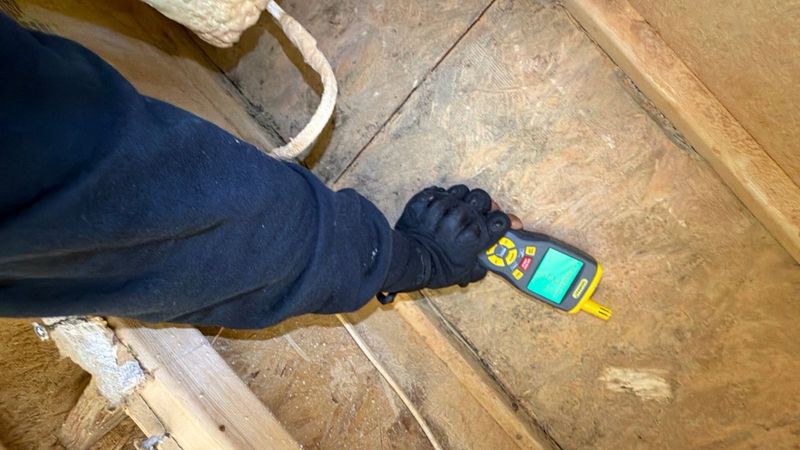
At Restoration Doctor, drying is grounded in psychrometry — the science of managing air temperature, relative humidity, and vapor pressure to pull moisture out of building materials. Technicians take moisture readings on both affected and unaffected materials, set a drying goal based on the dry (unaffected) baseline, and position air movers and commercial dehumidifiers to reach it. Progress is logged daily so drying is proven, not assumed. A typical structural dry-out runs 3 to 5 days, monitored to a verified dry standard.
Every step is documented as we go. We photograph conditions with CompanyCam, record daily moisture logs, and build an itemized Xactimate scope so nothing about the loss is left to guesswork. If materials like soaked drywall, wet insulation, or delaminated flooring can't be dried in place, we remove them under controlled conditions and note exactly why — documentation you may share with your insurer.
- Extraction: truck-mounted or portable units remove standing water fast.
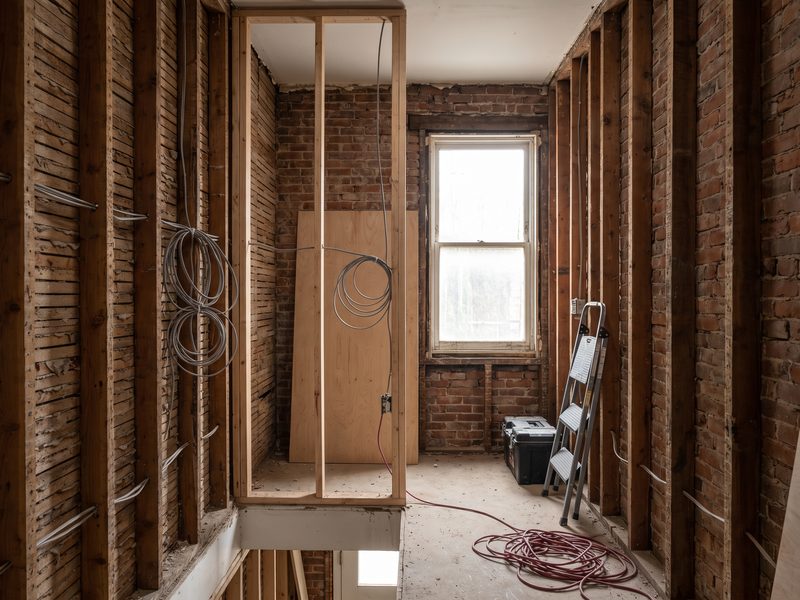
- Removal: unsalvageable carpet pad, wet insulation, and swollen drywall come out.
- Airflow: air movers are positioned to sweep moisture off wet surfaces.
- Dehumidification: commercial dehumidifiers pull moisture from the air so materials don't reabsorb it.
- Monitoring: daily moisture readings confirm materials reach the dry standard before equipment leaves.

Is a burst water heater covered by homeowners insurance in DC?
Coverage depends on your policy and your insurer's decision. Insurers typically cover the resulting water damage to your floors, walls, and belongings when the failure is abrupt rather than the result of long-term neglect. Coverage depends on your policy and your insurer's decision.
We invoice the property owner and provide project documentation — a detailed Xactimate scope, CompanyCam photo documentation, and daily moisture logs — to you and, at your request, your insurer. We do not interpret your policy, negotiate with your insurer, or represent you in your claim.
For condos and townhomes, the building's master policy and your personal policy are separate documents, especially where water travels between units. Coverage questions belong with your insurer, your agent, or a licensed public adjuster or attorney. Call us before you start tearing anything out.
How fast can mold grow after a water heater floods a basement?
Mold can begin developing within 24 to 48 hours of a water heater flood, especially in a warm, enclosed basement. Water heaters discharge hot water, which raises both surface temperatures and humidity — conditions that let mold colonize damp drywall, wood framing, carpet, and stored cardboard quickly if drying doesn't start right away.
The best mold prevention is speed and thorough drying. Removing standing water within hours and driving the space back to a verified dry standard denies mold the moisture it needs to grow. This is exactly why we monitor moisture daily rather than assuming a space is dry after a set number of days — a floor can feel dry to the touch while the subfloor or wall cavity behind it is still saturated.
If mold has already taken hold, remediation follows the ANSI/IICRC S520 Standard for Professional Mold Remediation: containment to prevent spore spread, controlled removal of affected materials, HEPA air filtration, and detailed cleaning of salvageable surfaces. If you suspect growth after a burst, don't paint or seal over it — that traps moisture and hides the problem. See our mold remediation services and have it assessed properly.

Who should I call for water heater burst cleanup in Washington, DC?
Call a water mitigation company that responds 24/7 and documents the loss — that's exactly what Restoration Doctor of Washington DC does. We serve Washington, D.C. and Southern Maryland, and our work follows the ANSI/IICRC S500 water damage standard, with S520 protocols when mold is involved. You can reach us any time at (202) 922-1444.
Restoration Doctor is a D.C.-licensed general contractor (DC DLCP #410524000721). Mailing address: 4315 50th St NW Suite 100 #7112, Washington, DC 20016. We combine emergency water extraction and structural drying with documentation you may share with your insurer — Xactimate scoping, CompanyCam photo evidence, and daily moisture logs, all assembled into project documentation. We are hired by the property owner under a written agreement.
When a water heater bursts, the clock determines how much of your basement you keep. The faster extraction and drying start, the less demolition, drywall replacement, and mold risk you face. If your tank has failed or is leaking, shut off the water and power, then call us — our emergency response team is standing by around the clock.