Cast-Iron Pipe Failure in Old DC Homes: Signs and Damage

BYSteve Jafari, General ManagerWASHINGTON DC & SOUTHERN MARYLAND

Cast iron pipe failure in DC is common in homes built before the 1970s, where waste stacks corrode from the inside out and leak sewage-laden Category 2 or 3 water behind walls and under floors. Warning signs include sewer odors, slow drains, staining, bubbling paint, and recurring backups. Because these leaks are hidden and biohazardous, they need fast professional drying and often mold remediation — not just a plumber's patch. Mold can begin growing within 24 to 48 hours of a leak, and a typical structural dry-out runs 3 to 5 days when handled to IICRC S500 standards.
Call (202) 922-1444What causes cast-iron pipe failure in old DC homes?
Cast-iron pipe failure in DC is caused by decades of internal corrosion. The waste stacks and drain lines in most D.C. homes built before the mid-1970s are cast iron, and that iron rusts from the inside out every time water, waste, and sewer gases pass through it. After 50 to 100 years, the pipe wall thins, scales, cracks, and eventually collapses — often long before there is any visible sign on the outside.
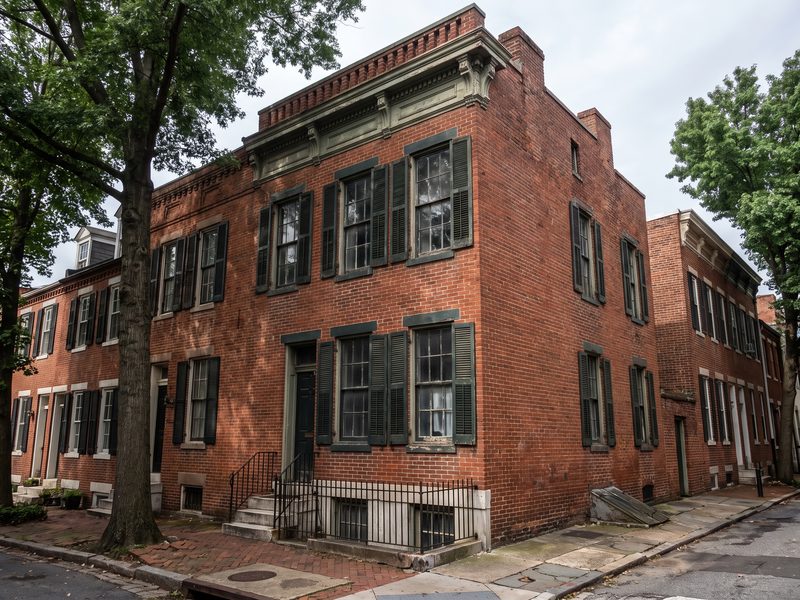
D.C.'s older housing stock makes this a citywide issue. Row houses in Capitol Hill, Petworth, Columbia Heights, Shaw, and Anacostia, along with pre-war condos and English-basement units, were plumbed with cast iron that is now well past its design life. Ground movement, aggressive soils, and the constant humidity of a below-grade level all speed the decay.
The failure is usually gradual, then sudden. A pinhole seep becomes a hairline crack, the crack becomes a channel, and one day the bottom of a horizontal drain run simply falls out. That is why so many homeowners discover the problem only after water is already staining a ceiling or pooling in a basement.
- Internal corrosion: rust and scale eat the pipe wall from the inside
- Age: most D.C. cast iron is 50–100+ years old and past its service life
- Below-grade humidity in English basements accelerates exterior rusting
- Soil movement and settling that crack brittle old joints
- Hydrogen-sulfide gas from waste, which corrodes the top of horizontal pipes

What are the warning signs of a failing cast-iron waste stack?
The clearest warning signs of a failing cast-iron waste stack are persistent sewer odors, slow or gurgling drains, and unexplained stains on ceilings and walls near plumbing. Because the pipe is hidden inside walls, floors, and chases, these secondary clues usually appear before you ever see the pipe itself.
Pay close attention to any symptom that keeps coming back after a plumber "fixes" it. Recurring backups, drains that snake clear and then clog again within weeks, and damp spots that dry and reappear all point to a structural pipe problem rather than a simple obstruction. In a D.C. row house, a musty smell in the first-floor half-bath or a stain bleeding through the English-basement ceiling is often the first honest signal that the main stack is compromised.
- Sewer or rotten-egg smell near a bathroom, kitchen, or basement
- Slow, gurgling, or repeatedly clogging drains on multiple fixtures
- Brown or yellow ceiling stains directly below a bathroom
- Bubbling, peeling, or blistering paint on walls near plumbing chases
- Warped, cupping, or spongy flooring around a toilet base
- Efflorescence, rust streaks, or damp patches on basement walls
- Increased pests (drain flies, roaches) drawn to a hidden leak
Why are cast-iron leaks so often Category 2 or 3 water?
Cast-iron leaks are almost always Category 2 or Category 3 water because the pipes carry waste, not clean supply water. Under the ANSI/IICRC S500 standard, Category 2 ("gray water") contains significant contamination and can cause illness if contacted or ingested, while Category 3 ("black water") is grossly contaminated with sewage, bacteria, and pathogens. A failed waste stack or drain line puts one or both of those into your walls, floors, and air.
This distinction matters enormously for how the damage must be handled. Clean-water leaks can sometimes be dried in place, but Category 2 and 3 losses require containment, controlled removal of porous materials, antimicrobial treatment, and disposal under biohazard protocols. Drywall, insulation, carpet, and pad that have absorbed contaminated water generally cannot be saved — they have to come out.
Time also degrades the category. Even a clean-water leak deteriorates to Category 2 or 3 as it sits and microorganisms multiply, which is why a slow hidden cast-iron seep discovered weeks later is treated as contaminated by default. Our crews follow S500 protocols and, where sewage is involved, full Category 3 biohazard procedures on every one of these jobs.
| Category | Source | Typical cast-iron scenario | Handling |
|---|---|---|---|
| Category 1 | Clean water | Rare — most cast iron is drain/waste, not supply | Dry in place if caught fast |
| Category 2 (gray) | Significant contamination | Failing kitchen or laundry drain line | Remove affected porous materials, disinfect |
| Category 3 (black) | Grossly contaminated / sewage | Corroded main waste stack or sewer lateral | Biohazard removal, containment, full remediation |

Where do cast-iron pipes typically fail in a DC row house?
Cast-iron pipes in a D.C. row house typically fail at the bottom of the vertical main stack, along horizontal drain runs, and where the stack transitions to the buried sewer lateral in the basement floor. These are the spots that hold standing waste and moisture the longest, so they corrode first.
In the narrow, tall footprint of a row house, the main stack usually runs through a chase from the top-floor bathroom straight down to the basement. The lowest sections carry everything from every floor above, so the pipe wall there thins fastest. Horizontal branch lines under first-floor bathrooms and kitchens are another frequent failure point because waste sits in the bottom of the pipe, corroding a channel along the base.
English basements and below-grade in-law units are especially vulnerable, because the failing pipe often runs directly overhead or under the slab. A leak that would drip harmlessly into a crawlspace in a suburban home instead pours into a finished, occupied living space in a D.C. row house.
- Base of the vertical main stack in the basement
- Horizontal branch drains under first-floor baths and kitchens
- The stack-to-sewer-lateral transition below the slab
- Hub-and-spigot joints packed with old lead and oakum
- Buried lines under English-basement floors
What kind of damage does a hidden cast-iron leak cause?
A hidden cast-iron leak causes progressive structural and biological damage: rotted framing and subfloor, saturated drywall and insulation, delaminated flooring, and mold growth that can begin within 24 to 48 hours. Because the water is contaminated and the leak is concealed, the destruction is usually well underway before anyone notices.
The most expensive damage is the damage you cannot see. Water wicks up wall cavities and travels along joists far from the actual leak, soaking materials several feet away. Continuous moisture behind finished surfaces creates the ideal conditions for the mold growth addressed by the ANSI/IICRC S520 remediation standard, and in older homes it can also feed wood-destroying decay and attract pests.
In finished basements and English-basement apartments, the damage compounds quickly because the space is low, humid, and often carpeted or paneled. What starts as a stain can become a full gut of the affected room if the moisture is not identified and dried to a verified standard.
- Rotted floor joists, subfloor, and bottom wall plates
- Saturated, sagging, or stained drywall and ceilings
- Ruined insulation, carpet, pad, and paneling
- Mold colonization inside wall and floor cavities (remediated per S520)
- Buckled hardwood and lifting tile in first-floor bathrooms
- Lingering sewage odor absorbed into porous materials

What should you do if you suspect a cast-iron pipe failure?
If you suspect a cast-iron pipe failure, stop using the affected fixtures, keep people and pets away from any contaminated water, and call for emergency response so the moisture can be measured and contained before mold sets in. Do not try to clean sewage water yourself — Category 2 and 3 water is a health hazard.
A plumber repairs or replaces the pipe, but the water that already escaped is a separate, urgent problem. Someone has to assess the water category, set containment, extract and remove affected materials, and dry the structure to a verified moisture standard. Restoration Doctor coordinates that side of the loss so the two efforts don't leave gaps — the pipe gets fixed and the building gets properly dried and disinfected.
Speed matters because the clock on mold and material loss starts immediately. Our team offers 24/7 emergency response across Washington, D.C. and Southern Maryland, and a typical structural dry-out runs 3 to 5 days, monitored daily until the structure meets verified dry standards. You can reach us any hour at (202) 922-1444 or through our contact page.
- Stop using toilets, sinks, and drains on the affected line
- Keep everyone away from standing or contaminated water
- Do not run fans that could push contaminated aerosols around
- Call a plumber for the pipe and a restorer for the water damage
- Document everything with photos before anything is moved
- Call (202) 922-1444 for 24/7 emergency response
Does insurance cover cast-iron pipe failure damage in DC?
Coverage depends on your policy and your insurer's decision. The exact outcome depends on your policy language, so documentation is everything.
We are hired by the property owner under a written agreement, and we provide project documentation with an Xactimate scope, CompanyCam photo documentation, and daily moisture logs. That record shows what was found and what was done on old-home losses. Your insurer alone decides what it approves and pays.
Our job is to document the loss accurately: photos, moisture readings and an invoice, provided to you and, at your request, your insurer. Coverage depends on your policy and your insurer's decision.
Note: this is general information, not a coverage guarantee. Review your specific policy and speak with your carrier about your situation.

How does Restoration Doctor dry and restore the damage?
Restoration Doctor restores cast-iron pipe damage by treating it as a contaminated-water loss under IICRC S500: we inspect and classify the water, set containment, remove unsalvageable porous materials, disinfect, and then dry the structure to a verified moisture standard using psychrometric monitoring. Where mold is present, we follow the ANSI/IICRC S520 standard for remediation.
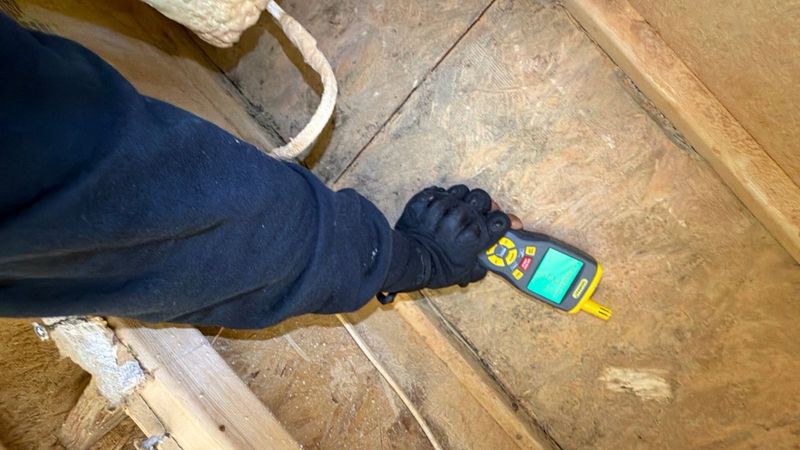
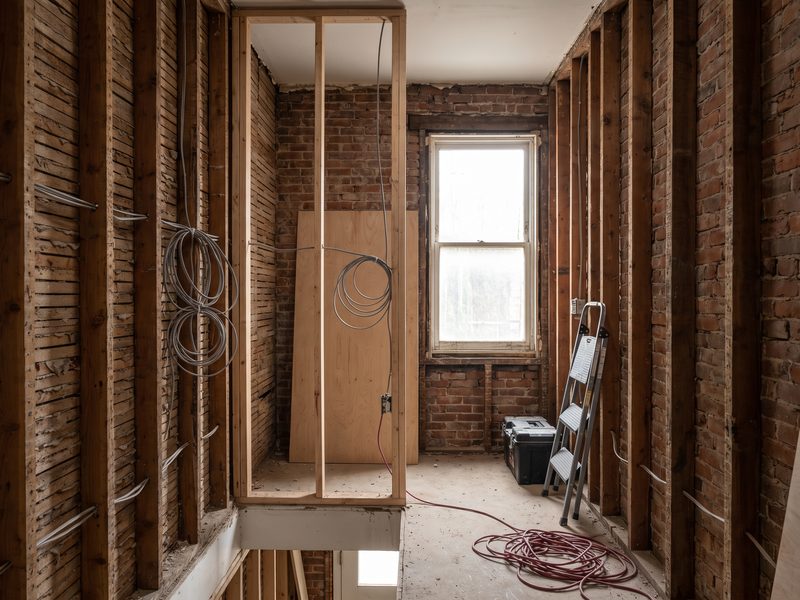
The process starts with a full moisture assessment using meters and thermal imaging to map how far the water traveled inside walls and floors — which, with cast iron, is usually farther than it looks. We establish containment to keep contaminated aerosols out of clean areas, extract standing water, and remove drywall, insulation, and flooring that have been compromised by Category 2 or 3 water.
Then we control the environment. Air movers and commercial dehumidifiers create the psychrometric conditions needed to pull bound moisture out of framing and subfloor, and we log temperature, relative humidity, and material moisture content daily until the structure meets verified dry standards. A typical structural dry-out takes 3 to 5 days. Only after the building is dry and disinfected do we rebuild, so nothing gets sealed up over hidden moisture. Explore our water damage restoration and mold remediation services, or contact us to get started. Restoration Doctor of Washington DC is licensed under DC DLCP #410524000721 and serves Washington, D.C. and Southern Maryland.
- Inspect and classify the water category (S500)
- Set containment and remove contaminated porous materials
- Disinfect surfaces with appropriate antimicrobials
- Dry with air movers and dehumidifiers to a verified standard
- Log moisture daily — typical dry-out runs 3 to 5 days
- Remediate mold per S520 where present, then rebuild